
DuckDuckGo Adds AI Voice Chat to Duck.ai With Privacy Protections
DuckDuckGo Elevates Privacy with New AI Voice Chat on Duck.ai
In a significant move reinforcing its dedication to user privacy, DuckDuckGo has unveiled groundbreaking voice chat capabilities for Duck.ai, its private AI chatbot platform. Launched last March, Duck.ai has quickly established itself as a go-to destination for users seeking AI interactions without compromising their personal data. This latest enhancement pushes the boundaries of private AI, allowing for more natural and intuitive conversations with advanced AI models, all while upholding DuckDuckGo's stringent privacy standards.
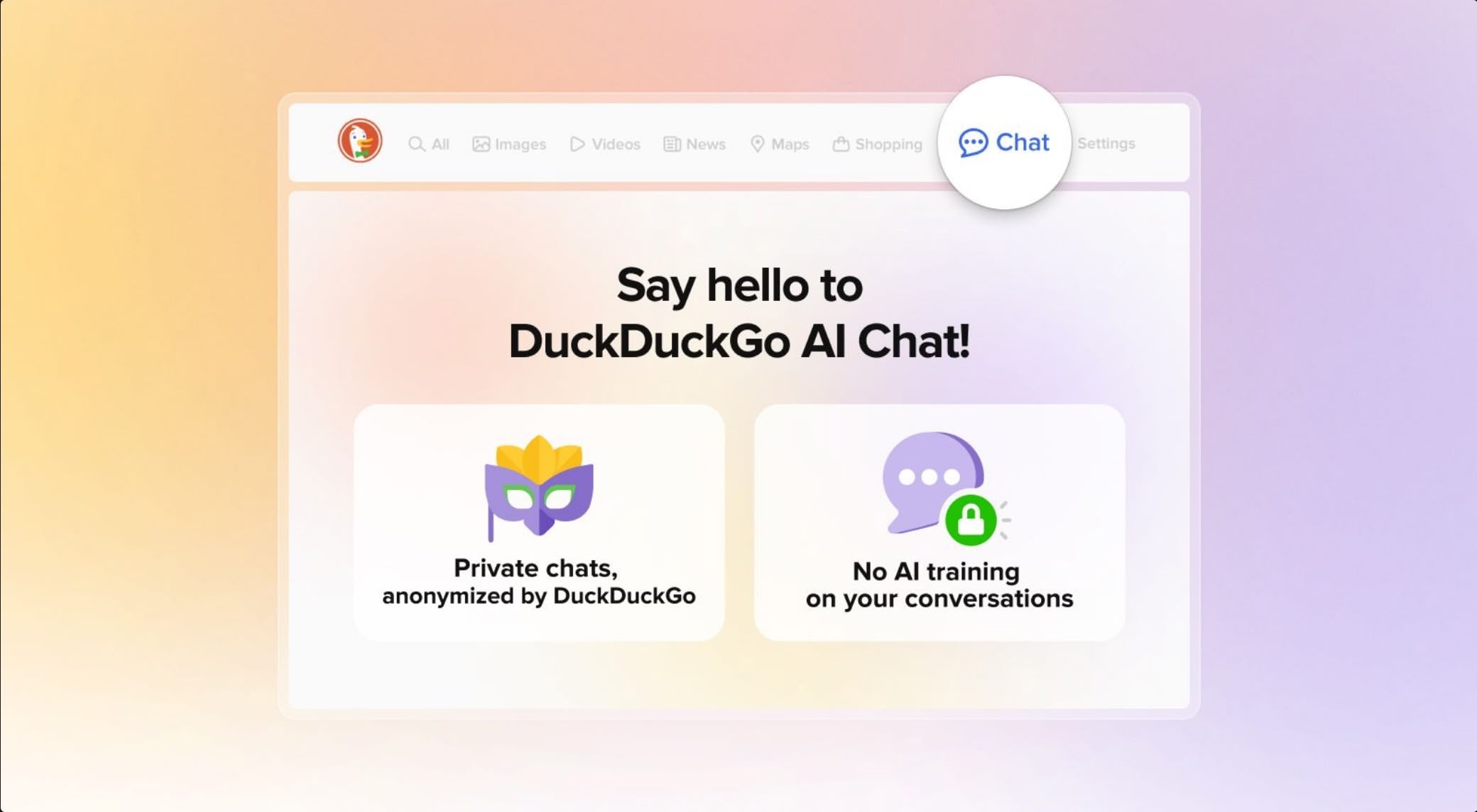
Experience Natural Conversations with Secure AI Voice Chat
The newly introduced voice chat feature transforms how users interact with artificial intelligence on Duck.ai. Instead of typing prompts, individuals can now engage in real-time spoken conversations with large language models (LLMs). This advancement makes the AI experience far more accessible, intuitive, and efficient, mimicking human-to-human interaction. Imagine asking complex questions, brainstorming ideas, or simply seeking information by speaking naturally, and receiving immediate, verbal responses from the AI. This eliminates the need for constant typing, making the interaction smoother and less cumbersome, particularly for users on mobile devices or those who prefer spoken communication.
The underlying technology facilitating these voice chats is powered by advanced LLMs provided by OpenAI. However, true to DuckDuckGo's core mission, the implementation is meticulously engineered for privacy. The entire conversation, from your spoken input to the AI's verbal response, is handled through an encrypted relay connection. This ensures that the data stream remains secure and protected from eavesdropping or unauthorized access as it travels between your device and the AI models. This commitment to security at the architectural level is a cornerstone of Duck.ai's design, providing users with peace of mind in an increasingly data-conscious world.
DuckDuckGo's Unwavering Commitment to Privacy in AI
While many AI services grapple with questions of data retention and usage, DuckDuckGo has explicitly designed its voice chat feature with privacy as its paramount concern. The company has made it abundantly clear that user interactions are not just secure, but also entirely ephemeral and anonymized. This is a crucial distinction that sets Duck.ai apart from many other AI platforms. In its official announcement, DuckDuckGo unequivocally stated, "Voice chats in Duck.ai are private, anonymized by us, and never used to train the underlying AI." This statement underscores a foundational principle: your conversations are for your benefit alone, not for the benefit of training future AI models or creating user profiles.
Furthermore, the partnership with OpenAI includes strict contractual limitations on how voice chat data can be used. This means that even the model provider, OpenAI, is bound by specific agreements that prevent them from misusing or retaining user audio. This multi-layered approach to privacy — from DuckDuckGo's internal anonymization processes to contractual obligations with third-party providers — creates a robust shield around user data. For a comprehensive understanding of these protections, DuckDuckGo provides a detailed breakdown on its help pages, which users can explore at any time. This transparency is key to building trust in an evolving technological landscape.
Deep Dive into Duck.ai's Voice Chat Privacy Protections
DuckDuckGo's approach to securing your audio stream and voice data is multifaceted, ensuring that it is accessed by OpenAI (the model provider for voice chats) solely for the purpose of responding to your prompts. This rigorous protection framework is detailed by DuckDuckGo here, and includes several critical components:
- Ephemeral Processing: Speak Freely, Without a Trace
- No Training: Your Voice, Your Data, Period
- Secure Connection: A Shield for Your Conversations
- Zero Data Retention: Wiping the Slate Clean
The concept of "ephemeral processing" is central to Duck.ai's privacy promise. In simple terms, your live audio stream is processed only for the duration that you are speaking. The moment you stop talking, or the session concludes, your voice data ceases to exist on any server. Neither DuckDuckGo nor OpenAI retains any recordings of your voice. This is a stark contrast to many other voice-enabled services, which might record snippets or full conversations for various purposes, including quality control, service improvement, or even personalized advertising. With Duck.ai, your spoken words are like sand sculptures on a beach, washed away by the tide as soon as they've served their immediate purpose. This "speak-and-forget" mechanism ensures that your private thoughts and inquiries, voiced through the AI, remain truly private and untraceable to you. It eliminates the potential for past conversations to be retrieved, analyzed, or leaked, offering a superior level of data minimization and protection.
Another critical pillar of Duck.ai's privacy model is the explicit guarantee that your audio and the AI model's responses are never used to train artificial intelligence models. This is an increasingly vital distinction in the world of AI. Many AI services, particularly those in their developmental stages or those seeking to continuously improve, often rely on user input to refine their algorithms, expand their knowledge base, and enhance their conversational abilities. While this can lead to better AI performance over time, it often comes at the cost of user privacy. Your private conversations, potentially containing sensitive information, personal opinions, or unique speech patterns, could inadvertently become part of a larger dataset used to shape the AI for everyone else.
DuckDuckGo fundamentally rejects this trade-off. By committing to "no training," they ensure that your interactions with Duck.ai remain solely between you and the current iteration of the AI model. Your voice data and the specific content of your conversations will not be archived, anonymized, or aggregated for the purpose of teaching the AI new things. This means that your unique queries and personal expressions will never contribute to a dataset that could potentially be analyzed, monetized, or exposed. It preserves the sanctity of your private dialogue, keeping it separate from the broader development goals of artificial intelligence and reinforcing the idea that your data is yours alone.
The journey of your voice data from your device to the AI models is meticulously protected through a secure connection. Duck.ai employs WebRTC (Web Real-Time Communication) and a secure relay server to encrypt audio streams in transit. WebRTC is an open-source project that provides web browsers and mobile applications with real-time communication capabilities via simple APIs. It enables secure, high-quality audio and video communication directly within the browser, without the need for external plugins. The use of WebRTC ensures that your audio is encrypted from the moment it leaves your device until it reaches the secure relay server.
This relay server acts as an intermediary, further anonymizing the connection and preventing direct links between your IP address and the AI model provider. End-to-end encryption means that your audio stream is scrambled into an unreadable format as it leaves your device and can only be decrypted by the intended recipient – in this case, the specific AI model providing the response. This prevents any third party, including internet service providers or malicious actors, from intercepting and understanding your spoken communication. It's akin to sending your message in a locked box, with only the recipient possessing the key, guaranteeing the confidentiality and integrity of your spoken words throughout their digital journey. This robust encryption protocol is a fundamental safeguard against eavesdropping and data breaches.
Perhaps the most impactful privacy guarantee offered by Duck.ai's voice chat is "zero data retention." This means that after you end a voice chat session, absolutely no conversation data, neither your audio input nor the model's responses, is retained by either DuckDuckGo or OpenAI. This goes beyond just not storing voice recordings; it encompasses the entire textual transcript of the conversation as well. Once your session is over, it's as if it never happened, from a data storage perspective.
This policy stands in stark contrast to many other services that might keep chat logs, even anonymized ones, for analysis, troubleshooting, or product improvement. Zero data retention means there's no archive of your conversations that could potentially be accessed by internal staff, subpoenaed by legal entities, or compromised in a data breach. It provides the ultimate assurance that your interactions with Duck.ai are transient and private. This commitment is crucial for users who discuss sensitive topics, personal information, or proprietary ideas with an AI, as it minimizes the risk of their data ever being misused or exposed after the conversation has concluded. It reinforces DuckDuckGo's philosophy that privacy is not just about protection during interaction, but also about the complete absence of a persistent digital footprint.
The OpenAI Partnership: A Collaborative Approach to Private AI
The decision to partner with OpenAI for the underlying large language models powering Duck.ai's voice chats is a strategic one. OpenAI is at the forefront of AI development, known for creating some of the most advanced and capable LLMs in existence. By leveraging OpenAI's technology, DuckDuckGo can offer users a high-quality, intelligent, and responsive AI experience. However, this partnership is not a standard "off-the-shelf" integration. DuckDuckGo has implemented its own privacy architecture on top of OpenAI's models, and critically, has established specific contractual agreements.
These agreements legally bind OpenAI to DuckDuckGo's stringent privacy policies regarding voice chat data. This means OpenAI is contractually limited in how it can use any data processed through Duck.ai's voice feature. They cannot store audio, they cannot use it for training their models, and they must adhere to the ephemeral and zero-retention principles. This demonstrates DuckDuckGo's proactive stance in vetting and regulating its technology partners to ensure that its privacy promises are upheld at every level of the service delivery chain. It's a testament to the fact that cutting-edge AI capabilities can indeed be delivered in a privacy-preserving manner, given the right technological and legal frameworks.
Why Voice Chat Matters: Convenience Meets Innovation
The introduction of voice chat capabilities is more than just a new feature; it's a significant leap forward in user convenience and accessibility for AI interaction. Typing can be slow, tedious, and sometimes impractical, especially when on the go or dealing with complex thoughts that flow more naturally through speech. Voice chat offers an immediate, hands-free way to communicate, making AI tools more integrated into daily life. For instance, dictating a long email draft, brainstorming ideas while driving, or quickly asking for information while cooking can now be done seamlessly.
Beyond mere convenience, voice interaction enhances the naturalness of human-computer interaction. It mirrors how we communicate with other people, reducing the cognitive load associated with text-based interfaces. This makes AI more approachable for a wider demographic, including individuals with certain physical disabilities or those who simply prefer verbal communication. The ability to engage in a back-and-forth dialogue, receiving spoken answers, creates a more immersive and less clinical experience. This innovation, combined with DuckDuckGo's privacy assurances, presents a compelling argument for the future of responsible and user-centric AI. It shows that advanced technology doesn't have to come at the expense of personal data security; instead, it can be designed to empower users with both intelligence and peace of mind.
Accessing Duck.ai Voice Chat: Free Tiers and Subscriber Benefits
Duck.ai's voice chat feature is designed to be broadly accessible. Users can enjoy the benefits of this private voice AI without needing to create an account, making it incredibly easy to try out. There are free daily limits in place, allowing anyone to experience the natural, secure interaction firsthand. This "try before you buy" approach aligns with DuckDuckGo's commitment to transparency and user empowerment, letting individuals evaluate the service without any commitment or personal data submission.
For those who find the voice chat indispensable and require higher daily usage limits, DuckDuckGo offers a subscription service at $10 per month. This subscription not only unlocks expanded daily limits for Duck.ai voice chat but also bundles other premium privacy services offered by DuckDuckGo. These additional benefits significantly enhance a user's overall digital privacy and security posture:
- DuckDuckGo VPN Access: A Virtual Private Network (VPN) encrypts your internet connection and masks your IP address, making your online activities much more private and secure. It protects your data from being intercepted by ISPs, governments, or malicious actors, and allows you to bypass geo-restrictions, ensuring a truly open and private internet experience.
- Personal Information Removal: This service helps users take control of their online presence by assisting in the removal of personal data from data broker sites. These sites often collect and sell your personal information (addresses, phone numbers, family details) to marketers and sometimes even scammers. DuckDuckGo's service proactively identifies and works to remove this exposed information, significantly reducing your digital footprint and risk of unwanted attention or identity theft.
- Identity Theft Restoration: In the unfortunate event of identity theft, this service provides expert assistance to help victims recover their identity. Identity theft can be a devastating and complex ordeal, requiring extensive time and effort to resolve. Having a dedicated team to guide you through the restoration process, dealing with credit bureaus, financial institutions, and legal procedures, offers invaluable support and peace of mind during a stressful time.
These bundled services transform the DuckDuckGo subscription into a comprehensive privacy and security toolkit, making it a compelling option for individuals serious about protecting their digital lives.
Browser Compatibility and Control
While Duck.ai voice chat is broadly compatible, it's worth noting that the feature works in most modern web browsers, with the exception of Firefox. DuckDuckGo has indicated that support for Firefox is still under development, suggesting that they are actively working to expand compatibility to all major platforms. This ongoing development highlights their commitment to making private AI accessible to as many users as possible.
Users also retain complete control over their experience. Should you decide that voice chat isn't for you, or if you simply prefer text-based interactions, the feature can be easily disabled at any time through Duck.ai's settings. This user-centric approach ensures that you are always in charge of how you interact with the AI, aligning perfectly with DuckDuckGo's broader philosophy of empowering individuals with choice and control over their digital privacy.
Beyond Voice: Exploring Duck.ai's Diverse AI Model Ecosystem
While the new voice chat feature is a significant addition, it's important to remember that Duck.ai offers a much broader array of AI capabilities. The platform provides access to a variety of non-voice large language models from multiple leading providers, including OpenAI, Meta, Anthropic, and Mistral. This diverse ecosystem allows users to experiment with different AI personalities and capabilities, finding the model that best suits their needs for specific tasks or queries.
Having access to models from various developers means that Duck.ai isn't locked into a single AI philosophy or dataset. This flexibility ensures that users can tap into a wider range of knowledge, creative styles, and problem-solving approaches, all while benefiting from DuckDuckGo's overarching privacy protections. Whether you need a highly creative writer, a factual summarizer, or a robust coding assistant, Duck.ai likely has a model to meet your demands, offering both versatility and privacy in one integrated platform.
The Broader Landscape: AI, Privacy, and the Path Forward
The rise of artificial intelligence has brought with it unprecedented opportunities for innovation, efficiency, and personal assistance. However, it has also sparked legitimate concerns about data privacy, security, and the ethical implications of how AI models are trained and used. Many mainstream AI services collect vast amounts of user data, often without clear explanations of how that data is stored, processed, or potentially shared. This has led to a growing demand for privacy-first AI solutions.
DuckDuckGo's launch of private voice chat on Duck.ai is a pivotal moment in this evolving landscape. It demonstrates that it is possible to combine cutting-edge AI technology with robust, user-centric privacy protections. By prioritizing ephemeral processing, forbidding data for training, ensuring secure connections, and committing to zero data retention, DuckDuckGo is setting a new standard for responsible AI development. This approach not only safeguards individual privacy but also fosters greater trust in AI technologies, encouraging wider adoption among users who are rightfully cautious about their digital footprint. As AI becomes increasingly pervasive in our lives, platforms like Duck.ai will be crucial in shaping a future where technological advancement and personal privacy can coexist harmoniously. It challenges other developers to adopt similar principles, pushing the entire industry towards a more ethical and privacy-respecting paradigm.
Conclusion: A New Era of Private AI Interaction
With the introduction of voice chat to Duck.ai, DuckDuckGo has once again affirmed its leadership in privacy-focused technology. This feature not only offers a convenient and natural way to interact with advanced AI models but does so with an uncompromising commitment to user data protection. From ephemeral audio processing and a strict "no training" policy to secure connections and zero data retention, every aspect of Duck.ai's voice chat has been engineered with your privacy in mind.
Whether you're a casual user exploring AI's potential or a privacy advocate seeking secure digital tools, Duck.ai provides a compelling solution. The option for free daily usage, coupled with comprehensive privacy benefits for subscribers, makes it accessible to everyone. As we navigate an increasingly AI-driven world, platforms like Duck.ai offer a beacon of hope for a future where innovation and individual rights are not mutually exclusive. We encourage you to experience the freedom and security of private AI voice chat for yourself.
Tag: DuckDuckGo
This article, "DuckDuckGo Adds AI Voice Chat to Duck.ai With Privacy Protections" first appeared on MacRumors.com
Discuss this article in our forums
from MacRumors
-via DynaSage
