
Apple-Supported Aliro 1.0 Smart Lock Standard Officially Released
Aliro 1.0: Unlocking the Future of Smart Access with Your Phone and Wearables
For centuries, the humble key has been our gatekeeper, a simple tool granting access to our homes, offices, and most private spaces. While the physical key still holds its place, the digital age has ushered in a new era of access control: the smart lock. These ingenious devices promise convenience, enhanced security, and seamless integration with our increasingly connected lives. Yet, for many, the reality of smart locks has often fallen short of the promise, plagued by a fragmented landscape of proprietary apps, compatibility headaches, and lingering security concerns.
Today, a significant stride forward has been made to address these challenges. The Connectivity Standards Alliance (CSA), a global organization committed to creating universal standards for the Internet of Things (IoT) – and notably including tech giants like Apple – has officially unveiled the Aliro 1.0 specification. Aliro isn't just another smart lock; it's a revolutionary new standard designed to fundamentally improve how smart door locks communicate and interact with the devices we carry every day: our smartphones and wearables.
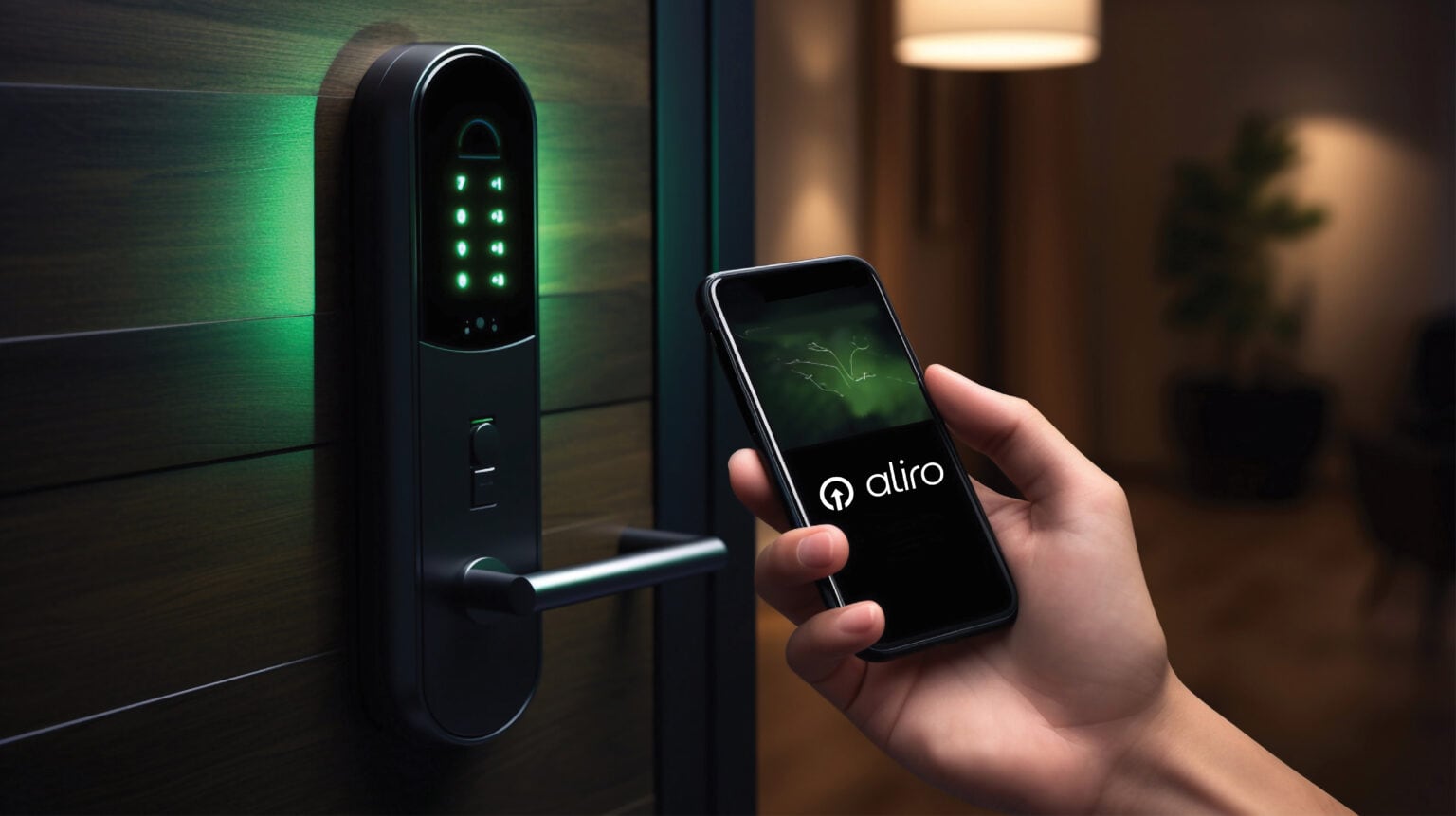
Imagine a world where your phone or smartwatch is not just a communication device, but your universal key. A single, secure digital key that works effortlessly across different brands of smart locks, in your home, at your workplace, or even when you check into a hotel. This is the future Aliro aims to build. By supporting interoperability between mobile devices, wearables, and access control readers, Aliro eliminates the need for a dedicated app for every lock. It's about making smart access truly smart, intuitive, and universally compatible.
This groundbreaking initiative isn't just for homeowners seeking more convenience. Aliro is poised to transform access control across a wide spectrum of environments, from individual residences to sprawling corporate offices, bustling university campuses, and modern hotel chains. It’s a standard built for pervasive integration, ensuring that the benefits of smart access can be realized on a much grander scale than ever before.
The Current Landscape: Why Smart Locks Haven't Always Lived Up to Their Potential
Smart locks have been around for a while, offering tantalizing glimpses of a keyless future. They allow users to lock and unlock doors remotely, grant temporary access to guests, and monitor entry and exit activities – all from a smartphone. For many early adopters, these features were a revelation, providing a level of control and convenience unimaginable with traditional keys.
However, the journey to a truly seamless smart access experience has been riddled with obstacles. One of the most significant challenges has been the fragmentation of the market. Every smart lock manufacturer often develops its own proprietary ecosystem, requiring users to download and manage a different app for each brand of lock they own. This creates a clunky and frustrating user experience, especially for those with multiple smart locks from different companies or those who encounter various smart lock systems in different aspects of their lives.
Furthermore, compatibility has been a constant headache. A smart lock from brand A might not work with the smart home hub from brand B, or integrate poorly with a specific type of smartphone or operating system. This lack of standardization has stifled innovation and made it difficult for consumers to make informed purchasing decisions, often leading to buyer's remorse when a new device doesn't integrate as expected.
Security has also been a perennial concern. While smart locks offer advanced encryption and authentication methods, public perception, fueled by sensationalized headlines about potential hacking vulnerabilities, has sometimes lagged. The thought of a digital key being compromised instills a higher level of fear than a lost physical key, even if the digital solution might ultimately be more secure. Ensuring robust, uncompromisable security is paramount for widespread adoption.
Finally, the user experience, while often convenient, has lacked true elegance. The process of pairing devices, managing digital keys, and interacting with locks has often been more complex than it needs to be. The ultimate vision of smart access is one where the technology fades into the background, becoming an invisible enabler of convenience and security, rather than a system requiring constant attention and troubleshooting.
Introducing Aliro 1.0: The Universal Language for Smart Access
This is where Aliro steps in, not just as a new product, but as a foundational standard. Aliro 1.0 represents a concerted effort by leading technology and smart home companies to create a "universal language" for smart access. Its core purpose is to break down the existing barriers of incompatibility and complexity, ushering in an era of truly interoperable and user-friendly smart locks.
The Power Behind the Standard: The Connectivity Standards Alliance
The Connectivity Standards Alliance (CSA) is the driving force behind Aliro. Composed of hundreds of companies spanning the globe, the CSA is renowned for its work on other pivotal smart home standards, most notably Matter. Their mission is to create open, global standards that allow devices from different manufacturers to work together seamlessly. The success of Matter in unifying smart home devices provides a strong precedent for Aliro’s potential impact on access control.
The CSA's approach ensures that Aliro is built on a foundation of collaborative expertise. By bringing together diverse stakeholders – from chip manufacturers and lock makers to operating system developers – they ensure the standard is robust, secure, and practical for real-world application. This collective intelligence is crucial for developing a standard that can truly revolutionize an industry.
Key Supporters: A United Front for a Connected Future
The widespread adoption and success of any new standard hinge on the support of major industry players. In this regard, Aliro has garnered impressive backing from the outset. Tech behemoths such as Apple, Google, and Samsung have publicly committed their support, a critical endorsement that signals Aliro's potential to become an industry-wide norm.
Their involvement is particularly significant because these companies control the mobile operating systems and hardware (smartphones and wearables) that will serve as the primary interface for Aliro-enabled locks. When Apple, Google, and Samsung align on a standard, it dramatically increases the likelihood of its success due to their immense market reach and influence over the user experience.
Beyond the tech giants, major smart home companies that produce smart locks have also signed on. The Alliance has highlighted a prestigious list of early adopters and certification candidates for Aliro 1.0, including: Apple, Allegion, Aqara, Google, HID, Kastle, Kwikset, Last Lock, Nordic Semiconductor, Nuki Home Solutions, NXP Semiconductors, Qorvo, Samsung, and STMicroelectronics. This diverse group represents a powerful coalition of manufacturers and technology providers, ensuring that Aliro-certified products will quickly become available across various market segments, from consumer-grade home locks to enterprise-level access solutions.
The commitment from these companies means that consumers can look forward to a future where their smart lock choices are less about brand ecosystems and more about features, design, and personal preference, knowing that compatibility will be a given.
How Aliro Transforms Your Access Experience
The most tangible benefit of Aliro for the everyday user will be the radical simplification of the access experience. Gone are the days of juggling multiple apps for different locks or struggling with complex pairing procedures. Aliro centralizes access control into the most ubiquitous device we own: our smartphone.
Ditching the Dedicated App for Good
One of Aliro's most appealing features is its ability to integrate directly with mobile wallet apps on your iPhone or Android device. This means that instead of downloading a specific app for your Kwikset lock, another for your Aqara lock, and yet another for your office access, all your digital keys can reside in one secure, convenient place: your phone’s native wallet app. This dramatically cleans up your home screen, reduces app clutter, and streamlines the process of gaining entry.
For iPhone users, this translates into more smart locks supporting Apple Home Key. Apple Home Key is a feature that allows users to add a digital key to Apple Wallet, enabling hands-free unlocking of compatible smart locks. With Aliro, this seamless and highly secure experience will extend to a much wider range of smart locks, offering unparalleled convenience. Android users can expect similar integrations with their respective mobile wallet solutions, making the experience equally accessible across platforms.
The Magic of Hands-Free Unlocking
Aliro is designed to make access not just app-free, but often truly "hands-free." This is achieved through the intelligent use of various communication technologies embedded in modern smartphones and smart locks. Imagine approaching your front door, and as you get within a certain range, your phone securely communicates with the lock, authenticating your presence and unlocking the door – all without you needing to take your phone out of your pocket or even tap it. This level of convenience fundamentally alters our interaction with physical spaces.
Beyond Smartphones: Wearables as Your Universal Key
The integration doesn't stop at smartphones. Aliro also supports interoperability with wearables, meaning your smartwatch could become your primary access device. Whether you're out for a run without your phone, or simply prefer the discreet convenience of tapping your wrist to unlock a door, Aliro enables this futuristic vision. This expands the utility of smart access, making it more adaptable to different lifestyles and situations.
For example, a hotel guest could receive their room key directly on their Apple Watch, allowing them to bypass the front desk entirely and simply tap their wrist at their door. This not only enhances guest experience but also improves operational efficiency for businesses.
Under the Hood: Aliro's Core Technology for Security and Performance
While the user-facing benefits of Aliro are clear, the real ingenuity lies in its underlying technology. Aliro 1.0 is built on a robust framework designed to ensure both convenience and uncompromising security and privacy.
Asymmetric Cryptography: The Foundation of Digital Security
At the heart of Aliro's security architecture is asymmetric cryptography. This sophisticated encryption method uses a pair of keys: a public key and a private key. The public key can be shared widely, while the private key must be kept secret by its owner. Data encrypted with a public key can only be decrypted by the corresponding private key, and vice-versa.
In the context of Aliro, this means that interactions between your device (smartphone or wearable) and the access control reader (on the smart lock) are highly secure. Your digital key, stored securely on your device, uses this cryptographic framework to establish a trusted connection with the lock. This prevents unauthorized access, tampering, and eavesdropping on the communication channel. It’s akin to having a unique digital signature for every access attempt, ensuring that only the legitimate key holder can unlock the door. Crucially, this robust security framework is designed without sacrificing user privacy, ensuring that your personal data remains protected during these secure interactions.
Multiple Communication Methods for Robustness and Versatility
Aliro understands that different access scenarios require different communication technologies. To provide a truly versatile and reliable experience, Aliro supports multiple communication methods, each optimized for specific situations:
-
NFC (Near Field Communication): This short-range wireless technology is perfect for close-proximity interactions. When you tap your phone or wearable against a smart lock, NFC enables a rapid and secure exchange of data over a few centimeters. This is the technology behind many contactless payments and is ideal for quick, intentional unlocks where you physically present your device to the reader. It’s highly energy-efficient and provides a reliable connection even in environments with high wireless interference.
-
Bluetooth LE (Low Energy): Bluetooth Low Energy (BLE) offers a greater range than NFC, typically up to 10 meters, while consuming minimal power. This makes it suitable for background communication, device discovery, and scenarios where you might not want to physically tap your device. For instance, BLE could be used to wake up a lock as you approach, or to facilitate remote unlocking within a certain range. Its low power consumption is crucial for extending battery life on both your mobile device and the smart lock itself.
-
UWB (Ultra Wideband): UWB is perhaps the most exciting addition for hands-free access. Unlike NFC and BLE, which primarily focus on data transfer, UWB excels at precise spatial awareness and ranging. It can accurately determine the distance and direction of your device relative to the smart lock. This precision allows for advanced features like knowing if you are inside or outside a door, or if you are simply walking past. With UWB, a smart lock can potentially unlock automatically only when you are directly in front of it and intending to enter, offering the ultimate in seamless, secure, and truly hands-free access without accidental unlocks. This technology is becoming increasingly common in newer smartphones and plays a pivotal role in the future of intuitive access.
By leveraging these complementary technologies, Aliro ensures that smart locks can adapt to various situations, providing a reliable and secure connection no matter how you choose to interact with them.
Who Benefits from Aliro? A Broad Spectrum of Applications
Aliro's design ethos extends far beyond just the smart home. Its focus on interoperability, security, and user experience makes it an ideal solution for a multitude of environments, revolutionizing access control wherever it's deployed.
For the Homeowner: Simplicity, Security, and Peace of Mind
-
Simplified Smart Home Setup: No more agonizing over which lock brand is compatible with your specific smart home ecosystem. Aliro-enabled locks will work seamlessly with your Apple Home or Google Home setup, appearing as a standard, easily managed device.
-
Guest Access Management: Granting temporary access to friends, family, or service providers becomes incredibly simple. Instead of physical key handovers or complex app invitations, you can securely share a digital key that resides in their mobile wallet, with defined expiry times, and revoke access instantly when needed.
-
Enhanced Security and Peace of Mind: The robust asymmetric cryptography combined with the secure element protection on modern smartphones ensures that your digital keys are extremely difficult to compromise. Knowing you have a highly secure, traceable access system provides unparalleled peace of mind.
-
Future-Proofing Smart Lock Investments: By adopting a universal standard, Aliro ensures that the smart lock you purchase today will likely remain compatible with future generations of smartphones and wearables, protecting your investment from rapid technological obsolescence.
For Corporate Offices and Businesses: Streamlined Operations and Enhanced Control
-
Streamlined Employee Access Control: Companies can issue digital access credentials directly to employees' smartphones or wearables. This eliminates the need for physical access cards, which can be lost, stolen, or require costly replacement.
-
Reduced Need for Physical Access Cards: The logistical nightmare of managing, distributing, and collecting physical access cards is significantly reduced. This not only saves costs but also improves efficiency.
-
Easier Onboarding/Offboarding of Staff: Granting or revoking access for new hires or departing employees can be done instantaneously and remotely, enhancing security and administrative efficiency.
-
Centralized Management and Auditing: Access systems can be managed from a centralized platform, providing a clear audit trail of who accessed which area and when, crucial for security compliance and incident investigation.
-
Meeting Room Access, Restricted Areas: Beyond main entry points, Aliro can be used for granular access to specific offices, meeting rooms, server rooms, or other restricted areas, with different levels of authorization for different staff members.
For Universities and Campuses: Modernizing Campus Life
-
Student Dorm Access: Students can use their phones or smartwatches to access their dorm rooms, reducing the problem of lost keys and improving security management for campus housing authorities.
-
Lab and Library Access: Access to specialized labs, libraries, or computer rooms can be controlled and granted based on student enrollment, faculty status, or specific permissions, all managed digitally.
-
Staff Offices: Faculty and administrative staff can use their personal devices for secure entry to their offices and departmental buildings.
-
Simplified Campus Navigation: Digital keys can potentially integrate with other campus services, providing a cohesive and modern experience for students and staff.
For Hotels and Hospitality: Enhancing Guest Experience and Operational Efficiency
-
Keyless Entry: Guests can receive their room key digitally via an app or directly into their mobile wallet before they even arrive. This allows for seamless, keyless check-in, bypassing the front desk and heading straight to their room.
-
Improved Guest Experience: The convenience of using one's own smartphone or smartwatch as a room key enhances the modern travel experience, providing a high-tech and hassle-free stay.
-
Operational Efficiency for Staff: Hotel staff can manage access for maintenance, housekeeping, and other services through a centralized system, improving efficiency and reducing the need for physical master keys.
-
Integration with Hotel Loyalty Programs: Digital keys can be integrated with loyalty programs, offering personalized experiences or exclusive access to club lounges or amenities based on guest status.
The Road Ahead: Aliro's Future and Evolving Capabilities
Aliro 1.0 is just the beginning. The Connectivity Standards Alliance emphasizes that Aliro will be a living standard, continuously updated and refined to meet the evolving demands of the market and the wider smart ecosystem. This commitment to ongoing development ensures that Aliro will remain at the forefront of access control technology.
One of the most anticipated future features explicitly mentioned is secure key sharing. Imagine being able to grant temporary, time-limited access to a delivery person for a specific window, or to a house cleaner for a few hours on a specific day, all from your phone. This feature will provide granular control over who can access your property, when, and for how long, without the need for physical key exchanges or complex instruction sets.
Further enhancements could include more sophisticated automation scenarios, integrating access control with other smart home functionalities. For example, your home lights could turn on automatically when your Aliro key unlocks the door, or your thermostat could adjust to your preferred temperature. We might also see deeper integration with advanced biometric authentication methods beyond what's available on current mobile devices, offering even greater layers of security.
As technology progresses and new needs emerge, Aliro is designed to adapt, ensuring that the promise of truly smart, secure, and convenient access control continues to expand and improve.
Conclusion: The Dawn of Truly Smart, Truly Accessible Door Locks
The release of the Aliro 1.0 specification marks a pivotal moment in the evolution of smart access technology. By tackling the long-standing issues of fragmentation, complexity, and security, Aliro promises to deliver on the original vision of smart locks: effortless, secure, and universally compatible access to our physical spaces.
With the backing of industry giants like Apple, Google, and Samsung, alongside a broad coalition of smart lock manufacturers, Aliro is set to become the standard for mobile and wearable-based access control. From simplifying daily life for homeowners to optimizing operations for businesses and enhancing experiences for travelers and students, Aliro is poised to make our interactions with doors more intuitive, more secure, and more integrated than ever before.
The days of fumbling for keys or managing a plethora of apps are fading. The future of access is digital, seamless, and with Aliro, it's finally here.
This article, "Apple-Supported Aliro 1.0 Smart Lock Standard Officially Released" first appeared on MacRumors.com
Discuss this article in our forums
from MacRumors
-via DynaSage
