
Foldable iPhone's Crease-Free Display Tech Spotted at CES 2026
The Future Unfolds: A Crease-Free Era for iPhones and Foldable Tech Previewed at CES 2026
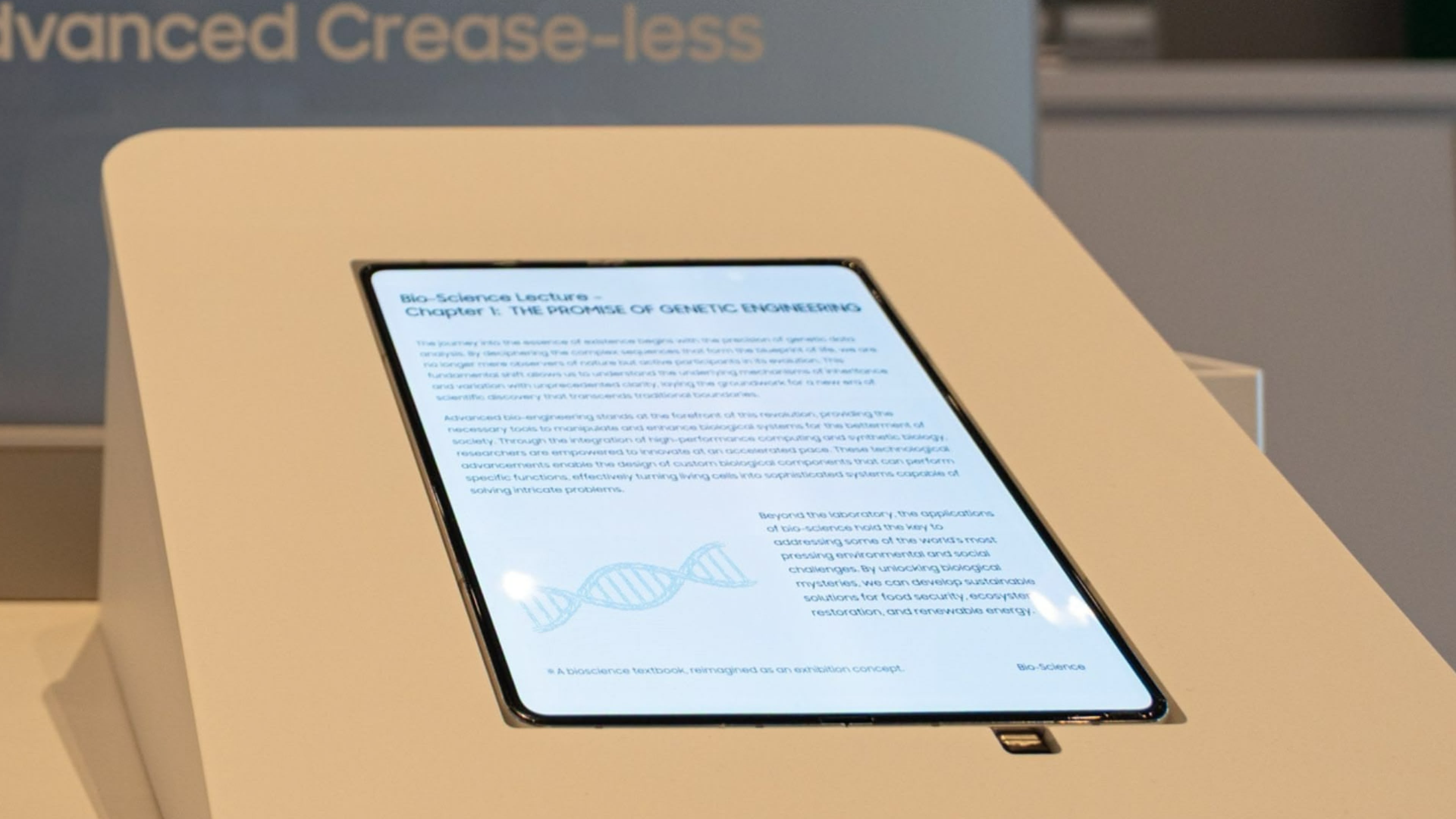
The world of smartphone technology is on the cusp of a groundbreaking transformation, and a recent sneak peek at CES 2026 has offered us an exciting glimpse into what lies ahead. At this premier global tech event, Samsung Display unveiled a revolutionary foldable OLED panel that is widely anticipated to be the core technology powering Apple's much-speculated foldable iPhone. This development marks a significant leap forward in display technology, promising to finally deliver a truly "crease-less" experience that has been the holy grail for foldable smartphone manufacturers.
Imagine a smartphone that seamlessly transitions from a compact, pocket-friendly device to a tablet-sized screen, all without the tell-tale crease that has plagued earlier foldable models. This vision is rapidly becoming a reality. At CES, Samsung Display, a key innovator in display technology, showcased its cutting-edge, crease-free foldable OLED panel. What made this demonstration particularly compelling was its direct comparison alongside a current-generation Galaxy Z Fold 7. According to reports from SamMobile, who had the unique opportunity to witness the test booth before its unexpected removal, the new panel truly "has no crease at all" when directly compared to its predecessor. This declaration is not just a minor improvement; it signifies a monumental leap in the pursuit of foldable perfection.
The Crease Conundrum: A Major Hurdle for Foldable Phones
For years, the visible crease at the fold point has been one of the most significant challenges and criticisms facing foldable smartphones. While manufacturers have made impressive strides in minimizing its appearance, it has remained a persistent visual anomaly. The existing display technology used in the Galaxy Z Fold 7, for instance, does an admirable job of reducing crease visibility. Its sophisticated hinge mechanisms and flexible screen materials work in harmony to create a smoother fold. However, despite these advancements, the crease can still be discerned, especially under specific lighting conditions or at certain viewing angles. This subtle imperfection, while not always a deal-breaker, impacts the premium feel and the seamless user experience that foldable devices aim to deliver. It’s a constant reminder that you are interacting with a device that folds, rather than a single, uninterrupted display.
The physical act of bending a screen puts immense stress on the display's materials. Over time, this stress can lead to a slight deformation or a permanent indentation along the fold line. Early foldable phones were particularly prone to this, with some models exhibiting noticeable valleys or ripples. For many consumers, the crease represented a compromise—a trade-off for the novelty and functionality of a transforming screen. It raised questions about durability, the visual integrity of content, and whether the technology was truly ready for mainstream adoption. A truly crease-free display, therefore, isn't just an aesthetic upgrade; it’s a critical step towards enhancing the practicality, longevity, and overall user satisfaction of foldable devices.
Samsung Display's Breakthrough: A Glimpse into the Future
In stark contrast to existing foldable panels, Samsung Display's newer prototype offers what can only be described as a revolutionary experience. The company claims that this panel, which is heavily rumored to be destined for the upcoming Galaxy Z Fold 8, ensures "seamless text across the fold" regardless of the viewing angle. This is a game-changer. Imagine reading an article, watching a video, or playing a game where the content flows uninterrupted across the expanded display, completely free from any visual distortion or distraction caused by a crease. This level of visual fidelity dramatically elevates the user experience, making the foldable screen truly feel like a single, cohesive canvas rather than two panels joined together.
The significance of this advancement extends beyond Samsung's own product line. Given that Samsung Display is Apple's primary supplier of cutting-edge OLED technology for its iPhones, this development carries immense weight for the highly anticipated foldable iPhone. Apple is renowned for its uncompromising commitment to design aesthetics and user experience. A visible crease would likely be a non-starter for the Cupertino giant, clashing with its brand image of sleek, seamless, and perfectly crafted devices. The availability of a genuinely crease-free display panel from its key supplier is, therefore, incredibly good news for Apple, signaling that the technology required to meet its stringent standards is now within reach.
Apple's Influence and the Quest for Perfection
Apple's entry into the foldable smartphone market has been a subject of intense speculation for years. While other manufacturers have launched several generations of foldable devices, Apple has patiently observed, refined, and presumably worked behind the scenes to address the inherent challenges. This patient approach is characteristic of Apple, which typically waits until a technology is mature and capable of delivering an uncompromised user experience before incorporating it into its products. The crease has undoubtedly been a major hurdle that Apple has been determined to overcome before launching its own foldable device.
The partnership between Apple and Samsung is a complex yet symbiotic one. While they are fierce competitors in the smartphone market, Samsung Display's technological prowess in OLED panels is indispensable to Apple. This dynamic means that Apple often pushes its suppliers to innovate and meet exceptionally high standards. It's plausible that Apple's rigorous "crease-free requirements" have, in part, driven Samsung Display's intensive research and development efforts to achieve this breakthrough. Apple's influence effectively raises the bar for the entire foldable industry, challenging all manufacturers to strive for greater perfection.
The Engineering Marvel: Laser-Drilled Metal Display Plates
So, what's the secret behind this miraculous crease-free display? Industry insights shed light on the sophisticated engineering involved. Apple supply chain analyst Ming-Chi Kuo reported in July that Samsung's next-generation Galaxy Z Fold 8, and by extension, the foldable iPhone, will utilize a revolutionary component: a laser-drilled metal display plate. This crucial component is set to be supplied by the South Korean company Fine M-Tec, a specialist in precision engineering.
The laser-drilled metal plate plays a pivotal role in overcoming the fundamental challenge of bending a display without creating a visible crease. When a flexible screen folds, the materials on the inside of the bend compress, while those on the outside stretch. This differential stress is what typically leads to the permanent deformation that manifests as a crease. The laser-drilled metal plate is ingeniously designed to disperse this generated stress more effectively and evenly across the folding area. By strategically introducing microscopic perforations or patterns through a laser drilling process, the plate gains a degree of flexibility and elasticity that allows the display to bend without concentrating stress at a single point. This technology essentially re-distributes the mechanical forces, enabling the screen to achieve a truly "crease-free" appearance.
This innovative approach represents a significant advancement over previous crease reduction methods, which often focused on optimizing hinge designs (like waterdrop or teardrop hinges) to create a larger bending radius. While those methods certainly helped, they couldn't entirely eliminate the localized stress on the display material itself. The laser-drilled plate tackles the problem at a more fundamental level, within the display structure itself, promising a more robust and permanent solution to the crease conundrum.
It's vital to note that while Samsung Display is showcasing this core technology, Apple's involvement goes much deeper than just sourcing a panel. Rumors suggest that the entire panel structure, the lamination method, and the material process used for the foldable iPhone have been meticulously designed by Apple itself. This means that even if the underlying crease-free plate technology is shared, we should still anticipate distinct differences in the overall display experience and characteristics when comparing the foldable iPhone to the Z Fold 8's display. Apple's custom design will likely influence factors such as touch sensitivity, color accuracy, brightness, and perhaps even the durability and longevity of the display, tailoring it precisely to the brand's exacting specifications and user interface.
Dimensions and Design: A Tale of Two Foldables
Beyond the crease-free technology, another interesting point of divergence between Samsung's and Apple's foldable philosophies appears in their design and display dimensions. Samsung's current Galaxy Z Fold 7 offers a familiar form factor: when closed, its display measures 6.5 inches, presenting a tall and relatively narrow screen with a 21:9 aspect ratio. When unfolded, it expands to an 8-inch display, adopting a more square-like 20:18 aspect ratio. This design aims to provide a large tablet-like experience while still being manageable as a conventional smartphone when folded.
In contrast, rumors circulating about the iPhone Fold suggest a different approach. Its closed display is rumored to be in the range of 5.3 to 5.5 inches, making it slightly smaller than the Z Fold 7 when compact. When unfolded, the iPhone Fold is expected to expand to a size between 7.5 to 7.8 inches. Crucially, the rumored aspect ratio when open is 4:3. This means the iPhone Fold will be noticeably squatter and wider than Samsung's taller, narrower design. This "squatter and wider" form factor could have significant implications for user experience. A 4:3 aspect ratio is closer to traditional tablet dimensions, potentially offering a more natural canvas for productivity apps, web browsing, and consuming content that benefits from more horizontal screen real estate. It might also provide a more comfortable grip and typing experience in tablet mode compared to a very tall and narrow screen. Apple's choice here would likely reflect a deliberate decision about how it envisions users interacting with their foldable device, prioritizing certain use cases over others.
The Mystery of the Early Booth Removal and Samsung's Clarification
One of the more intriguing aspects of the CES 2026 showcase was the early and unexplained removal of Samsung Display's test booth featuring the crease-less panel. While Samsung gave no immediate public reason for this abrupt disappearance, it certainly fueled speculation within the industry. Such an early removal of a high-profile demonstration can imply various things: perhaps the technology was still highly experimental, or there were concerns about revealing too much too soon, especially given Apple's known interest in the technology.
However, an important update followed. Samsung later reached out to MacRumors to clarify the situation. The company stated unequivocally that the crease-less foldable OLED panel showcased at CES 2026 was presented strictly as an R&D (Research and Development) concept. This distinction is crucial. An R&D concept is a demonstration of technological capability and future potential, not a confirmation of an imminent product or a direct component for a specific device. Samsung explicitly noted that it had not stated, nor indicated, that this panel would be applied to any future Galaxy Z Fold product, including the highly anticipated Galaxy Z Fold 8. This clarification serves to manage expectations, indicating that while the technology exists and works, its commercialization timeline and specific application are still under wraps.
Regarding the booth's removal, Samsung's representative clarified that its timing happened to coincide with a particular media tour and that the demonstration had, in fact, been shown to multiple groups throughout the day. This suggests the removal was likely logistical rather than indicative of any underlying issue with the technology itself or a sudden change of plans. Despite this clarification, the initial buzz around the early removal underscored the intense interest and sensitivity surrounding cutting-edge foldable display technology, especially when Apple's future plans are intertwined.
Beyond the Crease: Durability and Long-Term Reliability
While the elimination of the visible crease is a monumental achievement, the long-term durability of foldable displays remains a paramount concern for consumers and manufacturers alike. Early generations of foldable phones faced various durability challenges, including screen protector peeling, susceptibility to dust and debris, and questions about hinge longevity. Apple, with its reputation for building incredibly robust and long-lasting devices, will undoubtedly place immense emphasis on this aspect for its foldable iPhone.
The laser-drilled metal display plate, by effectively dispersing stress during folding, is not only expected to eliminate the crease but also contribute significantly to the overall structural integrity and longevity of the display. Reduced stress points should translate into fewer instances of material fatigue or micro-fractures, which could otherwise compromise the screen over prolonged use. However, true durability extends beyond just the screen itself. It encompasses the hinge mechanism, the protection against environmental factors like dust and water, and the resilience of the outer shell. The advances seen at CES 2026 appear to have raised the bar for both aesthetic perfection and underlying structural robustness. Whether these technological strides translate into vastly improved long-term durability across the entire device, particularly for the intricate components of a foldable phone, will become clearer as these next-generation devices hit the market and undergo real-world testing.
The Road Ahead: Timelines and Market Impact
The coming months promise to be exceptionally exciting for the foldable smartphone market. The Galaxy Z Fold 8, incorporating many of these advanced display technologies (or at least the principles behind them), is widely expected to launch this summer. This launch will provide the first major consumer-facing test of Samsung's latest advancements in crease reduction and display quality. For Apple enthusiasts, the wait for the foldable iPhone continues, but with more concrete expectations. It is anticipated that Apple's foldable iPhone will enter mass production this year, with a highly anticipated launch later in the year, likely around mid-September, aligning with Apple's traditional iPhone release schedule.
The arrival of a crease-free foldable iPhone, backed by Apple's design prowess and ecosystem, has the potential to be a watershed moment for the entire category. Apple's entry often legitimizes new technologies and pushes them into the mainstream, setting new standards for quality, user experience, and overall performance. With both Samsung and Apple pushing the boundaries of foldable technology, the market is poised for significant innovation and competition. This heightened competition will undoubtedly benefit consumers, leading to more refined, durable, and user-friendly foldable devices across the board. The initial glimpse at CES 2026 strongly suggests that the future of foldable smartphones is not just unfolding, but doing so without a single crease in sight.
This article, "Foldable iPhone's Crease-Free Display Tech Spotted at CES 2026" first appeared on MacRumors.com
Discuss this article in our forums
from MacRumors
-via DynaSage
