
Google's SynthID AI Detector is Now Available to Everyone
Google today announced that the Google SynthID Detector is now available to everyone worldwide in English, providing a dedicated tool for identifying content created using artificial intelligence. This web-based platform allows users to upload photos, videos, or audio files to detect imperceptible digital watermarks embedded by supported AI models.
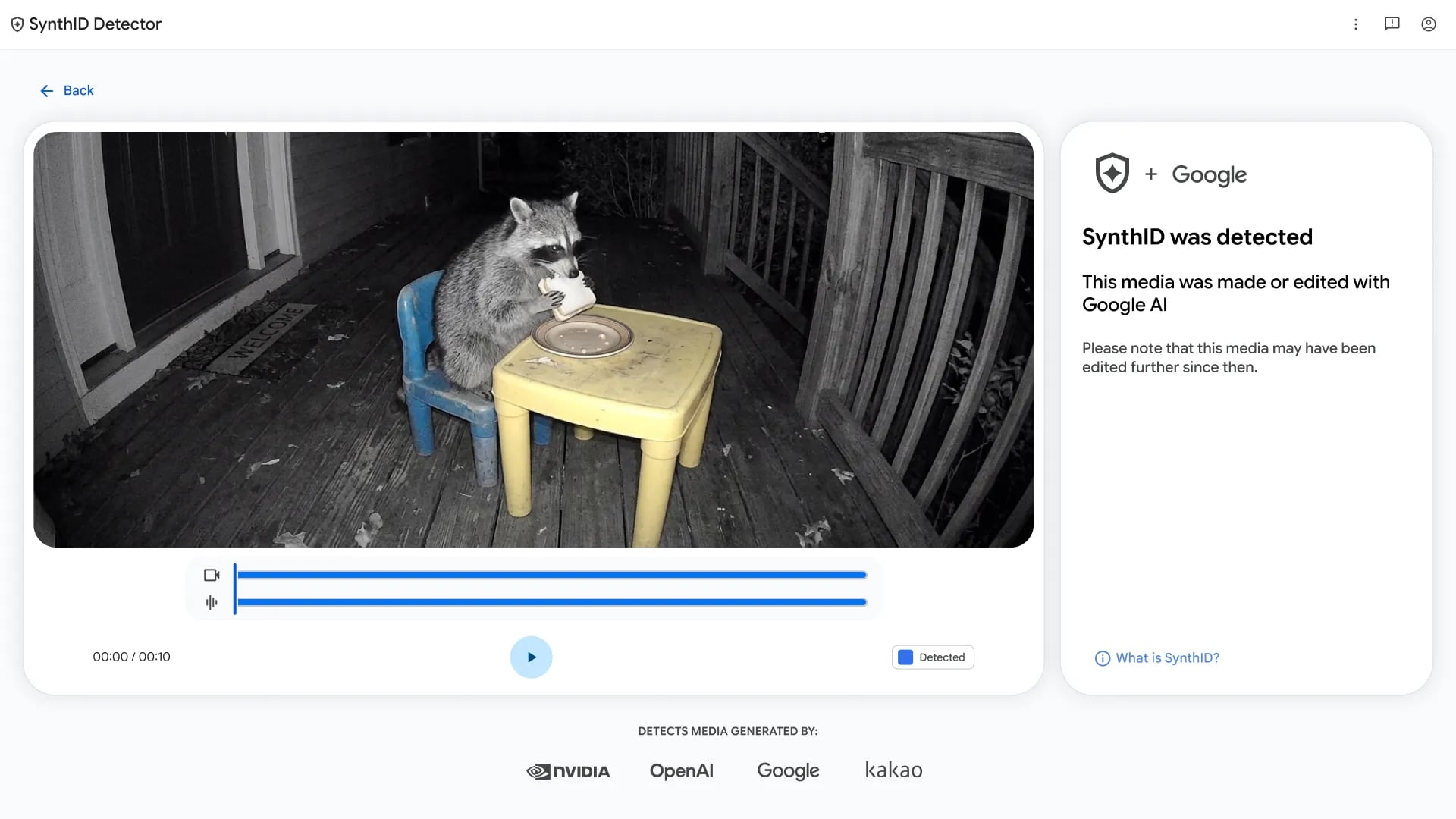
What Is the Google SynthID Detector?
Google announced today that it is officially making its SynthID Detector website accessible to everyone. The tool serves as a dedicated online hub for identifying media created using artificial intelligence technology.
The platform operates as a website where users can upload various media files to determine whether they contain hidden watermarking signatures. By checking these uploads, the detector helps verify content origin across supported AI platforms.
To use the detection tool, users are required to complete a sign-in process. Once signed in, individuals can upload photo, video, or audio files directly to the site for immediate scanning.
The platform is now available worldwide in the English language, expanding access far beyond its initial testing group to serve users across the globe.
How Does SynthID Watermarking Work for AI Media?
Understanding how the Google SynthID Detector operates requires looking at the underlying SynthID technology. SynthID embeds digital watermarks directly into content generated by artificial intelligence models.
A key feature of these digital watermarks is that they are not visible or audible to humans. When a person views an image or video or listens to an audio file, the watermark remains completely imperceptible to human senses.
While human eyes and ears cannot detect these hidden markers, they can be detected with Google's website. The platform analyzes the file structure to identify the presence of the hidden watermark.
When media created with compatible AI tools is uploaded, the web detector scans for these imperceptible markers to confirm whether SynthID technology was used during creation.
Which AI Platforms Support SynthID Watermarks?
The SynthID Detector is designed to identify media produced across multiple leading artificial intelligence engines, rather than being restricted solely to Google software.
Currently, the SynthID Detector can identify media generated using AI from the following companies:
- Google: Artificial intelligence models developed by Google embed compatible SynthID digital watermarks into generated content.
- OpenAI: Synthetic media produced using OpenAI artificial intelligence tools can be identified by the detector.
- Nvidia: Media created with Nvidia AI technologies contains detectable watermarking patterns.
- Kakao: Content generated through Kakao AI systems includes recognized SynthID watermarks.
In addition to these current providers, system compatibility is set to expand further. Apple also plans to support SynthID later this year, bringing broader adoption to the digital watermarking standard.
What File Formats Can You Check with SynthID Detector?
The Google SynthID Detector accepts three primary types of digital media uploads for analysis. This allows users to inspect a wide variety of synthetic media files.
Supported file types include:
- Photo Files: Digital images and visual graphics can be uploaded to scan for hidden visual watermarks.
- Audio Files: Sound clips, voice recordings, and audio tracks can be uploaded to check for embedded acoustic watermarks.
- Video Files: Moving picture files and video clips can be processed to inspect for video watermarking.
Users simply sign in to the website, select their desired photo, video, or audio file, and upload it to run the verification check.
What Are the Limitations of the SynthID Detector Tool?
Google has highlighted specific operational boundaries so that users understand what the platform can and cannot accomplish during testing.
Is SynthID Detector a General AI Detector?
Google explicitly clarifies that its website is not a general AI detector. It does not analyze media using statistical guessing or generic pattern evaluation to guess whether content was made by artificial intelligence.
Instead, the tool can only detect media that uses the SynthID technology specifically. If a file was generated using an AI engine that does not integrate SynthID watermarks, the detector will not identify it.
Can It Distinguish Between AI-Created and AI-Edited Media?
Another key limitation is that Google's tool cannot distinguish between AI-created and AI-edited media. It detects the presence of the embedded SynthID watermark regardless of how heavily AI was involved.
Whether a photo, video, or audio file was generated entirely from scratch using AI or simply modified using AI tools, the detector yields the same watermark result without differentiating between creation and editing.
Where Else Are SynthID Checks Available?
Visiting the standalone website is not the only method for verifying whether media contains SynthID watermarks. Google has integrated detection features directly into several of its core products.
SynthID checks are already integrated into the following Google services:
- Google Search: Built-in detection features allow users to verify watermarked media directly within search results.
- Google Gemini: Users interacting with Gemini can utilize integrated media verification tools.
- Google Chrome: Web browsing through Chrome provides built-in mechanisms to check for watermarked content.
These integrated check features offer convenient alternatives for users who want to identify watermarked media without navigating directly to the SynthID Detector website.
What Is the History and Public Availability of SynthID Detector?
The widespread release of the Google SynthID Detector follows a structured rollout history that began with targeted industry testing.
SynthID Detector first rolled out to members of the media last year. This initial release allowed journalists, news organizations, and publishers to test the watermarking tool and verify AI-generated media during early testing stages.
Following that media-focused period, Google today announced that the tool is available to everyone worldwide in English, giving the general public equal access to the verification technology upon signing in.
Conclusion: The Public Release of Google SynthID Detector
The public availability of the Google SynthID Detector provides a global tool for identifying AI-generated content containing hidden digital watermarks. By offering file scanning for photos, videos, and audio from Google, OpenAI, Nvidia, Kakao, and soon Apple, the website helps make AI watermarking recognizable across platforms.
Although the platform is not a general AI detector, requires signing in, and cannot distinguish between AI-created and AI-edited media, its global web availability and integration into Google Search, Gemini, and Chrome offer accessible options for content verification.
To learn more about related topics, browse the Google guide on MacRumors. This article, "Google's SynthID AI Detector is Now Available to Everyone" first appeared on MacRumors.com. Feel free to Discuss this article in the community forums.
from MacRumors
-via DynaSage
