
Apple Reportedly Waiting on Samsung for Ultimate Bezel-Free iPhone Display
Apple is reportedly holding out for Samsung to perfect a revolutionary OLED panel that wraps vertically around all four edges of a smartphone. If realized, this technological breakthrough could yield the ultimate bezel-free iPhone display, completely eliminating visible borders and traditional side buttons for a seamless glass design.
For over a decade, smartphone manufacturers have relentlessly pursued the ideal of an all-screen front surface. While display borders have steadily shrunk with each passing generation of hardware, conventional phone construction, metal side frames, and essential display wiring have kept a truly borderless device just out of reach. However, recent leaks from supply chain insiders suggest that display technology is approaching a massive technological turning point.
What Is the Ultimate Bezel-Free iPhone Display?
According to information originating from Chinese social network Weibo and shared by popular tech leaker Instant Digital, Apple is waiting on Samsung to complete development on an ambitious next-generation OLED panel. This advanced screen technology wraps almost vertically around the phone, effectively converting the physical sides of the device into usable display surface.
Inside Samsung, the technology is internally described as a full-surround, full-screen display. Unlike older curved screen designs that gently sloped along the side edges, this new approach maintains a totally flat primary front display while sharply bending the OLED panel downward at close to a 90-degree angle along all four edges and corners.
The Long Evolution of Smartphone Bezel Reduction
To appreciate the significance of this development, it helps to look back at how mobile screens have evolved over time. Early smartphones featured large upper and lower borders to accommodate physical home buttons, earpiece speakers, and front cameras. Over the years, manufacturers steadily trimmed those borders through notched displays, hole-punch camera cutouts, and slimmed-down side bezels.
Despite these steady improvements, traditional phone design still requires a structural border around the screen to hide driver chips and protect the panel edges. Samsung's full-surround display represents the culmination of this multi-year evolution, moving from shrinking bezels to eliminating them entirely.
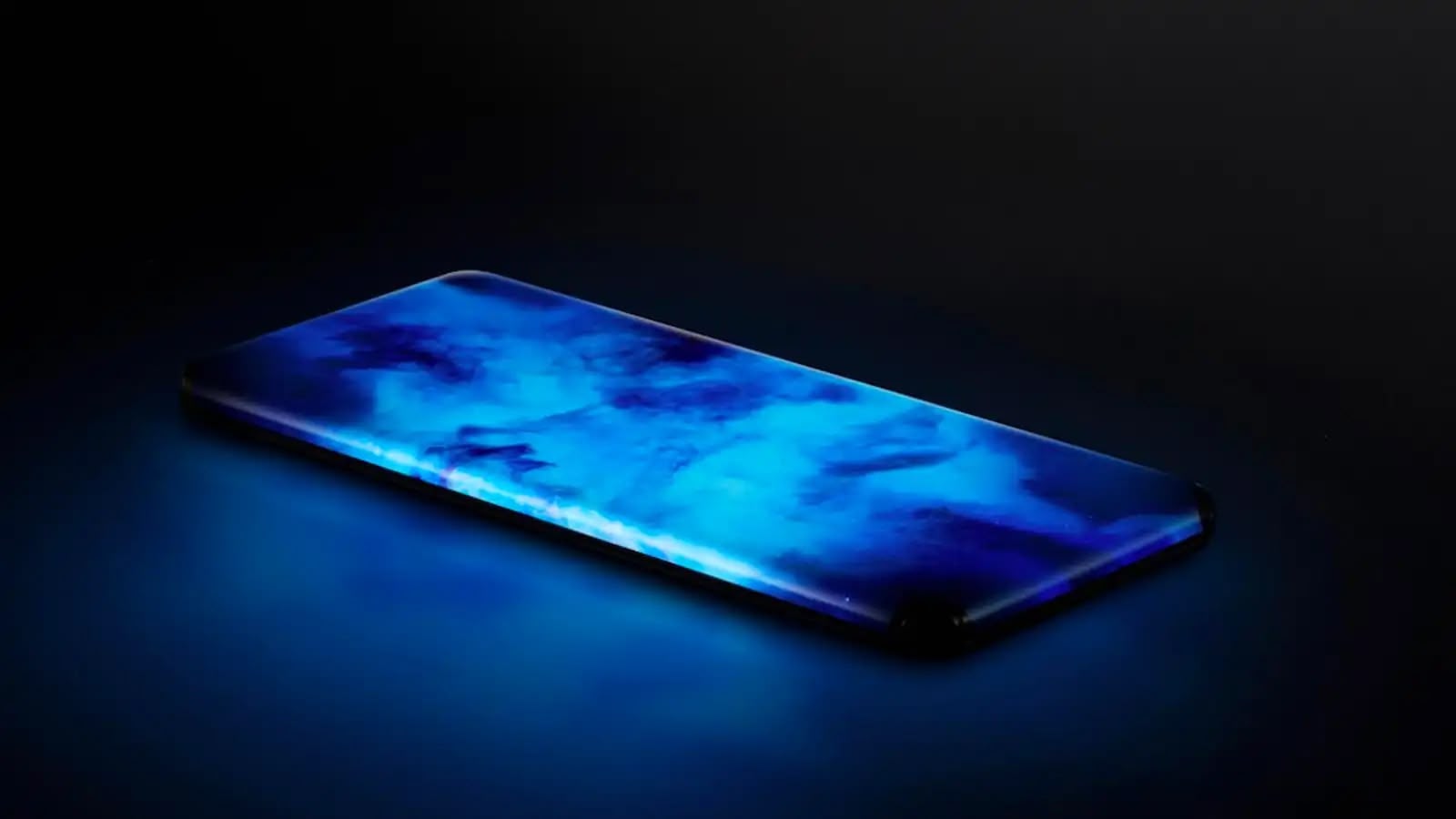
Xiaomi's 2021 concept phone - bearing a striking resemblance to Samsung's rumored technology
The concept of bending displays around the side edges of a smartphone is not entirely brand new to the mobile industry. Back in early 2021, Xiaomi showcased a striking concept phone featuring a quad-curved waterfall display. That experimental device demonstrated what a futuristic phone without physical ports or visible side borders might look like in hands-on practice. However, Samsung's rumored panel aims to refine and commercialize this idea for reliable mass production, taking the visual seamlessness and structural precision several steps further.
How Samsung's Full-Surround OLED Technology Works
To understand why this development is such a significant shift for the future of smartphone design, it is helpful to examine how standard mobile screens are constructed compared to how this new full-surround display functions.
Flat Main Display with Near 90-Degree Bends
Many earlier curved display smartphones, often referred to as waterfall screens, featured prominent curved glass that extended far into the main viewing area of the device. While those screens were undeniably eye-catching in promotional photos, they frequently created practical problems for daily users. These included accidental palm touches, distorted video content along the edges, and distracting glare under bright lighting conditions.
The full-surround display currently being developed by Samsung solves these long-standing issues by preserving a completely flat main screen surface. When looking directly at the device, the primary viewing area remains totally flat and undistorted. However, the underlying OLED panel bends sharply downward at close to a 90-degree angle along all four borders. This ensures that media and text displayed on the front screen stay crisp and easy to read, while the vertical wrap covers the outer perimeter.
Eliminating Standard Frame Bezels and Mechanical Buttons
In traditional smartphone manufacturing, handsets rely on an exterior chassis made of aluminum, stainless steel, or titanium to hold internal components securely. Furthermore, a thin black border known as a bezel surrounds the screen to hide display drivers, flex cables, and ribbon connectors.
With Samsung's full-surround concept, those folded display sections wrap downward to effectively replace the typical metal or plastic side frame. By rerouting display wiring, power traces, and associated driver circuitry around the peripheral edges, the physical black border around the screen is reduced virtually to zero when viewed from the front. Furthermore, this wrapped design technology could facilitate an iPhone model without conventional mechanical buttons, replacing physical keys with dynamic touch regions along the screen sides.
Rerouting Internal Display Wiring Around Peripheral Edges
In conventional display assemblies, the display driver integrated circuit (DDIC) and flex circuits connect along one or more flat edges of the screen substrate. This connection area requires a physical border, which is why even thin-bezel phones have a slight chin or border perimeter.
Samsung's new panel design overcomes this limitation by folding flexible printed circuit boards directly behind the 90-degree vertical edges. By tucking these essential electrical pathways underneath the side display curves, engineers can eliminate the border space that traditional display controllers require.
Key Engineering Challenges Holding Back the Bezel-Free iPhone Display
While an entirely borderless iPhone sounds like the pinnacle of modern mobile design, bringing this futuristic OLED panel into high-volume commercial production presents formidable engineering challenges. Reports indicate that several critical technical obstacles must be overcome before Apple can adopt this display technology for consumer devices.
Samsung and Apple engineers are actively working to resolve several complex manufacturing hurdles, including:
- Optical Distortion and Color Shifts: Bending an OLED panel sharply at a 90-degree angle across four edges and four tight corners creates intense optical refraction issues. Light emitted through sharply bent glass can suffer from noticeable color shifting, reduced brightness, or visible distortion along the outer margins.
- OLED Protective Encapsulation Integrity: Flexible OLED panels rely on delicate thin-film encapsulation layers to prevent moisture, air, and environmental contaminants from reaching vulnerable organic light-emitting materials. Bending this protective encapsulation layer tightly on all four sides puts severe physical stress on the material, risking microscopic fractures that could lead to dark spots or complete panel failure over time.
- Antenna Placement and Signal Transmission: Modern smartphones incorporate cellular, Wi-Fi, GPS, and Bluetooth antennas directly into the exterior metal frame for optimal signal performance. Covering all four sides with an active, wrapped display panel severely limits where antenna bands can be located without suffering interference or signal degradation when held by a user.
- Internal Wiring and Component Relocation: Placing display driving circuits and flexible circuit boards behind sharp vertical bends requires unprecedented engineering precision. Components usually housed behind the front bezel must be compacted and rerouted without increasing the thickness of the overall phone body.
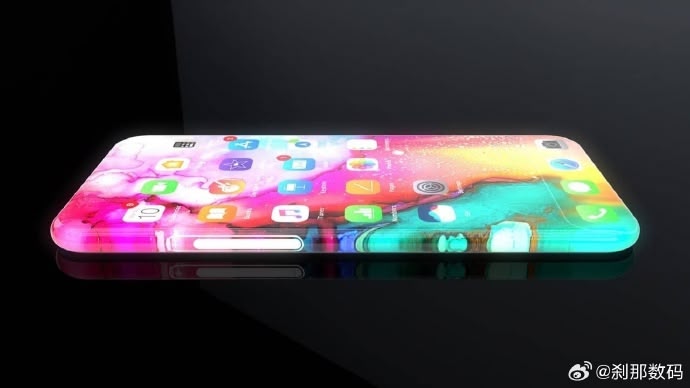
Concept design shared by Instant Digital
Solving Four-Corner Mechanical Stress at Extreme Angles
While bending a flexible screen along two parallel side edges (left and right) is established engineering, bending a screen along all four edges creates compound mechanical strain at the four corner points. At these corners, the glass and display substrate must stretch and compress in two directions simultaneously.
This compound bending creates severe pressure points that can compromise structural durability. Samsung engineers must formulate new flexible glass covers and resilient adhesive layers that can handle compound stress without cracking or delaminating during temperature changes or minor impacts.
Comparing Display Technologies: Waterfall Screens vs. Quad-Curved vs. Full-Surround
The evolution toward a completely seamless smartphone front has progressed across distinct technological eras. Examining these stages highlights why Samsung's full-surround approach is such a massive leap beyond previous display iterations.
Traditional Curved Waterfall Screens
Curved glass first captured public attention through early dual-edge smartphones and Android handsets featuring waterfall displays. These screens sloped steeply along the left and right sides. However, their top and bottom borders remained conventional flat bezels. Furthermore, the gentle curve encroached onto the main display area, causing optical distortion along the edges of photos and video playback.
The Micro-Curved Quad Display Era
Apple is rumored to be exploring an intermediate step on its hardware roadmap prior to introducing a fully wrapped device. Supply chain sources indicate that Apple is eyeing a four-sided quad-curved display for its 20th-anniversary iPhone expected in 2027. This commemorative design features subtle micro-curves on all four front glass edges, creating a smoother hand-feel and significantly narrowing bezels without fully wrapping the screen around the phone chassis.
How the 20th-Anniversary iPhone Fits into Apple's Roadmap
The rumored 20th-anniversary iPhone serves as a critical bridge on Apple's long-term hardware roadmap. By deploying a micro-curved glass panel first in 2027, Apple can evaluate glass manufacturing yields, drop resistance, and corner aesthetics on a massive commercial scale.
This intermediate phase gives Apple and Samsung real-world feedback on four-corner curvature before committing to the full 90-degree vertical wrapped OLED design. The leaker Instant Digital explicitly noted that the commemorative iPhone model could function as a stepping stone toward the ultimate full-surround display.
The Ultimate Full-Surround OLED Display
The full-surround display concept currently in development at Samsung represents the final evolutionary phase of borderless screen design. Rather than simply curving the front cover glass, the underlying OLED screen substrate itself bends downward at 90 degrees on all four sides. This turns the outer sides into active display surfaces, completely eliminating visible front bezels and traditional outer side frames.
Why Apple Is Waiting on Samsung to Perfect Next-Gen OLED Screens
Apple has long maintained a conservative, quality-focused strategy when adopting radical display technologies. Rather than rushing experimental form factors to market prematurely, Apple typically waits until manufacturing partners can guarantee consistently high yields, superior durability, and pristine visual quality across millions of production units.
Samsung Display remains Apple's primary partner for advanced OLED screens due to its unmatched manufacturing capacity and technological innovation. However, until Samsung can master the severe 90-degree bend radius without sacrificing OLED lifespan, color accuracy, or structural integrity, Apple is content to refine existing flat and micro-curved display form factors.
By letting Samsung perfect the underlying physics and fabrication processes behind full-surround displays, Apple avoids the reliability pitfalls that often plague early adopter hardware. Once the yield rates and optical performance reach Apple's strict internal benchmarks, the technology can transition from concept labs to mass consumer devices.
What a Seamless Bezel-Free iPhone Display Means for Users
If Samsung successfully overcomes these manufacturing hurdles, what will using a full-surround iPhone feel like in daily life? The transition to an all-display design will fundamentally transform how users interact with their devices in several key ways:
- Truly Immersive Content Viewing: Without black border frames, videos, games, and photos will appear as if they are floating seamlessly in your hand, offering an unmatched level of visual immersion.
- Virtual Touch Controls and Haptics: Replacing mechanical power and volume buttons with software-driven touch zones along the side display edges allows for customizable controls that adapt based on the active app or orientation.
- Innovative Software Interface Features: iOS could utilize the vertical wrapped display edges for subtle status indicators, notification tickers, contextual app controls, or battery status indicators without using main screen space.
- A Futuristic Single-Sheet-of-Glass Aesthetic: Removing visible metal side frames brings Apple closer than ever to fulfilling its long-held design dream of creating a phone that looks and feels like a single continuous piece of sculpted glass.
Haptic Feedback and Virtual Control Interfaces
Removing mechanical side switches introduces interesting possibilities for software interaction. Standard physical switches perform fixed tasks like adjusting volume or locking the screen. By contrast, active side displays paired with advanced haptic engines can simulate tactile button clicks while offering context-sensitive actions.
For example, when launching the camera app, the side display could transform into a virtual shutter button or a smooth zoom slider. While gaming, side surfaces could double as customizable trigger controls. This dynamic functionality turns former dead frame space into interactive hardware controls.
Frequently Asked Questions About the Bezel-Free iPhone Display
Will a full-surround bezel-free display make the iPhone more fragile?
Durability is one of the biggest challenges facing this screen design. Because the glass screen wraps around all four side edges, standard drop impacts are more likely to strike glass directly rather than a protective metal frame. Samsung and Apple are actively testing advanced glass formulations and protective OLED encapsulation techniques to ensure the wrapped display can endure daily drops and physical pressure.
How will palm rejection work on a display with wrapped edges?
Because the OLED screen extends along the physical sides of the device, intelligent palm rejection is critical to prevent accidental inputs while holding the phone. Apple will need to implement highly accurate machine-learning touch rejection algorithms within iOS to distinguish between passive palm contact and intentional side-touch gestures.
When can consumers expect Apple to launch a full-surround display iPhone?
While rumors suggest the micro-curved 20th-anniversary iPhone may launch in 2027, the full-surround display technology with 90-degree vertical wrapped edges is considered an ambitious longer-term goal. Given the remaining technical hurdles surrounding antenna placement and optical corner distortion, a full-surround iPhone is likely slated for release in the late 2020s.
Final Thoughts on the Future of iPhone Screen Design
The journey toward a completely borderless smartphone display is approaching its ultimate destination, but technical precision cannot be rushed. By waiting on Samsung to perfect its radical full-surround display technology, Apple is making sure that its vision for a bezel-free iPhone display achieves the highest standards of visual quality, structural durability, and everyday user convenience. As next-generation OLED manufacturing matures, the boundary between display and physical frame will disappear, ushering in an exciting new era of mobile hardware design.
Tags: Instant Digital, Samsung
This article, "Apple Reportedly Waiting on Samsung for Ultimate Bezel-Free iPhone Display" first appeared on MacRumors.com
Discuss this article in our forums
from MacRumors
-via DynaSage
