
macOS Golden Gate Seems to Hint at MacBook Pro With OLED Display
Recent findings in the macOS Golden Gate beta indicate that Apple is actively optimizing its Liquid Glass interface elements for high-end HDR OLED displays, dropping a subtle hint that a future MacBook Pro OLED display model may be right around the corner.
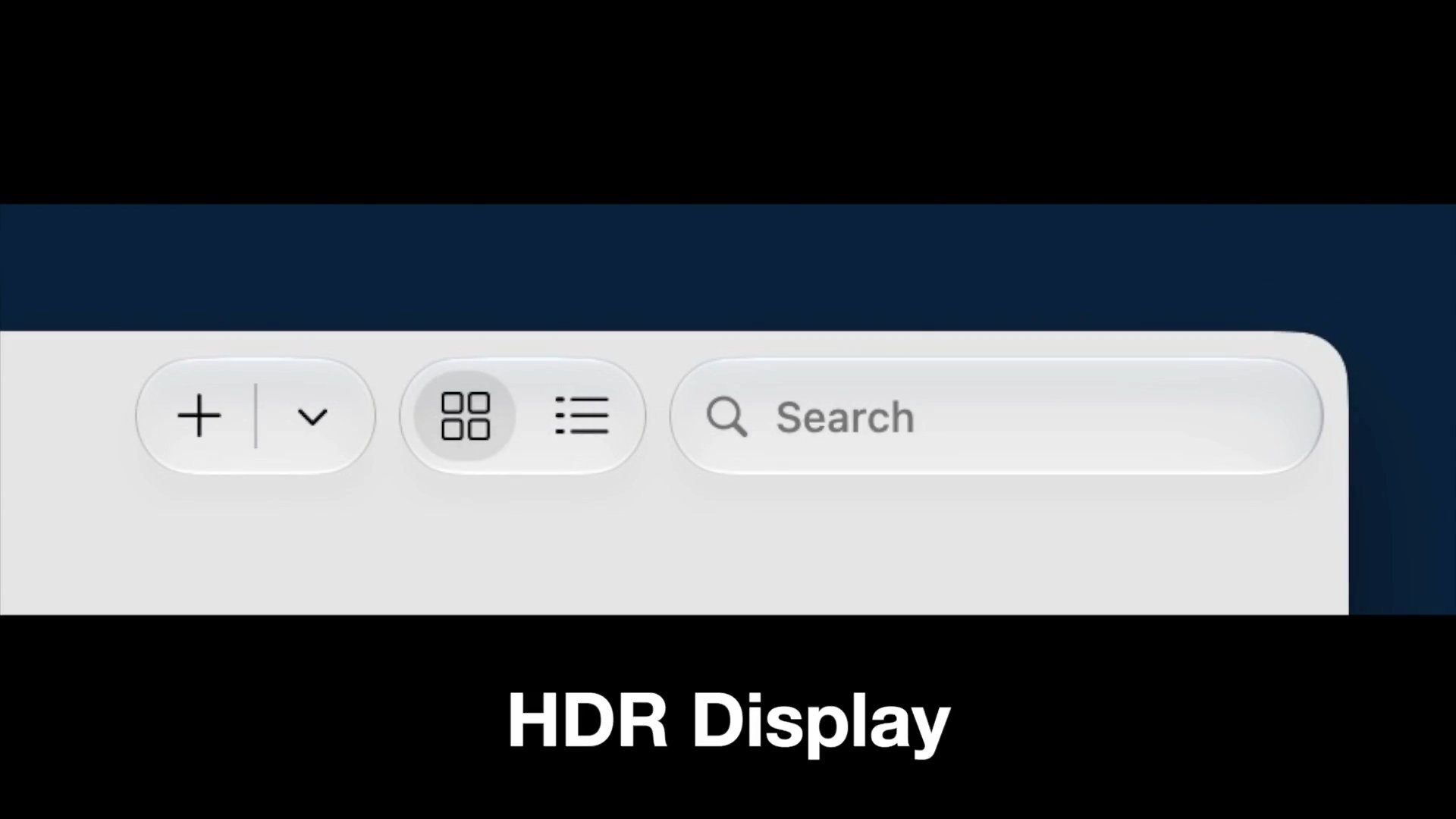
How macOS Golden Gate Hints at a MacBook Pro OLED Display
Software beta releases have long served as a window into Apple's future hardware plans. Developers often analyze subtle code changes, graphics rendering updates, and user interface tweaks to predict what new devices are sitting in Apple's testing labs. The latest build of macOS Golden Gate is no exception, bringing intriguing visual changes that appear tailored for upcoming display upgrades.
As noted by well-known software creator Steven Troughton-Smith, who developed the popular app Broadcasts, key elements of the operating system render differently depending on the monitor you use. Specifically, the Liquid Glass visual effects built into macOS Golden Gate react distinctly when viewed on high-performance screens.
When run on high-end OLED displays with High Dynamic Range (HDR) enabled, these interface elements take on a significantly enhanced visual quality. They showcase a noticeably glassier, richer appearance compared to how they render on standard non-HDR displays. This targeted optimization strongly implies that Apple is fine-tuning its desktop software for laptop screens capable of superior contrast and brightness ranges.
Understanding the macOS Golden Gate Liquid Glass UI Improvements
Apple's design language frequently relies on depth, translucency, and light refraction to give on-screen controls a tactile quality. The introduction of Liquid Glass design elements in macOS Golden Gate represents the next evolution of this visual approach, blending translucent layers with dynamic illumination.
On traditional LCD panels, translucency and specular highlights can sometimes look flat or washed out due to backlighting limitations. However, when these same Liquid Glass elements are displayed on an advanced OLED panel with HDR capabilities, the software leverages deeper black levels and higher peak brightness to produce a lifelike shine and realistic transparency.
The difference in appearance is not merely accidental. Rendering assets specifically designed to react to HDR headroom requires deliberate engine level engineering. The fact that macOS Golden Gate carries these rendering enhancements shows that Apple software engineers are designing interfaces with next-generation display hardware in mind.
What Did Developer Steven Troughton-Smith Discover?
Steven Troughton-Smith observed that the visual output of Liquid Glass components changes dramatically when driven by hardware that supports true HDR content. On displays capable of severe contrast ratios and precise local brightness control, the translucent layers show greater depth, higher clarity, and more pronounced refractive lighting.
Because current MacBook Pro models utilize Liquid Retina XDR displays based on Mini-LED technology, seeing software optimizations tuned specifically to maximize high-end HDR performance on OLED screens suggests that testing is underway for devices with alternative display panels.
Developers working on macOS software frequently uncover these subtle graphics driver or UI pipeline tweaks ahead of major hardware announcements. Troughton-Smith's discovery highlights how Apple prepares its operating system user interface months or even years before new consumer hardware reaches the market.
Apple's Hardware Roadmap: MacBook Pro and MacBook Ultra Rumors
The timing of these software clues aligns perfectly with industry reports regarding Apple's upcoming hardware pipeline. According to industry intelligence, Apple plans to launch new MacBook Pro models featuring OLED technology by early 2027.
In addition to standard laptop updates, reports also point toward the potential introduction of new top-tier laptop configurations. Apple is reportedly planning to release new high-end MacBook Pro or "MacBook Ultra" models designed to sit at the apex of its portable computer family.
Transitioning from Mini-LED to OLED display panels represents a significant shift for Apple's professional notebooks. OLED technology provides self-emissive pixels, allowing each individual pixel to turn completely off for absolute black levels, eliminating the blooming effects sometimes visible on backlit LED panels.
Why an OLED Display Upgrade Matters for Mac Users
Upgrading to a MacBook Pro OLED display brings several practical and visual benefits to daily computer use, professional video editing, and creative graphic design:
- True Black Levels: Since OLED pixels emit their own light, dark areas of the screen achieve pure black without backlight bleed.
- Superior Contrast Ratios: The infinite contrast ratio ensures fine details in high-key highlights and deep shadows remain crisp and distinct.
- Enhanced HDR Performance: High Dynamic Range interface elements, like Liquid Glass, pop with vibrant specular highlights and vibrant translucency.
- Faster Pixel Response Times: Motion clarity improves significantly, reducing motion blur during fast animated transitions and media playback.
- Potential Power Efficiency: Displaying darker content on an OLED panel consumes less energy, which can benefit overall battery endurance.
Comparing Standard Displays and High-End HDR OLED Screens
To better understand why macOS Golden Gate looks so different across displays, it helps to examine how traditional monitors handle software graphics compared to modern HDR OLED screens.
Standard displays utilize a global or full-array backlight behind a liquid crystal layer. While modern Mini-LED displays use local dimming zones to improve contrast, they still rely on light passing through multiple layers. This structure can sometimes spread light into neighboring dark areas, dampening the intensity of delicate translucent highlights.
In contrast, high-end HDR OLED screens offer pixel-level brightness control. When macOS Golden Gate draws a Liquid Glass button or sidebar, the operating system can instruct individual pixels to output high brightness right alongside pixels that are completely turned off. This precise light management produces the glassier, polished appearance that developers have observed in the latest beta build.
Timeline for Apple's Display Transition
Apple has gradually migrated its mobile device lineup toward OLED technology over several years, beginning with Apple Watch and iPhone, before extending the technology to recent iPad models. The Mac lineup remains one of the final product categories awaiting this display shift.
With an anticipated rollout target set for early 2027, Apple appears to be laying the software foundations well in advance. Incorporating specialized Liquid Glass rendering features into macOS Golden Gate ensures that when new laptop hardware arrives, the operating system will already be fully prepared to showcase the capabilities of the new panels.
Whether these displays debut exclusively on standard pro notebooks or arrive under a new premium branding tier remains to be seen. However, the presence of these system-level visual optimizations demonstrates that Apple is actively polishing the software experience for high-performance displays.
Related Resources and Community Discussions
If you want to dive deeper into hardware rumors, system roundups, and buyer guides regarding upcoming Mac laptops and software releases, explore the following resources:
- Check out our comprehensive MacBook Pro roundup for overall hardware timelines and news.
- Learn more about the latest software features in our macOS Golden Gate feature overview.
- Explore detailed information on display panel technology in our dedicated OLED guide.
- Looking to buy current hardware? Consult our MacBook Pro (Buy Now) buyer's guide for purchasing advice.
- Join active community conversations in the dedicated MacBook Pro discussion forum.
This article, "macOS Golden Gate Seems to Hint at MacBook Pro With OLED Display" first appeared on MacRumors.com.
Discuss this article in our community forums to share your thoughts on the upcoming display transition and software features.
Final Thoughts on macOS Golden Gate and Future Mac Hardware
The discovery of enhanced Liquid Glass UI rendering on high-end HDR screens in the macOS Golden Gate beta offers compelling evidence of Apple's long-term display strategy. By refining how software interface elements interact with high contrast, bright OLED panels, Apple is paving the way for a smooth software transition when new hardware launches.
With reports pointing toward an official release by early 2027, Mac enthusiasts and professionals have plenty to look forward to as software features and hardware innovations converge around an upcoming MacBook Pro OLED display generation.
from MacRumors
-via DynaSage
