
iPhone Duo Battery Life Depends on Which Screen You Use
The overall iPhone Duo battery life depends significantly on which of its two screens you decide to use throughout your daily routine. Featuring an innovative dual battery architecture, fast 60W wired charging, and efficiency optimizations from the new A20 Pro processor, Apple's latest device delivers impressive longevity across both inner and outer displays.
When evaluating new smartphones, battery endurance remains one of the most critical factors for buyers. Apple has designed a unique hardware layout for its dual-screen smartphone, split across two distinct halves of the device chassis. Depending on whether you browse on the smaller exterior display or stream media on the expanded unfolded screen, your total battery runtime will vary noticeably.
Understanding the iPhone Duo Battery Life and Hardware Architecture
The foundation of the iPhone Duo battery life relies on what Apple officially calls an "iPhone-first dual battery system." Rather than placing a single large battery cell within one side of the device casing, Apple engineered the device with one individual battery positioned on each side of the chassis.
This split physical layout allows Apple to maximize every millimeter of internal space inside the thin folding housing. By optimizing internal space around the hinge mechanism and components, Apple ensured that total overall battery capacity could be pushed as high as physically possible.
Although the hardware physically consists of two separate battery packs, iOS manages them seamlessly behind the scenes. The operating system treats both physical units as one unified single battery system. Users will not see separate battery percentages or disjointed power drains; iOS balances charge and discharge rates across both cells automatically to keep performance smooth and predictable.
To achieve this balance, Apple combined several custom hardware components to work alongside the dual battery layout. These include an eSIM-only structural design, the power-efficient C2 modem, and the advanced processing power of the A20 Pro chip. Together, these technologies work in tandem to reduce power consumption during active tasks and standby modes.
How Screen Choice Impact on Battery Performance Works
The screen you choose to view directly determines how long your charge will last during continuous media usage. Because display panels are typically the largest consumers of power in modern mobile electronics, screen surface area plays a massive role in overall battery depletion.
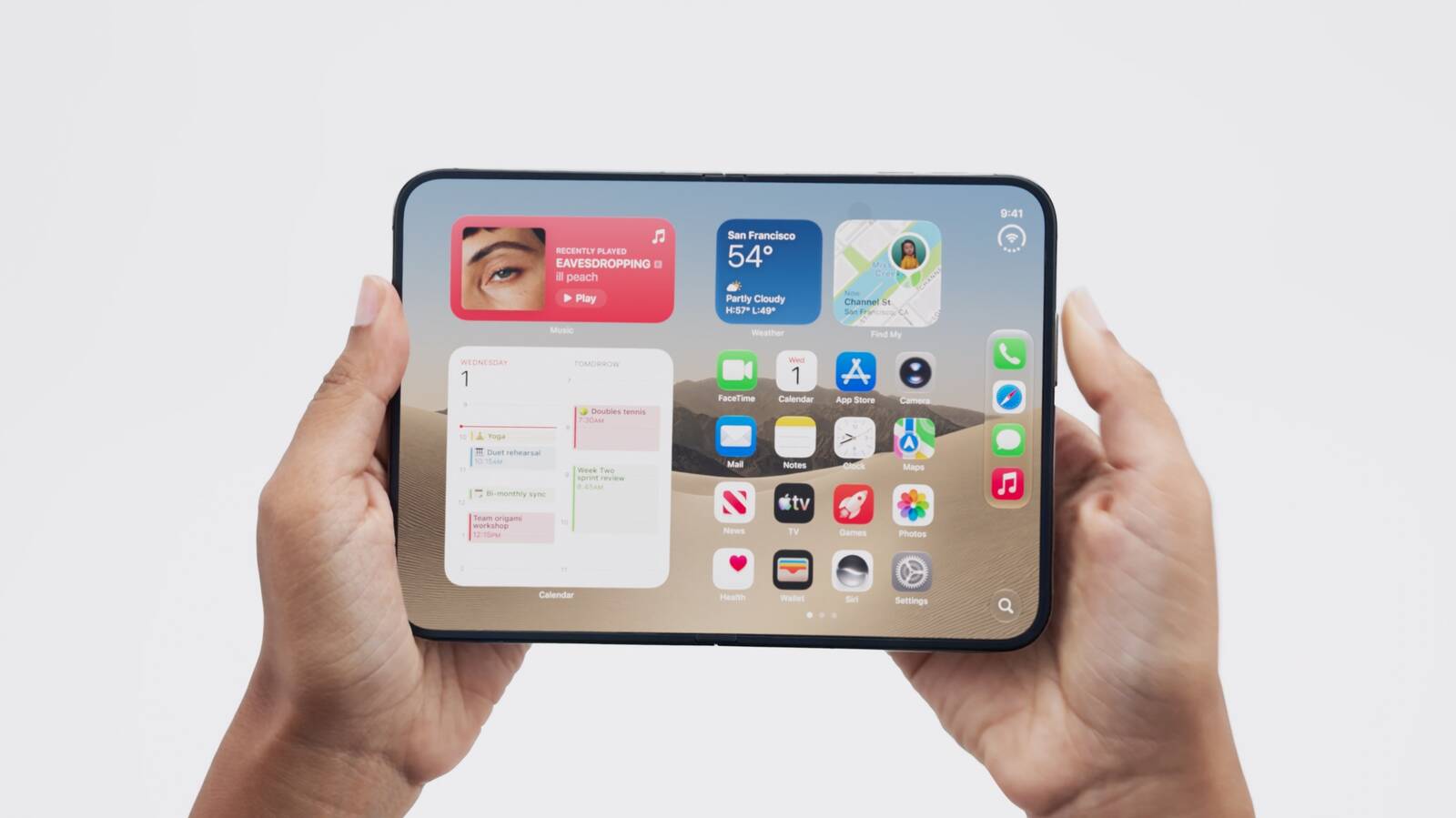
Inner 7.6-Inch Display: 31 Hours of Video Playback
When unfolded, the device showcases its expansive 7.6-inch inner screen. This larger display provides an immersive tablet-like experience for streaming, gaming, and multitasking across multiple application windows.
When watching video exclusively on this larger 7.6-inch inner display, the battery lasts for up to 31 hours of continuous video playback. The increased surface area requires more backlight intensity and panel driver power, which consumes charge faster than the outer screen during prolonged multimedia sessions.
Outer 5.4-Inch Display: 44 Hours of Video Playback
For quick tasks, messaging, or standard phone operations, you can rely on the compact 5.4-inch outer display without unfolding the device. This outer screen functions like a traditional compact smartphone display.
If you use exclusively the smaller 5.4-inch outer display for media consumption, the battery lasts for up to 44 hours when watching video. That represents a massive 13-hour increase in continuous playback compared to using the main unfolded inner screen.
Why Display Size Creates a 13-Hour Gap in Battery Playback
The dramatic difference between 31 hours and 44 hours comes down to simple display physics and surface area power demands. Lighting a larger 7.6-inch display panel requires significantly more energy than powering a compact 5.4-inch panel.
While the larger screen offers an upgraded visual experience for gaming and movies, it inherently drains energy at a faster rate. Users seeking maximum battery endurance during long travel days or extended shifts can conserve significant power simply by performing lighter tasks on the front screen.
Apple's Typical Usage Metric: Real-World Expectation of 24 Hours
While continuous video playback metrics provide valuable benchmarks, real-world smartphone use rarely consists of watching video non-stop. To give potential buyers an accurate expectation of daily performance, Apple measures standard daily runtime using a multi-activity testing routine.
Under Apple's official typical use metric—which calculates equal split usage between both the inner and outer displays—the overall battery lasts for up to 24 hours of standard daily operation. This metric reflects realistic habits where users switch back and forth between screens throughout their normal day.
Activities Included in the Typical Use Testing Metric
Apple calculates its typical usage figures based on actual median usage habits observed across a broad population of iPhone users. The test script includes a diverse combination of routine daily smartphone tasks:
- Exchanging text messages and chat interactions throughout the day.
- Capturing photos and recording short video clips using the camera system.
- Listening to digital music streams and offline audio playlists.
- Browsing through social media feeds and interactive social applications.
- Streaming online video content across wireless network connections.
- Playing graphic-intensive mobile games during active screen sessions.
- Browsing websites and reading digital articles over cellular and Wi-Fi networks.
- Using real-time turn-by-turn GPS navigation and mapping applications.
By combining these various daily activities in balanced proportions, Apple provides a overall estimate of what average users can expect during a full day of standard screen usage.
Comparing iPhone Duo Battery Life to iPhone 18 Pro and Pro Max
Understanding how the dual-screen foldable compares against conventional flagship smartphones helps contextualize its performance capabilities. Apple's flagship line offers different form factors and power profiles depending on your specific needs.
When evaluating typical daily usage metrics, the overall rating matches that of the flagship iPhone 18 Pro. Both devices provide up to 24 hours of operation under Apple's standard mixed-use battery testing methodology.
Display Power Draw Comparison with Flagship Devices
While the overall mixed usage metrics match, direct video playback comparisons show clear differences due to display hardware variations. The larger 7.6-inch inner display on the foldable model draws noticeably more power and eats through battery reserves faster than the standard display on the 18 Pro during continuous video streaming.
Conversely, when relying exclusively on the smaller 5.4-inch exterior screen, the device outperforms the standard 18 Pro in video playback endurance. The compact front screen allows the dual battery system to push runtime up to 44 hours, surpassing single-screen compact flagships.
How the Pro Max Retains the Overall Battery Lead
For users who prioritize raw continuous battery life above all other features, the flagship iPhone 18 Pro Max remains the top contender in Apple's lineup. It offers the longest overall battery endurance among all three flagship devices, delivering up to 45 hours of video playback capacity.
The Pro Max achieves this lead because it features a massive traditional high-density battery cell combined with a single optimized display panel, eliminating the secondary screen controller hardware needed in foldable designs.
Fast Charging and Wireless Power Options
When power reserves finally run low, getting your device back up to speed quickly is essential. Apple has upgraded charging capabilities across both wired and wireless interfaces to reduce recharge downtime significantly.
The physical dual battery design allows charging current to be distributed safely and efficiently across both cells simultaneously, enabling faster power restoration without creating excessive heat build-up inside the casing.
Wired Charging Performance: 50 Percent in 20 Minutes
The device supports rapid wired fast-charging protocols via its USB-C port. When connected to a compatible fast-charger, it can charge to 50 percent capacity in approximately 20 minutes.
To achieve these fast-charging speeds, users need to pair the device with a 60W or higher USB-C power adapter. Using lower-wattage wall adapters will still charge the device reliably, but higher power bricks are required to unlock the rapid 20-minute top-off feature.
Wireless Power via MagSafe and Qi2 Chargers
In addition to fast wired charging capabilities, the dual-screen flagship fully supports modern wireless power standards. Users can charge wirelessly at speeds up to 25W when using compatible chargers.
Wireless charging options include native support for MagSafe magnetic charging accessories alongside universal Qi2 wireless charging stands and pads. This flexibility allows convenient wire-free power restoration at home, in office setups, or inside magnetic automotive mounts.
Key Hardware Innovations Driving Battery Efficiency
Delivering long-lasting performance in a dual-screen foldable form factor requires more than just cramming larger battery cells into the frame. Apple implemented four distinct hardware engineering advancements to maximize energy efficiency throughout the system.
1. Dual Battery Physical Architecture
By dividing the chemical battery capacity across two separate physical compartments, engineers optimized weight distribution and structural integrity while utilizing available internal space. This balance prevents thermal throttling during heavy use, ensuring the device operates efficiently under heavy workloads.
2. SIM Tray Removal with eSIM-Only Design
The transition to a completely eSIM-only internal design eliminated the need for a physical SIM card tray and card reading mechanism. Eliminating these bulky internal components freed up critical cubic millimeters inside the chassis, allowing Apple to install larger chemical battery cells in both sides of the phone.
3. Custom C2 Modem Efficiency Enhancements
Cellular connectivity represents one of the highest baseline power drains on any modern smartphone. The inclusion of Apple's C2 modem brings optimized cellular power management, significantly reducing battery consumption when searching for cellular signals, switching mobile towers, or transmitting mobile data over high-speed networks.
4. Processing Power Efficiency via the A20 Pro Chip
At the heart of the system sits the advanced A20 Pro silicon chip. Built with modern micro-architecture efficiency cores, the A20 Pro chip handles background tasks and routine system processing while drawing minimal current from the dual battery setup. High-performance cores trigger only when demanding tasks require extra computational horsepower.
Release Date, Preorders, and Event Context
Announced as part of the official September 2026 Apple Event, the foldable device represents Apple's latest expansion into dual-display hardware architectures. Official preorders and retail availability dates have been formally scheduled for prospective buyers worldwide.
Customer preorders for the new device officially begin on October 16. Following the initial preorder window, the official store launch and retail delivery date will take place one week later on October 23.
For more detailed technical breakdowns, architectural insights, and industry analysis, explore the dedicated iPhone Fold roundup page. You can read the original reporting article titled iPhone Duo Battery Life Depends on Which Screen You Use directly on MacRumors.com, or join the ongoing reader debate via Discuss this article in the community discussion forums.
Summary of Key Features and Battery Specifications
To help review all core metrics quickly, here is a breakdown of the official performance specifications, charging speeds, and hardware characteristics:
- Outer Display Battery Life: Up to 44 hours of continuous video playback using the compact 5.4-inch front screen.
- Inner Display Battery Life: Up to 31 hours of continuous video playback when unfolded using the 7.6-inch display.
- Typical Mixed Usage Rating: Up to 24 hours of daily runtime with equal screen split utilization.
- Flagship Rating Match: Standard typical daily usage metrics directly match the baseline iPhone 18 Pro model.
- Maximum Range Comparison: The flagship iPhone 18 Pro Max leads the complete iPhone lineup with up to 45 hours of playback.
- Wired Fast Charging: Achieves a 50 percent charge in approximately 20 minutes when utilizing a 60W or higher USB-C power adapter.
- Wireless Charging Support: Supports wireless charging speeds up to 25W using MagSafe and universal Qi2 accessories.
- Battery Architecture: iPhone-first dual battery system managed as a single unified power pool by iOS.
- Efficiency Enhancements: eSIM-only physical design, ultra-efficient C2 modem, and the advanced A20 Pro chip silicon.
- Preorder Date: Preorders open officially on October 16.
- Official Release Date: Retail store availability and customer deliveries start on October 23.
Conclusion: What You Need to Know About iPhone Duo Battery Life
Ultimately, the overall iPhone Duo battery life provides exceptional flexibility for daily usage scenarios across both folded and unfolded form factors. Whether you rely on the power-efficient 5.4-inch cover screen for quick daily tasks or unfold the 7.6-inch inner screen for immersive media, Apple's dual battery design ensures high performance and rapid 60W charging recovery times whenever you need to recharge.
from MacRumors
-via DynaSage
