
Apple Watch Series 12 vs. Ultra 4 Buyer's Guide
Comparing the Apple Watch Series 12 and Apple Watch Ultra 4 reveals key differences in battery life, durability, and design, helping you choose the best smartwatch for your lifestyle.
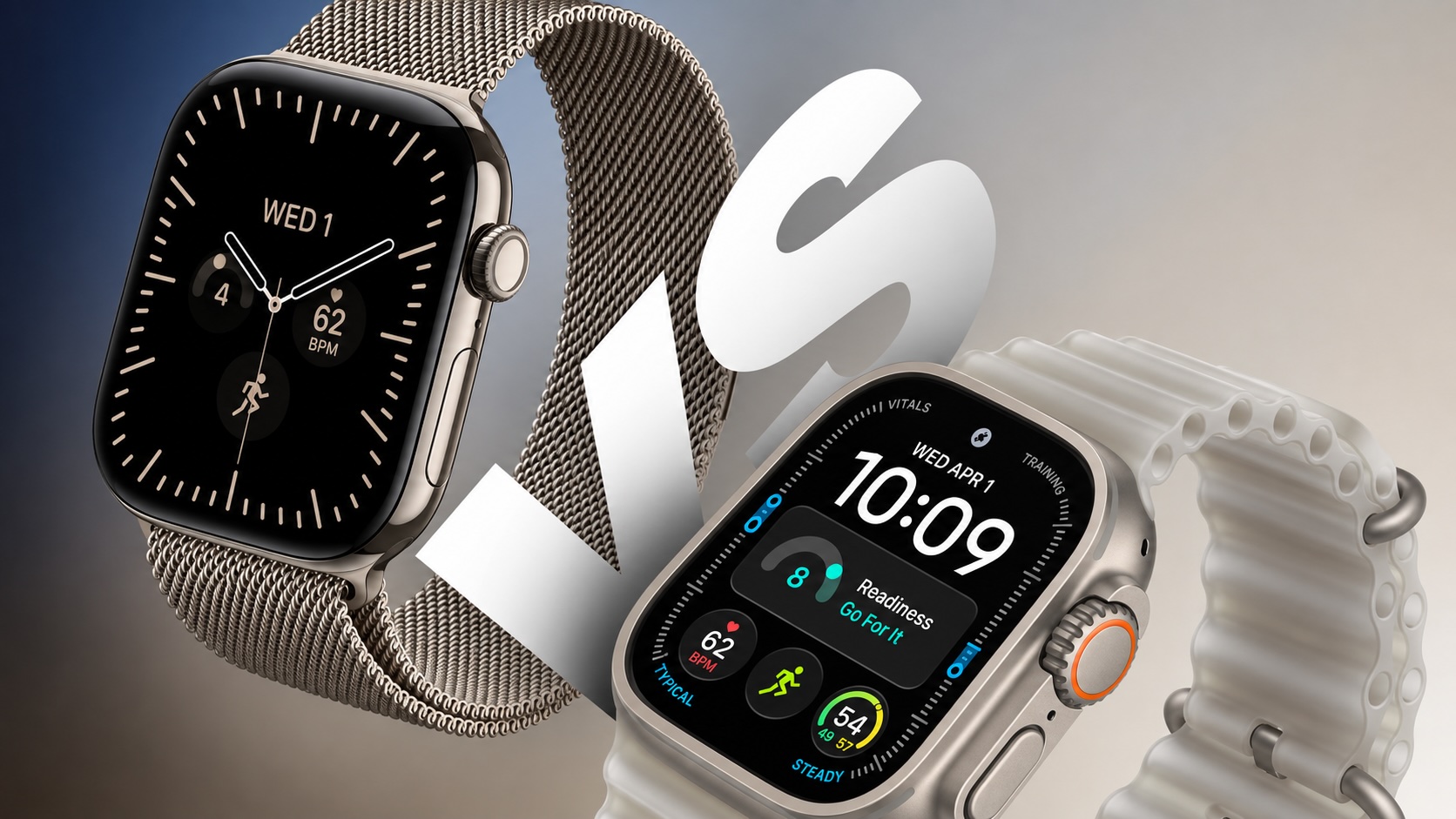
Apple Watch Series 12 vs. Apple Watch Ultra 4: What Are the Key Differences?
When evaluating the Apple Watch Series 12 vs. Apple Watch Ultra 4, buyers are faced with two distinct visions for Apple's wearable lineup. The Series 12 emphasizes a sleek, lightweight profile suitable for daily wear and general fitness. Meanwhile, the Ultra 4 prioritizes extreme durability, massive battery life, and specialized tools for outdoor exploration and diving.
Despite their physical differences, both smartwatches share core internals that deliver fast overall performance and precise health monitoring. Understanding where these devices overlap and where they diverge is essential to deciding which watch offers the best value for your budget and daily routine.
Shared Performance and Core Health Features
Before diving into the hardware differences, it is helpful to look at what both smartwatches share under the hood. Apple has equipped both models with identical primary processing hardware and software capabilities for daily health tracking.
Both models feature the S11 chip, 4GB of RAM, and 64GB of internal storage. They both introduce the advanced Health Sensing System, which measures your heart rate every five seconds throughout the day for unmatched continuous tracking accuracy.
Here is a breakdown of the core health and wellness features shared across both devices:
- Continuous Heart Rate Monitoring: Measures heart rate every five seconds all day using the Health Sensing System.
- Advanced Vitals and Sleep Tracking: Includes Sleep Score, sleep apnea notifications, hypertension notifications, and daytime vitals.
- Recovery Insights: Offers Readiness metrics and Recovery HRV data to help monitor physical strain and daily energy levels.
- Enhanced Fitness Tracking: Features improved step tracking algorithms alongside comprehensive workout recording options.
- Smart Features: Includes full support for Audio Intelligence capabilities and seamless watchOS integration.
Because these health tracking features are completely identical across both devices, paying extra for the Ultra 4 will not unlock additional everyday health sensors. The main reasons to upgrade lie strictly in battery life, display visibility, build materials, and extreme environmental capabilities.
Pricing and Material Options Breakdown
Price is one of the most significant factors when comparing these two models. The standard Apple Watch Series 12 starts at a budget-friendly $399, whereas the Apple Watch Ultra 4 begins at $799.
However, the price gap narrows depending on the case material you choose for the Series 12. If you prefer a premium finish like titanium, the cost increases significantly, bringing it closer to the baseline price of the Ultra lineup.
The baseline options and premium pricing tiers break down as follows:
- Series 12 Aluminum: Starts at $399 for GPS or GPS + Cellular models. Available in Dark Bronze, Light Gold, Black, and Space Gray finishes. Features 40% recycled content.
- Series 12 Titanium: Starts at $699 and includes standard GPS + Cellular connectivity. Finishes include Radiant Gold and Natural titanium. Features 40% recycled content.
- Series 12 Ceramic: Features a premium ceramic option starting at $899 with GPS + Cellular included. Available in Pearl White and Night Blue.
- Series 12 Hermès: Starts at $1,399 in Silver or Radiant Gold titanium finishes.
- Ultra 4 Standard: Starts at $799 and comes standard with GPS + Cellular. Available in Natural Titanium or Black Titanium finishes with 45% recycled content.
- Ultra 4 Hermès: Starts at $1,499 in Natural titanium.
Interestingly, choosing the ceramic Series 12 model makes it more expensive than the base Ultra 4, despite the ceramic model having a smaller case size and shorter overall battery life. In this comparison, ceramic is purely a cosmetic luxury choice rather than a functional upgrade.
Design, Size, and Case Dimensions
The physical design of these two smartwatches reflects their target audiences. The Apple Watch Series 12 features a rounded design with a thinner case profile and front glass that curves gently at the edges for a sleek appearance.
In contrast, the Apple Watch Ultra 4 uses a rugged design with a thicker case and raised edges surrounding the flat display. This design protects the sapphire crystal screen from direct impacts during outdoor adventures and demanding activities.
The physical dimensions and weight differ noticeably between the two models:
- Series 12 Aluminum & Titanium Sizes: Offered in 42mm and 46mm case sizes. Case width is 37mm for the 42mm model and 40mm for the 46mm model. Case depth measures 9.7mm.
- Series 12 Ceramic Sizes: Marketed as 42mm and 46mm, but actual heights measure 43mm and 47mm. Case width is 37mm for the 43mm model and 41mm for the 47mm model. Case depth measures 9.85mm.
- Ultra 4 Size: Available in a single 49mm case size. Case width is 44mm and depth is 12mm.
- Weight Variations: The Series 12 weighs between 31.5 and 52.9 grams depending on case size, material, and connectivity. The Ultra 4 weighs 63.0 grams in Natural Titanium and 63.1 grams in Black Titanium.
- Screen Protection: Aluminum Series 12 models use Ceramic Shield 2 front glass, while titanium and ceramic Series 12 models feature sapphire crystal. All Ultra 4 models utilize sapphire front crystal.
For users who value a weightless feel on the wrist or need a device that slides easily under dress shirts, the Series 12 is far more comfortable for daily wear and sleep tracking.
Display Size, Resolution, and Peak Brightness
Screen visibility and total display area are vital considerations for any smartwatch. While the Ultra 4 has the largest overall case size, the 46mm Series 12 actually delivers a display area that comes very close to the Ultra's screen real estate.
The display specifications across both watch families compare as follows:
- Series 12 42mm Display: 374 by 446 pixels with a 970 sq mm display area.
- Series 12 46mm Display: 416 by 496 pixels with a 1,196 sq mm display area.
- Ultra 4 Display: 422 by 514 pixels with a 1,245 sq mm display area.
- Peak Brightness: The Series 12 reaches up to 2,000 nits peak brightness, whereas the Ultra 4 achieves up to 3,000 nits peak brightness.
The extra 1,000 nits of brightness on the Ultra 4 makes a noticeable difference when viewing maps or workout metrics in direct harsh sunlight. Additionally, the Ultra 4 includes software features restricted to its screen layout.
The Ultra 4 offers exclusive watch faces including Wayfinder, Modular Ultra, and Orienteering. It also features built-in Night Mode support on these exclusive faces, turning the interface red to preserve night vision during low-light activities.
Hardware, Speaker, and Microphone Upgrades
Audio performance and hardware control options set these two smartwatches apart. If you rely on your watch for phone calls, voice commands, or quick physical inputs during workouts, the Ultra 4 provides specialized controls.
The Series 12 includes a single speaker for sound playback and a single microphone equipped with Voice Isolation software to reduce background noise during calls.
The Ultra 4 expands on this hardware significantly to accommodate outdoor environments:
- Dual Speakers: Delivers louder sound output for calls, alerts, and audio feedback.
- Three-Microphone Array: Features beamforming technology and wind noise mitigation for clear communication in stormy or windy conditions.
- Customizable Action Button: Allows instant physical access to functions like workout controls, lap tracking, or Precision Start.
- Emergency Siren: Includes an 86-decibel Siren designed to attract attention up to 600 feet away in emergency situations.
The Action button is particularly useful for athletes wearing gloves or operating in wet conditions where touching a glass screen can be difficult.
GPS, Cellular, and Satellite Connectivity Options
Staying connected while working out or exploring requires robust wireless hardware. While both watches offer cellular options, their underlying navigation systems and emergency communication protocols differ.
The Series 12 aluminum model is available in either GPS-only or GPS + Cellular configurations, while all titanium and ceramic models come standard with GPS + Cellular connectivity. It utilizes Precision L1 GPS with support for GPS, GLONASS, Galileo, QZSS, and BeiDou satellite constellations.
The Ultra 4 provides superior tracking accuracy and emergency coverage for backcountry travel:
- Precision Dual-Frequency GPS: Integrates both L1 and L5 GPS frequencies along with Galileo, QZSS, and BeiDou for accurate tracking in dense cities or forested regions.
- Expanded Cellular Band Support: Supports U.S. TDD cellular bands including 5G n38, n40, n41, and n53, plus LTE bands 38, 39, 40, 41, and 53.
- Satellite Communications: Supports direct satellite connectivity for Emergency SOS, satellite messaging, and location sharing via Find My when completely out of cellular and Wi-Fi range.
If your adventures regularly take you off the grid beyond standard cell towers, the satellite capabilities and dual-frequency GPS on the Ultra 4 provide unmatched safety and location precision.
Durability, Water Resistance, and Environmental Range
When comparing the Apple Watch Series 12 vs. Apple Watch Ultra 4, environmental resilience is a major differentiator. The Series 12 is engineered for daily life, gym sessions, and routine swimming, while the Ultra 4 is built to withstand extreme environments.
The Series 12 is water resistant to 50 meters and is suitable for pool swimming and shallow snorkeling. It features a depth gauge and Depth app that function down to 6 meters. Its operating temperature range spans from 0°C to 35°C, with an operating altitude from 0 to 3,000 meters supported by an always-on altimeter.
The Ultra 4 expands these limits dramatically for technical sports and harsh climates:
- Enhanced Water Resistance: Water resistant to 100 meters, making it suitable for high-speed water sports and recreational scuba diving down to 40 meters.
- Advanced Depth Gauge: Features a depth gauge and Depth app rated down to 40 meters, complete with EN13319 certification for diving equipment.
- Military-Grade Durability: Tested to MIL-STD 810H standards for shock, temperature, moisture, and impact resistance.
- Extreme Temperature Operating Range: Operates directly on the wrist in ambient temperatures ranging from -20°C to 55°C.
- Expanded Altitude Capabilities: Operates at extreme elevations from -500 meters below sea level up to 9,000 meters high, backed by an expanded always-on altimeter range.
For mountaineers, scuba divers, and cold-weather outdoor enthusiasts, these extended operational ranges ensure the watch continues functioning reliably where standard consumer electronics fail.
Battery Life, Power Modes, and Charging Speed
Battery longevity remains one of the clearest reasons users choose the Ultra line over the standard Apple Series lineup. The physical space inside the Ultra 4's larger case accommodates a significantly larger battery capacity.
The standard battery performance metrics for the Series 12 include:
- Normal Use: Up to 24 hours of standard daily usage.
- Low Power Mode: Up to 38 hours of extended use.
- Workout Tracking: Up to 10 hours of continuous outdoor workout tracking with GPS.
- Fast Charging: Charges from 0 to 80% in approximately 30 minutes; a quick 15-minute charge delivers up to 12 hours of normal daily use.
By comparison, the Ultra 4 delivers multi-day endurance that changes how users approach charging routines:
- Normal Use: Up to 50 hours of continuous normal usage on a single charge.
- Low Power Mode: Up to 84 hours of battery longevity.
- Standard Outdoor Workout Tracking: Up to 18 hours of continuous activity tracking.
- Extended Workout Mode: Up to 25 hours of active tracking retaining full GPS and continuous heart rate readings.
- Max Extended Workout Mode: Up to 45 hours of workout tracking while retaining GPS readings every single second.
- Fast Charging: Charges from 0 to 80% in roughly 45 minutes; a 15-minute charge provides up to 18 hours of normal daily use.
The Ultra 4's longer battery life makes multi-day camping trips, ultramarathons, and overnight sleep tracking far easier to manage without constantly worrying about carrying a charging cable.
Which Apple Watch Model Should You Buy?
Choosing between the Apple Watch Series 12 and Apple Watch Ultra 4 ultimately comes down to your budget, wrist size preferences, and intended use cases.
For the majority of everyday consumers, runners, and gym-goers, the Apple Watch Series 12 is the smarter purchase. It delivers identical health metrics, heart rate tracking frequency, S11 performance, and sleep tracking insights at half the starting price of the Ultra 4. Its slimmer, lighter frame is noticeably more comfortable to wear to sleep and during standard daily activities.
However, you should buy the Apple Watch Ultra 4 if you:
- Need multi-day battery life that lasts up to 50 hours in regular mode or up to 84 hours in Low Power Mode.
- Participate in extreme sports, deep-water scuba diving, high-speed water sports, or high-altitude mountaineering.
- Require satellite connectivity for emergency communication off the grid.
- Prefer a rugged aesthetic, maximum display brightness, and the tactile control of a customizable Action button.
If you are considering the titanium Series 12 at $699, the price gap narrows to just $100 compared to the baseline Ultra 4. In that specific scenario, upgrading to the Ultra 4 is a very compelling choice if your wrist can comfortably accommodate its larger 49mm case footprint.
Regardless of which model you choose, both smartwatches deliver industry-leading health insights and smooth software performance driven by the S11 processor.
Related Roundups: Apple Watch 12, Apple Watch Ultra 4
Buyer's Guide: Apple Watch (Buy Now), Apple Watch Ultra (Buy Now)
Related Forum: Apple Watch
This article, "Apple Watch Series 12 vs. Ultra 4 Buyer's Guide" first appeared on MacRumors.com
Discuss this article in our forums
from MacRumors
-via DynaSage
