
Apple Reportedly Planning All-New MacBook Model Between Air and Pro
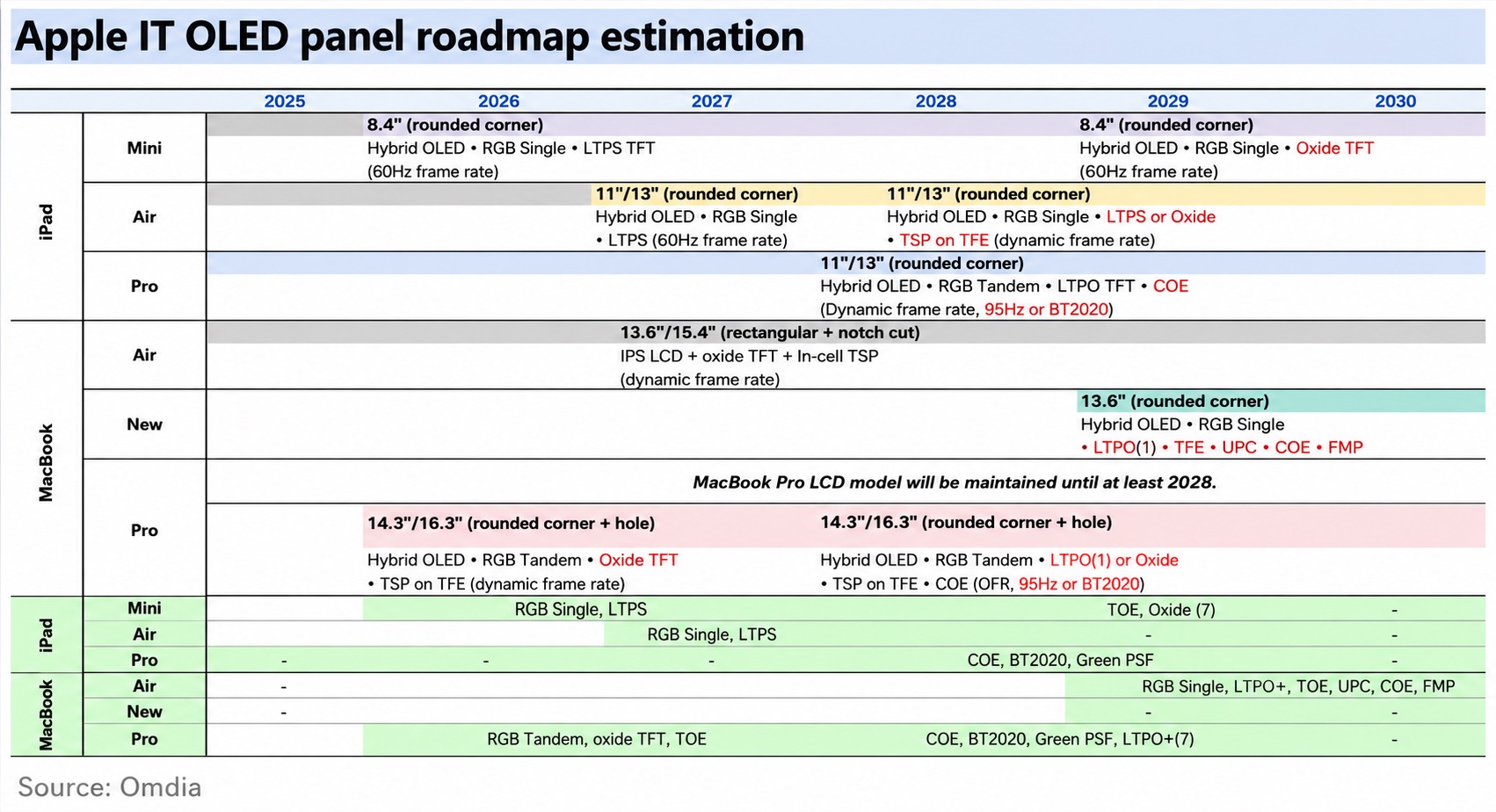
Apple is reportedly developing a brand-new 13.8-inch OLED MacBook targeted for a 2029 release, which could introduce a distinct product category sitting directly between the MacBook Air and MacBook Pro. According to an updated display roadmap from market research firm Omdia, this middle-tier laptop could bring advanced display technologies like hybrid OLED panels, integrated touch, and under-panel cameras to mainstream Mac users.
Tech industry analysts and display supply chain watchers have uncovered fresh details suggesting Apple may be planning a significant shift in its laptop lineup. According to a recently updated display technology roadmap published by research firm Omdia, Apple is considering an all-new 13.8-inch OLED MacBook that could make its official debut around 2029. Rather than replacing any existing laptop in the current portfolio, this unexpected device appears designed to occupy a totally new space in Apple's hardware lineup.
For years, consumers seeking a Mac laptop have essentially chosen between two primary categories: the ultra-portable, consumer-focused MacBook Air and the feature-packed, high-performance MacBook Pro. The arrival of a 13.8-inch OLED MacBook would create a third distinct option, blending premium display capabilities with mainstream portability at a potential price point positioned neatly between the entry-level Air and the professional Pro lines.

What Is the Rumored 13.8-Inch OLED MacBook?
The concept of a 13.8-inch OLED MacBook represents a fresh approach to Apple's display strategy. The device is reported to feature a 13.8-inch diagonal display size, placing it right between the traditional 13.6-inch MacBook Air and the 14.2-inch MacBook Pro. However, the most intriguing detail in Omdia's updated roadmap is not just the screen size, but the specific display technology chosen for this mystery model.
According to Omdia, this upcoming model is slated to use a single-stack hybrid OLED panel. This display architecture differs noticeably from the more complex tandem OLED technology expected in upcoming OLED MacBook Pro models, which are slated to launch either late this year or early next year. Single-stack hybrid OLED panels combine glass substrates with thin-film encapsulation, resulting in an exceptionally slim screen structure that balances image quality with manufacturing costs.
By opting for a single-stack hybrid OLED design rather than a dual-stack tandem OLED system, Apple could keep production costs low enough to target a mainstream audience while still providing the vibrant colors, deep blacks, and exceptional contrast ratios inherent to OLED screen technology.
How Would a New OLED Laptop Fit into Apple's Portfolio?
To understand why Apple might introduce a 13.8-inch OLED MacBook, it helps to examine how the current laptop market is structured. Right now, Apple offers the MacBook Air in 13-inch and 15-inch sizes, both utilizing traditional LCD displays with standard LED backlighting. On the higher end, Apple offers 14-inch and 16-inch MacBook Pro models that utilize advanced mini-LED displays, with tandem OLED panels scheduled to arrive on Pro models in the near future.
Adding a brand-new middle tier could give Apple a powerful competitor against mid-to-high-end Windows ultrabooks that already feature OLED displays. Here is how the projected MacBook product structure might look if this new category comes to fruition:
- MacBook Air (LCD Tier): Positioned as the most affordable, highly portable everyday laptop for students and general users, continuing to use cost-effective LCD display panels.
- 13.8-Inch OLED MacBook (Mainstream Premium Tier): Positioned as a mid-tier option for everyday users who want vibrant OLED visuals, touch capabilities, and modern bezel designs without paying Pro-level prices.
- MacBook Pro (Professional OLED Tier): Positioned at the top of the line for creative professionals and power users, featuring high-brightness tandem OLED displays, maximum processing performance, and professional port selection.
This potential three-tier strategy would allow Apple to capture buyers who want a better display experience than the standard MacBook Air offers, but who do not require the heavy computational power or high price tag of a fully specced MacBook Pro.
What Advanced Display Features Could the 13.8-Inch OLED MacBook Offer?
While the choice of a single-stack hybrid OLED display keeps costs down, Omdia's roadmap indicates that Apple is not cutting corners when it comes to display innovation. The 13.8-inch OLED MacBook is projected to incorporate several cutting-edge screen technologies that have not yet appeared together on any existing Mac laptop.
1. LTPO+ Backplane Technology
The rumored laptop is expected to utilize an LTPO+ (Low-Temperature Polycrystalline Oxide) backplane. LTPO technology is widely praised for its exceptional power efficiency because it enables variable refresh rates. On mobile devices, LTPO allows the screen to dynamically drop its refresh rate down when viewing static content to save battery life, and ramp it back up during scrolling or watching high-frame-rate video. An LTPO+ backplane on a MacBook could deliver significant battery efficiency benefits.
2. Integrated Touch Sensing
Another compelling specification listed in Omdia's findings is integrated touch sensing. Unlike traditional touchscreens that place a separate touch-sensitive layer on top of the display glass, integrated touch technology embeds touch sensors directly into the OLED panel structure during manufacturing. This approach keeps the display module thin and lightweight while maintaining touch responsiveness and optical clarity.
3. Under-Panel Camera (UPC) Tech
Perhaps one of the most radical technical features mentioned for this 13.8-inch OLED MacBook is an under-panel camera (UPC). Current MacBook Air and MacBook Pro models feature a visible notch cut into the top center of the screen to house the FaceTime camera and ambient light sensors. An under-panel camera places the camera module behind active display pixels, allowing light to pass through to the camera sensor when needed while displaying screen content when the camera is turned off. This would effectively eliminate the screen notch and enable a seamless, full-screen design.
4. Color Filter Integrated into Encapsulation (COE)
The roadmap also points to the inclusion of a color filter integrated directly into the OLED encapsulation layer, often referred to as COE (Color Filter on Encapsulation). Replacing traditional plastic polarizers with an integrated color filter reduces panel thickness, increases display brightness, and improves energy efficiency by allowing more light generated by the OLED layer to pass through cleanly.
What Happened to the OLED MacBook Air Rumors?
The discovery of this 13.8-inch OLED MacBook category helps clarify previous supply chain rumors that left analysts puzzled. Industry reports had long suggested that Apple was working on an OLED version of the MacBook Air. However, Omdia's latest findings indicate a pivot in Apple's roadmap strategy.
Earlier details regarding this project surfaced in a June report from ZDNet Korea. That report revealed that Apple had sounded out major display manufacturers, including Samsung Display, LG Display, and BOE, requesting information and sample specs regarding a 13.8-inch OLED notebook panel. At the time, industry watchers assumed this 13.8-inch panel was meant for an upcoming OLED MacBook Air model, which was widely expected to arrive by 2028 at the earliest.
However, in Omdia's newest display roadmap, the dedicated OLED MacBook Air is conspicuously missing from the timeline. Instead, it appears to have been replaced by this separate 13.8-inch OLED machine assigned to an entirely new category. Meanwhile, Omdia's revised roadmap shows the standard MacBook Air lineup continuing to rely on conventional LCD displays well into 2030.
Who Will Manufacture Panels for the 13.8-Inch OLED MacBook?
A crucial question surrounding any major Apple display transition is which supplier will win the primary manufacturing contracts. Producing millions of high-quality OLED panels that meet Apple's stringent performance and color accuracy standards is a complex logistical challenge.
As noted in previous reports, Apple has engaged in exploratory discussions with the big three display producers in the industry:
- Samsung Display: A dominant force in small and medium OLED panel production, with extensive experience in hybrid OLED and LTPO manufacturing process lines.
- LG Display: A key supplier of display panels for Apple devices, currently investing heavily in medium-sized OLED production infrastructure for laptops and tablets.
- BOE: A major Chinese display manufacturer that has rapidly expanded its OLED capabilities and frequently competes for Apple's consumer electronics orders.
Omdia believes it is still too early to confirm with certainty which supplier will supply the 13.8-inch OLED panels for this prospective device. Because the hardware launch is still projected several years out, supplier selections, yield rate evaluations, and price negotiations remain ongoing among Apple and its display partners.
Why Is Apple Considering a Middle Tier Laptop?
Introducing a completely new product category between the MacBook Air and MacBook Pro makes strong strategic sense for Apple's long-term hardware business. Over the last several years, the performance gap between Apple Silicon chips in the Air and Pro models has narrowed for everyday tasks, making screen quality and physical features primary differentiators for consumers.
By creating a 13.8-inch OLED MacBook, Apple can address several market dynamics:
Addressing Price Sensitivity: Tandem OLED panels used in pro-grade devices are expensive to manufacture, driving up laptop retail prices. A single-stack hybrid OLED screen offers stunning contrast and color depth at a significantly lower cost structure, allowing Apple to offer an OLED laptop at a mainstream consumer price point.
Differentiating Display Capabilities: Keeping the entry-level MacBook Air on standard LCD displays allows Apple to maintain an accessible starting price point for students and budget-conscious shoppers. Meanwhile, buyers willing to spend a bit more can upgrade to the 13.8-inch OLED model for superior screen performance without having to jump all the way to a high-end Pro model.
Testing New Technologies: Features like under-panel cameras and integrated touch sensing require real-world scaling. Deploying these innovations in a new mainstream model allows Apple to refine manufacturing processes before rolling them out across other hardware lines.
Understanding Roadmaps and Manufacturing Timeline Caveats
While the prospect of a 13.8-inch OLED MacBook is exciting, industry analysts caution that long-term product roadmaps should always be evaluated with realistic expectations. Omdia explicitly notes that display supply chain projections reflect current market expectations and manufacturing feasibility studies.
Apple's long-term OLED adoption schedule could change due to several factors:
- OLED Manufacturing Capacity: Display suppliers must build out specialized production facilities (such as Gen 8.5 OLED lines) capable of efficiently producing laptop-sized panels in massive volumes.
- Component Costs and Yields: If initial production yields for LTPO+ or under-panel camera tech remain low, component costs could delay mass production timelines.
- Market Demand Dynamics: Macroeconomic conditions and global consumer demand for laptops could cause Apple to adjust product release dates or modify feature sets.
- Strategic Portfolio Adjustments: Apple routinely tests hardware prototypes internally that may be altered, delayed, or canceled before reaching mass manufacturing.
Because this project represents the first time a completely separate laptop category has appeared in display roadmaps, and because the targeted release year of 2029 is still several years away, industry observers should treat these plans as an evolving timeline that will likely see refinements over the coming years.
Conclusion
The prospect of a 13.8-inch OLED MacBook offers a fascinating preview into Apple's long-term display strategy. By pairing single-stack hybrid OLED technology, an LTPO+ backplane, integrated touch features, and an under-panel camera in a new product category, Apple could deliver a sleek, modern laptop positioned comfortably between the budget-friendly MacBook Air and the high-end MacBook Pro. While 2029 remains a ways off, this potential expansion shows that Apple is continually exploring new ways to evolve its Mac family for every type of user.
Tag: Omdia
This article, "Apple Reportedly Planning All-New MacBook Model Between Air and Pro" first appeared on MacRumors.com
Discuss this article in our forums
from MacRumors
-via DynaSage
