
Apple Card Savings Account's Interest Rate Just Went Up
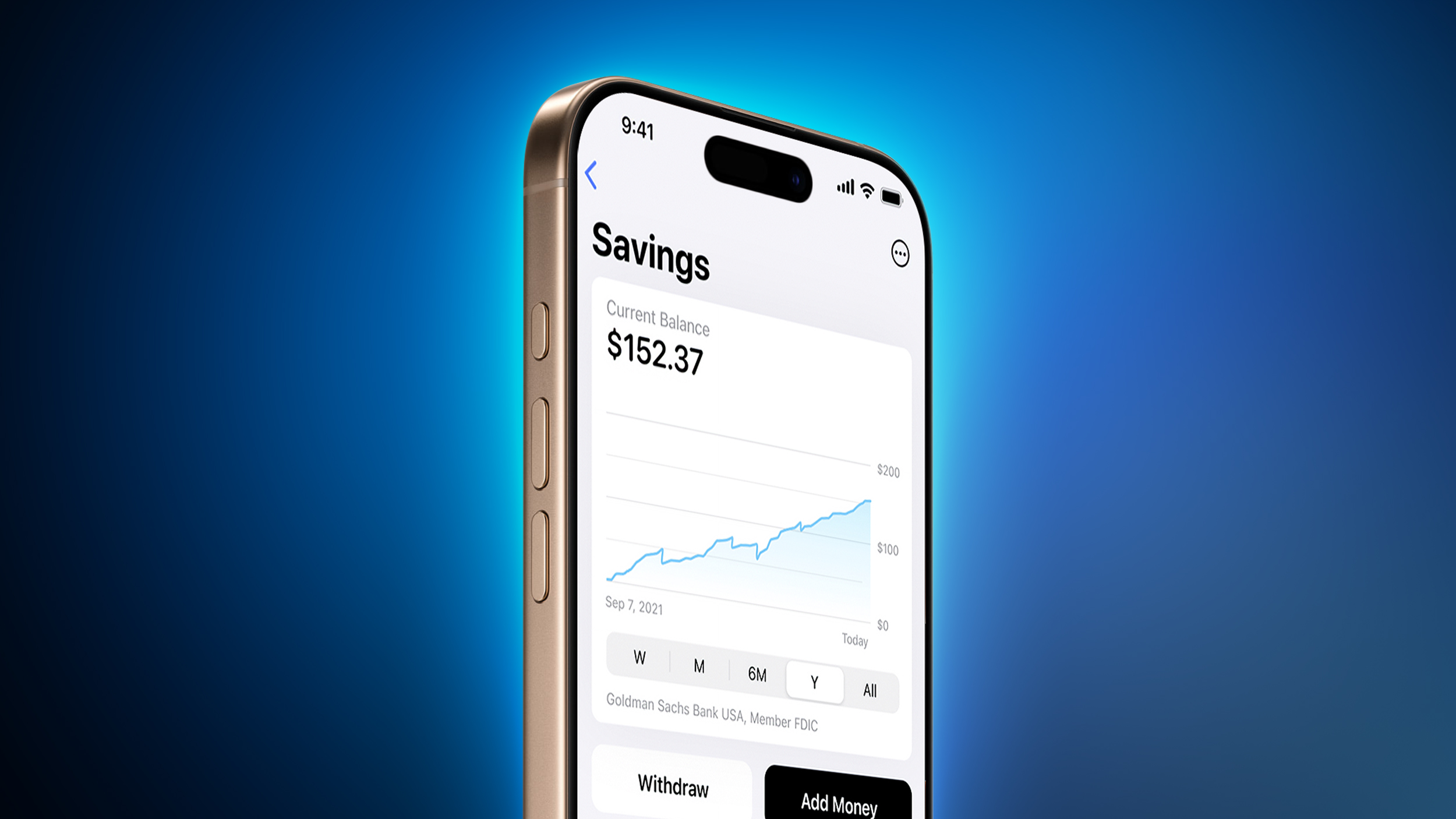
The Apple Card savings account interest rate has officially increased from 3.4% to 3.5% APY, offering account holders a higher return on their deposited funds. If you deposit $1,000 into the account and make zero withdrawals over the course of one full year, your balance will earn exactly $35 in interest under this updated annual percentage yield.
What Is the New Apple Card Savings Account Interest Rate?
Savers using the Apple Card's savings account received a welcome update as the annual percentage yield (APY) bumped up from 3.4% to 3.5%. This rate change means that every dollar stored inside the savings account now generates interest at a faster pace than it did previously. Whether you keep a modest emergency fund or a substantial balance, this interest rate increase boosts your overall earnings potential over time.
Financial yields on cash balances frequently adjust in response to broader economic market dynamics. When annual percentage yields move upward, account holders reap the reward directly through increased monthly interest payouts. For users tracking their personal finances, keeping an eye on these rate changes ensures you understand exactly how hard your money is working for you.
Understanding how annual percentage yield functions helps clarify why even modest rate jumps matter. APY reflects the real rate of return earned on a savings balance taking into account the effect of compounding interest. Because interest accumulates and compounds regularly, a 3.5% yield guarantees that your final balance grows smoothly across a twelve-month period.
How Much Interest Can You Earn with a 3.5% APY?
Calculating your potential return under the new rate is straightforward. When you evaluate cash growth using an annual percentage yield of 3.5%, the annual earnings directly reflect your starting balance assuming no additional deposits or withdrawals occur throughout the year.
Here is a breakdown of what various starting account balances can yield over one complete year at the upgraded 3.5% APY:
- $100 Deposit: Earns $3.50 in annual interest after one year.
- $500 Deposit: Earns $17.50 in annual interest after one year.
- $1,000 Deposit: Earns $35.00 in annual interest after one year.
- $2,500 Deposit: Earns $87.50 in annual interest after one year.
- $5,000 Deposit: Earns $175.00 in annual interest after one year.
- $10,000 Deposit: Earns $350.00 in annual interest after one year.
- $25,000 Deposit: Earns $875.00 in annual interest after one year.
- $50,000 Deposit: Earns $1,750.00 in annual interest after one year.
As illustrated in the example, leaving $1,000 untouched inside your account for twelve consecutive months results in an earnings yield of $35. Larger balance amounts scale up proportionately, allowing significant principal balances to generate substantial extra funds through passive compound returns.
Comparing 3.4% APY versus 3.5% APY: What Changes?
While an increase from 3.4% to 3.5% represents a shift of 0.10 percentage points, comparing the two rates highlights how annual earnings improve across different deposit amounts. Over time, even small adjustments add up to noticeable additions to your total savings balance.
Let us look closely at how the math breaks down when comparing annual returns between the old 3.4% rate and the new 3.5% rate:
- $1,000 Deposit: At 3.4% APY, you earned $34.00 per year. At 3.5% APY, you earn $35.00 per year, gaining an additional $1.00 annually.
- $5,000 Deposit: At 3.4% APY, you earned $170.00 per year. At 3.5% APY, you earn $175.00 per year, gaining an additional $5.00 annually.
- $10,000 Deposit: At 3.4% APY, you earned $340.00 per year. At 3.5% APY, you earn $350.00 per year, gaining an additional $10.00 annually.
- $20,000 Deposit: At 3.4% APY, you earned $680.00 per year. At 3.5% APY, you earn $700.00 per year, gaining an additional $20.00 annually.
- $50,000 Deposit: At 3.4% APY, you earned $1,700.00 per year. At 3.5% APY, you earn $1,750.00 per year, gaining an additional $50.00 annually.
Although a one-dollar difference on a thousand-dollar balance may seem small, higher balance tiers experience meaningful increases in regular cash accumulation. Furthermore, consistently leaving interest payouts inside the account allows future compounding to act upon a larger overall sum.
Understanding How APY and Compound Interest Work
To fully appreciate why an interest rate increase helps your savings grow, it is essential to understand the underlying principles of APY and compounding interest. Annual Percentage Yield measures the actual annual return earned on your money, factoring in how frequently interest calculates and adds back to your principal amount.
When interest calculates on a balance, that extra payment becomes part of the total cash balance. During subsequent payout cycles, interest is calculated on both the original principal and the previously added interest. This compounding snowball effect ensures that your overall account growth accelerates over time without requiring extra initial capital.
When high-yield accounts increase their stated APY rates, the rate of compounding speeds up. A higher yield means every payout adds slightly more money to the base balance, which in turn elevates the starting balance for every single payout period that follows.
Why Monitoring High-Yield Interest Rates Matters
Interest rates across financial accounts are dynamic rather than fixed. Rates move up or down in response to macroeconomic trends, central bank policies, and competitive market environment shifts. Paying attention to these variations helps consumers ensure their money yields competitive financial returns.
When rates go up, existing account holders automatically enjoy the elevated returns without needing to open new accounts or restructure their holdings. The move from 3.4% to 3.5% ensures that stored cash yields higher ongoing interest with zero manual management required from users.
For individuals building liquid emergency funds, keeping funds in accounts that offer competitive percentage yields protects purchasing power against inflation. Higher annual returns ensure that cash balances hold stronger real value over extended holding periods.
Key Strategies to Maximize Your Savings Account Growth
To get the most out of an upgraded interest rate, account holders can adopt simple financial practices that optimize total growth over time. Applying structured strategies ensures your cash yields maximum return throughout the year.
1. Keep Principal Balances Intact
The core mathematical calculation behind earning $35 on a $1,000 deposit at 3.5% APY assumes that the full balance remains in the account for the entire twelve-month period. Avoiding unnecessary transfers or withdrawals keeps the daily average balance high, which maximizes interest payouts.
2. Reinvest Your Earned Interest
Allowing earned monthly interest payouts to remain in the savings account triggers the benefits of compound growth. When interest payments stay untouched, they join the main balance and start earning interest themselves during subsequent payout cycles.
3. Automate Regular Deposits
Adding regular recurring contributions to your initial balance increases the overall principal upon which interest calculates. Over time, regular additions combined with an increased 3.5% yield accelerate total account growth faster than resting on a static starting deposit.
4. Track Yield Changes Consistently
Staying informed about rate fluctuations ensures you remain aware of your ongoing earning power. When rates shift upward from 3.4% to 3.5%, knowing your new annual yield allows you to project future balance figures and adjust personal savings goals accurately.
Managing Cash Reserves and Financial Goals
High-yield savings options serve as practical tools for short-term and medium-term money goals. Whether saving for an upcoming major purchase, establishing an emergency reserve, or holding liquid cash, earning a 3.5% APY provides safe and predictable capital expansion.
Because interest yields deliver guaranteed returns based on account balances, consumers can calculate expected returns with precision. For instance, knowing that a $1,000 deposit generates $35 over one year without risk provides a clear baseline for financial planning.
Combining predictable percentage yield returns with automated money habits creates a reliable structure for building wealth. Keeping liquid funds in yielding accounts ensures your emergency cash continues generating passive income continuously.
Community Reactions and Further Reading
Interest rate changes frequently spark discussion among financial enthusiasts and users tracking digital spending tools like the Apple Card. Rate hikes offer positive news for cardholders seeking maximum yield on their everyday savings.
To read the initial announcement details, visit the original publication titled "Apple Card Savings Account's Interest Rate Just Went Up" on MacRumors.com.
If you want to share your thoughts, view community perspectives, or engage in conversation regarding this annual yield change, you can Discuss this article on the community forum dedicated to consumer finance discussions.
Final Thoughts on the Apple Card Savings Rate Increase
The bump in the Apple Card savings account interest rate from 3.4% to 3.5% APY offers account holders an immediate, effortless boost to their passive earnings. By simply keeping cash deposited—such as earning $35 on a $1,000 balance over one full year—savers can take full advantage of compounding yield growth to build stronger financial reserves effortlessly.
from MacRumors
-via DynaSage
