
World Of Warcraft Players Claim Their Characters Keep Fighting Bosses On Their Own After Disconnecting
Suuuper Weird: Uncovering the World's Most Mind-Boggling Mysteries
Have you ever looked at something and thought to yourself, "Wow, that is suuuper weird!"? You are definitely not alone. Our world is absolutely packed with things that make us scratch our heads in confusion. From bizarre deep-sea creatures that glow in the dark to strange events in history that sound like make-believe, reality is often much stranger than fiction.
In this blog post, we are going to dive deep into some of the absolute weirdest things in science, nature, history, and space. We will explain these mysteries in simple, everyday English so you can easily understand them. By the end of this article, you will have plenty of mind-blowing facts to share with your friends and family. So, get ready to explore the unexplained, the bizarre, and the downright creepy!

1. Nature's Strangest Phenomena
Nature is beautiful, but it can also be incredibly strange. Sometimes, Mother Nature does things that seem to defy the laws of physics. Let’s take a look at three of the most bizarre natural occurrences on our planet.
The Sliding Stones of Death Valley
In a dry lake bed in Death Valley, California, there is a mystery that puzzled scientists for decades. Heavy stones—some weighing hundreds of pounds—seem to travel across the flat desert floor all by themselves. As they move, they leave long, winding tracks in the dirt behind them.
For a long time, people came up with wild theories. Some thought magnets were pulling the rocks, others blamed pranksters, and a few even suggested aliens were involved! However, in 2014, scientists finally solved the mystery using GPS trackers and time-lapse cameras.
It turns out the secret is a rare combination of ice, water, and wind. On cold winter nights, a thin layer of water on the desert floor freezes into a sheet of ice. When the sun comes up, the ice begins to melt and break into large, floating panels. Even a gentle breeze pushing against these ice sheets is strong enough to slide the heavy stones across the slippery mud. When the ice melts completely and the mud dries up, only the stones and their mysterious tracks remain.
Blood Falls in Antarctica
Antarctica is a land of endless white snow and ice. But in one specific spot, a deep red liquid pours out of a glacier, looking exactly like a bleeding wound. It is known as "Blood Falls," and it looks like a scene straight out of a horror movie.
For a long time, people thought red algae was coloring the water. But the real scientific explanation is even more fascinating. Deep beneath the heavy glacier lies an ancient, saltwater lake that has been cut off from the rest of the world for millions of years. This trapped water has no light and no oxygen, but it is incredibly rich in iron and salt.
When this salty water finally finds a way to leak through cracks in the glacier, it splashes out into the open air. The moment the iron-rich water mixes with the oxygen in the atmosphere, a chemical reaction occurs. The iron rusts instantly, turning the water a bright, vivid red. You can read more about these kinds of harsh environments on the official National Geographic website.
The Endless Lightning Storm of Venezuela
Imagine living in a place where it storms almost every single night. Over the Catatumbo River in Venezuela, a unique weather phenomenon creates an almost endless light show. This spot experiences up to 280 lightning strikes per hour, lasting for up to 10 hours a day, for nearly 300 days a year!
This is not your average thunderstorm. The lightning is incredibly bright, yet it is often completely silent because the strikes happen so high up in the atmosphere. The unique shape of the nearby mountains traps warm, moist Caribbean winds, causing them to collide violently with cold air coming down from the Andes. This constant collision creates perfect, highly charged storm clouds that light up the night sky like clockwork.

2. Bizarre Creatures That Defy Biology
If you think nature's landscapes are weird, wait until you see the animals. Evolution has created some truly strange creatures that seem to break all the rules of biology.
The Immortal Jellyfish
Aging is a natural part of life for almost every living creature on Earth. We are born, we grow up, we grow old, and eventually, we die. But there is a tiny creature in the ocean that has figured out how to cheat death: the *Turritopsis dohrnii*, more commonly known as the Immortal Jellyfish.
When this jellyfish gets physically damaged, falls ill, or faces starvation, it does something mind-boggling. Instead of dying, it actively reverses its aging process. It shrinks its body, transforms its cells, and turns back into a baby "polyp," which is the very first stage of its life cycle. It then settles on the sea floor and begins growing all over again.
Theoretically, this jellyfish can repeat this process forever, making it biologically immortal. Unless it gets eaten by a predator or destroyed by a disease it cannot recover from, it never has to die of old age!
Tardigrades: The Indestructible Water Bears
If you looked at a tardigrade under a microscope, you might think it looks like a chubby, eight-legged caterpillar with a vacuum-cleaner mouth. Because of their cute appearance, people call them "water bears." But do not let their cute looks fool you—these tiny creatures are the toughest survivors on our planet.
Tardigrades can survive conditions that would instantly kill almost any other living thing. They can handle:
- Freezing cold temperatures near absolute zero (minus 458 degrees Fahrenheit).
- Boiling hot temperatures up to 300 degrees Fahrenheit.
- Crushing pressure at the very bottom of the deepest oceans.
- Massive doses of radiation that would easily kill a human.
Most incredibly, tardigrades have even been taken into space! In 2007, scientists sent tardigrades into the vacuum of space, exposed to deadly solar radiation and zero oxygen. When they brought them back to Earth, the little water bears were completely fine. To survive these extremes, they pull in their legs, lose almost all the water in their bodies, and enter a state of deep sleep where their metabolism almost completely stops.
The Platypus: Nature's Puzzle
When European scientists first saw a stuffed platypus in the late 18th century, they literally thought it was a hoax. They believed a clever taxidermist had sewn a duck's bill onto the body of a beaver-like animal as a joke. But the platypus is very real, and it is wonderfully weird.
The platypus is classified as a mammal, but it lays eggs instead of giving birth to live young. It has a bill like a duck, a tail like a beaver, and webbed feet like an otter. If that is not strange enough, male platypuses have sharp spurs on their hind legs that can deliver a highly painful venom. They also do not have nipples; instead, mothers sweat milk out of their skin for their babies to lick off. Finally, they hunt with their eyes closed underwater, using special electrical sensors in their bills to detect the tiny muscle movements of their prey.

3. Historic Events That Do Not Make Sense
History is full of stories about wars, kings, and inventions. But if you look closely at the history books, you will find events that are so bizarre they sound like complete fiction. Let’s look at two historical mysteries that still leave historians scratching their heads.
The Dancing Plague of 1518
In July 1518, in the city of Strasbourg (which is now in France), a woman named Frau Troffea stepped into the street and began to dance. She did not stop. She danced for hours, and eventually, she danced until she collapsed from exhaustion. After a brief rest, she got up and started dancing again.
Within a week, dozens of other people had joined her. By the end of the month, around 400 people were dancing in the streets of Strasbourg. They did not want to dance; they looked terrified, screamed for help, and begged to stop, but their bodies simply would not let them.
Local authorities did not know what to do. Believing that the dancers just needed to "get it out of their system," the city built wooden stages and even hired musicians to keep playing. This only made things worse. Many people danced for days on end without food, water, or rest, and several actually died from strokes, heart attacks, or sheer exhaustion.
What caused this bizarre "dancing plague"? Some modern scientists believe it was a case of mass psychogenic illness, which is a physical reaction to extreme stress and panic. Others think the townspeople might have eaten bread made from rye contaminated with a toxic fungus called ergot. Ergot contains chemicals similar to modern hallucinogens and can cause muscle spasms, tremors, and hallucinations. We may never know the absolute truth!
The Great Molasses Flood of 1919
When you think of deadly natural disasters, you probably think of earthquakes, floods, or hurricanes. You probably do not think of a giant wave of sweet, sticky pancake syrup. But in 1919, a massive wave of molasses caused pure chaos in the city of Boston.
A huge steel storage tank, standing 50 feet tall and filled with 2.3 million gallons of molasses, suddenly burst open due to poor construction and rising temperatures. The result was a sticky wave of syrup that was 25 feet high at its peak, rushing down the streets of Boston at 35 miles per hour!
The heavy syrup was incredibly destructive. It knocked down buildings, crushed vehicles, and trapped people and animals in its sticky grip. Clean-up crews had to use saltwater from the harbor and high-pressure steam hoses to wash the sticky mess away, and the city smelled like sweet molasses for years afterward. It is a prime example of how reality can sometimes be suuuper weird!
4. Deep Space Oddities
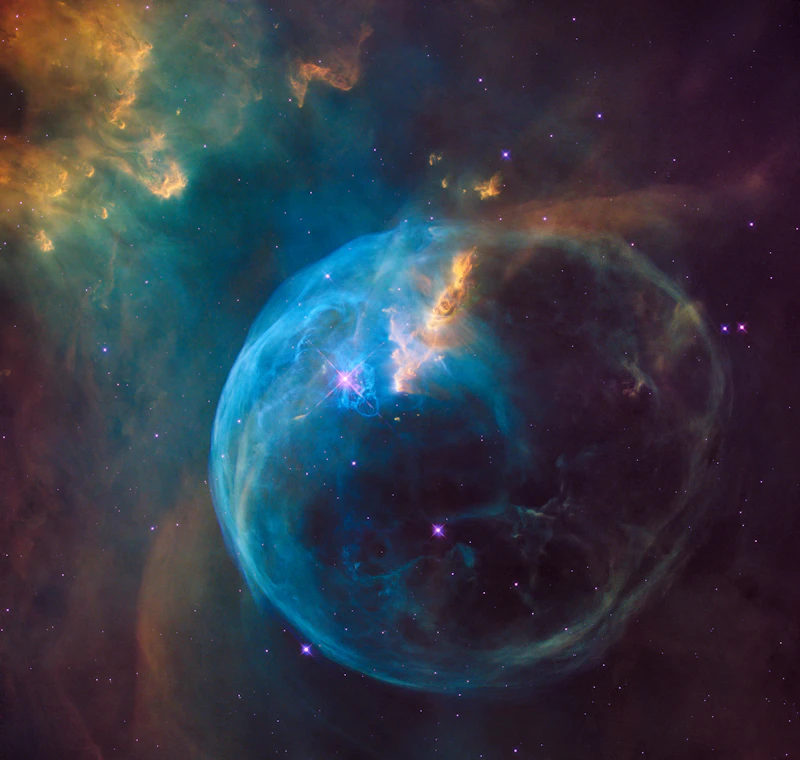
If you think Earth is weird, space is on a whole different level. The universe is incredibly vast, and it is filled with cosmic anomalies that challenge our understanding of reality. Organizations like NASA spend billions of dollars trying to understand these cosmic puzzles.
'Oumuamua: The Mysterious Interstellar Visitor
In October 2017, astronomers in Hawaii spotted something flying through our solar system that had never been seen before. It was an object that did not come from our solar system; it came from deep interstellar space, far beyond our sun's reach. They named it 'Oumuamua, which is a Hawaiian word meaning "a messenger from afar arriving first."
Everything about 'Oumuamua was strange:
- Its Shape: It was highly elongated, shaped like a giant cigar or a flat pancake, which is incredibly unusual for natural space rocks.
- Its Orbit: It was traveling so fast that the sun's gravity could not trap it, meaning it was just passing through on its way to another star system.
- Its Speed: As it began to leave our solar system, it suddenly sped up. Usually, only comets do this because the sun's heat boils off ice, creating gas jets that push them forward like rockets. But 'Oumuamua showed no signs of releasing gas, dust, or a comet tail.
Some scientists suggested it could be a piece of frozen hydrogen or nitrogen, while others speculated it might be a piece of alien technology, like a solar sail. While we will never know for sure because it is now too far away to study, 'Oumuamua remains one of the greatest space mysteries of our time.
The Boötes Void: The Loneliest Place in the Universe
When you look up at the night sky, you see stars everywhere. In deep space, telescopes show us that the universe is packed with billions of galaxies, clumped together like glowing cities. But there is one spot in the universe where there is almost absolutely nothing.
This spot is called the Boötes Void, or "The Great Void." It is an unimaginably giant sphere of empty space that is about 330 million light-years in diameter. To put that in perspective, our own galaxy is only about 100,000 light-years wide. Based on the average density of the universe, there should be around 10,000 galaxies in this region of space. Instead, astronomers have only found a tiny handful of galaxies inside it.
If you were placed in the middle of the Boötes Void, the night sky would be pitch black. You would not see a single star or galaxy in any direction. Scientists are still trying to figure out why this massive patch of space is so empty. Did galaxies pull away from each other over billions of years, or is there some invisible force keeping the area clear?
5. Mind-Bending Mental Phenomena
Sometimes, the weirdest thing in the universe is the human brain. Our brains are incredibly complex machines, but they can occasionally glitch in the most surprising ways.
Synesthesia: Hearing Colors and Tasting Words
Imagine if every time you heard the sound of a trumpet, you saw a flash of bright yellow. Or imagine if the word "Thursday" tasted like chocolate chip cookies. This is not a dream; it is a real neurological condition called synesthesia.
For most people, our senses are kept in separate compartments. Sight, sound, taste, touch, and smell are processed individually by different parts of the brain. But in a person with synesthesia, these sensory pathways are cross-wired. When one sense is stimulated, another sense is triggered at the same exact time.
Some people see specific colors when they look at numbers or letters. Others experience physical touch on their own body when they watch someone else get touched. Synesthesia is not a disease or a disorder; in fact, many artists, musicians, and writers have synesthesia and use it to create amazing, creative works of art!
Phantom Limb Syndrome
One of the most mysterious things our brains can do is create feelings for body parts that are no longer there. When a person has an arm or leg amputated due to injury or illness, they often continue to feel the missing limb.
They might feel an itch on a foot that is gone, feel their missing fingers wiggling, or even experience intense pain in the missing limb. This is called Phantom Limb Syndrome.
This happens because the brain has a built-in map of the entire body. Even though the physical limb is gone, the brain's map still expects it to be there. When the nerves at the amputation site send mixed signals to the brain, the brain interprets those signals as coming from the missing limb. Doctors have found clever ways to treat this, such as using "mirror boxes" to trick the brain into thinking the missing limb is moving and relaxing, which can relieve the phantom pain.
Embracing the Weirdness of Our World
From sliding rocks in the desert to space objects that speed up for no obvious reason, our world is full of things that defy simple explanations. While science has helped us solve many of these mysteries, new questions are always popping up to take their place.
Instead of being afraid of the unexplained, we should embrace it! The fact that the universe is so beautifully, wonderfully, and suuuper weird is what makes exploring it so exciting. It reminds us that no matter how much we think we know, there is always something new and amazing left to discover.
So, the next time you run across something that makes you scratch your head, do not just shrug it off. Ask questions, look up the science, and dive into the mystery. You might just find that the truth is even stranger—and more exciting—than anything you could have ever imagined!
from Kotaku
-via DynaSage
