
Unreleased AirPods 5 Models Referenced in macOS 26.7
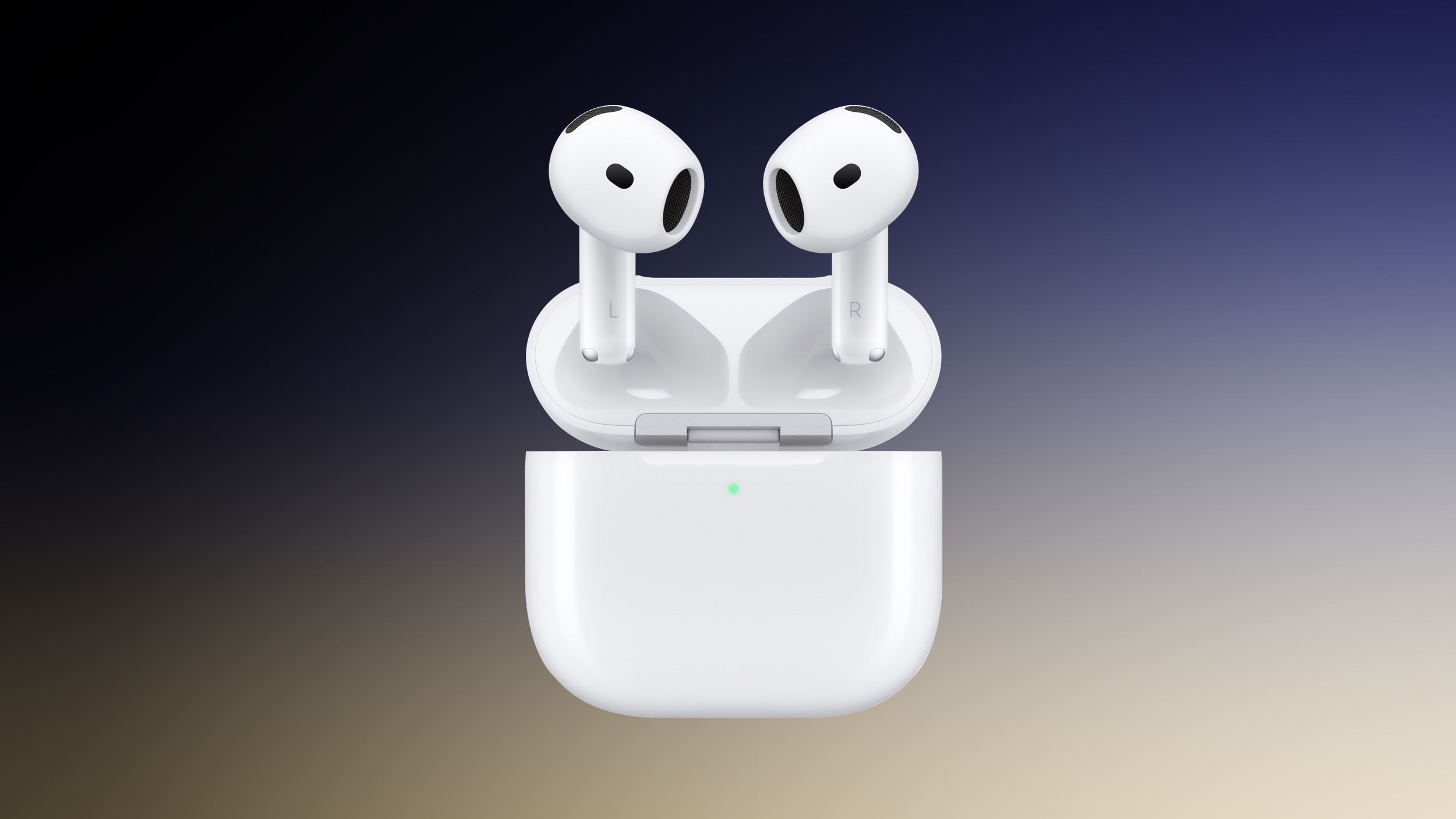
Unveiling the Future: AirPods 5 Spotted in macOS Tahoe 26.7
The world of Apple enthusiasts is buzzing with fresh revelations, as a recent software update for macOS Tahoe 26.7 has dropped intriguing hints about the next generation of Apple's popular wireless earbuds. In a significant addition to the list of unreleased Apple products referenced within this update, new AirPods models, widely believed to be the AirPods 5, have made their first appearance. This discovery, hot on the heels of the macOS 26.7 release, provides a compelling peek into Apple's future audio hardware.
These exciting new models are identified by their internal codenames: B868M and B868E. Based on Apple's consistent naming conventions for its audio devices, these codenames almost certainly point to the standard AirPods 5 and a more advanced version, likely the AirPods 5 with Active Noise Cancellation (ANC). This aligns with the current AirPods 4 models, which were introduced in September 2024 and carry the internal codenames B768M and B768E. The jump in the numerical sequence (from B768 to B868) strongly suggests a full generational leap rather than a minor refresh, signaling significant advancements are on the horizon.
While specific details about the next-generation features remain under wraps, the emergence of these codenames ignites a wave of speculation about what Apple has in store. The most anticipated upgrade is undoubtedly an improved H3 chip, which could unlock a new era of audio processing capabilities. Such a chip promises not only superior sound quality but also remarkably lower audio latency, offering a more immersive and responsive experience for users across all their Apple devices. This early reference within a macOS update is a classic Apple move, often preceding a major product launch, keeping fans on the edge of their seats.
Beyond the core AirPods 5 revelations, macOS 26.7 also quietly includes a reference to an unreleased Beats Solo Buds model. This tidbit confirms that Apple's audio division is working on multiple fronts, continuously innovating across its various earbud and headphone lines. For now, however, the spotlight remains firmly on the AirPods 5, as we delve deeper into what these new models could mean for the future of personal audio.
The Tell-Tale Signs: Codenames and Apple's Internal Language
Apple's internal codenames are often the first breadcrumbs leading to new product launches. The discovery of B868M and B868E within macOS Tahoe 26.7 is significant because it follows a predictable pattern. For context, the AirPods 4, which debuted in September 2024, were internally known as B768M and B768E. This clear numerical progression – from '7' to '8' – strongly indicates a new generation rather than a minor hardware revision. This is crucial for distinguishing between an 'AirPods 4s' update and a full-fledged 'AirPods 5' overhaul.
The suffixes 'M' and 'E' in the codenames are also worth dissecting. Historically, Apple has used similar distinctions to denote different tiers or variants of a product. For instance, in the context of AirPods, 'M' could potentially refer to the standard model, offering essential features and a compelling price point, while 'E' might stand for 'Enhanced' or 'Extended,' signifying a model with premium features like Active Noise Cancellation (ANC), spatial audio with dynamic head tracking, or potentially improved battery life. This mirrors the differentiation we see between the regular AirPods and the AirPods Pro line, where the Pro models offer advanced noise cancellation as a key differentiator.
The fact that two distinct codenames have been found suggests that Apple plans to offer at least two variants of the AirPods 5. This strategy allows Apple to cater to a broader range of consumers, from those seeking high-quality basic wireless earbuds to users who demand the very best in audio performance, noise control, and smart features. The inclusion of an ANC-equipped model within the standard AirPods line, rather than exclusively in the Pro series, could be a game-changer, making advanced noise cancellation more accessible to a wider audience. This move could potentially blur the lines between the regular AirPods and AirPods Pro, perhaps setting the stage for even more distinct differentiation in future 'Pro' models down the line.
Developers often scour these software updates for exactly this kind of internal nomenclature, as Apple's operating systems are a treasure trove of hints about upcoming hardware. The accuracy of such findings has been consistently high, lending considerable weight to the assumption that AirPods 5 are indeed in active development and nearing readiness for release. The appearance in macOS rather than iOS or watchOS might suggest a particular focus on desktop integration or cross-device functionality, or simply that particular build of macOS was the first to integrate the necessary drivers or references for the new hardware.
A Glimpse into the Future: What Could AirPods 5 Bring?
With the confirmation of AirPods 5 in the pipeline, speculation naturally turns to the features and improvements Apple will introduce. Drawing from past AirPods generations and the broader trends in wireless audio technology, we can paint a picture of what these new earbuds might offer, driven by the anticipated H3 chip.
The Heart of the Innovation: The H3 Chip
The H-series chip is the undisputed brainpower behind Apple's AirPods, responsible for everything from audio processing and connectivity to battery management and active noise cancellation. The jump from the H2 chip (found in AirPods Pro 2 and AirPods 4) to an H3 chip in AirPods 5 would represent a significant leap. This new silicon is expected to bring a host of improvements, pushing the boundaries of what's possible in a compact earbud form factor.
Firstly, an H3 chip would almost certainly enhance audio processing capabilities. This could translate into richer, more detailed sound reproduction, possibly enabling features like adaptive audio processing that dynamically adjusts to environmental conditions or user preferences in real-time. We might see improved computational audio algorithms that enhance clarity, bass response, and overall fidelity, making every listening experience more immersive. Lossless audio support, perhaps through a proprietary low-latency codec over Bluetooth or even a dedicated UWB connection, is a long-standing wish for many audiophiles and could finally become a reality with the H3 chip's increased bandwidth and processing power.
Secondly, the H3 chip is expected to bring substantial advancements in Active Noise Cancellation (ANC). The H2 chip already delivered impressive ANC, but the H3 could refine this further, targeting a broader range of frequencies, including challenging higher-pitched noises, and providing more robust noise reduction in extremely loud environments. It might also enable more sophisticated adaptive ANC, where the level of noise cancellation automatically adjusts based on the surrounding soundscape, requiring less manual intervention from the user. Similarly, Transparency Mode could become even more natural, allowing users to hear their surroundings with incredible clarity, almost as if they weren't wearing earbuds at all, with potential enhancements to reduce sudden loud noises while still letting in voices and important sounds.
Thirdly, battery life is always a key area for improvement. A more power-efficient H3 chip, coupled with advancements in battery technology, could extend listening times for both the earbuds and the charging case. Longer battery life means fewer interruptions and more convenience, a highly valued attribute for daily users. We might see an incremental increase of an hour or two per charge, along with more charges available from the case.
Finally, the H3 chip could lay the groundwork for new sensor integration and smarter features. This might include more accurate in-ear detection, enhanced spatial audio processing for an even more convincing 3D soundstage, or even preliminary health-related sensors, such as temperature monitoring or more advanced hearing health diagnostics. The chip could also bolster connectivity, supporting newer Bluetooth standards for greater range, stability, and multi-device pairing capabilities, making switching between an iPhone, iPad, Mac, and Apple Watch even more seamless and reliable.
Unrivaled Audio Experience: Sound Quality and Latency
The promise of an H3 chip brings with it the expectation of an unparalleled audio experience. Apple has consistently pushed the envelope in sound quality, and AirPods 5 are poised to continue this tradition. Improved custom drivers, coupled with the H3 chip's advanced digital signal processing, could lead to a significant leap in audio fidelity. We could see a wider frequency response, more articulate bass, clearer mids, and sparkling highs, offering a balanced and engaging sound profile for all genres of music.
One of the most exciting prospects is the potential for true lossless audio playback. While Bluetooth traditionally compresses audio, advancements in chip technology and proprietary codecs (like Apple's own AAC or a potential new high-bandwidth protocol) could finally allow AirPods 5 to deliver audio without compromise. This would be a monumental step for serious music listeners and would further cement AirPods' position as a premium audio device.
Beyond raw sound quality, lower latency is a critical improvement. High latency, the delay between an audio source and when it's heard, can be particularly noticeable and frustrating during gaming, watching videos, or making calls. The H3 chip, with its optimized processing and potentially a newer, more efficient Bluetooth standard (like Bluetooth LE Audio), could drastically reduce this delay. This would result in perfectly synchronized audio and video, giving gamers a competitive edge and making video calls feel more natural and responsive. Imagine gaming on your iPhone or Mac with zero perceptible lag between the on-screen action and the accompanying sound effects – that's the kind of experience lower latency can unlock.
Furthermore, Spatial Audio, a feature that creates an immersive, theater-like experience, is likely to see further enhancements. With an H3 chip, the dynamic head tracking could become even more precise and fluid, making the audio experience feel even more anchored to the device. This could also extend to more sophisticated personalization of the audio profile, adapting to an individual's ear shape and listening environment for an optimized sound tailored specifically to them.
Enhanced Noise Control: Active Noise Cancellation and Transparency
Active Noise Cancellation (ANC) has become a non-negotiable feature for many premium earbuds, and AirPods 5 are expected to take it to new heights. The H3 chip's enhanced processing power will allow for more sophisticated noise-canceling algorithms. This could mean a broader range of noise frequencies being effectively nullified, from the low rumble of an airplane engine to the chatter of a busy office or even unexpected high-frequency sounds. We might see advancements in "adaptive" ANC, where the earbuds intelligently adjust the level of noise cancellation in real-time based on the surrounding environment without user input, providing an optimal balance between silence and situational awareness.
Similarly, Transparency Mode, which allows users to hear their surroundings without removing their earbuds, is ripe for improvement. With the H3 chip, Transparency Mode could achieve an even more natural and uncolored pass-through of ambient sound, making conversations clearer and environmental cues more distinct. The "Adaptive Audio" feature introduced with AirPods Pro 2, which dynamically blends Transparency Mode with ANC to reduce harsh loud noises while keeping you aware, could become standard across the AirPods 5 line and further refined for even smoother transitions and greater effectiveness. This means being able to walk down a busy street and clearly hear important announcements or conversations, while still being protected from sudden, jarring noises like sirens or construction sounds.
Redesigned Comfort and Durability
While the internal changes are significant, a new generation of AirPods often brings subtle, yet impactful, design refinements. Apple is known for its meticulous attention to ergonomics, and AirPods 5 could feature an updated design focused on enhanced comfort and a more secure fit for a wider range of ear shapes. This might involve subtle tweaks to the stem length, earbud curvature, or even new ear tip materials or designs to improve passive noise isolation and overall wearer experience. A more comfortable fit means users can wear their AirPods for longer periods without discomfort, whether for extended listening sessions, calls, or workouts.
Durability is another area where improvements are always welcome. While current AirPods offer some water resistance, AirPods 5 could potentially boast an improved IP rating (e.g., IPX5 or IPX6), making them more resistant to sweat, splashes, and dust. This would make them an even more reliable companion for workouts, outdoor activities, or daily commutes in varying weather conditions. Enhanced durability would translate to a longer lifespan for the device, providing better value for the consumer.
Powering Your Day: Battery Life Advancements
Battery life remains a crucial factor for wireless earbuds. While the H3 chip will inherently be more power-efficient, the AirPods 5 could also incorporate larger batteries within the earbuds themselves and the charging case. We can anticipate an increase in listening time per charge, potentially pushing towards 7-8 hours for the earbuds alone, and significantly extending the total listening time with the charging case, possibly upwards of 30-36 hours. This would provide users with greater freedom and convenience, reducing the need for frequent recharges.
Faster charging capabilities are also a possibility. Leveraging advancements in power delivery, the AirPods 5 might offer quicker top-ups, allowing users to get several hours of listening time from just a few minutes of charging. This "fast charge" feature is incredibly convenient for those moments when you're rushing out the door and realize your earbuds are low on power.
Seamless Integration and Smart Features
The AirPods' deep integration within the Apple ecosystem is one of its strongest selling points. AirPods 5 will undoubtedly continue this trend, offering seamless pairing and automatic switching between all your Apple devices (iPhone, iPad, Mac, Apple Watch, Apple TV). This experience could be further refined with the H3 chip, making the transitions even faster and more reliable, reducing any momentary audio drops or connection hiccups that can occasionally occur.
The "Find My" feature for AirPods has proven invaluable, and with the H3 chip, we might see even greater precision. This could involve leveraging Ultra Wideband (UWB) technology, already present in the AirPods Pro 2 case, directly within the earbuds themselves. This would allow for even more accurate pinpointing of lost earbuds, guiding users to their exact location with directional accuracy, similar to how an AirTag works. The charging case, already having a speaker for Find My alerts, could also see enhancements in its UWB capabilities.
Looking further into the future, and perhaps stretching the bounds of a non-Pro AirPod, the H3 chip could potentially enable rudimentary health-tracking features. While full-fledged health monitoring might remain exclusive to AirPods Pro or future specialized devices, basic functionalities like monitoring body temperature (from within the ear canal), improved hearing health notifications, or even posture correction prompts during calls could be explored. Apple is increasingly focused on health and wellness, and extending some of these capabilities to the standard AirPods line would align with that broader strategy.
The Charging Case: More Than Just a Power Bank
The charging case for AirPods 5 is expected to evolve beyond its primary role of providing power. Building on the features introduced with the AirPods Pro 2 case, we anticipate that the AirPods 5 case will also incorporate a built-in speaker. This speaker would serve multiple purposes, primarily for "Find My" alerts, allowing users to audibly locate a misplaced case. It could also provide audible feedback for charging status, low battery warnings, or even pairing confirmations.
Furthermore, the integration of Ultra Wideband (UWB) technology, currently found in the AirPods Pro 2 case, is highly likely for the AirPods 5 charging case. UWB enables precise location tracking, allowing users to pinpoint the exact location of their case using the Find My app on their iPhone. This 'Precision Finding' feature would be a significant upgrade for the standard AirPods line, offering peace of mind to users who frequently misplace their charging case.
Wireless charging, including MagSafe compatibility, is expected to remain standard, offering convenient and versatile charging options. The design of the case might also see subtle refinements, perhaps with improved hinge durability, a more ergonomic shape, or new indicator light placement, all contributing to a more premium and user-friendly experience.
When Can We Expect Them? Speculating on the Release Timeline
While the macOS Tahoe 26.7 reference confirms AirPods 5 are in development, the exact launch timing remains the subject of much speculation. Apple typically follows a relatively predictable, though not entirely rigid, release cycle for its audio products. The current AirPods 4 models were launched in September 2024. Considering this, a direct successor in the form of AirPods 5 would likely follow a 1.5 to 2-year cadence, suggesting a potential release window in late 2025 or early to mid-2026.
Apple often ties significant product launches to its major events, such as its fall iPhone event in September, or potentially a spring event earlier in the year. If the AirPods 5 are ready by late 2025, a September launch alongside new iPhones or Apple Watches would be highly plausible, allowing them to capitalize on the holiday shopping season. Alternatively, if the H3 chip or other advanced features require more development time, a spring 2026 event could serve as the platform for their debut.
Several factors could influence this timeline. The development and mass production of a new chip like the H3 are complex endeavors, prone to unforeseen delays. Supply chain stability, especially for key components, plays a critical role. Furthermore, Apple's internal strategy and the market landscape also dictate timing. If Apple perceives strong competition or an opportune moment to introduce a game-changing feature, they might accelerate or adjust their plans. The current economic climate and consumer spending trends could also factor into Apple's decision-making regarding launch windows.
Historically, Apple has spaced out its standard AirPods releases. The original AirPods launched in late 2016, followed by AirPods 2 in early 2019, AirPods 3 in late 2021, and AirPods 4 in late 2024. This pattern suggests a roughly 2.5 to 3-year gap between standard model generations. However, with the increasing pace of technological innovation and market competition, Apple might be looking to shorten this cycle, particularly for their highly popular earbud line. Therefore, a late 2025 or early 2026 release for AirPods 5 feels quite plausible, aligning with the "next-generation" feel implied by the codename jump.
The Broader Picture: What This Means for Apple's Audio Strategy
The impending arrival of AirPods 5 is not just about a new pair of earbuds; it's a reflection of Apple's overarching strategy in the intensely competitive personal audio market. The AirPods line has been a phenomenal success for Apple, becoming a cultural phenomenon and a significant revenue driver. With the AirPods 5, Apple aims to maintain its dominance and continue to innovate in a space where new competitors emerge constantly.
Maintaining Market Dominance
Apple has consistently held a commanding lead in the truly wireless earbud market, thanks to the seamless integration of AirPods into its ecosystem, their ease of use, and a blend of quality audio and innovative features. However, the market is saturated with strong contenders from companies like Sony, Bose, Samsung, Jabra, and Google, many of whom offer excellent audio quality, advanced noise cancellation, and unique features at various price points.
The AirPods 5, with their anticipated H3 chip, enhanced audio, and improved ANC, are crucial for Apple to stay ahead. These advancements will reinforce the premium positioning of AirPods and justify their price point against increasingly capable rivals. By continually pushing the boundaries of what a compact earbud can do, Apple solidifies its appeal to existing users and attracts new ones. The deep ecosystem lock-in, where AirPods work effortlessly across iPhones, iPads, Macs, and Apple Watches, remains a key differentiator that competitors struggle to replicate effectively.
Furthermore, the potential for new health-related features, even minor ones, could open up new avenues for Apple in the wellness technology sector, further integrating AirPods into the broader Apple Health ecosystem. This strategic move could position AirPods not just as audio devices, but as personal health companions, increasing their value proposition and entrenching them deeper into users' daily lives.
The Evolution of AirPods: A Brief History
To truly appreciate the significance of AirPods 5, it's helpful to look back at the journey of Apple's wireless earbuds. The original AirPods, launched in late 2016, revolutionized the market by popularizing truly wireless earbuds and showcasing the magic of the W1 chip for instant pairing and seamless device switching. They were quirky, innovative, and instantly iconic.
AirPods 2 (2019) introduced the H1 chip, bringing faster connection times, "Hey Siri" support, and improved call quality, refining the core experience. The AirPods Pro (2019) then elevated the game with Active Noise Cancellation, Transparency Mode, and a customizable fit with silicone ear tips, targeting a more premium segment of the market. This was a pivotal moment, showing Apple's commitment to advanced audio features.
AirPods 3 (2021) brought a significant design overhaul, closer to the Pro line but without ANC, adding Spatial Audio, adaptive EQ, and improved battery life to the standard AirPods experience. The AirPods Pro 2 (2022) further refined ANC, introduced the H2 chip for even better sound and noise cancellation, added a speaker and UWB to the case, and offered personalized Spatial Audio. Most recently, the AirPods 4 (2024) continued the evolution with further enhancements, but the B868 codename suggests the AirPods 5 will be an even bigger leap.
Each generation has built upon the last, incrementally improving features and introducing new technologies. The AirPods 5 are expected to continue this trajectory, leveraging a new H3 chip to deliver a genuinely next-level audio experience that keeps Apple at the forefront of the personal audio revolution.
Beyond AirPods: A Nod to Beats Solo Buds
It's also worth noting the additional detail found in macOS 26.7: a reference to an unreleased Beats Solo Buds model. While the focus of this article is clearly on the highly anticipated AirPods 5, this small detail confirms that Apple's audio hardware development is broad and continuous, spanning both its primary AirPods brand and its Beats by Dre subsidiary. The Solo line from Beats is known for its on-ear headphone designs, so "Solo Buds" could indicate a new compact, possibly wireless earbud version that leverages the Solo branding's popularity and distinct aesthetic. This shows Apple's commitment to catering to different market segments and preferences within the audio space, offering diverse options beyond the core AirPods line.
The Reliability of macOS Leaks: Why We Trust These References
For seasoned Apple observers, discovering internal codenames in macOS updates is nothing new; in fact, it's a tried-and-true method for predicting upcoming hardware. Apple's operating systems, including macOS, iOS, and watchOS, frequently contain references, drivers, or configuration files for unreleased devices long before they are officially announced. This happens because these devices need to be compatible with the current software, and developers often uncover these clues in the code. Past examples include references to unreleased iPhones, iPads, Apple Watches, and even previous AirPods generations appearing in software updates months ahead of their public debut.
The consistency and accuracy of these types of leaks make the AirPods 5 reference in macOS Tahoe 26.7 highly credible. It's not merely a fleeting mention but a structured internal codename (B868M and B868E) that fits perfectly into Apple's established nomenclature for AirPods. This pattern lends significant weight to the expectation that these new models are not just conceptual but are actively in development and progressing towards a market release. Such a leak provides concrete evidence of Apple's product roadmap, giving us a reliable indicator of what's to come, even if the exact features and timing remain speculative for now.
Looking Ahead: The Impact of AirPods 5
The impending launch of AirPods 5, hinted at by the macOS Tahoe 26.7 update, represents more than just another product release; it signifies Apple's ongoing commitment to innovation in the personal audio space. With the anticipated H3 chip at its core, these new earbuds are poised to deliver substantial improvements in sound quality, lower latency, enhanced active noise cancellation, and potentially new smart features that further integrate them into the Apple ecosystem.
For consumers, AirPods 5 promises a more immersive, comfortable, and intuitive listening experience. Gamers and video enthusiasts will appreciate the reduced latency, while commuters and frequent travelers will benefit from superior noise cancellation. The potential for improved battery life, refined design, and more precise "Find My" capabilities will only add to their appeal. For Apple, the AirPods 5 are critical to maintaining their leading position in the fiercely competitive wireless earbud market, showcasing their ability to continuously innovate and set new standards.
As we await official announcements, the excitement surrounding AirPods 5 is palpable. The blend of cutting-edge technology and seamless user experience that Apple consistently delivers with its AirPods line ensures that the next generation will be eagerly anticipated by fans and critics alike. The future of personal audio, it seems, is still very much in Apple's hands.
This article, "Unreleased AirPods 5 Models Referenced in macOS 26.7" first appeared on MacRumors.com
Discuss this article in our forums
from MacRumors
-via DynaSage
