
Leaker: All-Glass 2027 iPhone Still on Track Despite Cancellation Rumors
The Future is Clear: Apple's "All-Glass" 20th Anniversary iPhone Still on Track for 2027
The world of tech rumors is a whirlwind of anticipation, speculation, and sometimes, outright contradiction. Recently, a significant stir was caused by an analyst report claiming Apple had canceled its ambitious "all-glass" iPhone, expected to mark the device's 20th anniversary in 2027. This news sent ripples through the industry and among eager Apple enthusiasts, who have been dreaming of a truly revolutionary design.
However, swift rebuttals from highly reputable sources have quickly emerged, pushing back against this cancellation claim. Mark Gurman of Bloomberg, a journalist renowned for his deep connections within Apple, was among the first to respond, confidently asserting that the "glass-centric" redesign is still very much on track for 2027. Adding further weight to this reassurance, a prominent Chinese leaker known as Digital Chat Station has now confirmed that this commemorative device remains in active development, offering exciting new details about its groundbreaking design.
This news brings a collective sigh of relief to those who believe Apple is due for a truly transformative iPhone, one that not only pushes technological boundaries but also redefines the aesthetic possibilities of a smartphone. The concept of a device primarily constructed from glass, with a display that seemingly melts into its edges, represents a bold leap forward, promising an unparalleled level of immersion and a premium feel that only Apple can deliver. As we delve deeper into the details provided by these trusted sources, the vision for the 20th-anniversary iPhone becomes clearer, painting a picture of innovation that remains firmly on the horizon.
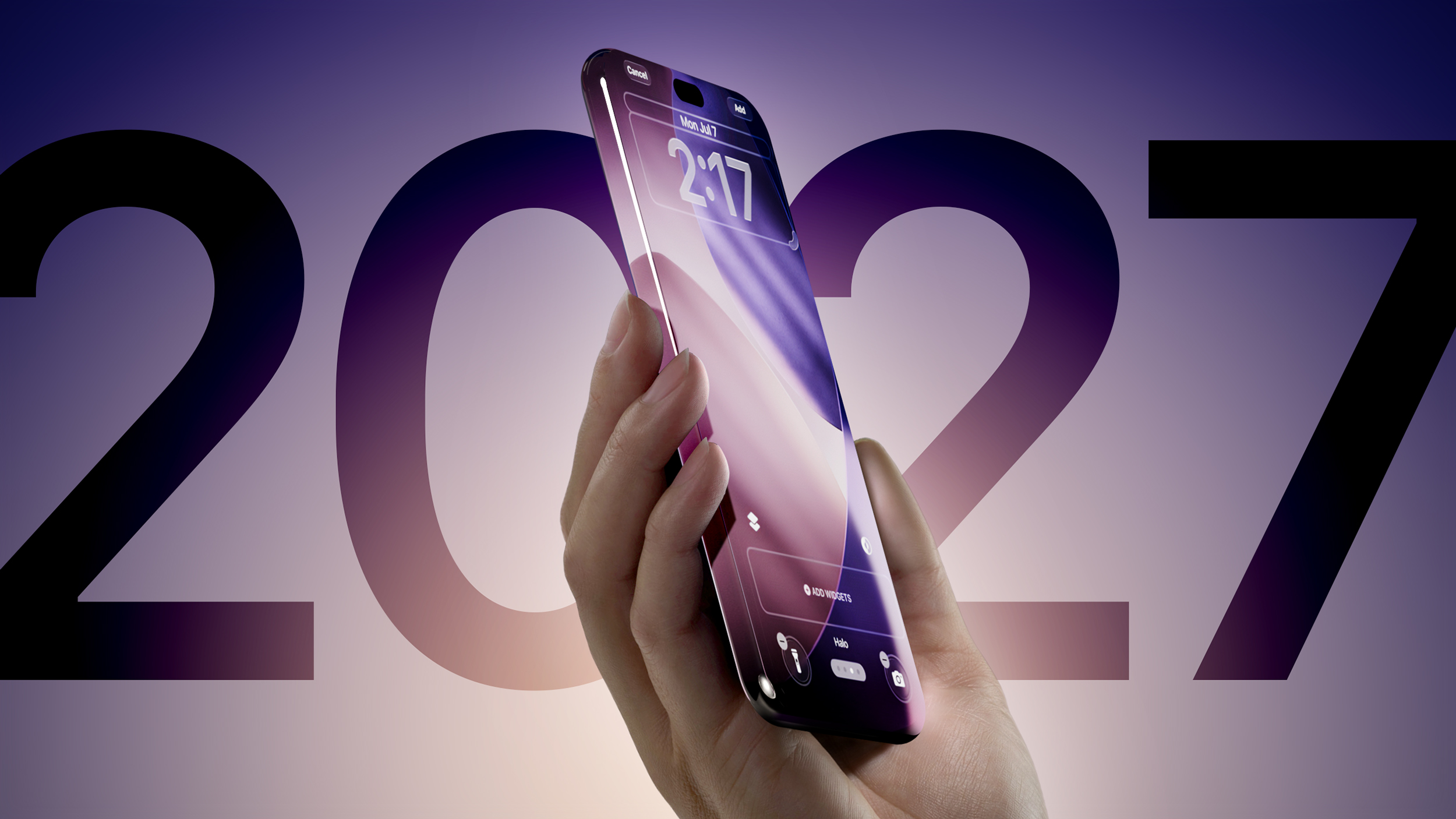
The Anticipation: Apple's 20th Anniversary iPhone
Every few years, Apple marks a significant milestone in the life cycle of its most iconic product, the iPhone, with a device that aims to redefine the smartphone experience. We saw this with the 10th-anniversary iPhone X, which introduced Face ID, an edge-to-edge OLED display, and a gesture-based navigation system that reshaped the industry. For the 20th anniversary, the expectations are even higher. Consumers and analysts alike anticipate a phone that doesn't just iterate but innovates, offering a glimpse into the future of personal technology.
The idea of an "all-glass" iPhone isn't just about aesthetics; it speaks to Apple's relentless pursuit of seamless design and material innovation. Such a design would offer a tactile experience unlike any other phone on the market, combining elegance with advanced engineering. It's a statement piece, a testament to two decades of smartphone evolution, and a promise of what's next. This visionary device, often referred to as the "20th-anniversary iPhone" or sometimes the "iPhone Ultra" by some circles, is more than just another annual refresh; it's slated to be a celebration of the iPhone's legacy and a blueprint for its future trajectory.
The journey from concept to consumer product for such a complex device is fraught with challenges. Material science, manufacturing precision, and software integration all play critical roles. Apple's history shows a willingness to push these boundaries, often accepting higher production costs or longer development cycles in exchange for a truly distinctive product. The anticipation for the 2027 iPhone is fueled by this history of innovation, with many wondering what groundbreaking features beyond the glass design might accompany such a monumental release. Will it introduce new display technologies, advanced haptic feedback, or an even deeper integration with Apple's ecosystem? These questions continue to drive excitement as we approach the rumored launch year.
The Rumor Mill Ignites: Cancellation Claims and Their Impact
The tech world was recently abuzz with unsettling news when Jefferies analyst Edison Lee claimed that Apple's much-anticipated "all-glass" 20th-anniversary iPhone had been canceled. This report, published on a Monday, sent a ripple of concern through the market and among Apple enthusiasts. Analyst reports, especially from respected financial institutions, often hold significant sway, influencing investor confidence and shaping public perception. A cancellation of such a high-profile, potentially game-changing product would represent a considerable setback for Apple's innovation narrative and could impact future stock performance.
For consumers, the news was deflating. The "all-glass" design had captured imaginations, symbolizing a bold step forward in smartphone aesthetics and functionality. The sudden possibility of its demise sparked conversations about potential reasons: perhaps insurmountable manufacturing difficulties, prohibitive costs, durability concerns, or a strategic shift in Apple's product roadmap. Such a dramatic design departure would undoubtedly pose significant engineering hurdles, from sourcing specialized glass to developing new assembly processes that maintain structural integrity while achieving a near-seamless appearance. It's not uncommon for ambitious projects, even within companies like Apple, to face roadblocks that lead to delays or even abandonment.
However, the rapid succession of counter-arguments underscored the often-speculative nature of early rumors. In a fast-paced industry where information is constantly flowing and evolving, a single analyst's report, even from a reputable firm, doesn't always tell the full story. It highlights the importance of cross-referencing information from multiple, independent sources, especially when dealing with projects as secretive and complex as Apple's future product pipeline. The initial shock of the cancellation claim quickly gave way to a more nuanced discussion, as other trusted voices began to weigh in, painting a very different, and much more optimistic, picture of the 20th-anniversary iPhone's development status.
Leading Voices Speak Out: Gurman's Reassurance
Almost immediately following the cancellation rumors, one of the most authoritative voices in Apple news, Mark Gurman of Bloomberg, stepped forward to directly refute the claim. Gurman, known for his consistent and accurate leaks stemming from his extensive network of sources within Apple, stated unequivocally that the "glass-centric" redesign is still firmly on track for 2027. His swift response provided a much-needed dose of reality and confidence, reassuring enthusiasts and investors alike that Apple's ambitious plans for its anniversary device had not been shelved.
Gurman's description of a "glass-centric" redesign is key. It implies a device where glass is not merely a component but a defining characteristic, shaping both its form and function. This aligns with a long-standing desire within the industry to create devices that feel like a single, seamless object, where the display and body merge harmoniously. For Apple, this means pushing the boundaries of material engineering to craft an iPhone that is visually striking and tactilely unique. It suggests an evolution from the current glass-and-metal sandwich design to something more integrated and flowing, truly embodying a premium, futuristic aesthetic.
The credibility of Gurman's information is paramount. Over the years, his reports have proven remarkably accurate, often detailing Apple's plans months or even years in advance. This track record makes his refutation particularly impactful, indicating that the core vision for the 20th-anniversary iPhone, centered around its distinctive glass construction, remains a high priority within Apple's engineering and design teams. His early insights into complex Apple projects often reveal the company's long-term strategic goals and technological advancements, reinforcing the idea that this "glass-centric" approach is a fundamental part of Apple's future smartphone direction, not a fleeting experiment.
Reinforcing the Vision: Digital Chat Station's Detailed Insights
Adding further validation to Gurman's report, the prolific Weibo-based leaker Digital Chat Station (DCS) has offered their own confirmation, stating that the device is indeed in active development. DCS, known for reliable insights into the Chinese supply chain, provides additional granular details that paint an even clearer picture of this groundbreaking device. They identify the device as coming in two sizes, equivalent to Apple's current Pro and Pro Max variants, and even cite the internal codenames V73 and V74, which were previously referenced by Gurman. This independent corroboration from two highly respected sources significantly strengthens the belief that the 20th-anniversary iPhone is not only real but well into its development cycle.
The Borderless Display Revolution
One of the most exciting revelations from Digital Chat Station concerns the display technology. Based on supply chain information, the leaker indicates that the two new displays will have increased in physical size while remarkably retaining the same aspect ratio. This is a subtle yet crucial detail, meaning users will get more screen real estate without encountering awkward stretching or changes in how content is displayed. The true innovation, however, lies in how Apple intends to achieve a seemingly borderless experience.
DCS explains that Apple's "borderless four-curved-edge design" will utilize a flat 2D display panel combined with a cleverly engineered glass cover. The magic happens through the glass's optical refraction and shape, which are precisely designed to create the visual effect of a display lacking borders entirely. Imagine looking at your phone and seeing the image seemingly float from edge to edge, with the physical boundaries of the screen disappearing into the curves of the glass. This isn't just about having thinner bezels; it's about creating an illusion of infinite screen space, a truly immersive experience that blurs the line between digital content and the physical device.
This technical approach is a testament to Apple's meticulous design philosophy. Instead of simply bending the OLED panel itself, which can introduce color shifts and durability concerns, they appear to be leveraging the properties of light and glass. By shaping the glass cover precisely and utilizing its ability to refract light, they can extend the visual perception of the display beyond its physical boundaries. This could lead to an unprecedented level of immersion for watching videos, playing games, or simply navigating the user interface, making the phone feel like a window into another world rather than a framed screen.
A Unified Glass and Metal Structure
Digital Chat Station's description further aligns perfectly with Gurman's earlier claim that glass will be used on both the front and back of the phones, with the material curving elegantly into the sides. This seamless integration would leave only a minimal metal band in the middle, essentially acting as a structural spine and perhaps housing essential components like buttons and antenna lines. This design would create an incredibly smooth, uninterrupted surface, enhancing the premium feel and visual continuity of the device. The challenge for Apple will be to achieve this level of glass integration while ensuring the phone remains robust and capable of withstanding the rigors of daily use. Such a design would require advancements in glass manufacturing, strengthening processes, and adhesive technologies to create a structure that is both beautiful and durable.
Display Evolution: Size and Form Factor
The details emerging about the 20th-anniversary iPhone's display are particularly exciting, especially for users who crave more screen real estate without a corresponding increase in overall device bulk. Digital Chat Station’s latest post chimes with an earlier claim of theirs that Apple is testing a slightly larger 6.96-inch display for the device's Pro Max variant. This isn't just a marginal bump; it’s a significant leap towards a truly expansive viewing experience. To put this into perspective, current Pro Max models hover around 6.7 inches, so nearly 7 inches would represent a noticeable increase.
The genius lies in how Apple intends to integrate this larger display without making the phone unwieldy. The leaker suggests that while the OLED panel itself is slightly bigger, the extra area will be cunningly used by curving the display further into the device’s edges. This means that the actual visible screen area will be maximized right up to the very edge of the phone's perceived body. Crucially, the chassis – the physical frame and overall dimensions of the device – is expected to remain essentially the same size as the current iPhone 17 Pro Max. This is an engineering feat that ensures improved ergonomics and one-handed usability, preventing the phone from becoming too cumbersome despite its larger display.
This approach to display expansion has several profound implications for the user experience. A larger, more immersive display, especially one that appears to have no borders, dramatically enhances media consumption. Movies, TV shows, and even simple photos will come alive with more detail and presence. For productivity, whether it's managing emails, editing documents, or multitasking with split-screen apps, the additional screen real estate will provide a more comfortable and efficient workspace. Gamers, too, will benefit from a more expansive field of view and heightened immersion, making for a truly captivating mobile gaming experience. The ability to achieve this without increasing the overall footprint of the device addresses a common pain point for users who desire bigger screens but balk at bigger, heavier phones.
Furthermore, the retention of the same aspect ratio while increasing physical size is vital for content compatibility and user familiarity. Apps and media designed for existing iPhone aspect ratios will scale beautifully onto the larger screen, avoiding awkward letterboxing or cropping. This thoughtful approach ensures that the leap to a larger display is seamless and enhances, rather than disrupts, the daily usage of the device. It demonstrates Apple’s commitment not just to innovation, but to practical, user-centric design that truly benefits the end-user.
Addressing the Discrepancy: The "More Aspirational Version"
The contradiction between Edison Lee's cancellation report and the subsequent affirmations from Gurman and Digital Chat Station raises an important question: what exactly prompted Lee's initial claim? Gurman’s detailed response provides a plausible explanation, suggesting that while the "glass-centric" 20th-anniversary iPhone is on track, Apple had also considered an "even more aspirational version" that "used even more glass." This ultra-ambitious variant, according to Gurman, was indeed scrapped early on in the development process.
It’s quite possible that this highly experimental, "more aspirational" version was the device Lee was referring to in his report. Product development cycles at companies like Apple are complex and iterative, involving numerous prototypes, design iterations, and technological explorations. Not every groundbreaking concept makes it to market. Engineers and designers often push boundaries with concepts that, while exciting, prove too challenging, too expensive, or simply unfeasible for mass production. This "even more glass" version might have faced insurmountable hurdles related to durability, weight, heat dissipation, or manufacturing yield rates, leading Apple to make the pragmatic decision to scale back to a still revolutionary, but more attainable, "glass-centric" design.
This scenario highlights the dynamic nature of product development. What starts as a grand vision might be refined multiple times due to real-world constraints. An "even more glass" design could imply a phone almost entirely devoid of metal, perhaps relying on innovative glass-bonding techniques for structural integrity or featuring incredibly complex three-dimensional glass shaping. While such a device would be a marvel, its practical challenges could be immense. Costs would likely skyrocket, potential points of failure would increase, and manufacturing at scale would be a nightmare. By distinguishing between the core "glass-centric" redesign and a hyper-ambitious "even more glass" prototype, Gurman provides a crucial clarification that reconciles the conflicting reports.
Understanding this distinction allows us to appreciate the current state of affairs: a radically redesigned 20th-anniversary iPhone, while incredibly innovative, is not the most extreme version Apple might have dreamt up. It represents a balanced approach, pushing the envelope of design and materials while still adhering to Apple's standards for usability, durability, and mass-market viability. This insight provides a deeper understanding of the meticulous decision-making process that goes into bringing an iconic device like the iPhone to fruition, reminding us that even the most visionary companies must navigate the practical realities of engineering and production.
The Road Ahead: What to Expect for 2027
With the dust settled on the cancellation rumors, the consensus is clear: Apple’s radically redesigned, "glass-centric" 20th-anniversary iPhone is firmly in the works. All signs point to its highly anticipated arrival in the fall of 2027, continuing Apple’s tradition of releasing its flagship iPhones in September or October. This consistency in timing provides a predictable window for consumers and the market to prepare for what promises to be one of the most significant iPhone redesigns in recent memory.
The build-up to the 2027 launch will undoubtedly be intense, with more leaks and official teasers expected as development progresses. Beyond the innovative glass design and borderless display, we can speculate on other potential advancements. New processor architectures, camera system enhancements, battery life improvements, and perhaps even entirely new sensor technologies could accompany this milestone device. Apple rarely introduces such a dramatic aesthetic overhaul without also packing significant internal upgrades. This combination of groundbreaking external design and cutting-edge internal components would truly solidify its status as a celebratory anniversary model, setting a new benchmark for smartphone technology.
The impact of such a device could resonate throughout the entire smartphone industry. Competitors would undoubtedly race to mimic or counter Apple's design, driving further innovation in material science and display technology. For consumers, it promises a truly fresh experience, moving beyond the incremental updates that have characterized many recent smartphone releases. The 20th-anniversary iPhone, therefore, isn't just about Apple; it's about pushing the entire mobile tech landscape forward, inspiring new forms, functions, and user interactions. The excitement for its fall 2027 debut is palpable, as the world awaits Apple’s next big reveal.
Conclusion: A Clear Vision for Apple's Future
The recent rollercoaster of rumors surrounding Apple’s 20th-anniversary iPhone has settled into a clear and reassuring trajectory. Despite a brief moment of uncertainty caused by an analyst’s cancellation claim, overwhelming evidence from highly reliable sources like Mark Gurman of Bloomberg and prominent leaker Digital Chat Station confirms that the "glass-centric" redesign is not only alive but actively progressing towards its anticipated fall 2027 release.
This isn't just another iPhone; it’s poised to be a landmark device. The vision of an iPhone featuring a seamless, borderless display, achieved through ingenious optical refraction and a unique two-part glass construction, combined with a larger screen footprint within the same compact chassis, speaks volumes about Apple’s ongoing commitment to pushing the boundaries of design and engineering. While an even more ambitious, "all-glass" concept may have been explored and subsequently retired, the core innovative spirit remains, promising a phone that truly stands apart.
As we look towards 2027, the prospect of this radically redesigned iPhone fills enthusiasts with renewed excitement. It represents not just an incremental upgrade, but a bold statement, celebrating two decades of iPhone innovation by setting a new standard for what a smartphone can look and feel like. The future, it seems, is indeed clear, and it’s shining brightly through Apple’s next-generation glass-centric marvel.
This article, "Leaker: All-Glass 2027 iPhone Still on Track Despite Cancellation Rumors" first appeared on MacRumors.com
Discuss this article in our forums
from MacRumors
-via DynaSage
