
Apple Reports 3Q 2026 Results: $29.8B Profit on $109.4B Revenue
Apple's Stellar Quarter: Record-Breaking Revenue, AI Innovations, and a Glimpse into the Future
Apple, the technology giant known for its groundbreaking products and services, recently shared its financial performance for the third fiscal quarter of 2026. This period, which aligns with the second calendar quarter of the year, saw the company achieve remarkable milestones, demonstrating its enduring strength and strategic vision amidst a dynamic global economic landscape. These quarterly earnings announcements are always a highly anticipated event, offering investors, analysts, and tech enthusiasts a detailed look into the company's health, its growth drivers, and its future direction.
Unprecedented Financial Performance: A New Benchmark for Growth
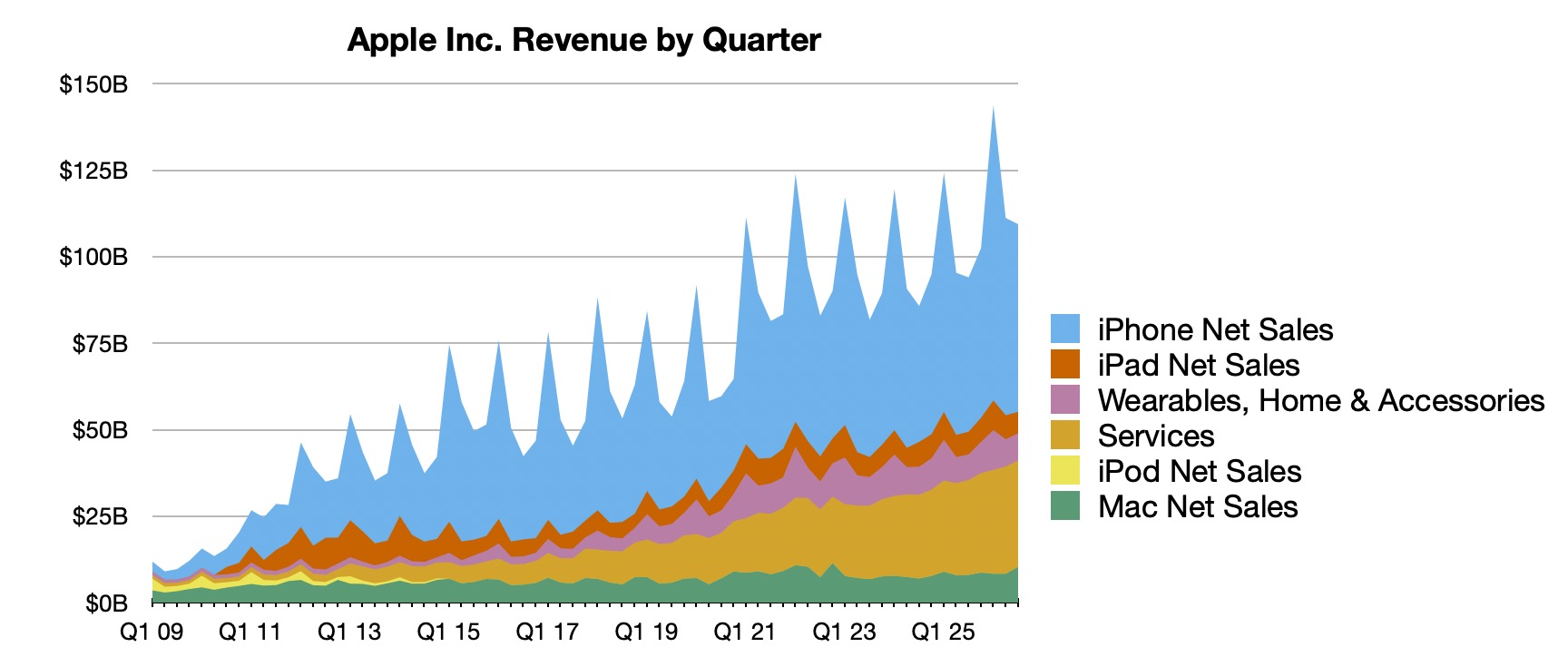
For this significant quarter, Apple reported an impressive total revenue of $109.4 billion. This figure represents a substantial increase compared to the previous year, highlighting the company's ability to consistently expand its market reach and revenue streams. Alongside this robust top-line growth, Apple also announced a net quarterly profit of $29.8 billion. This translates to an earnings per diluted share (EPS) of $2.02, a key metric closely watched by investors as it indicates the company's profitability on a per-share basis.
To put these numbers into perspective, let's compare them to the same period a year ago. In the year-ago quarter, Apple's revenue stood at $94.0 billion, with a net quarterly profit of $23.4 billion, or $1.57 per diluted share. The substantial leap in both revenue and profit underscores a period of exceptional growth and strong operational efficiency for the company.
Breaking new ground, Apple established fresh June quarter records across several vital categories. These include overall revenue and earnings per share, signaling robust demand for its entire ecosystem of products and services. Furthermore, the company set specific revenue records for its flagship iPhone, its popular Mac computers, and its rapidly expanding Services division. This broad-based growth across key segments paints a picture of a well-diversified and highly successful business model.
Another crucial financial indicator, the gross margin for the quarter, reached an impressive 50.1 percent. This figure, representing the percentage of revenue left after deducting the cost of goods sold, improved significantly from 46.5 percent in the year-ago quarter. A higher gross margin typically suggests better cost management or stronger pricing power, both positive signs for the company's financial health. In recognition of its strong performance and commitment to shareholder returns, Apple also declared a quarterly dividend payment of $0.27 per share. This dividend is scheduled to be paid on August 13 to shareholders who are officially recorded as owners by August 10.
Leadership's Perspective: Celebrating Success and Eyeing the Future
Tim Cook, Apple's Chief Executive Officer, expressed immense pride in the company's achievements. He highlighted the record-breaking June quarter as a testament to Apple's strength, noting double-digit revenue growth across its core product categories – iPhone, Mac, and Services – and impressively, in every single geographic segment worldwide. This widespread success indicates that Apple's appeal transcends regional boundaries and product preferences.
"Today, Apple is proud to report our strongest June quarter ever, with double-digit revenue growth across iPhone, Mac and Services, and in every geographic segment," said Tim Cook, Apple's CEO. "At WWDC26, we were thrilled to introduce the all-new Siri AI, alongside all of Apple's latest software innovations and important new child safety features."
Cook also took the opportunity to reiterate the excitement surrounding the company's recent announcements at the Worldwide Developers Conference (WWDC26). A standout innovation introduced was the entirely new Siri AI, poised to transform user interaction with Apple devices. This new AI capability was unveiled alongside a suite of other cutting-edge software innovations and crucial new child safety features, demonstrating Apple's commitment to both technological advancement and user well-being.

Diving Deeper: Conference Call Highlights and Market Reactions
Following the initial announcement, Apple hosts an investor conference call to provide further insights into its financial results and answer questions from analysts. This call is live-streamed and serves as a crucial forum for understanding the nuances behind the numbers. As is customary, MacRumors provided real-time updates and coverage of the key takeaways from this important discussion.
CFO's Optimism and Share Price Dynamics
Kevan Parekh, Apple's Chief Financial Officer, echoed Cook's enthusiasm, emphasizing the "record business performance" during the quarter. He specifically pointed to new June quarter records for both Earnings Per Share (EPS) and operating cash flow, highlighting the company's efficiency in generating cash from its operations. Parekh also revealed that the total number of active Apple devices globally reached an unprecedented high across all major product categories and geographic regions. This "installed base" is a critical indicator of Apple's ecosystem strength, as a larger installed base often translates to more opportunities for service revenue and future product upgrades.
Despite the strong results, Apple's stock experienced some volatility. After a slight decline of approximately 1.4% during regular trading hours, the share price dropped further by another 2.5% in after-hours trading immediately following the earnings release. This often happens because market expectations can be extremely high, and even excellent results might fall short of analysts' loftiest predictions or forward-looking guidance might suggest a slowdown, causing some investors to adjust their positions.
Product Segment Performance: A Mixed Bag with Strong Highlights
The detailed breakdown of revenue by product segment provided further clarity on Apple's growth drivers:
- Mac revenue: Showcased impressive growth, soaring by 28.7% compared to the previous year. This indicates strong demand for Apple's computer lineup.
- iPhone revenue: Continued its upward trajectory with a significant 21.7% increase year-over-year, reaffirming its position as Apple's primary revenue generator.
- Services revenue: Maintained solid growth, rising by 12.1%. This segment, encompassing App Store, iCloud, Apple Music, and more, is a key focus for Apple's long-term strategy due to its recurring nature.
- Wearables, Home and Accessories revenue: Experienced a respectable 6.5% increase. This category includes popular products like the Apple Watch, AirPods, and HomePod, which continue to expand Apple's ecosystem.
The only product segment that saw a year-over-year decline was iPad, which was down 5.9%. This dip can sometimes be attributed to challenging comparisons with strong previous quarters, product cycle timing, or shifts in consumer demand patterns.
Geographic Strength: Global Expansion Continues
Apple's global reach was evident in its geographic revenue performance:
- Europe and Greater China: Each witnessed robust growth with a 22.4% increase in revenue, showcasing strong market penetration and demand in these crucial regions.
- Japan: Saw a healthy 13.4% rise in revenue.
- The Americas: Contributed an 11.1% increase.
- Rest of Asia Pacific: (Excluding Greater China and Japan) recorded a solid 15.6% increase, indicating broad success across diverse Asian markets.
These figures underscore Apple's successful strategy of tailoring its products and marketing efforts to resonate with diverse international audiences.
Pre-Call Jitters: Stock Dip Before a Historic Moment
Just minutes before the highly anticipated conference call, Apple's stock price experienced a further dip, now down nearly 4.5% in after-hours trading. This heightened tension was compounded by the knowledge that this would be Tim Cook's final quarterly earnings call as CEO, adding a layer of historical significance to the event.
The Earnings Call Commences: A New Era Begins
The call officially began with the standard legal disclaimers regarding forward-looking statements, delivered by Suhasini Chandramouli, Apple's Investor Relations chief. The panel for this momentous call featured CEO Tim Cook, CFO Kevan Parekh, and, notably, for the very first time, the incoming CEO, John Ternus. This marked a symbolic transition, with the outgoing and incoming leaders sharing the stage.
Tim Cook opened the discussion by reiterating the strong financial results, stating, "Good afternoon everyone, and thanks for joining the call. Today, Apple is pleased to report $109.4 billion in revenue, up 16% from a year ago and a June quarter record." He acknowledged that these record achievements were accomplished despite facing challenges such as supply constraints and foreign exchange headwinds, which typically exert downward pressure on financial performance. This demonstrates the underlying strength of demand for Apple's offerings.
Cook proudly announced that Apple achieved June quarter records in every geographic segment, indicating widespread market success. He further clarified that these records were set in both developed and emerging markets, showcasing Apple's ability to thrive in diverse economic environments, from established wealthy nations to rapidly growing economies.
The Power of AI: Siri AI Takes Center Stage
Tim Cook then shifted focus to the groundbreaking announcements from WWDC, with a particular emphasis on the new Siri AI. He enthusiastically reported that "The reviews from early users have been phenomenal," underscoring the positive reception of this significant technological leap. "We are feeling incredibly enthusiastic about the impact it's going to have," Cook added, highlighting the company's high expectations for how Siri AI will transform user experience and interaction with Apple devices.
Deep Dive into Product Categories
iPhone: Record-Breaking Popularity
Starting with iPhone, revenue reached an impressive $54.3 billion, a robust 22% increase from the previous year. This performance marked a June quarter record across every geographic segment and also set a new record for customers upgrading their devices. According to industry analyst firm IDC, Apple significantly gained market share globally during the quarter, indicating that the iPhone continues to outcompete rivals. Cook proudly declared, "This is the most popular iPhone lineup we've ever had," a testament to the strong appeal and capabilities of the current models.
Mac: Defying Constraints with Unprecedented Growth
The Mac line delivered its best June quarter ever, with $10.4 billion in revenue, soaring 29% from the previous year. This remarkable growth was achieved despite significant supply constraints, demonstrating exceptionally high demand. The strong performance was primarily driven by the popularity of the MacBook Pro and the new MacBook Neo. IDC confirmed that Apple gained global market share in the computer segment. The Mac set a June quarter revenue record in developed markets and an all-time record in emerging markets, with particularly strong performance observed in Greater China.
Cook lauded the Mac lineup, stating, "The Mac lineup delivers outstanding power-efficient performance, massive memory bandwidth, and next-level AI capabilities." He specifically highlighted the MacBook Neo as being "especially popular, with its distinctive design and excellent value resonating with customers around the world." This new model appears to have struck a chord with consumers, contributing significantly to the Mac's success.
iPad: Performance Boosted by M4
iPad revenue for the June quarter was $6.2 billion. Despite a slight decline year-over-year, Cook emphasized the technological advancements, noting that the addition of the powerful M4 chip to the iPad Air "has made it even more capable, delivering a significant performance boost." This strategic upgrade ensures that the iPad remains a compelling option for users seeking high performance and versatility.
Wearables, Home and Accessories: Connectivity and Innovation
Revenue for Wearables, Home and Accessories reached $7.9 billion, an increase of 6% from a year ago. This segment demonstrated growth in every geographic segment, showcasing the widespread adoption of products like Apple Watch and AirPods. Cook noted, "We continue raising the bar across our AirPods lineup," and highlighted how new features like Live Translation, powered by Apple Intelligence, are "crossing language barriers and connecting like never before." This illustrates how AI is being integrated into Apple's smaller, more personal devices to enhance everyday experiences.
Apple's Long-Term AI Strategy and Ecosystem
Cook provided deeper context on Apple's long-standing commitment to Artificial Intelligence. He explained, "We began laying the groundwork for users to have the best possible experience with AI when we introduced a neural engine in 2017..." This historical perspective shows that Apple's current AI advancements are the result of years of deliberate innovation and investment. "Ever since then, we've innovated and invested deliberately in silicon systems and scalable unified memory architecture designed with AI at their core," Cook added, emphasizing that Apple builds its hardware from the ground up with AI capabilities in mind.
He confidently asserted, "Apple has created the world's best hardware to experience AI, whether using Apple Intelligence, including Siri AI, or third-party offerings." This highlights Apple's dual approach: developing its own powerful AI features while also ensuring its hardware is optimized for other AI applications, solidifying its ecosystem as a premier platform for AI innovation.
Services: Resilience Amidst Headwinds
Services revenue reached $30.7 billion, a respectable 12% increase from a year ago. This growth was achieved "despite significant foreign exchange headwinds," indicating the inherent strength and consistent demand for Apple's diverse service offerings. Cook pointed to the return of popular content, noting that Ted Lasso is returning to Apple TV next week for its fourth season. He also celebrated Apple's recent accolades, including a Tony Award and 89 Emmy Award nominations, showcasing the quality of its original content.
Beyond entertainment, Cook mentioned, "We're halfway through an unforgettable year of F1, and Apple TV subscribers have been tuning in all season." This indicates the successful integration of sports content into Apple's service ecosystem, attracting a broad audience.
New Initiatives and Accessibility
In Retail, Apple recently launched the Apple Upgrade program for customers in the US. This program aims to make it easier for users to get their hands on the latest Apple products, potentially boosting upgrade cycles and customer loyalty. Cook also highlighted Apple's dedication to inclusivity, stating, "In honor of Global Accessibility Awareness Day, we unveiled new features to help users get more out of the products they use every day." This commitment to accessibility ensures that Apple's innovations are beneficial for everyone.
Investing in the Local Economy and Future Manufacturing
Apple demonstrated its commitment to local investment, with Cook stating, "We're doing our part to invest in innovation close to home." He referenced a significant $600 billion commitment to the US over four years, which includes reinvesting tariff refunds back into the US economy. A major new development is an agreement with Broadcom to design and produce custom silicon components and advanced wireless connectivity technologies, an deal expected to exceed $30 billion in US spending. This strategic partnership not only strengthens Apple's supply chain but also fosters domestic technological innovation and job creation.
Further demonstrating this commitment, Apple plans to manufacture the Mac mini at its Advanced Manufacturing Center in Houston. This initiative will also involve training employees and suppliers in the advanced techniques required to build these sophisticated products, boosting local manufacturing capabilities and expertise.
Cook concluded his remarks by reaffirming Apple's core mission: "We will remain guided by our north star: building products and services to enable people to do magical things." He expressed immense personal excitement for the future, adding, "I couldn't be more excited to watch our phenomenal story of innovation continue to unfold, and I've never been more confident that the best is yet to come." These words conveyed a strong sense of purpose and optimism for the company's trajectory.
CFO's Detailed Financial Breakdown
Following Tim Cook's strategic overview, CFO Kevan Parekh provided a more granular breakdown of the financial figures. He confirmed the reported revenue of $109.4 billion, which was up 16% year over year. Product revenue, a core component, stood at $78.7 billion, an 18% increase year over year. Parekh underscored the impressive statistic that Apple's active installed base of devices reached a new all-time high, now exceeding 2.5 billion. This massive user base provides a strong foundation for future growth in both products and services. Services revenue was specifically detailed at $30.7 billion, reflecting a 12% increase year over year.
Parekh elaborated on the company's gross margin, which was 50.1%. He noted that this figure was 80 basis points higher sequentially (compared to the previous quarter) and included a beneficial impact of 2% from tariff refunds. Without these refunds, the gross margin would have been squarely in the middle of the company's guidance range. Product margin, specifically, was 40.1%, up 140 basis points, with tariff refunds contributing 2.5% to this improvement, highlighting the positive effect of these refunds on profitability.
Operating expenses (OpEx) for the quarter were $19.1 billion, an increase of 23%. This rise was primarily driven by significant investments in research and development (R&D), underscoring Apple's commitment to innovation. Net income, the company's profit after all expenses, was $29.8 billion. Apple also generated a strong $34.4 billion in operating cash flow, setting new June quarter records even when excluding the impact of tariff refunds, indicating excellent cash generation capabilities from core business operations.
Key Product Highlights from CFO
- iPhone: Generated $54.3 billion, up 22%. The active installed base of iPhone users grew to an all-time high, and the quarter set a June record for upgraders. The iPhone was the top-selling model in critical markets like the US, urban China, the UK, France, Australia, and Japan.
- Mac: Revenue of $10.4 billion was primarily driven by the exceptional strength of MacBook Neo and MacBook Pro. Growth was observed in both developed and emerging markets, with customer reception for MacBook Neo described as "incredible." The Mac segment also achieved its best quarter ever for both new customers and upgraders.
- iPad: Revenue was $6.2 billion, down 6% year over year against a difficult comparison to a very strong prior year quarter. Despite the slight decline, more than half of the customers who purchased an iPad were new to the product, indicating continued appeal and market expansion.
- Wearables, Home and Accessories: Revenue was $7.9 billion, up 6% year over year. Similar to the iPad, more than half of customers purchasing an Apple Watch were new to the product, showcasing successful market penetration for this popular wearable.
Services revenue, at $30.7 billion, was up 12% despite "significant sequential FX headwinds." Parekh expressed optimism for the future of the Services business, stating, "We are optimistic about the long-term future of our Services business... we have an incredibly strong foundation for growth opportunities." This segment continues to be a strategic pillar for Apple's long-term revenue stability and growth.
Enterprise and Education Adoption
Parekh provided examples of Apple's growing presence in enterprise and education sectors. Morgan Stanley, a major financial institution, deployed more than 20,000 iPhone 17 devices, shifting from employee-owned to corporate-owned devices for enhanced liability and security. This indicates a strong corporate trust in Apple's device security and management capabilities.
In the education sector, Pinellas County Schools in Florida is transitioning 25,000 students from Windows devices to MacBook Neo. This move highlights the MacBook Neo's appeal in educational settings, likely due to its blend of performance, value, and ecosystem advantages. Parekh noted that "About half of the MacBook Neo purchases by US education institutions replaced Windows and Chromebook devices," illustrating Apple's success in converting users from competing platforms.
Capital Returns and Future Outlook
Apple ended the quarter with a substantial $147 billion in cash and $84 billion in debt, maintaining a very healthy financial position. The company returned a significant $33 billion to shareholders, comprising $4 billion in dividends and $25.8 billion in share repurchases, demonstrating a strong commitment to shareholder value.
Looking ahead, Apple's forward projections for the next quarter (September quarter) were shared with some caveats. These projections assume no changes to global tariff rates and that the global macroeconomic outlook does not worsen. Parekh specifically mentioned two main factors that would impact total company revenue: "First, we expect foreign exchange to be a sequential headwind of about two and a half percentage points to the year-over-year total company growth rate from the June quarter over the September quarter." This means a stronger US dollar would make Apple's international earnings worth less when converted back.
Despite these headwinds, Apple expects total company revenue to grow between 9-11% next quarter. iPhone revenue is also expected to be impacted by foreign exchange challenges and supply constraints, though its reported growth rate is projected to be in the mid-teens year over year. Gross margin is expected to be between 47% and 48%, with approximately 1% benefit related to tariff refunds. Operating expenses are forecast to be between $19.1 billion and $19.4 billion, reflecting continued investments. The cash dividend of $0.27 per share remains payable on August 13.
A Fond Farewell: Tim Cook's Final Remarks
Tim Cook took the microphone one last time as CEO during an earnings call, delivering a heartfelt message. "I just wanted to take a moment to say 'thank you' to all of you," he began, extending his gratitude to shareholders, particularly long-term investors who had placed their trust in Apple for many years, and to the analysts who had closely followed the company's journey.
He then expressed immense confidence in his successor, John Ternus. "I am beyond excited for John to step into his new role and lead Apple into its next era. He is truly one of a kind, and there is no better person to take the helm of the company." Cook's endorsement of Ternus was unequivocal, signaling a smooth and confident transition of leadership.
He concluded with a powerful message of optimism and belief in Apple's future: "I couldn't be more confident in his leadership, in our executive team, and in the extraordinary people at Apple that are determined to enrich the lives of our users all over the world. We have a bright future ahead, and I truly have never been more optimistic. So thank you all." These words marked the end of an era under Cook's direct leadership in earnings calls, but also heralded a new chapter for the company.
Analyst Q&A: Deeper Insights and Challenges
The call then moved to the eagerly anticipated question-and-answer session with analysts, providing further clarity on Apple's strategy and outlook. Almost every analyst began by congratulating Tim Cook on his successful tenure and wishing him well.
Navigating Growth Deceleration and Supply Constraints
One analyst inquired about the projected 9-11% growth for the next quarter, noting it represented a deceleration. The question specifically asked how much of this was attributable to supply constraints versus foreign exchange (FX) headwinds.
Apple's response acknowledged the 9-11% growth forecast, explaining that the projected 2.5% sequential headwind from foreign exchange would significantly impact the year-over-year growth rate compared to the June quarter. More critically, the company anticipated "significant" impact from supply constraints affecting iPhone, Mac, and iPad. Combining these two factors, Apple stated, brought the projected growth rate closer to the June quarter's overall company growth rate.
Elaborating on supply constraints, Apple clarified that while they experienced some in the current quarter (primarily Mac, lesser for iPhone and iPad), the situation was set to worsen. These constraints are "primarily driven by availability of the advanced nodes that our SOCs are produced on." Advanced nodes refer to the most cutting-edge manufacturing processes for complex chips (System-on-a-Chip), which are in high demand across the tech industry. The issue, Apple admitted, wasn't a regular supply problem but rather "a demand forecast issue to be candid," meaning the iPhone and Mac performed "remarkably better than we thought they would do," exceeding even high expectations. This unforeseen surge in demand, combined with "less flexibility in the supply chain than normal," meant Apple was "pulling supply ahead and at some point there's a limit to that." For the upcoming quarter, the company expects to be "scrambling on the supply side eventually," with significant constraints and limited flexibility to resolve them quickly.
Addressing Memory Pricing and Sourcing Flexibility
An analyst raised a question about Apple's strategy for memory sourcing, noting reports of the company seeking greater flexibility. The core of the question was whether this was primarily about ensuring supply, mitigating memory inflation, or preserving Apple's value proposition (keeping products affordable for customers).
Apple's response highlighted a troubling trend in memory pricing: "We paid more in March for memory than December quarter, and we paid more in the June quarter than March. We expect this to continue to get worse in September." While Apple benefited from "carry-in inventory" (older, cheaper stock), this benefit is expected to decrease over time. The company also anticipates "lower costs on certain non-memory components," which offers some offset. However, beyond September, the market pricing for memory is seen "continuing to increase," which could "drive an increasing impact on our business." In terms of sourcing, Apple noted that the DRAM market is largely controlled by three major suppliers. The company stated that more suppliers "would be good" for both supply and potentially pricing, and they are "evaluating all options" to address this.
The Apple Upgrade Program: Impact on Replacement Cycles
The Apple Upgrade program, a new retail initiative, was a topic of interest. An analyst asked if it was expected to shorten the replacement cycle for iPhones and potentially impact Mac and iPad, which historically haven't benefited from carrier subsidies in the same way iPhones often have.
Apple explained that the program makes it easier for customers to acquire the latest products through a leasing plan. A key advantage for Apple is that "residual values on Apple products tend to be much higher than residuals on the competition," making such a program more financially viable. It offers an "affordable basis" to get into a product, especially for customers who want to upgrade on a regular schedule. However, it's currently "offered in our retail stores, not across all channels," so the company is still observing customer uptake. Early feedback, though, has been "quite positive," despite its current US-only availability.
Apple Intelligence and Siri AI: Demand Driver and Cost Implications
Questions about Apple Intelligence, Siri AI, and iOS 27 focused on learnings from the public beta, the potential for Siri AI to drive iPhone demand during the holiday season, and how usage patterns might affect compute costs and Apple's ability to recover those costs, potentially through iCloud Plus subscriptions.
Apple expressed extreme excitement for Siri AI, noting overwhelmingly positive feedback from developers, reviewers, and public beta users. The core idea of AI "based on your personal context and that's integrated across the operating system" was highlighted as a major differentiator. While it's still early, Apple acknowledges that "there will be people who want to use it a lot," and therefore, "we will have some kind of upgrade possibilities on iCloud+ where people can buy up the stack." The company is monitoring how this uptake develops, but remains "incredibly excited about where the product is."
Regarding capital intensity, especially for AI features that rely on a hybrid model (on-device processing combined with cloud backend), Apple confirmed that they use both "third-party cloud and our own data centers." They acknowledged growing operating expenses and increased spending on AI in general, noting that "quite a bit more" is being invested. While there are "other locations on the P&L besides OpEx that have AI expenditures," the specific cost impact of Siri AI is still being assessed. However, the potential for iCloud+ upgrades offers a way to offset these costs, though the "balance of that is a bit uncertain at the moment."
The Unforeseen Demand Surge: A "Great Problem"
Another analyst pressed on the supply constraints, particularly regarding their potential impact into the December quarter. Apple reiterated that the primary issue is the availability of "advanced nodes that we run our SOCs on." The candid admission followed: "The root cause of it is not a regular supply issue. It's a demand forecast issue to be candid. Where iPhone and the Mac are both doing remarkably better than we thought they would do, and we had high expectations and it wasn't that our expectations were low."
The company explained that because iPhone growth was 22% and Mac at 29% – "these are extraordinary numbers" – the supply chain, already under normal constraints, had "less flexibility than normal." Having been "pulling supply ahead" to meet demand, there's a limit to how much more can be done. This means that for the upcoming quarter, Apple expects to be "scrambling on the supply side." This, combined with foreign exchange impacts, is precisely what is built into the 9-11% growth rate guidance. Beyond the September quarter, Apple chose not to provide further projections.
Tim Cook emphasized that this wasn't an issue with partners or suppliers, but rather "a great issue in some ways, it's an incredibly strong iPhone and Mac product cycle that has yielded demand beyond expectations." He also mentioned the company's manufacturing efforts in Arizona, sourcing over 100 million components this year as part of the $600 billion US commitment, and expressed satisfaction with the progress of that fabrication facility.
Pricing Philosophy and Protecting Margins
An analyst probed Apple's pricing strategy, asking if they intend to secure agreements for pre-agreed prices for components and whether their approach to product pricing aims to protect gross margins or total gross profit dollars.
Apple explained that they "reluctantly raised prices" due to what they described as a "100-year flood on the memory pricing with exponential increases in memory prices." This was the direct rationale. Regarding their pricing philosophy, Apple clarified that they consider "units revenue and margin" to arrive at a "business judgment" rather than relying on a single mathematical formula. They emphasized looking at "all three dimensions, thinking about it over the long term instead of a 90-day clock," indicating a strategic, holistic approach to pricing.
Services Growth Deceleration and Contributing Factors
A question arose about the 12% services growth being slightly below guidance and the underlying factors contributing to this deceleration, especially considering third-party data sources that hinted at softness in the App Store or potential shifts in time away from the App Store due to AI. The analyst sought clarity on the "moving pieces on Services."
Apple elaborated on the transition from 16% growth in the previous quarter to 12% in the June quarter, identifying foreign exchange (FX) as the primary driver for the year-over-year growth rate difference. Other factors included the theatrical release of F1 last year (creating a tougher comparison) and "some headwinds in mobile gaming and some change to the business model in certain countries," as well as a US ruling on "link out for transactions" (allowing app developers to link to external payment methods). Despite these headwinds, the App Store still "set a June quarter revenue record." Positive trends included strong double-digit growth in various sectors and revenue records in every category. Apple TV viewership reached an "all time high," and Apple Pay saw "a record number of users in both developed and emerging markets." The Services segment continued to attract more customers, surpassing 1.5 billion paid subscriptions, demonstrating robust long-term engagement.
In reflection, Apple stated that they "roughly met our expectations but saw some more softness on mobile gaming and the App Store." For the September quarter, FX is expected to remain a significant headwind, impacting Services more than the overall company. Specifically, FX is projected to cause a "5% headwind from March to September quarter," with an additional "2.5% sequential headwind from June to September."
Demand Assessment and Pull-Forward Concerns
An analyst questioned Apple's assessment of demand, specifically asking if they observed a "pull-forward" of demand (customers buying earlier than they normally would) from consumer, enterprise, or education segments, and if this was factored into future outlooks.
Regarding iPhone, Apple responded that with a consistent "24% growth rate for a while, it's not obvious that what you're asking is true." For iPad and Mac, where prices were reluctantly raised, it's "too early to come to a conclusion of what happens there." The company explained that it takes time for sales channels to adjust to new pricing (due to existing channel inventory) and for consumers to respond. Therefore, more understanding will emerge "in the weeks ahead."
AI's Long-Term Opportunities for Apple
The conversation shifted to the longer-term, thematic impact of AI as it "proliferates towards the edge" (meaning more processing happens on devices rather than solely in the cloud). An analyst asked if Apple foresees AI opening additional opportunities and evolving new addressable markets over time.
Apple's response was unequivocally positive: "These are enormous opportunities for Apple moving forward in AI." The excitement for Siri AI, both in its current state and its future development, was reiterated, along with the positive feedback it has garnered. This suggests Apple views AI not just as a feature enhancement but as a fundamental shift that will unlock entirely new product categories and user experiences.
Global Rollout of Apple Intelligence and Siri AI
A crucial question addressed the global rollout of Apple Intelligence and Siri AI, particularly concerning regulatory environments like the EU and market specifics like China.
Apple acknowledged the challenges, stating, "If you look at the EU, we're working closely with the commission. We want to launch everything, everywhere all of the time. We haven't been able to do that in the EU." The company is actively trying to offer these features in the EU, noting that they are currently "allowed to offer it on the Mac there," as it's not covered by the same regulations as iPhone and iPad. Apple hopes to "reach some sort of solution" for broader deployment.
Regarding China, Apple confirmed that "last week we received approval to ship the original features of Apple Intelligence, things like cleanup and so-forth." They are now working on the rollout of these initial features. However, "there will be more work required down the road for Siri AI," indicating a phased approach and ongoing regulatory discussions in that market. Apple described themselves as being "at the front end of that" process.
Gross Margin Dynamics: FX vs. Commodity Costs
The discussion returned to gross margin, with an analyst seeking clarification on the forecast of 46.5% (without tariff refunds) compared to the 48% delivered in the current quarter (also adjusted for tariffs). The question aimed to discern how much of this change was due to FX versus commodity costs.
Apple explained the sequential change from 49.3% in March (adjusted) to 48.1% in June (adjusted), noting that "most of that is the memory cost impact." While there were partial offsets from "carry-in inventory and some favorable mix," these were not enough to fully counter rising memory prices. The same dynamics are expected from June's 48.1% to the September midpoint of 46.5% (adjusted), with more than the 160 basis point change "explained by memory offset by lower costs and favorable mix." Critically, Apple stated that "FX was a pretty minimal impact versus memory, so the sequential change is really driven by memory." This clarifies that rapidly increasing memory component costs are the primary factor driving down gross margins in the near term.
The conference call concluded, with nearly all analysts taking a moment to congratulate Tim Cook on his remarkable tenure and express their best wishes for his future endeavors.
This article, "Apple Reports 3Q 2026 Results: $29.8B Profit on $109.4B Revenue" first appeared on MacRumors.com
Discuss this article in our forums
from MacRumors
-via DynaSage
