
Apple Opens Houston Advanced Manufacturing Center Ahead of Mac Mini Production
Apple Unveils State-of-the-Art Advanced Manufacturing Center in Houston, Boosting US Production and Innovation
In a significant move that underscores its deep commitment to American manufacturing and technological advancement, Apple has officially opened its Advanced Manufacturing Center (AMC) in Houston, Texas. This cutting-edge facility isn't just another factory; it represents a dual-purpose hub for both high-tech production and invaluable educational training. Located strategically within the same Houston complex where Apple currently manufactures its sophisticated AI servers, the new AMC is poised to become a cornerstone of American ingenuity, with plans to begin manufacturing the popular Mac mini later this year.
This initiative marks a pivotal moment for Apple, demonstrating a tangible investment in the national economy, workforce development, and the future of advanced manufacturing within the United States. By bringing critical production capabilities closer to home and simultaneously offering unparalleled training opportunities, Apple is not just creating products; it's fostering an ecosystem of innovation and skill-building that promises to benefit countless businesses, workers, and students across the nation.
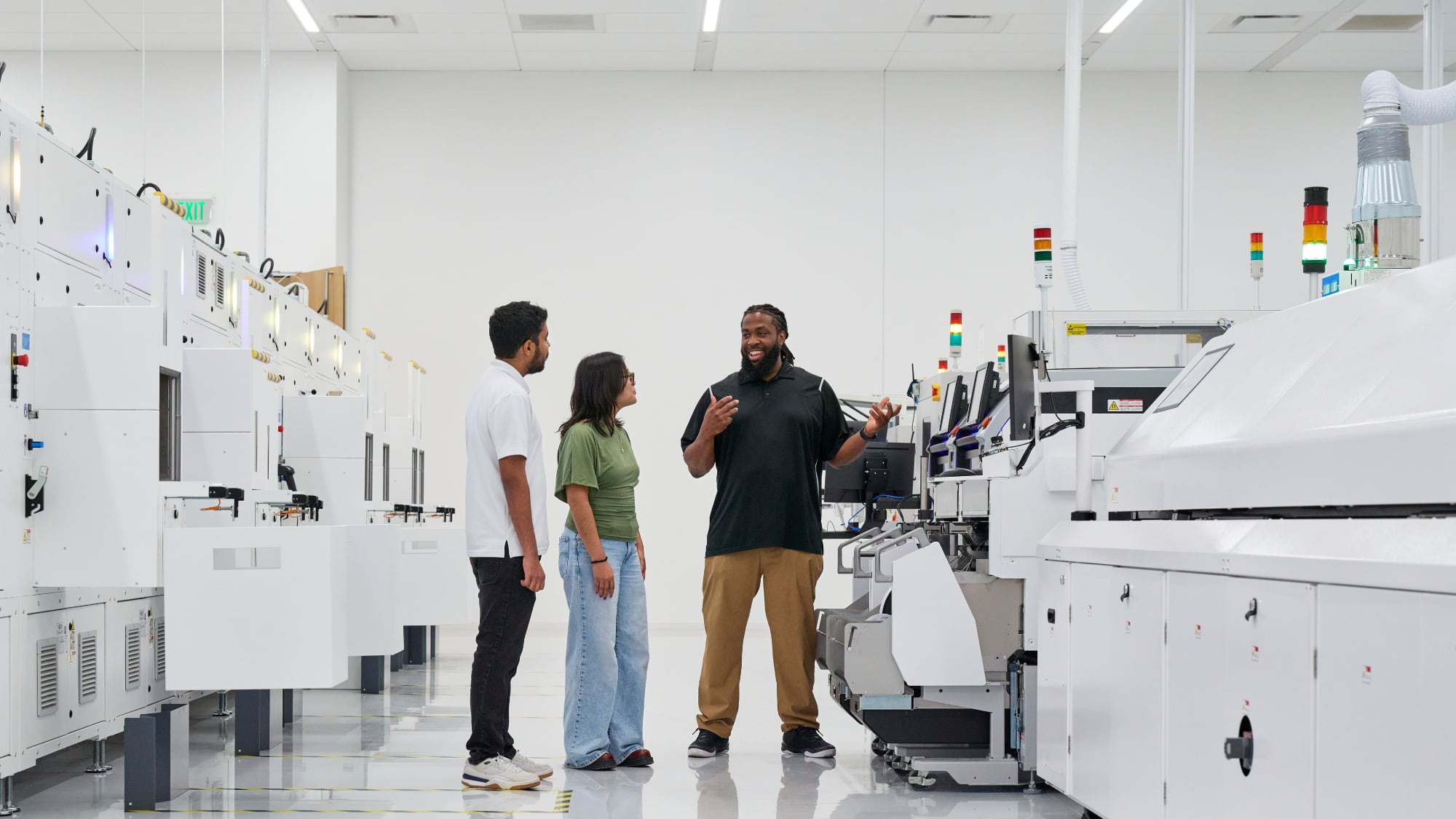
The Heart of American Innovation: A Dual-Purpose Manufacturing Hub
The newly unveiled Advanced Manufacturing Center in Houston stands as a testament to Apple's vision for a resilient and technologically advanced domestic supply chain. Choosing Houston, a city renowned for its burgeoning tech sector and skilled workforce, provides Apple with an ideal location to expand its manufacturing footprint. The AMC is not merely an expansion but an evolution, strategically co-located with existing operations that produce high-performance AI servers. This co-location fosters synergy, allowing for shared expertise, streamlined logistics, and the efficient utilization of state-of-the-art infrastructure already in place.
The decision to manufacture AI servers in the U.S. reflects a growing trend towards localizing critical technology infrastructure, particularly for components vital to data centers and advanced computing. These servers are the backbone of many modern digital services, including Apple's own cloud-based offerings and artificial intelligence capabilities. Producing them domestically enhances supply chain security, reduces lead times, and supports American jobs in a highly specialized field.
Adding the Mac mini to the Houston facility's production line later this year further solidifies the center's importance. The Mac mini, celebrated for its compact design and powerful performance, serves a diverse user base, from everyday consumers to creative professionals and even server administrators. Bringing its manufacturing to the U.S. signifies a deeper commitment to domestic production across Apple's product lines, ensuring that one of its most versatile computers is built with American craftsmanship and innovation. This move is expected to create new jobs, both directly within the facility and indirectly through supporting industries, reinforcing Apple's long-term investment in the American economy.
Empowering Small and Medium Businesses: A Hub for Practical Learning
Beyond its significant manufacturing capabilities, a core mission of Apple's Houston Advanced Manufacturing Center is to serve as a vital educational resource. A substantial 20,000-square-foot section of the facility is dedicated entirely to free training and educational sessions, specifically designed to empower small and medium businesses (SMBs). This commitment to education is crucial in today's rapidly evolving technological landscape, where staying competitive often hinges on access to the latest manufacturing techniques and tools.
For SMBs, these sessions offer an invaluable opportunity to elevate their operations, improve efficiency, and innovate their own products and processes. Apple understands that a robust supply chain and a thriving ecosystem of partners are built on shared knowledge and capabilities. By providing free access to cutting-edge training, Apple is helping to cultivate a stronger, more skilled manufacturing base across the United States, allowing smaller companies to adopt best practices that might otherwise be out of reach.
Participants in these programs will gain hands-on experience in interactive labs, utilizing the same advanced tools and equipment found in Apple's own production lines. A particularly exciting feature is the inclusion of a holographic lab table, which offers a futuristic and highly immersive learning environment. This innovative technology allows users to visualize complex designs, simulate assembly processes, and troubleshoot virtual prototypes in three dimensions, providing an unparalleled understanding of manufacturing challenges and solutions without the need for physical materials initially. Such advanced tools ensure that the training is not merely theoretical but deeply practical and forward-thinking.
Apple emphasizes that attendees will learn the "same innovative processes" used to craft Apple's renowned devices. This isn't a watered-down version of their methods; it's an authentic transfer of knowledge in areas like precision engineering, which ensures components fit together flawlessly; advanced quality control, guaranteeing every product meets stringent standards; lean manufacturing principles, minimizing waste and maximizing efficiency; and automation strategies, which are key to scaling production while maintaining consistency. By sharing these industry-leading methodologies, Apple aims to equip businesses with the knowledge and confidence to innovate their own production lines, adapt to new technologies, and ultimately drive their own success in an increasingly competitive global market.
Tim Cook's Vision: Cultivating the Future of American Manufacturing
Apple CEO Tim Cook eloquently articulated the company's ambitious vision for the Houston facility and its broader commitment to American manufacturing during the center's opening. His statements underscore not just a financial investment but a deep-seated belief in the potential of American workers and the power of domestic innovation.
Cook highlighted the extraordinary speed and scale of Apple's commitment: "In less than nine months, we have invested hundreds of millions of dollars into this Houston facility. We stood up a factory, started production, and shipped the first advanced AI servers off the line." This rapid turnaround demonstrates Apple's agility and its capacity to execute large-scale, complex projects quickly. The investment of "hundreds of millions of dollars" signifies a substantial and long-term commitment, not just to the Houston site but to the broader strategy of strengthening U.S. manufacturing capabilities. The fact that advanced AI servers are already being produced and shipped from this facility speaks volumes about its operational readiness and strategic importance. These servers are crucial for powering Apple's data centers globally, supporting everything from Siri and iCloud to advanced machine learning research, making their domestic production a strategic advantage for both security and innovation.
Cook continued, expressing the company's excitement for the AMC's dual role: "Today, we're thrilled to open our new Advanced Manufacturing Center, a place where businesses, workers, and students can learn the same innovative processes that we use to make Apple's most groundbreaking products." This statement perfectly encapsulates the integrated nature of the facility – a place where manufacturing prowess meets educational outreach. By providing access to the "same innovative processes" used for products like the iPhone, Mac, and Apple Watch, the AMC will empower a new generation of manufacturers and innovators. It’s about democratizing access to the kind of high-level engineering and production knowledge that has made Apple a global leader.
The announcement of "Mac mini production later this year" further reinforces the tangible impact of the AMC on Apple’s product lineup. For many, the Mac mini is an entry point into the Apple ecosystem, a versatile machine that often serves as a primary computer or a powerful home server. Producing it in the U.S. adds another layer of significance to this beloved product, connecting it directly to American craftsmanship and job creation.
Perhaps the most profound aspect of Cook's message was his overarching philosophy: "We believe in American workers and American ingenuity, and we are moving at an incredible pace because we want to build more than great products. We want to build the future of American manufacturing." This statement goes beyond corporate ambition; it outlines a vision for national economic revitalization. The belief in "American workers" speaks to job creation, investing in skilled labor, and providing opportunities for professional growth. "American ingenuity" highlights the nation's capacity for innovation, problem-solving, and leading the charge in new technological frontiers. Apple isn't just seeking to manufacture efficiently; it's actively participating in shaping the future of manufacturing itself, pushing for advancements in automation, sustainability, and workforce development. This holistic approach aims to inspire other companies and contribute to a stronger, more competitive American industrial base for decades to come.
Curriculum and Expertise: Bridging the Skills Gap
The training programs at Apple's Advanced Manufacturing Center are meticulously designed to address the evolving demands of modern industry, bridging the critical skills gap that many businesses face. Led by seasoned Apple experts, these sessions offer a deep dive into the practical aspects of high-tech production, moving far beyond theoretical concepts.
One primary focus is on "advanced manufacturing principles for final assembly." This area covers sophisticated techniques such as lean manufacturing, which aims to maximize value and minimize waste in production; automated assembly lines, integrating robotics and precision machinery for increased efficiency and consistency; and quality assurance protocols, ensuring every product meets Apple's rigorous standards. Participants will learn about complex material handling, ergonomic workstation design, and the use of advanced tooling to achieve micron-level accuracy in product assembly. The goal is to instill a comprehensive understanding of how to optimize assembly processes for both speed and quality, skills directly transferable to a wide range of industries.
Another crucial topic is "design considerations for printed circuit board assembly." Printed circuit boards (PCBs) are the literal brains of modern electronics, and their assembly requires immense precision and specialized knowledge. Training in this area will delve into topics like component placement optimization, thermal management to prevent overheating, electromagnetic interference (EMI) shielding to ensure signal integrity, and robust soldering techniques. Attendees will learn how design choices made early in the product development cycle directly impact manufacturability, reliability, and cost-effectiveness. This knowledge is invaluable for businesses looking to design and produce their own electronic devices or improve existing ones.
The interactive workshops are a cornerstone of the AMC's educational philosophy. Unlike traditional lectures, these workshops provide hands-on experience using the "site's representative production facility and equipment." This means participants aren't just reading about a robotic arm; they're learning to program and operate it. They're not just discussing quality control; they're performing inspections and defect analysis on actual or simulated product lines. This immersive approach ensures that learning is practical, engaging, and directly applicable to real-world scenarios.
A key objective is for participants to "learn to identify and adapt to production challenges in real time." This involves training in problem-solving methodologies, root cause analysis for manufacturing defects, process improvement techniques like Kaizen, and agile manufacturing strategies that allow for quick adjustments to production plans. By simulating common manufacturing roadblocks and guiding participants through their resolution, the AMC empowers businesses and workers to become proactive problem-solvers, capable of maintaining high-quality output even when faced with unexpected difficulties. The guidance of Apple's experts, who bring years of experience from developing and producing some of the world's most sophisticated electronics, provides an unparalleled level of insight and mentorship, truly bridging the gap between academic knowledge and industrial application.
Investing in the Next Generation: Opportunities for Local College Students
Looking ahead, Apple's Advanced Manufacturing Center will extend its educational outreach to cultivate the next generation of innovators and skilled workers by offering hands-on training to local college students. This forward-thinking initiative is designed to create a direct pipeline between academic learning and real-world industry demands, providing students with unparalleled opportunities to gain practical experience in advanced manufacturing.
For college students in Houston and the surrounding areas, this means direct exposure to cutting-edge technologies and manufacturing processes that are typically only accessible within large corporations. Students will have the chance to work with the same equipment and methodologies used to produce Apple's devices, giving them a significant head start in their careers. This kind of experiential learning is invaluable for engineering, industrial design, supply chain management, and computer science students, offering them a clear understanding of how theoretical knowledge translates into tangible products.
The impact on local educational institutions will also be substantial. Collaborations with the AMC can enrich curricula, provide students with unique internship and co-op opportunities, and potentially inspire new research and development partnerships. By fostering a close relationship between academia and industry, Apple is helping to ensure that the local workforce is highly skilled, innovative, and ready to meet the demands of the modern manufacturing sector.
Ultimately, this investment in student training is about more than just individual career readiness; it's about building a sustainable talent pool for the entire region and country. By equipping young minds with the practical skills and innovative mindset required for advanced manufacturing, Apple is contributing to a future where American ingenuity continues to lead the global technological landscape. It helps to secure a future where the U.S. remains at the forefront of innovation, with a strong, capable workforce ready to take on the challenges and opportunities of tomorrow's industries.
Apple's Broader Commitment to US Manufacturing
The opening of the Houston Advanced Manufacturing Center is not an isolated event but a significant component of Apple's much larger strategic initiative to bolster manufacturing within the United States. This center is a tangible manifestation of Apple's pledge to spend $600 billion to support manufacturing and job creation across the U.S. This monumental financial commitment underscores a profound shift towards greater domestic production and investment.
The scope and impact of this massive investment extend far beyond Apple's direct operations. It encompasses partnerships with hundreds of suppliers and manufacturers across all 50 states, funding for advanced research and development, and support for critical infrastructure. By channeling such vast resources into the U.S. economy, Apple is directly contributing to job creation in diverse sectors, from highly specialized engineering roles to assembly line positions and logistics management. This surge in economic activity helps to strengthen local communities and fosters a more resilient national economic framework.
One of the primary benefits of this focus on domestic manufacturing is enhanced supply chain resilience. Global events have highlighted the vulnerabilities of relying solely on international supply chains. By increasing production within the U.S., Apple can reduce lead times, mitigate risks associated with geopolitical fluctuations, and respond more agilely to market demands. This localization also offers greater control over quality standards and labor practices, ensuring that products are made under ethical and sustainable conditions.
Furthermore, this commitment aligns with broader national goals of revitalizing America's industrial base and maintaining technological leadership. Domestic manufacturing contributes to national security by keeping critical technologies and expertise within the country. It also fosters a virtuous cycle of innovation, as proximity between R&D, design, and manufacturing can accelerate product development and problem-solving. Environmentally, localizing production can potentially reduce the carbon footprint associated with long-distance shipping, contributing to Apple's broader sustainability goals.
Apple's $600 billion pledge represents a powerful statement about the company's belief in the enduring strength of American innovation and the skill of its workforce. It's an investment not just in factories and machinery, but in people, ideas, and the future economic prosperity of the United States. The Houston AMC is a shining example of how this commitment is translating into real-world impact, driving both technological advancement and widespread economic benefit.
How to Engage: Visiting the Advanced Manufacturing Center
The training and educational opportunities at Apple's Advanced Manufacturing Center in Houston are designed to be accessible and beneficial for a wide range of small and medium businesses (SMBs) across various industries. Apple is actively encouraging interested parties to take advantage of these unique resources.
Businesses that are keen to learn about the innovative manufacturing processes, utilize the interactive labs, and connect with Apple experts can easily sign up for notifications regarding future sessions. This ensures that they stay informed about upcoming schedules, curriculum details, and registration procedures as new programs become available. The sign-up process is streamlined and can be completed directly on Apple's official website, providing a convenient gateway to these invaluable educational resources.
By registering for notifications, businesses can gain early access to information about workshops focusing on advanced assembly, printed circuit board design, quality control, automation, and more. This proactive engagement will allow them to plan their participation effectively and ensure they don't miss out on the chance to enhance their operational capabilities. Apple is committed to making these educational opportunities as impactful as possible, and early registration ensures that all interested businesses have the chance to be part of this exciting initiative.
Moreover, as the center expands its offerings to include hands-on training for local college students in the future, educational institutions and individual students will also be able to find relevant information and sign-up opportunities on the same portal. This ensures broad access to a program designed to foster the next generation of American manufacturing talent. The Houston AMC is not just a place of production; it's a dynamic learning environment poised to uplift businesses and individuals alike, fostering a stronger, more innovative manufacturing ecosystem for years to come.
Conclusion: A Blueprint for the Future
The inauguration of Apple's Advanced Manufacturing Center in Houston represents far more than the opening of a new facility; it marks a significant milestone in the ongoing story of American innovation and manufacturing. This state-of-the-art center is a powerful embodiment of Apple's deep and multifaceted commitment to investing in the United States, serving as both a cutting-edge production hub for critical technologies like AI servers and the Mac mini, and an unparalleled educational resource for businesses and future generations.
By combining high-volume, advanced manufacturing with comprehensive, hands-on training for small and medium businesses and, eventually, local college students, Apple is setting a new standard for corporate responsibility and economic development. The investment of hundreds of millions of dollars and the pledge of a staggering $600 billion towards U.S. manufacturing underscore a belief in the ingenuity of American workers and the resilience of the nation's industrial base. This initiative is designed to create jobs, foster skilled talent, enhance supply chain security, and drive technological progress right here at home.
The Houston AMC is a tangible example of how strategic investment can lead to a ripple effect, positively impacting local economies, equipping the workforce with future-proof skills, and inspiring a new era of manufacturing excellence. It is a blueprint for how a global technology leader can contribute meaningfully to national prosperity, building not just exceptional products, but also the very future of American industry. As the Mac mini production gears up and training sessions commence, the Advanced Manufacturing Center in Houston stands ready to play a pivotal role in shaping a more innovative, robust, and domestically focused manufacturing landscape.
This article, "Apple Opens Houston Advanced Manufacturing Center Ahead of Mac Mini Production" first appeared on MacRumors.com
Discuss this article in our forums
from MacRumors
-via DynaSage
