
Supergirl’s Reported Behind-The-Scenes Drama Was Bad Enough For DC To Make Its Own Cut
The Supergirl Saga: Unpacking the Creative Clash Between Craig Gillespie and DC Studios
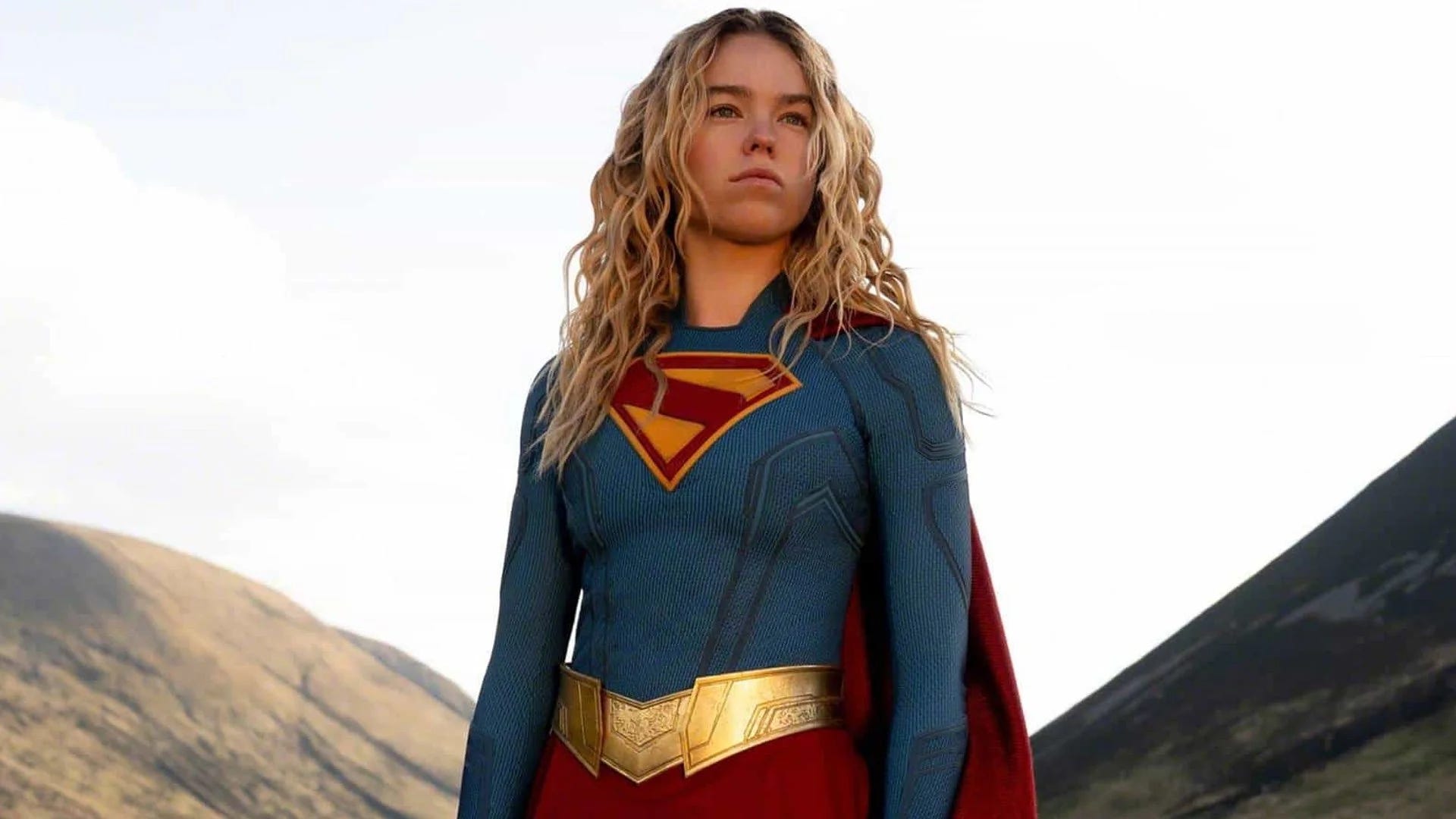
In the fast-paced world of Hollywood, where superhero movies often dominate the box office, news of a director departing a major project due to "creative differences" is not uncommon. Yet, when the acclaimed director Craig Gillespie, known for his unique storytelling in films like *I, Tonya* and *Cruella*, parted ways with DC Studios over a Supergirl project, it sent ripples through the industry. The simple statement that Gillespie and DC Studios "were not creatively aligned" hints at a much deeper story, one that touches upon the complexities of artistic vision clashing with corporate mandates and the challenges of building a cohesive cinematic universe.
This article dives into what "creative alignment" truly means in filmmaking, explores the distinctive artistic approach of Craig Gillespie, examines the current strategic direction of DC Studios, and speculates on the potential points of divergence that led to this significant split. Understanding this situation offers valuable insight into the delicate balance between a director's individual artistic expression and a studio's overarching vision for its valuable intellectual properties.
The Initial Buzz and The Sudden Halt
The prospect of Craig Gillespie directing a Supergirl film or series was, for many, an exciting one. Gillespie has a remarkable track record of taking complex characters, often outsiders or anti-heroes, and presenting their stories with nuance, grit, and often a darkly comedic edge. His films are celebrated for their strong character development, distinctive visual styles, and an ability to delve into the human (or superhuman) condition in unexpected ways. Imagine this sensibility applied to Kara Zor-El, a powerful alien trying to find her place on Earth.
When news initially broke of his involvement, fans and critics alike speculated on what kind of Supergirl story we might get. Would it be a fresh, unconventional take on the Kryptonian hero? Could it inject a much-needed unique voice into the evolving DC Universe? The possibilities seemed endless, promising a Supergirl narrative that might deviate from traditional superhero tropes. However, these discussions were cut short when reports confirmed that Gillespie would no longer be helming the project. The reason, as stated, was a lack of "creative alignment" – a phrase that, while vague, speaks volumes about the intricate push and pull in major film productions.
Deconstructing "Creative Alignment" in Hollywood
The term "creative alignment" is a polite and professional way to describe a fundamental disagreement on the artistic direction of a project. In a multi-million-dollar production like a superhero film, this can encompass a vast array of elements, from the grand narrative arc to the smallest character detail. It's far more than just a difference of opinion; it represents a divergence in core philosophy that can make collaboration impossible.
Key areas where creative alignment is crucial include:
- Vision and Tone: This is arguably the most significant. Does the director envision a dark, gritty, character-driven drama, while the studio prefers a lighter, more action-packed, family-friendly adventure? Gillespie's work often leans into character complexities and a unique tone that might not always fit a studio's broader franchise strategy.
- Script and Character Interpretation: A director might have a specific reading of a character's motivations, background, or emotional journey that clashes with the studio's established lore or future plans for that character within a shared universe. Changes to dialogue, plot points, or character arcs can become contentious.
- Story Structure and Pacing: Some directors prefer a slow burn, allowing characters to develop over time, while studios might demand a faster pace to keep audiences engaged, especially for tentpole releases.
- Budget and Production Scope: A director's artistic vision might require a certain budget or production scale that the studio is unwilling or unable to provide, or vice-versa. Creative choices often have significant financial implications.
- Integration into a Shared Universe: For franchises like the DC Universe, every film must, to some extent, fit into a larger narrative tapestry. A director's standalone vision might not integrate seamlessly with the studio's overarching story plans, character cameos, or future plot developments.
- Target Audience: A studio might aim for a broad, four-quadrant audience, while a director might be more interested in a niche, artistically challenging project.
When these fundamental elements don't mesh, the production faces an uphill battle. It can lead to constant conflict, creative compromises that dilute the film's potential, or, as in Gillespie's case, a mutual decision to part ways before filming even begins, to avoid further complications and ensure the best outcome for the project.
Craig Gillespie's Distinctive Vision: What He Might Have Brought to Supergirl
To understand the potential clash, one must first appreciate Craig Gillespie's unique directorial style. He is not a director who simply executes a studio's script; he brings a powerful, often subversive, artistic voice to his projects. His filmography showcases a clear pattern of exploring complex individuals who defy easy categorization, making them simultaneously relatable and profoundly human (or, in some cases, surprisingly villainous).
Exploring Outsiders and Anti-Heroes
In *Lars and the Real Girl* (IMDb Link), Gillespie deftly handles a story about a man who forms a romantic relationship with a life-sized doll. What could have been a crude comedy becomes a poignant, empathetic exploration of loneliness, community, and unconventional love. Gillespie treats Lars's delusion with respect, allowing the audience to understand and even root for him, while never shying away from the inherent strangeness of the situation. This ability to find the humanity in the unusual is a hallmark of his work.
Then there's *I, Tonya* (IMDb Link), a biographical black comedy that chronicles the life of figure skater Tonya Harding. Gillespie doesn't just present the facts; he dissects the media circus, the poverty, the abuse, and the raw ambition that shaped Harding. The film is irreverent, darkly humorous, and unapologetically messy, much like its subject. It challenges viewers to empathize with a figure often demonized by the public, offering a multifaceted portrait of a flawed individual pushed to extremes. His narrative technique, often featuring direct-to-camera interviews and a breaking of the fourth wall, creates an intimate yet critical distance, forcing the audience to grapple with uncomfortable truths.
Most recently, *Cruella* (IMDb Link) saw Gillespie take a classic Disney villain and reimagine her origin story with punk-rock flair. The film is a visually stunning, high-energy spectacle, but at its heart, it's about a rebellious young woman finding her identity and embracing her darker tendencies in a rigid, unforgiving world. Gillespie injects the film with a kinetic energy, a rebellious spirit, and a keen eye for character motivation, transforming a one-dimensional antagonist into a complex, stylish anti-heroine. He managed to weave a narrative that was both entertaining and thought-provoking, while still fitting within the Disney brand, albeit pushing its boundaries.
What This Means for Supergirl
Given this track record, it's not hard to imagine what Gillespie might have envisioned for Supergirl. He likely would have focused on Kara Zor-El's sense of alienation and her struggle to reconcile her Kryptonian heritage with her life on Earth. He might have explored her status as an "other" with profound power, rather than simply as Superman's cousin. His Supergirl could have been an outsider, perhaps even a bit rebellious, grappling with her identity and purpose in a world that might fear or misunderstand her. He excels at portraying characters who are misunderstood or misjudged, and Supergirl, despite her heroism, often carries the burden of her legacy and immense power.
A Gillespie-directed Supergirl might have been less about generic superheroics and more about the internal journey of a young woman burdened by extraordinary abilities and an immense responsibility. It could have featured a darker, more introspective tone, infused with his signature blend of drama and subtle, perhaps even dark, humor. His approach would likely have prioritized character depth and emotional resonance over strict adherence to traditional comic book tropes, potentially offering a Supergirl that was gritty, complex, and deeply humanized, even within her alien context.
DC Studios' Strategic Imperative: A Cohesive Universe
On the other side of the "creative alignment" coin is DC Studios, now under the joint leadership of James Gunn and Peter Safran. Their mandate is clear: to establish a cohesive, interconnected, and critically successful DC Universe (DCU) that can stand proudly alongside its rivals. This new era for DC comes after years of a somewhat disjointed "DCEU" (DC Extended Universe), which saw mixed critical reception and inconsistent box office performance, often struggling to find a consistent tone or narrative direction across its various films.
Lessons from the Past and the Path Forward
The previous iteration of DC films often suffered from a lack of overarching creative control. Directors were given significant freedom, which sometimes led to wildly different tones and interpretations of characters across projects, making it difficult for audiences to invest in a unified universe. While artistic freedom is often lauded, for a shared universe strategy, it can be a double-edged sword.
Gunn and Safran's vision, as outlined in their "Chapter 1: Gods and Monsters" plan (DC.com Link), emphasizes storytelling consistency, interconnected narratives, and a clear creative roadmap. Every project, whether a film or a TV series, is intended to fit into this grand design, building towards larger story arcs and character developments. This approach requires a level of creative oversight and collaboration that prioritizes the health of the entire universe over the singular vision of an individual filmmaker, particularly for characters as central as Supergirl.
The Importance of Supergirl in the New DCU
Supergirl is a foundational character in the DC pantheon. Her story is intrinsically linked to Superman's, and her presence in the new DCU is critical for exploring themes of legacy, hope, and what it means to be a powerful alien protector. The upcoming Supergirl film, *Supergirl: Woman of Tomorrow*, is based on Tom King's acclaimed comic series, which offers a more mature, contemplative, and slightly darker take on the character. This choice of source material already hints at DC Studios' desire for a specific kind of Supergirl story – one that is perhaps more epic and emotionally resonant than a purely lighthearted superhero romp.
For DC Studios, ensuring that the Supergirl project aligns perfectly with their broader narrative goals, character portrayals, and the overall tone of the new DCU is paramount. They cannot afford another project that feels disconnected or undermines the careful groundwork they are laying. This means that while a director's unique vision is valued, it must also operate within the defined parameters of the shared universe. This often necessitates compromise, and sometimes, if the visions are too disparate, a separation becomes inevitable.
Where Visions Diverge: Hypothetical Scenarios
Given Craig Gillespie's history and DC Studios' current objectives, we can speculate on several key areas where their creative visions might have diverged, leading to the "creative alignment" issue:
1. Tone and Aesthetic
Gillespie excels at a distinct blend of gritty realism, dark humor, and often a slightly melancholic or rebellious undertone. His films aren't afraid to be uncomfortable or to explore morally ambiguous territory. DC Studios, while open to different tones, likely has a specific range in mind for Supergirl, especially one intended to launch a major character within a new universe. While *Woman of Tomorrow* is darker, it's still fundamentally a story of heroism and hope through struggle. Gillespie's interpretation might have leaned too heavily into the "dark" or "rebellious" aspects, potentially pushing the character beyond what DC considers suitable for its flagship universe, or perhaps the 'darkness' he intended was too niche for a blockbuster audience.
2. Character Arc and Origin Story
Supergirl's origin, particularly the *Woman of Tomorrow* storyline, sees her as a hardened, cynical hero who has seen too much and is tasked with a quest that forces her to reconnect with her ideals. Gillespie might have wanted to emphasize her trauma and disillusionment even more, perhaps depicting a Supergirl who is far more jaded and less traditionally heroic than DC Studios was comfortable with. Conversely, DC might have wanted her to retain a stronger connection to her iconic optimistic portrayal, even within a darker narrative, to ensure she remains an aspirational figure. Disagreements over how central Superman is to her narrative, or how independent her story should be from his shadow, could also have been significant.
3. Integration with the Wider DCU
A core tenet of the Gunn/Safran DCU is interconnectedness. Every film and show is expected to contribute to the larger tapestry. Gillespie, known for his character-driven, standalone narratives, might have preferred to tell a more isolated Supergirl story, one that didn't necessarily need to set up future crossovers or adhere strictly to the evolving continuity. This could clash with DC's demands for strategic world-building, character introductions for future projects, or specific narrative beats that serve the overall universe first.
4. Creative Control and Studio Oversight
Directors working on major franchise films often face more studio oversight than on independent projects. DC Studios, having just rebooted their universe, would undoubtedly maintain a tight leash on key characters. Gillespie, as an auteur director, is used to a certain level of creative freedom. It's plausible that the level of studio intervention in the script, casting, or even visual style might have become a point of contention. This isn't about one side being "right" or "wrong," but about differing expectations of control and collaboration.
5. Budget and Production Scale
Gillespie's films, while visually distinct, are not always mega-budget blockbusters, even *Cruella* focused heavily on character and aesthetic. A Supergirl film, however, would demand significant visual effects and action sequences. Disagreements could arise over how best to allocate resources, whether certain set pieces were essential, or if a more grounded, character-focused approach was feasible within the expected blockbuster budget and scope.
A Familiar Hollywood Narrative: Director Departures in Major Franchises
The situation with Craig Gillespie and Supergirl is not unique; it's a recurring theme in the history of major film franchises. The high stakes, enormous budgets, and pre-existing fan bases create an environment ripe for creative clashes between ambitious directors and protective studios.
One of the most famous examples is **Edgar Wright and *Ant-Man*** (Marvel.com Link). Wright, known for his distinctive visual style and rapid-fire editing (*Shaun of the Dead*, *Baby Driver*), spent years developing *Ant-Man* for Marvel. However, shortly before production began, he departed due to "creative differences," reportedly over script changes demanded by Marvel to better integrate the film into the Marvel Cinematic Universe (MCU). Wright's vision was likely more idiosyncratic and less beholden to the MCU's interconnectedness, clashing with the studio's need for continuity. This led to Peyton Reed taking over and delivering a film that, while successful, many fans still wonder what Wright's version would have been.
Another instance was **Phil Lord and Christopher Miller on *Solo: A Star Wars Story*** (StarWars.com Link). The duo, famous for their innovative and comedic approach (*The Lego Movie*, *21 Jump Street*), were famously fired deep into production. Reports suggested that Lucasfilm wanted a more traditional Star Wars tone, while Lord and Miller were improvising heavily and aiming for a more comedic and perhaps irreverent take on Han Solo's origin. Ron Howard was brought in to reshoot a significant portion of the film, highlighting the studio's determination to maintain a specific brand image.
Even Zack Snyder, the architect of the initial DCEU, ultimately faced significant creative challenges and retooling with *Justice League*, leading to Joss Whedon's involvement and a vastly altered final product (before the eventual release of the *Snyder Cut* HBO Max Link), underscoring the constant tension between a director's vision and studio interference, particularly when a shared universe is at stake.
These examples illustrate that when a director's unique voice clashes with a studio's established brand, interconnected universe requirements, or commercial aspirations, the studio often asserts its control, even if it means losing a talented filmmaker. For DC Studios, having just initiated a major reboot, this control is arguably more critical than ever.
The Road Ahead for Supergirl and the DCU
With Craig Gillespie's departure, DC Studios will continue its search for a director who is creatively aligned with their vision for *Supergirl: Woman of Tomorrow*. This film is expected to be a key component of James Gunn and Peter Safran's "Chapter 1: Gods and Monsters" slate, introducing a Supergirl who is distinctly different from previous iterations. The character will reportedly be portrayed as more "brutal" and hardened, reflecting the survivalist themes of the comic series, but still retaining her core heroism and capacity for hope.
The search for a new director will likely focus on filmmakers who can deliver a sophisticated, character-driven superhero narrative that fits within the grittier yet ultimately hopeful tone envisioned for this version of Kara Zor-El, while also being capable of handling the visual spectacle required for a major DC film. The studio will need someone who can both respect the source material and integrate the character seamlessly into the broader DCU narrative that is currently being constructed.
This setback, while disappointing for those excited by Gillespie's involvement, underscores DC Studios' commitment to their new direction. It signals that creative synergy and adherence to the overarching universe plan are non-negotiable. While the exact details of the disagreement remain private, the outcome serves as a stark reminder of the delicate and often challenging process of bringing ambitious, large-scale cinematic universes to life.
Conclusion: The Art vs. Commerce Tightrope
The parting of ways between Craig Gillespie and DC Studios over the Supergirl project is a microcosm of the larger struggles often faced in Hollywood, particularly within the realm of massive superhero franchises. It highlights the perpetual tension between a director's singular artistic vision and a studio's commercial imperatives, brand consistency, and the complex demands of building a shared cinematic universe.
Craig Gillespie is an exceptional filmmaker whose unique storytelling ability has given us memorable and acclaimed films. His potential take on Supergirl would undoubtedly have been distinctive and thought-provoking. However, DC Studios, under new leadership, is charting a very specific course for its revitalized universe, prioritizing cohesion and a unified vision above all else. When these two powerful forces are not "creatively aligned," separation, though often regrettable, becomes the most practical path forward for both parties.
Ultimately, this situation reminds us that filmmaking, especially at the blockbuster level, is a delicate dance between art and commerce. For a major franchise like the DC Universe, every piece must fit precisely into the grand puzzle. The Supergirl project will continue its journey, and eventually, a director whose vision perfectly harmonizes with DC Studios' ambitious plans will emerge. Until then, the story of Craig Gillespie's near-involvement serves as a fascinating case study in the intricate art of Hollywood collaboration and creative compromise.
from Kotaku
-via DynaSage
