
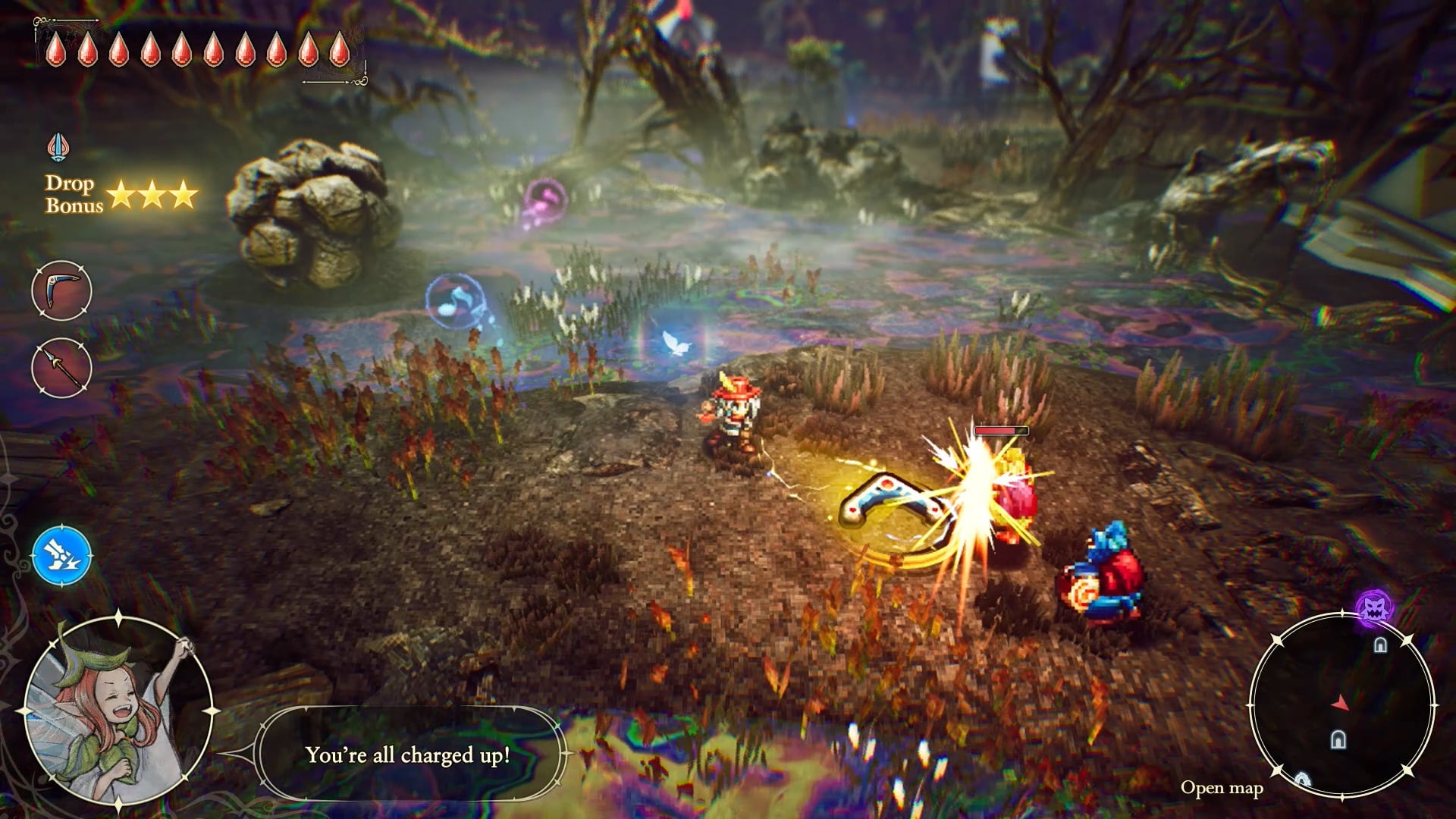
Square Enix Finally Gives Up And Lets Players Turn Off Adventures Of Elliot’s Annoying Fairy Entirely
The Love-Hate Relationship with Water in Video Games: When "Splish Splash" Doesn't Go "Away We Go"
Ah, water. In the real world, it's essential for life, refreshing, and often beautiful. In video games, however, water can be a source of immense joy, breathtaking beauty, and often, deep-seated frustration. Many gamers have experienced that moment: a character plunges into a seemingly innocent body of water, expecting a swift dive or a smooth swim, only to find themselves moving like a slug through treacle, battling awkward controls, or encountering unexpected dangers. It's in these moments that the phrase "Splish splash, and away we don't" perfectly captures the feeling of our grand aquatic adventures suddenly grinding to a halt.
This common gaming frustration is something nearly every player has encountered, whether it’s in a platformer, an adventure game, or even an RPG. The promise of exploring underwater worlds or navigating treacherous currents often collides with the reality of slow movement, limited visibility, confusing level design, and unique enemies that make you wish you'd just stayed on dry land. Why is it that something so natural in real life becomes such a notorious hurdle in our digital playgrounds? Let's dive deep into the fascinating, sometimes infuriating, world of water in video games.
The Universal Dread of Water Levels: More Than Just Wet Feet
For many, the mention of "water level" in a video game instantly conjures a sense of dread. This isn't just a niche opinion; it's a widespread sentiment across the gaming community. But what exactly makes these sections so consistently challenging or unpopular? The reasons are varied and often interconnected, touching upon core aspects of game design and player experience.
Firstly, there's the issue of control. Most video games are designed with movement in mind, whether it's running, jumping, or flying. When a character enters water, these fundamental movement mechanics often change dramatically. What was once fluid and responsive on land can become clunky and imprecise underwater. Gravity shifts, buoyancy becomes a factor, and the familiar directional controls might suddenly feel inverted or simply less effective. This sudden loss of control can be incredibly jarring and frustrating, especially if players are expected to perform intricate maneuvers or escape tight situations.
Secondly, visibility often becomes a major problem. Water, especially murky or deep water, significantly reduces how much a player can see. This can lead to disorientation, making it difficult to spot enemies, find objectives, or navigate complex environments. Combine this with slow movement, and you have a recipe for getting lost and feeling helpless. The atmosphere might be designed to be mysterious or frightening, but it often just ends up being annoying, turning what could be an exciting exploration into a tedious search.
Beyond control and visibility, water levels often introduce unique gameplay mechanics or enemy types that are exclusive to the aquatic environment. While this can add variety, it can also force players to adapt to an entirely new set of rules and challenges that they might not be equipped for. Running out of breath, dealing with currents, or facing creatures that are only dangerous underwater can quickly deplete a player's resources or patience. The sense of vulnerability is heightened, transforming a powerful protagonist into a struggling swimmer.
"Splish Splash, and Away We Don't": Pinpointing the Frustration
The phrase "Splish splash, and away we don't" perfectly encapsulates those moments when a game's aquatic section fails to deliver on the promise of adventure and instead delivers only frustration. It speaks to the feeling of getting stuck, of losing momentum, and of the game actively working against your enjoyment once you hit the water. It’s the antithesis of smooth gameplay and rewarding exploration.
Consider a character who can sprint, double-jump, and dash across vast landscapes. The moment they hit water, they might be reduced to a slow, methodical paddle, perhaps with a constantly ticking oxygen meter adding pressure. This sudden deceleration and shift in gameplay can be incredibly jarring. The "away we don't" part hits hard here because the expectation is that movement, even if changed, would still be purposeful and allow for progression. Instead, it often feels like a penalty box, a segment where the fun is momentarily suspended.
This feeling is often amplified in games where water sections are poorly integrated or feel like an afterthought. If a game's core mechanics aren't designed to support underwater gameplay, forcing it in can lead to a clumsy and unenjoyable experience. Developers might include water simply for environmental variety, without fully considering how it impacts the player's primary toolkit or the pacing of the game. The result is a segment that breaks immersion rather than enhances it, leaving players wishing they could skip it entirely.
Iconic (and Infamous) Water Worlds in Gaming
Despite the challenges, water levels have been a staple in video games for decades, with some becoming legendary for their difficulty, ingenuity, or outright notoriety. From the depths of Hyrule to vast alien oceans, water has played a pivotal role in countless gaming experiences.
The Water Temple (The Legend of Zelda: Ocarina of Time)
Perhaps the most infamous water level of all time is the Water Temple from The Legend of Zelda: Ocarina of Time. This dungeon is a masterclass in complex environmental puzzles, requiring players to constantly raise and lower water levels to access new areas. While brilliant in concept, its execution led to widespread player frustration. The constant need to pause and switch items (specifically the Iron Boots) to sink or float, coupled with the confusing layout and repetitive backtracking, made it a true test of patience. Many players vividly recall getting lost, struggling with the controls, and simply wanting to be done with it. It perfectly embodies the "splish splash, and away we don't" sentiment for many who felt progress was an uphill battle.
The Water Temple’s legacy is complex; it’s both revered for its ambitious design and reviled for its execution. The dark, often indistinguishable corridors, combined with the slow movement of Link underwater, created an atmosphere that was more tedious than thrilling. It required an extreme level of attention to detail and spatial reasoning that many found overwhelming, especially given the platform’s technical limitations at the time. Yet, its difficulty has cemented its place in gaming lore, becoming a benchmark for challenging dungeons.
Dire, Dire Docks (Super Mario 64)
On the other hand, Super Mario 64's Dire, Dire Docks offers a contrasting experience. While still a water level, it largely avoids the pitfalls of deep frustration. Mario's swimming controls, though different from his land-based moves, are responsive and enjoyable. The level focuses on exploration, collecting coins, and finding secrets, with minimal combat. The movement feels graceful, and the sense of freedom in a 3D underwater environment was groundbreaking for its time. It shows that water levels can be fun when the mechanics are well-implemented and the design supports fluid gameplay.
The beauty of Dire, Dire Docks lies in its relative simplicity and the joy of movement. Mario's ability to dive, swim, and perform elegant flips under the water made exploring the submerged castle and its hidden passages genuinely fun. The calm music and vibrant visuals contributed to a sense of peaceful discovery, rather than the tense struggle often associated with water environments. It proved that water could be an asset, not just an obstacle, in 3D platformers.
Subnautica: Embracing the Deep
Then there are games like Subnautica, which don't just feature water levels but are entirely built around an underwater experience. Here, water isn't an occasional nuisance; it's the very foundation of the game. Subnautica thrives on the player's sense of wonder and fear in an alien ocean. Movement, resource management, and combat are all intrinsically linked to the aquatic environment. The game embraces the challenges of underwater exploration, making oxygen, depth, and creature encounters central to its thrilling gameplay loop. It’s a prime example of how designing a game specifically for water can lead to an incredibly immersive and unique experience.
Subnautica’s success comes from its commitment to its theme. The developers didn't try to shoehorn water mechanics into a land-based game; they built an entire ecosystem around it. The progression system, which involves crafting better diving gear and submarines, directly addresses the challenges of deep-sea exploration, turning potential frustrations into rewarding achievements. The fear of the unknown, the claustrophobia of the deep, and the beauty of the vibrant biomes all contribute to a powerful and unforgettable aquatic adventure.
BioShock: Underwater Cities and Dread
The original BioShock, while not primarily an underwater game, uses its setting – the sunken city of Rapture – to phenomenal effect. While players aren't constantly swimming, the pervasive presence of water, leaking through bulkheads and visible through massive windows, is central to the game's atmosphere and narrative. The feeling of being trapped far beneath the ocean's surface adds to the claustrophobia and decay of Rapture, creating a unique sense of dread and isolation. This demonstrates how water can be an incredible storytelling and atmospheric tool, even without being a core gameplay mechanic.
The drips, the creaks, the occasional flood, and the sheer visual impact of a city beneath the waves make water a character in itself within BioShock. It’s not about difficult swimming, but about the overwhelming pressure and isolation of the deep. This strategic use of an aquatic environment enhances the themes of a fallen utopia and the horrors that lurk within, proving that water’s influence can extend far beyond just movement mechanics.
The Technical Hurdles: Why Water is So Hard to Get Right
From a game developer's perspective, water is one of the most complex elements to realistically and enjoyably implement. This isn't just about making it look pretty; it's about making it behave convincingly and interact with the game world and player character in a logical manner. The technical challenges involved are immense, explaining why so many games struggle to get it right.
Firstly, physics. Simulating fluid dynamics in real-time is incredibly computationally intensive. Water needs to react to objects moving through it, create ripples, splashes, and currents, and exert force on the player. This isn't just a visual effect; it directly impacts gameplay. Replicating buoyancy, drag, and resistance accurately without bogging down the game engine is a delicate balancing act. Many games simplify these physics, which can sometimes lead to characters feeling detached from the water, or the water itself behaving unnaturally.
Secondly, rendering water beautifully is a feat in itself. Realistic water requires complex shaders, reflections, refractions, foam, caustics (the patterns of light on surfaces underwater), and volumetric effects to convey depth and transparency. The way light behaves when passing through water is different from air, and accurately rendering this in a dynamic environment pushes graphical limits. Achieving stunning visual water, whether it's crystal clear or murky and dark, demands significant artistic and technical expertise.
Thirdly, level design and enemy AI in water present unique problems. How do enemies behave when submerged? Do they swim, float, or walk on the seabed? How do player projectiles or magic spells behave underwater? These considerations require specific coding and careful balancing. Designing puzzles or combat encounters that feel fair and engaging when the player's movement and visibility are altered adds another layer of complexity. Often, developers resort to simpler AI or less dynamic encounters underwater because of these difficulties.
The combination of these factors means that developers often have to make compromises. They might prioritize visual realism over physical accuracy, or simplify controls to make underwater sections less frustrating. The games that get water right are those that either commit fully to the aquatic theme, like Subnautica, or those that carefully integrate water mechanics into their core design, ensuring they complement rather than detract from the overall experience.
Beyond Frustration: When Water Works Wonders
While the "Splish splash, and away we don't" moments are memorable, it’s important to acknowledge that many games have successfully used water to enhance gameplay, create stunning visuals, or drive narrative. When done well, water can elevate a game from good to unforgettable.
Consider the expansive oceans of Sea of Thieves. The game is entirely built around sailing, naval combat, and underwater exploration. The water physics are incredibly dynamic, reacting to weather, cannon fire, and ship movement. The visual fidelity of the waves, the splashes, and the underwater bioluminescence creates a truly immersive pirating experience. Here, water isn't a barrier; it's the medium through which all adventure unfolds, a source of both beauty and peril.
Another excellent example is the fluid dynamics and water interactions in games like Minecraft. While visually stylized, the way water flows, can be manipulated, and used for farming or defense is a core part of its creative gameplay. Players can build elaborate irrigation systems or create stunning waterfalls, demonstrating how even simplified water mechanics can be incredibly engaging when they empower the player.
Even in racing games, water can add an exciting dynamic. Think of the hydroplaning effects in certain rally games, or the splash effects when driving through puddles. These elements add realism and a layer of challenge that makes the experience more engaging. Games like Wipeout or F-Zero, with their futuristic racing tracks, often incorporate water-like surfaces that alter vehicle speed and handling, adding strategic depth.
Furthermore, water can be a powerful narrative tool. The drowned cities in games like The Last of Us Part II or Horizon Forbidden West use submerged environments to tell stories of environmental change, decay, and the passage of time. Exploring these ruins, even if movement is slower, adds a profound layer of emotional depth to the game world. It shows us history, tragedy, and the relentless power of nature.
Strategies for Staying Afloat: Tips for Players
For those times when you encounter a challenging water level that makes you want to throw your controller, there are strategies you can employ to make the experience less painful and potentially even enjoyable:
- Master the Controls: Spend some time in a safe area of the water to get a feel for the unique movement mechanics. Don't rush into combat or complex puzzles until you're comfortable. Understand how different inputs affect your character's buoyancy and direction.
- Manage Your Oxygen: If your game features an oxygen meter, always keep an eye on it. Plan your routes to include air pockets or surfaces where you can replenish your breath. Sometimes, a slow, methodical approach is better than a frantic dash that leads to drowning.
- Increase Visibility: Look for in-game options or items that might help. Does your character have a flashlight? Can you craft a diving mask? Sometimes increasing your screen brightness or adjusting gamma settings can also help in murky environments.
- Prioritize Exploration: Water levels often hide crucial items or pathways. Take your time to thoroughly explore, even if it feels slow. The solution to a puzzle or a vital upgrade might be just out of sight.
- Seek Guides (When Desperate): If you’re truly stuck and finding no joy, there’s no shame in consulting an online guide or video walkthrough. Sometimes seeing someone else navigate a tricky section can provide the "aha!" moment you need to progress. Sites like IGN or GameSpot often have comprehensive walkthroughs.
- Change Your Mindset: Instead of dreading the water, try to appreciate the unique challenges it brings. Think of it as a different kind of puzzle, requiring a different approach. Sometimes, a mental shift can make a big difference in how you perceive the difficulty.
The Future of Aquatic Adventures
As technology advances, so too does the potential for truly spectacular and engaging water mechanics in video games. Modern game engines are constantly improving their ability to simulate complex physics and render breathtaking visuals, opening new doors for developers.
We can expect even more realistic fluid dynamics, where water reacts with unparalleled accuracy to player actions and environmental changes. Imagine currents that genuinely pull you, waves that crash with convincing force, and underwater environments that feel as alive and dynamic as any land-based setting. Ray tracing technology is already allowing for stunning reflections and refractions on and through water, creating scenes that are almost indistinguishable from reality.
Beyond visuals, future games might integrate water mechanics more seamlessly into core gameplay loops. Instead of being isolated "water levels," we could see dynamic weather systems that affect water bodies in real-time, changing gameplay on the fly. We might see more innovative uses of water for traversal, combat, and puzzle-solving, moving beyond simple swimming to truly unique forms of interaction.
The rise of virtual reality (VR) also holds immense potential for aquatic experiences. Imagine the immersion of diving into a virtual ocean, feeling the scale of vast underwater caverns, or encountering terrifying sea creatures up close. While motion sickness can be a concern, advancements in VR technology are continuously addressing these issues, promising a future where water levels are no longer just a challenge, but an awe-inspiring, fully immersive adventure.
Conclusion: The Enduring Allure of Water in Games
Water in video games remains a fascinating paradox. It is simultaneously a source of boundless beauty and profound frustration, a canvas for innovative design and a pitfall for poor execution. The phrase "Splish splash, and away we don't" perfectly captures those moments when our digital aquatic journeys take an unexpected, unwelcome turn, highlighting the universal challenges developers face in getting water just right.
Yet, despite the occasional aggravation, water continues to draw us in. Whether it's the serene beauty of a calm lake, the terror of the deep ocean, or the strategic depth of a well-designed underwater puzzle, water adds an essential layer of complexity and wonder to our virtual worlds. As game development continues to evolve, we can only hope for more experiences that make us eager to dive in, transforming those "away we don't" moments into thrilling "away we go!" adventures. The journey beneath the surface, with all its challenges and triumphs, remains one of gaming's most enduring and compelling frontiers.
from Kotaku
-via DynaSage
