
Sony’s Famous E3 2013 Press Conference Celebrating Disc-Based Games Hits Different Now
The Unkept Promise: Owning Your Games Forever in a Digital World
In the ever-evolving landscape of video games, certain moments stand out—promises made, visions cast, and expectations set. One such moment, captured in a memorable E3 press conference, involved a figure like Jack Trenton, who boldly declared a future where gamers would "own their games forever with no DRM." This statement resonated deeply with a community passionate about their digital libraries, sparking hope for true ownership in an industry rapidly shifting towards digital distribution. But what exactly did this promise entail, and how has the reality of modern gaming measured up to such a grand vision?
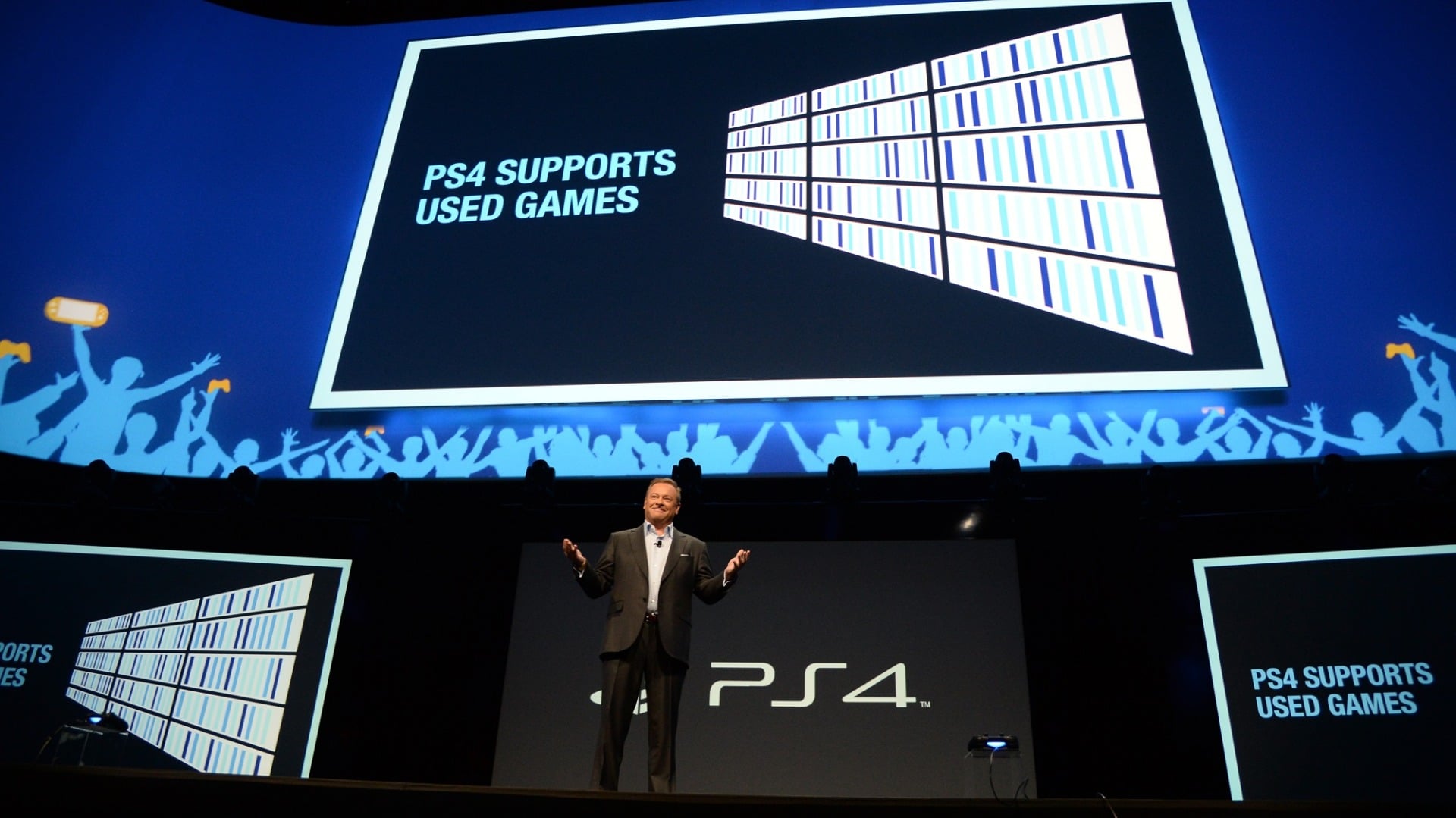
The image above takes us back to that very moment, a snapshot in time at a Sony PlayStation E3 press conference, where the future of gaming seemed limitless and consumer-friendly. The idea of acquiring a game and truly owning it, free from the shackles of digital restrictions, was incredibly appealing. It spoke to a fundamental desire for autonomy and permanence in our entertainment.
What Exactly is DRM, and Why Does it Matter to Gamers?
To truly understand the weight of Jack Trenton's promise, we first need to define DRM, or Digital Rights Management. In simple terms, DRM refers to technologies used by publishers and copyright holders to control the use, modification, and distribution of copyrighted digital content. For video games, this often translates into various mechanisms designed to prevent piracy, but it also impacts legitimate consumers in significant ways.
These mechanisms can include requiring an internet connection to verify ownership, limiting the number of times a game can be installed, tying a game to a specific user account on a specific platform, or even implementing always-online requirements for single-player experiences. While the intention might be to protect intellectual property and revenue, the reality for players is often a feeling of reduced ownership and control over the games they've purchased. Imagine buying a book only to find you need permission from the publisher every time you want to read it, or that it disappears if the library that sold it to you closes down. This is the core frustration that DRM can create in the digital gaming space.
Gamers dislike DRM for several compelling reasons. Firstly, it often restricts access to content they legally own. If servers go down, an internet connection is unavailable, or a platform ceases to exist, the game can become unplayable. Secondly, DRM can introduce performance issues, with anti-piracy software sometimes consuming system resources or conflicting with other programs. Thirdly, it erodes the traditional concept of ownership, where you could lend, resell, or archive your physical games. Digital DRM often removes these fundamental rights, turning a purchase into more of a long-term license or rental agreement. The promise of "no DRM" directly addressed these concerns, offering a vision of genuine, unfettered access to one's gaming library.
The Golden Age Promise: Jack Trenton's Vision of Ownership
The promise made by Jack Trenton, whether a real figure or a symbolic one representing a console manufacturer's intent at E3, was a powerful declaration. It wasn't just a marketing slogan; it was a philosophical stance on consumer rights in the burgeoning digital era. At a time when the industry was grappling with the shift from physical media to digital downloads, the concept of "owning your games forever with no DRM" was nothing short of revolutionary. It painted a picture of a gaming utopia where players held ultimate control over their purchases, free from the digital gatekeepers that were beginning to emerge.
This promise tapped into a deep-seated desire among gamers for true autonomy. Historically, buying a game meant owning a physical cartridge or disc that could be played indefinitely, lent to friends, or resold. The emerging digital model, while convenient, introduced new uncertainties. Would a game still be accessible if the digital storefront shut down? What if an internet connection was unavailable? The "no DRM" pledge offered reassurance, suggesting that despite the digital format, the core principles of ownership would remain intact. It was a commitment to player freedom, implying that a purchase truly meant a permanent acquisition, not a temporary lease.
The context of an E3 press conference amplified this promise. E3 has always been a stage for grand announcements and future visions. For a console platform to stand on that stage and champion consumer-friendly policies like DRM-free gaming would have been a significant moment, potentially swaying public opinion and setting a standard for the industry. It conveyed a message that this particular platform understood and valued its community, prioritizing their long-term access and enjoyment over restrictive controls. It aimed to build trust at a crucial juncture in gaming history, offering a compelling alternative to what many feared would become a restrictive digital future.
From Physical Discs to Digital Downloads: A Shifting Landscape
The gaming world has undergone a dramatic transformation in how games are delivered and consumed. For decades, physical media – cartridges, floppy disks, CDs, and DVDs – reigned supreme. Buying a game meant acquiring a tangible item that contained all the necessary data to play it. This model inherently supported the idea of true ownership: you held the game in your hand, you could install it on your machine, and you could play it without external validation. The concept of "no DRM" was almost implicit in this physical world, as once the game was in your possession, its playability was largely independent of the publisher.
However, the advent of faster internet speeds and increased storage capabilities paved the way for digital distribution. Platforms like Steam revolutionized PC gaming, offering unparalleled convenience in purchasing, downloading, and managing game libraries. Console manufacturers soon followed suit, integrating digital storefronts directly into their systems. This shift brought undeniable benefits: instant access to games, no need for physical storage, and the potential for continuous updates and bug fixes. Yet, it also introduced a complex layer of digital rights management.
With digital downloads, the relationship between player and game changed. Instead of owning a physical copy, players often purchased a license to access the game through a specific platform. This meant that the game's availability became tied to the platform's servers, the player's account status, and the publisher's ongoing support for the title. While the convenience of digital gaming is undeniable, it subtly eroded the traditional definition of game ownership. The promise of "no DRM" was an attempt to bridge this gap, assuring players that even in a digital world, their ownership rights would be respected, allowing them to enjoy their games without constant oversight or fear of future inaccessibility.
The Erosion of Ownership: How DRM Changed the Game
Despite the hopeful promise of "no DRM," the reality of the digital gaming landscape has largely moved in the opposite direction. Over time, various forms of Digital Rights Management have become standard practice, leading to a noticeable erosion of what it means to truly "own" a video game. This shift has had profound implications for consumers, transforming purchases into what often feel more like extended rental agreements.
One of the most visible forms of DRM that has impacted ownership is the requirement for an always-online connection, even for single-player games. This means that if your internet goes down, or if the publisher's authentication servers are offline, you simply cannot play the game you've paid for. This dependence creates a single point of failure and fundamentally undermines the idea of playing your game anytime, anywhere. Imagine buying a board game and needing to connect to the internet just to roll the dice – it's a concept that feels alien and restrictive in the physical world, yet has become increasingly common in digital gaming.
Even more concerning are instances of server shutdowns. When a publisher decides to decommission the online infrastructure for an older game, any DRM tied to those servers can render the game completely unplayable, regardless of whether you've purchased it. This has happened to numerous titles over the years, effectively deleting games from players' libraries without any form of compensation or recourse. The promise of owning your games "forever" rings hollow when the longevity of your purchase is dictated by a company's business decisions rather than your personal desire to revisit a title.
The rise of subscription services like Xbox Game Pass and PlayStation Plus, while offering incredible value and access to vast libraries, further complicates the notion of ownership. With these services, you are paying for access to a rotating catalog of games, not purchasing individual titles. Once your subscription ends, or a game leaves the service, your access is revoked. This is a clear "rental" model, which, while beneficial for discovery and affordability, stands in stark contrast to the promise of owning games outright.
Finally, the inability to resell digital games is a major departure from traditional ownership. With physical games, a robust secondary market allowed players to recoup some of their investment or discover older titles. Digital storefronts, by tying games to specific user accounts and often implementing strict licensing agreements, eliminate this possibility entirely. Once you buy a digital game, it's yours and yours alone, with no option to transfer or sell it. This lack of a secondary market not only impacts consumer rights but also devalues the digital purchase compared to its physical counterpart. The collective effect of these DRM practices has been a slow but steady chipping away at the concept of true game ownership, making Jack Trenton's original promise feel more like a distant, unfulfilled dream.
The Business Behind the Barriers: Why Companies Embrace DRM
While gamers often view DRM as an inconvenience or an impediment to true ownership, from a publisher's perspective, it serves several key business objectives. Understanding these motivations helps to explain why, despite promises of "no DRM," these technologies have become pervasive in the industry. The primary driver behind most DRM implementations is piracy prevention. Game development is an expensive and time-consuming endeavor, and publishers invest significant resources in creating these products. Piracy, which involves distributing copies of games without authorization, directly impacts potential sales and revenue. DRM technologies are designed to make it more difficult for unauthorized copies to be made and distributed, thereby protecting the publisher's investment.
Beyond piracy, DRM provides companies with a greater degree of control over their products and the secondary market. By tying a game to a specific account or requiring online verification, publishers can control how and where their games are played. This control extends to preventing the resale of digital games, which is a significant factor. In the physical realm, the used game market represents lost potential revenue for publishers, as they don't receive a share from second-hand sales. Digital DRM effectively eliminates this secondary market, ensuring that every purchase is a new sale for the publisher or platform holder. This allows them to maximize revenue from each game title throughout its lifespan.
Furthermore, DRM facilitates certain monetization strategies. By maintaining control over the game, publishers can more easily manage and deliver additional content such as downloadable content (DLC), expansions, and in-game purchases. These elements are often tied to the same accounts and authentication systems as the base game, ensuring that only legitimate owners can access them. This integration helps create a more robust ecosystem for ongoing revenue generation beyond the initial sale. It also enables publishers to maintain a direct relationship with their customers, gather valuable data on player behavior, and push updates or marketing messages more effectively.
In some cases, DRM is also used to enforce specific licensing agreements or to manage regional releases. A game might be released in different regions with different content, pricing, or release dates, and DRM can help ensure that these regional restrictions are upheld. While these business considerations are understandable from an economic standpoint, they often come at the expense of consumer freedom and the traditional concept of ownership. The tension between protecting intellectual property and empowering consumers remains a core challenge in the digital age, continually forcing a reevaluation of what "owning your games forever" truly means.
The Player's Predicament: What True Ownership Means
For many gamers, the concept of "true ownership" extends far beyond merely having a game appear in their digital library. It embodies a set of fundamental rights and expectations that have been largely shaped by the era of physical media. When Jack Trenton made his promise, he tapped into these deeply held beliefs, offering a vision where digital convenience wouldn't come at the cost of consumer freedom.
At its core, true ownership means the right to play a game anytime, anywhere, without external interference. This implies the ability to launch a game without requiring an internet connection (especially for single-player titles), without needing to authenticate with a third-party server, and without fear of it being revoked or rendered unplayable by a publisher's decision. It means that once you've paid for a product, its functionality should not be dependent on external factors outside your control. This right is critical for rural players with unreliable internet, for those who want to play decades into the future, or simply for anyone who values uninterrupted access to their purchased content.
Another crucial aspect of true ownership is the right to resell, lend, or gift a game. In the physical world, a robust secondary market for video games allowed players to recoup some of their investment, trade titles with friends, or pass down beloved games to new generations. This not only offered economic benefits but also fostered a sense of community and shared experiences. Digital DRM, by tying games to specific user accounts and prohibiting transfer, has effectively dismantled this right. When you "buy" a digital game, you're essentially acquiring a non-transferable license, not a piece of property that can be freely exchanged. This restriction feels inherently anti-consumer, as it strips away a fundamental right associated with ownership in almost every other product category.
Perhaps the most significant aspect of true ownership, especially in the long run, is the right to preserve games for future generations. Video games are a cultural art form, and their preservation is vital for understanding technological and artistic evolution. When games are dependent on online servers, proprietary launchers, or specific operating systems that eventually become obsolete, they are at risk of being lost forever. DRM exacerbates this problem, as even if a game's files are archived, the authentication mechanisms might prevent it from being played. True ownership would empower players and archival organizations to ensure that games remain playable and accessible long after their commercial viability has expired, allowing future historians and enthusiasts to experience these digital artifacts. The current state of DRM often stands directly opposed to this noble goal, making the player's predicament a complex challenge of balancing convenience with enduring rights.
Pioneers of Preservation: Fighting for DRM-Free Gaming
While the broader industry has largely embraced DRM, a dedicated movement and certain platforms have championed the cause of DRM-free gaming and game preservation. These pioneers recognize the value of true ownership and the importance of keeping digital content accessible for the long term. Their efforts stand as a testament to the enduring appeal of Jack Trenton's original promise.
One of the most prominent examples is GOG.com (Good Old Games). GOG's entire business model is built around offering classic and modern PC games completely DRM-free. When you purchase a game from GOG, you receive a standalone installer that you can download, back up, and play indefinitely, without needing an internet connection or a specific client to launch it (though they do offer an optional client called GOG Galaxy). This approach directly fulfills the promise of "owning your games forever," providing peace of mind to consumers who worry about server shutdowns or platform obsolescence. GOG.com has become a haven for those who value digital freedom and game preservation, demonstrating that a successful business model can exist without relying on restrictive DRM.
Beyond GOG, many independent game developers have also opted for DRM-free distribution. These creators often have a closer relationship with their communities and understand the desire for unrestricted access to their artistic works. By foregoing DRM, they build trust with their audience and empower players to control their purchased content. This trend highlights a philosophical split within the industry, where some creators prioritize player freedom and longevity over strict control. Websites like itch.io serve as platforms for many of these independent developers, often offering their games without DRM.
The archival community also plays a crucial role in fighting for game preservation. Organizations like the Internet Archive actively work to collect, document, and make playable historical software, including video games. However, their efforts are significantly hampered by DRM, which often prevents them from legally or technically preserving games that are tied to online authentication or proprietary systems. The ongoing debate around legal exemptions for game preservation, particularly concerning abandoned or defunct online-only titles, underscores the critical need for a more consumer-friendly approach to DRM. These pioneers continue to push boundaries, advocate for change, and offer viable alternatives, striving to ensure that the rich history of video games remains accessible, fulfilling the spirit of that initial, hopeful promise of true ownership.
The Future of Game Ownership: Cloud, Subscriptions, and New Horizons
The landscape of game distribution and ownership continues to evolve at a rapid pace, with new technologies and business models constantly emerging. The promise of "owning your games forever" faces increasing challenges from trends that often prioritize access over permanent possession. Cloud gaming, for instance, represents a significant shift. Services like Xbox Cloud Gaming and NVIDIA GeForce NOW allow players to stream games directly to various devices without needing powerful local hardware or even to download the game files. While incredibly convenient, this model is the antithesis of ownership; you are essentially renting computing power and access to a game that resides entirely on a remote server. The cautionary tale of Google Stadia, which shut down and made many purchased games inaccessible, serves as a stark reminder of the risks associated with entirely server-dependent gaming.
Subscription services are also becoming the dominant model for accessing game libraries. Xbox Game Pass, PlayStation Plus, and EA Play offer vast catalogs of games for a monthly fee. While these services provide immense value and allow players to discover a wide array of titles, they fundamentally operate on an access-based model rather than an ownership-based one. When a subscription lapses or a game leaves the service, access is lost. This paradigm shift encourages players to engage with a rotating library rather than building a permanent collection, further moving away from the "owning your games forever" ideal.
Looking ahead, new technologies like blockchain and NFTs (Non-Fungible Tokens) have been proposed as potential solutions for digital ownership, though they remain highly controversial and speculative in the gaming space. The theoretical promise of NFTs is to provide verifiable, immutable proof of ownership for digital assets, which could include game items or even entire games. In principle, this could allow for a digital secondary market and true transferability. However, the technology is still nascent, faces significant environmental concerns, and has been plagued by scams and speculative trading. Furthermore, even with NFTs, the actual game content might still reside on a publisher's server, meaning the NFT only proves ownership of a license, not necessarily the game's functional access.
The future of game ownership is likely to be a complex mosaic of these different models. While subscription services and cloud gaming will continue to grow due to their convenience and accessibility, there will always be a segment of the gaming population that values true ownership. The challenge for the industry will be to find a balance between these competing desires, perhaps offering tiered options where players can choose between subscription access and true, DRM-free ownership for individual titles, ensuring that Jack Trenton's aspirational promise doesn't fade entirely into history.
Reclaiming the Promise: What Can Gamers Do?
In an era where digital ownership feels increasingly ambiguous, gamers are not powerless. Reclaiming the spirit of Jack Trenton's promise requires active participation, informed choices, and collective advocacy. There are concrete steps that individuals and communities can take to push for more consumer-friendly practices and support the ideal of truly owning one's games.
First and foremost, gamers can support DRM-free games and platforms. Purchasing titles from storefronts like GOG.com or directly from independent developers who forgo DRM sends a clear message to the industry. Every sale of a DRM-free game validates a business model that prioritizes player ownership and longevity. By consciously choosing these options, consumers can influence market demand and encourage more publishers to reconsider their DRM strategies. This directly rewards companies that align with the values of true digital freedom.
Being an informed consumer is also crucial. Before purchasing a game, especially a digital one, investigate its DRM policies. Does it require an always-online connection? Is it tied to a specific launcher or account that might be shut down in the future? Understanding these terms of service helps gamers make educated decisions about where they invest their money and whether they are truly "buying" a game or merely leasing access. Websites and communities dedicated to cataloging DRM practices can be valuable resources in this regard.
Furthermore, gamers can advocate for better consumer rights and clearer policies. This can involve participating in online discussions, supporting organizations that lobby for digital rights, or even directly contacting publishers and platform holders to express concerns. Collective voices have power, and consistent feedback can encourage companies to adopt more transparent and player-friendly approaches to game distribution and ownership. This includes demanding clarity on the longevity of digital purchases and the potential for offline play.
Finally, responsible game preservation efforts by individuals are important. This includes backing up DRM-free game installers, documenting game dependencies, and supporting community initiatives that aim to keep older games playable. While individual efforts cannot solve systemic issues, they contribute to a broader culture of appreciating and protecting game history. By making conscious choices, staying informed, and speaking up, gamers can continue to push the industry towards a future where the promise of "owning your games forever with no DRM" isn't just a nostalgic echo but a lived reality for all players.
Conclusion: The Enduring Battle for Digital Freedom
The promise delivered by Jack Trenton at that E3 press conference—that gamers would "own their games forever with no DRM"—was a beacon of hope in a rapidly digitizing world. It spoke to a fundamental desire for autonomy, permanence, and true ownership over the digital entertainment we invest our time and money in. In that moment, the vision of a consumer-friendly future for gaming seemed within reach, where the convenience of digital distribution would not come at the cost of traditional rights.
However, the years that followed have shown a complex reality. While digital gaming has flourished, bringing unprecedented access and innovation, it has also introduced layers of Digital Rights Management that have profoundly reshaped the meaning of "ownership." From always-online requirements and server shutdowns that render games unplayable, to the inability to resell digital purchases and the rise of access-based subscription models, the industry's trajectory has largely moved away from the spirit of Trenton's initial pledge. The focus has often shifted from selling a product to licensing an experience, controlled and managed by platform holders and publishers.
Yet, the promise endures. It continues to be a rallying cry for gamers who value true digital freedom and for pioneers like GOG.com and independent developers who prove that viable, successful models for DRM-free gaming exist. The ongoing discussion surrounding game preservation underscores the cultural importance of this battle; without true ownership, significant portions of gaming history risk being lost forever.
As we look to the future, with the advent of cloud gaming and the continuous evolution of subscription services, the debate over ownership will only intensify. It is a critical dialogue that challenges the gaming industry to balance its commercial interests with the fundamental rights and desires of its passionate community. By supporting DRM-free options, staying informed, and advocating for consumer-friendly policies, gamers can collectively work towards reclaiming that original promise. The battle for digital freedom in gaming is far from over, and the vision of truly owning our games forever remains a powerful, aspirational goal worth fighting for.
from Kotaku
-via DynaSage
