
Meta's 'Super Sensing' Prototype Glasses Quietly Record Everything
Meta's "Super Sensing" Glasses: The Future of Personal AI, or a Privacy Nightmare?
The world of wearable technology is rapidly evolving, promising a future where our devices are seamlessly integrated into our lives, offering unprecedented convenience and assistance. At the forefront of this revolution, companies like Meta are pushing boundaries, recently prototyping "super sensing" smart glasses. These glasses, as reported by the Financial Times, represent a significant leap from existing smart wearables, aiming to capture the wearer's every moment through an array of cameras and audio recordings.
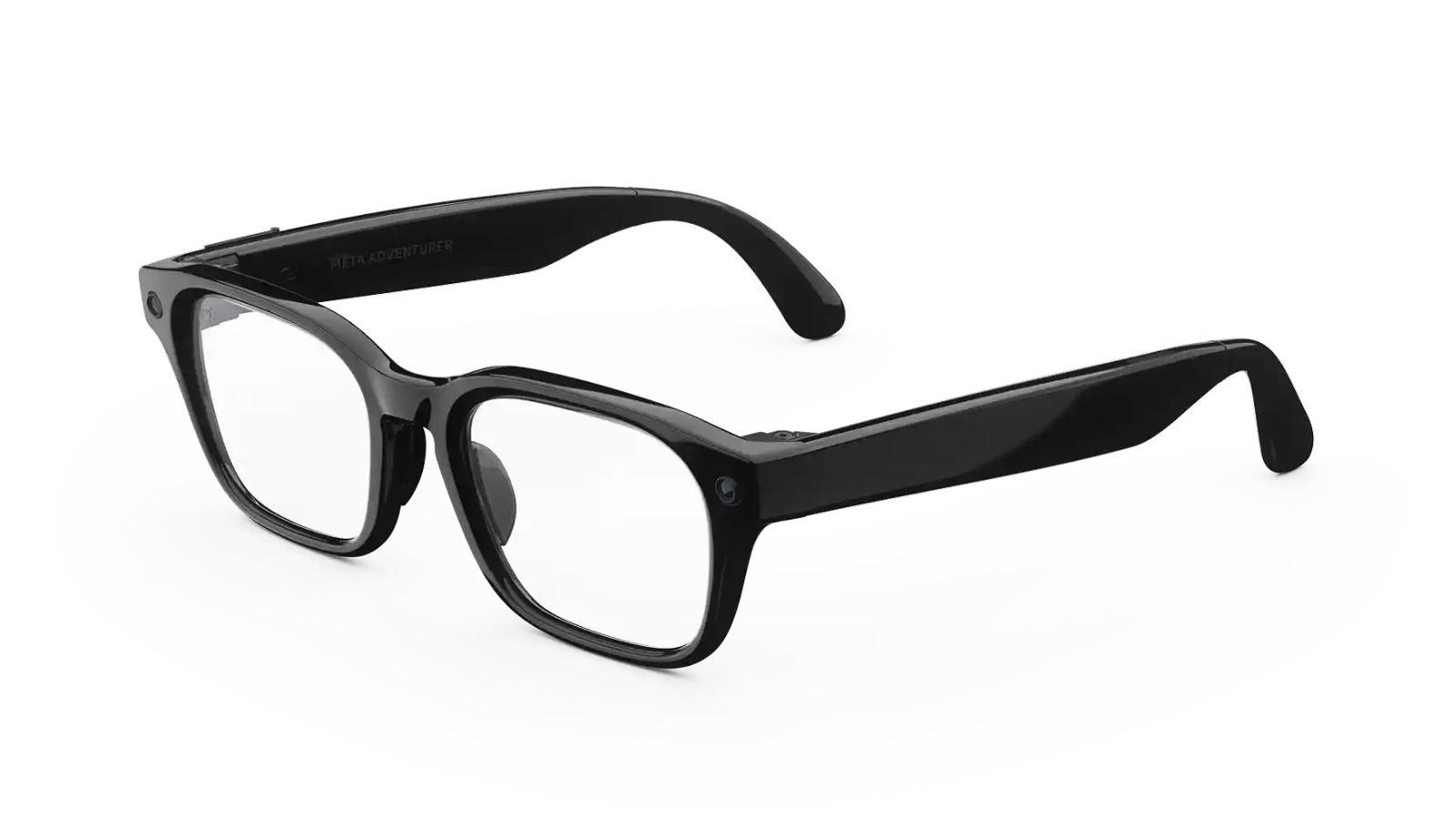
Imagine a device that quietly and continuously observes the world through your eyes and ears, then uses advanced artificial intelligence to help you recall specific details from your day, answer questions about what you saw, or even provide context to conversations. This is the ambitious vision behind Meta's super-sensing smart glasses. While the potential benefits in memory assistance, personal organization, and even accessibility are vast, this technology also ushers in a new era of profound civil liberty and privacy questions. The journey to ubiquitous personal AI is fraught with ethical dilemmas that demand careful consideration from technologists, regulators, and the public alike.
What Exactly Are "Super Sensing" Smart Glasses?
Unlike conventional smart glasses or even existing AI-powered wearables, Meta's "super sensing" prototype is designed for continuous, pervasive data collection. According to sources cited in the report, these glasses would be in a constant state of vigilance, collecting audio information non-stop and snapping photographs every few seconds. This isn't just about taking a picture when you ask; it's about building a comprehensive, moment-by-moment record of your lived experience.
The true power of these glasses, however, lies in their integration with artificial intelligence. The constant stream of sensory data – sights and sounds – would be fed into Meta's AI systems. This AI would then act as a personal, omnipresent assistant. For instance, a user could later query the AI: "Where did I put my keys after I got home yesterday?" or "What was the name of that person I met at the coffee shop this morning?" The AI, having 'witnessed' and processed your day, could then provide highly specific and context-rich answers. It could help you recall conversations, locate lost items, remember faces, or even summarize events from your recent past, essentially serving as an external memory bank.
This capability goes far beyond the basic functions of current smart glasses, which typically offer features like hands-free calling, music playback, or discreet photo/video capture on demand. The "super sensing" aspect suggests a fundamental shift: from a tool that records specific moments initiated by the user, to a passive, always-on recorder that creates a searchable database of one's entire life. Such a device could revolutionize personal productivity, memory recall for individuals with cognitive impairments, or even aid in learning by providing instant context to observations. However, the very nature of this continuous capture also raises immediate red flags regarding who controls this data and how it is used.
The Silent Observer: The Dilemma of the Missing LED Indicator
A crucial detail revealed in the report concerns a design choice with significant privacy implications. Meta's current generation of AI smart glasses, such as the Ray-Ban Meta Smart Glasses, incorporate an LED light in the corner of the frame. This indicator illuminates to signal to others in the vicinity that the wearer is currently taking photographs or recording video. This small light serves as a visual cue, a nod to basic social etiquette and a measure of transparency, informing those around the wearer that their actions might be captured.
However, for the "super sensing" features, Meta executives are reportedly considering not activating this LED indicator. This decision, if implemented, would mean that the glasses could continuously record audio and capture images every few seconds without any external visual sign. The absence of this indicator fundamentally changes the social contract surrounding wearable recording devices. It removes the opportunity for individuals in the wearer's environment to be aware they are being recorded, let alone to consent to it. This design choice prioritizes an uninterrupted, seamless experience for the wearer, potentially at the expense of the privacy and awareness of everyone else they encounter.
The reasoning behind such a decision could be multifaceted. Perhaps it’s to make the glasses feel more like natural eyewear, blending seamlessly into the user's perception without drawing attention. Or it could be to ensure the "super sensing" capabilities operate unobtrusively, allowing the AI to gather data without interruption or self-consciousness from the user or those around them. Regardless of the intent, the lack of a clear, visible recording indicator on an always-on device capable of pervasive capture presents a significant ethical challenge. It transforms the glasses from a visible recorder into a silent, omnipresent observer, blurring the lines of public and private space and eroding the expectation of privacy in everyday interactions.
Privacy by Design? The Metadata Approach
Recognizing the profound privacy concerns associated with continuous, pervasive recording, Meta is reportedly exploring a proposed system designed to mitigate these risks. This system, detailed in the Financial Times report, involves a unique approach to data handling:
In one proposed system, raw footage and audio would not be stored by Meta or made available to the user, several people said. Instead, the metadata from that audio and images would be extracted and uploaded to the server for Meta's AI to query, which proponents argue would have fewer privacy implications.
This strategy suggests that the actual video and audio files captured by the glasses would not be saved directly by Meta or even be accessible to the wearer. Instead, the raw data would be processed locally on the device, and only extracted "metadata" would be uploaded to Meta's servers. But what exactly constitutes metadata in this context, and does this approach genuinely alleviate privacy concerns?
Understanding Metadata in a "Super Sensing" Context
Metadata, in simple terms, is "data about data." For these glasses, it wouldn't be the video of your conversation, but rather information *about* that conversation. This could include:
- Timestamps and Locations: When and where an event occurred.
- Object Recognition Tags: Identifying items seen (e.g., "cup," "laptop," "car," "dog").
- Speech-to-Text Transcripts (potentially anonymized): Converting spoken words into text, or identifying keywords and topics.
- Speaker Identification: Recognizing different voices, without necessarily knowing *who* spoke them (e.g., "Speaker A," "Speaker B").
- Sentiment Analysis: Detecting emotional tones in conversations.
- Facial Detection/Recognition Tags: Identifying that a face was present, or even recognizing a specific individual if integrated (though Meta has a complex history with this).
- Contextual Cues: Recognizing activities (e.g., "walking," "eating," "meeting").
Proponents of this metadata-only approach argue that by not storing raw footage or audio, the risk of sensitive personal moments being exposed is significantly reduced. The idea is that Meta's AI doesn't need to 'see' or 'hear' everything directly; it only needs intelligent summaries and classifications of that data to answer user queries. For example, if you ask "Where did I leave my keys?" the AI might respond by saying, "You placed them on the kitchen counter at 7:30 AM," based on an object recognition tag ("keys") associated with a specific time and location, rather than needing to stream or store the actual video clip of you placing them there.
The Nuance of Privacy Implications
While seemingly a step towards better privacy, the metadata-only approach is not without its own complex challenges:
- Richness of Metadata: Modern AI can extract incredibly detailed and personal information from raw sensory input. Even without the full video, metadata can reveal sensitive aspects of your life: who you meet, what you discuss, where you go, your habits, your health, and even your emotional state. This aggregated metadata can paint a very comprehensive and intimate picture of an individual.
- Re-identification Risks: Even "anonymized" metadata can often be re-identified, especially when combined with other data sources. If the metadata includes precise locations and timestamps, it can be relatively easy to link it back to a specific individual.
- Definition of "Raw Footage": The line between raw data and processed metadata can be blurry in the age of advanced AI. What if the metadata includes highly accurate descriptions or even reconstructed visual information? What constitutes "not storing raw footage" when the essence of that footage is meticulously transcribed and categorized?
- Trust and Transparency: Users must implicitly trust Meta's systems to faithfully discard the raw data and only process/upload benign metadata. Without independent audits and extreme transparency, skepticism will naturally persist, especially given Meta's past privacy controversies.
The "metadata only" model attempts to strike a balance between powerful AI assistance and user privacy. However, it necessitates a sophisticated understanding of what modern AI can infer and how to truly anonymize data without rendering it useless. The debate will undoubtedly center on whether such a system offers sufficient safeguards against the pervasive monitoring it enables.
Training the AI Beast: Data for Development
Beyond providing personalized assistance to the wearer, Meta has a broader, strategic interest in the data collected by these super-sensing glasses. The report highlights ongoing discussions within the company about whether the data gathered through these glasses and their features could be used to train Meta's own artificial intelligence models. This aspiration is not merely academic; it is central to Meta's aggressive pursuit of leadership in the global AI race, where it is pouring billions into rivalling established players such as OpenAI, Google, and Anthropic.
Why This Data is Gold for AI Training
To understand the immense value of this data, one must appreciate how AI models learn. They learn from vast datasets, identifying patterns, relationships, and nuances. The data from super-sensing glasses offers several unique advantages:
- First-Person Perspective: This data provides an unparalleled first-person view of the world. Traditional datasets often come from third-person cameras or curated environments. Data from a wearer's perspective offers invaluable insights into human interaction, object manipulation, environmental navigation, and personal routines – all from the most intimate viewpoint possible.
- Real-World Context: The data would be derived from messy, unpredictable, real-world scenarios, making AI models more robust and adaptable. This contrasts with data collected in controlled lab environments, which often fails to capture the complexity of daily life.
- Rich Multi-Modal Data: The glasses collect both visual (photos) and auditory (audio) data simultaneously. Training AI models with this multi-modal input allows them to develop a deeper, more contextual understanding of events, enabling them to connect what is seen with what is heard.
- Scale and Continuity: The continuous and pervasive nature of the collection means an enormous volume of data could be generated, providing an unprecedented stream of diverse human experiences for AI to learn from.
Imagine an AI system trained on billions of hours of first-person experiences – it could develop an incredibly sophisticated understanding of human behavior, intent, and environment. This could lead to breakthroughs in areas like conversational AI, contextual awareness, assistive technologies, and even the development of more human-like AI agents. For Meta, such a dataset could be a decisive advantage in developing the next generation of AI that powers its metaverse ambitions and competes effectively with its rivals.
Ethical Quandaries of Training with User Data
While the benefits for AI development are clear, the ethical implications of using user-generated data for training are equally profound:
- Lack of Explicit Consent: Will users fully understand and explicitly consent to their personal experiences (even if reduced to metadata) being used to train powerful AI models that Meta then commercializes? The default position for many data privacy regulations, such as GDPR, is that consent must be freely given, specific, informed, and unambiguous.
- Ownership of Data: Who owns the "insights" derived from a user's life? If an AI model becomes incredibly smart by learning from your unique patterns and experiences, do you have any claim over the resulting intellectual property or commercial value?
- Bias and Discrimination: If the user base for these glasses is not diverse, or if the AI models are trained predominantly on a specific demographic's experiences, there's a risk of perpetuating or amplifying biases in the AI's understanding of the world, leading to unfair or discriminatory outcomes.
- "Ghost in the Machine" Privacy: Even if metadata is anonymized, the aggregate patterns might still contain sensitive information about groups or individuals that could be inadvertently revealed or exploited.
The decision to use this data for AI training is a pivotal one, placing Meta at the intersection of technological advancement and profound ethical responsibility. It underscores the critical need for transparent policies, robust anonymization techniques, and clear user control over how their personal experiences contribute to the development of powerful AI systems.
Software Update: The Slippery Slope of Activation
One of the most concerning aspects of Meta's plan, as highlighted in the report, is the suggestion that these advanced "super sensing" features could be activated on Meta's existing smart glasses simply via a software update. This ease of deployment, while technically impressive, carries significant implications for user trust, device functionality, and the very nature of privacy.
From Hardware to Software: Shifting Capabilities
When consumers purchase a piece of hardware, they typically have a baseline understanding of its capabilities at the point of sale. If a device designed primarily for hands-free audio, calls, and occasional photo capture can suddenly transform into an always-on, pervasive personal recorder through a software update, it represents a dramatic shift in its functionality. This is not merely an incremental improvement; it is a fundamental alteration of the device's privacy profile and its potential impact on the user and those around them.
The "slippery slope" concern here is significant. If features with such profound privacy implications can be enabled after purchase with a simple update, it means the perceived privacy safeguards of a device can change overnight, without the need for new hardware or a new purchase decision. This blurs the line between what a device "is" and what it "could become," placing the onus on users to constantly monitor software updates for features that might fundamentally alter their privacy exposure.
User Consent and Control: A Critical Junction
The ease of activation via software update brings the issue of user consent to the forefront. When such a powerful feature is rolled out, how will Meta present it to users? Will it be an optional opt-in, requiring explicit affirmative consent? Or will it be an opt-out feature, where users must actively disable it if they do not wish for continuous sensing to be enabled? The default setting for such a privacy-sensitive feature is paramount. Best practices in data privacy typically advocate for an opt-in model for new, privacy-impacting functionalities.
Furthermore, the communication surrounding such an update needs to be exceptionally clear and comprehensive. Users must fully understand:
- What data is being collected (audio, visual, metadata).
- How often it is collected (continuously, every few seconds).
- How this data is processed (on-device, then metadata uploaded).
- For what purposes the data is used (personal query, AI training).
- Who has access to the data (Meta, third parties).
- The risks involved (privacy, legal liability).
Anything less than crystal-clear communication and granular control over these settings would erode user trust and could lead to widespread privacy concerns. The idea that a device you bought for one purpose could, with a silent software update, begin to record your life for another purpose, is deeply unsettling to many.
A Minefield of Legal and Ethical Challenges
Meta's ambitious plan for "super sensing" glasses, while technologically advanced, throws into sharp relief a host of legal and ethical challenges. The implications span civil liberties, data privacy, and the very fabric of social interaction. This is not merely about a company's product; it's about setting precedents for how technology interacts with our most fundamental rights and societal norms.
Civil Liberties and the Right to Privacy
The concept of "always-on" devices that record an individual's every moment fundamentally clashes with the established right to privacy. The expectation of privacy is a cornerstone of modern civil liberties, extending to both private spaces and, to a varying degree, public spaces where individuals do not expect to be perpetually monitored and recorded. These glasses challenge this expectation in several ways:
- Erosion of Public Privacy: While there's a diminished expectation of privacy in public, constant, unseen recording by individuals fundamentally changes the dynamic. It can create a "chilling effect," where people become more guarded in their public interactions, knowing they might be perpetually recorded.
- Inadvertent Capture of Sensitive Moments: Despite the "metadata only" proposal, the sheer volume and continuity of capture increase the likelihood of inadvertently recording highly sensitive personal moments of the wearer or those around them, even if the raw footage is purportedly discarded.
- Biometric Data Laws: Many jurisdictions have specific laws governing the collection and use of biometric data (e.g., facial scans, voiceprints). If the glasses capture such data, even as metadata for AI processing, it could trigger complex legal requirements for explicit consent and secure storage. The potential for such data to be used for identification purposes, even indirectly, is a major concern.
- Data Privacy Laws (GDPR, CCPA, etc.): Global data privacy regulations impose strict rules on the collection, processing, and storage of personal data. An always-on device that continuously processes personal information (even if metadata) for Meta's AI training would need to demonstrate robust compliance with principles like data minimization, purpose limitation, transparency, and accountability.
The very existence of such a device raises questions about the definition of personal space and the right to exist without constant digital surveillance, even if self-imposed or by a companion.
The Quagmire of Wiretapping Laws
Perhaps one of the most immediate and tangible legal challenges relates to wiretapping and recording consent laws. In the United States, states have varying regulations regarding the recording of conversations:
- "All-Party Consent" States: In some states (e.g., California, Florida, Illinois), all parties to a conversation must consent to its recording. This means if you're wearing "super sensing" glasses that continuously record audio, you could be in violation of the law every time you engage in a conversation where others are unaware they are being recorded, let alone have given consent.
- "One-Party Consent" States: In other states (and federally), only one party to a conversation needs to consent to its recording (which could be the wearer themselves). While seemingly less restrictive, the ethical implications for those unknowingly recorded remain.
The report explicitly states that it is "unclear whether the company or the wearer would be liable for potential violations of wiretapping laws." This ambiguity is a critical risk. If the wearer is held liable, it places an enormous burden on individuals to navigate complex legal landscapes every moment they wear the device. If the company is held liable, it exposes Meta to a torrent of legal challenges from individuals claiming their privacy rights were violated. The practicality of obtaining "all-party consent" for every conversation an always-on device might capture is virtually impossible, making the legal landscape incredibly treacherous for this technology.
Public Perception and Trust
Beyond the legal framework, there's the equally important dimension of public perception and trust. The initial rollout of Google Glass years ago faced significant social backlash, with users being dubbed "glassholes" due to concerns about surreptitious recording. A device that records continuously and unobtrusively without an LED indicator risks reigniting and intensifying such negative public sentiment. The success of any pervasive wearable technology ultimately hinges on its societal acceptance, which demands transparency, clear ethical guidelines, and robust privacy protections.
Meta's Track Record with Privacy: A Cause for Concern
The concerns surrounding Meta's "super sensing" glasses are amplified by the company's tumultuous history with user privacy. Over the years, Meta (formerly Facebook) has faced numerous controversies and criticisms regarding its data collection practices, ad targeting, and handling of sensitive user information. This track record makes many privacy advocates and users inherently skeptical of new technologies that promise extensive data collection, even with assurances of privacy by design.
Existing Ray-Ban Smart Glasses: Foreshadowing "Super Sensing"?
Meta's current generation of Ray-Ban smart glasses already offers a glimpse into the company's approach to integrating AI with wearable tech. These glasses, while having an LED indicator for active photo/video recording, reportedly lack a visual indicator when their onboard AI is being used to analyze the wearer's surroundings. This means that even without explicitly recording, the glasses could be passively processing environmental data for various AI functionalities. While Meta claims it safeguards privacy by "stripping out key identifying information," the very act of continuous analysis without a clear visual cue is a point of contention for privacy advocates.
The question of how robustly "key identifying information" is stripped out remains. What level of detail is necessary for the AI to function, and what could potentially be re-identified? This earlier implementation in the existing glasses serves as a precedent, hinting at Meta's preference for unobtrusive, always-on AI processing, a concept that aligns disturbingly well with the proposed "super sensing" features.
The Facial Recognition Fiasco
Further compounding privacy fears is the revelation in February that Meta had an inactive facial recognition feature embedded in its Ray-Ban smart glasses platform. Although the company later removed the system, its initial presence raised significant alarm bells. Facial recognition technology is one of the most contentious areas of biometric data, with widespread concerns about surveillance, misidentification, and the potential for misuse. The fact that such a powerful and controversial feature was initially built into the glasses, even if inactive, suggests a readiness to integrate advanced biometric capabilities that could have profound privacy implications.
This incident is particularly relevant to the "super sensing" concept. If the glasses are continuously capturing images, the potential for integrating facial recognition, even for on-device processing to generate metadata (e.g., "recognized Person X at location Y"), is ever-present. Meta's past actions demonstrate a willingness to explore these technologies, which fuels public skepticism when new, even more pervasive sensing capabilities are proposed.
Meta's history means that any new venture into advanced data collection, particularly with devices worn on the face, will be scrutinized heavily. To build trust, the company will need to go above and beyond industry standards for transparency, user control, and data protection, offering concrete, auditable assurances that address the profound privacy risks inherent in "super sensing" technology.
The Apple Factor: A Different Approach?
As Meta pushes the boundaries of wearable AI, another tech giant, Apple, is also gearing up to enter the smart glasses market. Apple is widely expected to release its first smart glasses in 2027, designed in-house rather than through a partner brand. This places Apple in direct competition with Meta in the burgeoning field of smart wearables, but their approach, particularly concerning privacy, may diverge significantly.
Apple's Expected Capabilities
Apple's smart glasses are anticipated to include a suite of advanced features, mirroring some of the core functionalities that Meta is exploring. These are expected to encompass cameras, microphones, and AI capabilities, enabling users to:
- Take photos and record video hands-free.
- Provide real-time translations.
- Offer turn-by-turn directions directly in the user's field of vision.
- Integrate with Apple's ecosystem for notifications, calls, and other smart features.
However, a key distinction noted in preliminary reports is that Apple's initial smart glasses are *not* expected to have augmented reality (AR) capabilities. This means they might focus more on discreet notification delivery, contextual information, and sensory capture rather than overlaying digital content onto the real world in a complex visual manner. This design choice could simplify the hardware and potentially reduce the computational demands, allowing Apple to focus on core smart glass functions and, perhaps, privacy by design.
How Will Apple Manage Privacy Concerns?
Apple has consistently positioned itself as a champion of user privacy, often contrasting its approach with that of data-driven companies like Meta. While no company is entirely immune to privacy controversies, Apple's general philosophy tends to favor on-device processing, strong encryption, and transparent controls for user data.
Given the immense privacy implications of smart glasses, it is highly likely that Apple will adopt a cautious and user-centric approach. How they might manage privacy concerns could include:
- On-Device AI Processing: Prioritizing the processing of sensitive personal data directly on the device, rather than uploading it to cloud servers, whenever possible. This minimizes the exposure of raw or even metadata to Apple's infrastructure.
- Clear Indicators for Recording: Given Apple's attention to user experience and social norms, it's probable that their glasses will feature unambiguous visual indicators when cameras or microphones are actively recording or capturing.
- Granular Consent and Control: Offering users very specific and easy-to-understand controls over what data is collected, how it's used, and whether it's shared, with an emphasis on opt-in for privacy-sensitive features.
- Data Minimization: Designing features that only collect the minimum amount of data necessary to provide a service, rather than continuous, pervasive capture.
- Transparency Reports: Continuing to publish transparency reports about data requests and privacy practices to build user trust.
The entry of Apple into the smart glasses market will undoubtedly intensify the focus on privacy in wearable technology. Their approach, potentially more conservative regarding data collection and more explicit about user control, could set a different standard and provide consumers with a clear choice between differing philosophies on the balance between innovation and privacy.
The Future of Wearable AI: A Balancing Act
Meta's "super sensing" smart glasses represent a compelling vision of the future: a world where personal AI assistants are truly ubiquitous, seamlessly integrated into our daily lives, and capable of enhancing our memory, knowledge, and productivity in unprecedented ways. The benefits could be transformative, offering individuals a powerful tool for recall, learning, and navigating complex environments.
However, this future comes with a heavy price tag in terms of personal privacy, civil liberties, and legal complexities. The idea of an always-on device silently observing and processing every moment of one's life, and potentially the lives of those around them, invokes dystopian fears of perpetual surveillance. The ethical and legal challenges are not trivial: they involve fundamental rights to privacy, the consent of unsuspecting third parties, the ownership and use of deeply personal data, and the potential for new forms of social friction.
As technology progresses at an astonishing pace, the onus is on tech companies, regulators, and society as a whole to navigate these uncharted waters thoughtfully and responsibly. For companies like Meta, this means embracing genuine privacy-by-design principles, implementing robust data governance, offering transparent and granular user controls, and engaging in open dialogue with privacy advocates and the public. For regulators, it means developing forward-looking laws that protect individual rights without stifling innovation. For individuals, it means demanding transparency, understanding the implications of the technologies they adopt, and making informed choices about their digital footprint.
The advent of "super sensing" wearable AI is not just about a new gadget; it's about redefining our relationship with technology, with data, and with each other. Striking the right balance between the undeniable power of AI and the imperative to protect human dignity and autonomy will be one of the defining challenges of our era.
This article, "Meta's 'Super Sensing' Prototype Glasses Quietly Record Everything" first appeared on MacRumors.com
Discuss this article in our forums
from MacRumors
-via DynaSage
