
Matt Damon As Odysseus From Christopher Nolan’s Odyssey Joins Fortnite Just As Homer Always Dreamed He Would
Matt Damon, Fortnite, and the Timeless Echo of Achilles: What Modern Gaming Teaches Us About Life and Death
Imagine the unexpected: a rugged, acclaimed Hollywood actor known for intense, dramatic roles suddenly appearing in the vibrant, chaotic, and utterly fantastical world of Fortnite. This isn't just a quirky cameo; it's a fascinating cultural collision that bridges the worlds of high cinema and cutting-edge gaming. When we see Matt Damon, a figure synonymous with serious storytelling, navigating the battle royale island, it prompts a surprising question: what deeper themes are at play when our contemporary heroes enter virtual realms?
This intriguing blend of reality and digital fantasy takes an even more profound turn when we juxtapose it with an ancient, poignant declaration from the greatest warrior of Greek mythology. Achilles, specter-like in the underworld, famously tells Odysseus, Don't give me consolation about death, glorious Odysseus.
He'd rather be a living peasant than a dead king. This stark preference for life, however humble, over the grim glory of the afterlife, resonates with a raw, timeless truth about mortality.
At first glance, the connection seems tenuous. What could a millennia-old lament about death have to do with a global pop culture phenomenon like Fortnite, where "death" is often a temporary setback, quickly followed by a respawn or a new match? Yet, by exploring this surprising juxtaposition, we can uncover rich insights into how society perceives heroism, mortality, and immortality in both classical and digital ages. From the dusty plains of Troy to the pixelated battlegrounds of Fortnite, humanity's fascination with life, death, and legacy remains an enduring narrative.
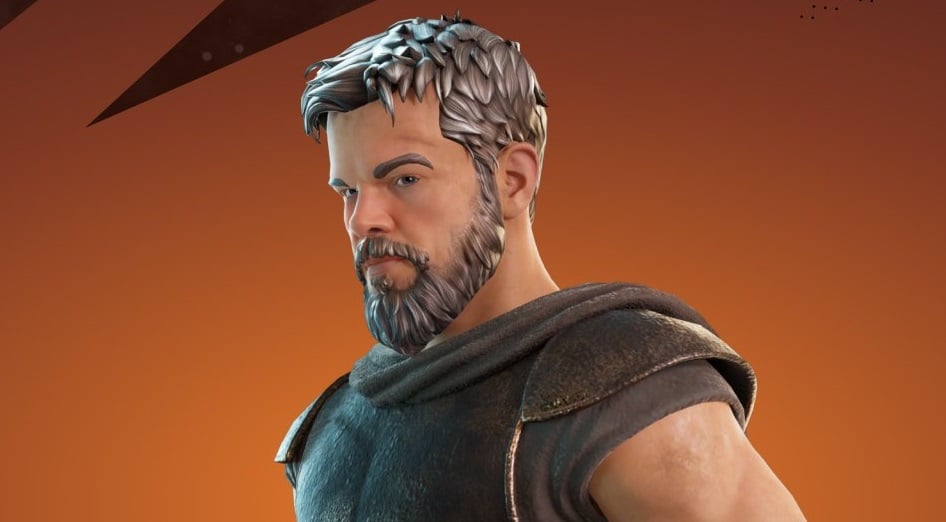
The Fortnite Phenomenon: Where Celebrities Become Avatars
Fortnite, developed by Epic Games, has transcended its origins as a battle royale game to become a sprawling metaverse, a digital cultural melting pot. Its appeal lies not only in its engaging gameplay but also in its unparalleled ability to integrate pop culture, music, movies, and sports into its ever-evolving world. Celebrities, musicians, and fictional characters from virtually every major franchise have found a home on the Fortnite island, transforming the game into a dynamic platform for virtual identity and collective experience.
Matt Damon’s appearance in Fortnite is particularly noteworthy. Known for his serious, often stoic roles in films like "Good Will Hunting," "The Martian," and the "Bourne" series, Damon brings a distinct gravitas to the otherwise whimsical Fortnite universe. His characters often embody resilience, intelligence, and a grounded sense of heroism. Seeing such a figure rendered in Fortnite's distinct, vibrant art style, participating in its signature dances (emotes), and wielding its eclectic weaponry creates a powerful juxtaposition. It signals a new frontier for celebrity endorsement and fan engagement, where actors don't just promote products; they *become* playable parts of a digital ecosystem.
This integration reflects a broader trend in entertainment: the blurring of lines between reality and virtuality. For millions of players, the experience of "being" Matt Damon (or an avatar resembling him) in Fortnite offers a unique form of immersion and connection. It allows fans to interact with a digital representation of their idol in ways previously unimaginable, creating new narratives and shared moments. This phenomenon raises interesting questions about the nature of celebrity, the longevity of fame, and how we consume and participate in popular culture in the digital age. It's a form of digital immortality, where a star's persona can live on and engage with new audiences in entirely new contexts.
Achilles and the Grim Reality of Mortality: A Timeless Perspective
To truly understand the depth of Achilles' plea, we must journey back to the ancient world, to the pages of Homer's epic poem, The Odyssey. In Book 11, Odysseus ventures into the underworld, a shadowy realm where the spirits of the dead reside. Among them, he encounters the ghost of Achilles, the legendary warrior whose name is synonymous with unparalleled courage and tragic glory. Achilles, who chose a short but glorious life over a long, obscure one, met his fate at Troy.
When Odysseus attempts to comfort him, suggesting that Achilles, even in death, holds a place of honor among the departed, the great warrior's response is stark and heart-wrenching: Don't give me consolation about death, glorious Odysseus. I'd rather be a serf bound to the soil, slaving away for some poor tenant farmer, than rule down here over all the breathless dead.
This powerful declaration shatters any romantic notions of the afterlife as a grand continuation of earthly glory. For Achilles, the underworld is a bleak, joyless existence, devoid of warmth, light, and the simple pleasures of life.
Achilles’ words underscore a profound human truth: the inherent value of life, however imperfect or humble, over the absolute finality of death. His longing for even the lowliest existence on earth highlights the ancient Greek perception of the afterlife as a pale imitation of life, a place of shadows and forgotten joys. This sentiment reveals a deep-seated human fear of oblivion, a universal desire to cling to the warmth and vitality of existence, regardless of status or wealth. It's a reminder that even the most heroic figures, faced with the ultimate frontier, yearned for the simple breath of life.
Bridging the Worlds: Virtual "Death" vs. Real Mortality
The contrast between Achilles' somber view of death and the mechanics of "death" in Fortnite couldn't be more pronounced. In Fortnite, being "eliminated" is rarely a permanent state. Players are often "knocked down" and can be revived by teammates. Even if fully eliminated, they can quickly jump into a new match, often within minutes. This rapid cycle of life, elimination, and respawn trivializes the concept of death in a way that would be utterly alien to Achilles. There's no dark underworld, no lingering shadows; only the vibrant promise of another round.
This stark difference invites us to ponder the psychological implications of virtual mortality. Do games like Fortnite desensitize us to the concept of death, or do they offer a safe, controlled environment to engage with themes of risk, survival, and loss without real-world consequences? For many players, the thrill of Fortnite comes precisely from its high-stakes, low-consequence environment. The frequent "deaths" are part of the learning curve, moments for reflection on strategy rather than existential dread. This dynamic allows players to experience the adrenaline of combat and the agony of defeat, only to shake it off and try again, fostering resilience and adaptability.
Yet, even within the virtual realm, there's a subtle echo of Achilles' sentiment. While virtual death isn't final, it still carries a sense of loss—loss of progress, loss of a victory, loss of momentum. Players invest time and effort into each match, and being eliminated can be frustrating, even disheartening. The desire to survive, to achieve victory royale, mirrors the primal drive to persist, to thrive, that Achilles expressed. The "consolation" in Fortnite is the immediate opportunity to try again, to learn from mistakes, and to experience the joy of revival or a fresh start—a stark contrast to the irreversible nature of Achilles' fate.
The immersive nature of modern gaming, particularly with high-fidelity graphics and realistic sound design, can sometimes blur the line between the virtual and the real, even if only for a moment. When a player character, be it Matt Damon's avatar or any other skin, is eliminated, there's a momentary impact. It's not real death, but it's a simulated consequence that can evoke real emotions—frustration, disappointment, or even relief. This emotional engagement, albeit fleeting, hints at the enduring human connection to themes of survival and mortality, even when experienced through a digital lens. In a way, games offer a form of "consolation" for our own mortality by allowing us to play out endless scenarios of life and death, providing a sense of control over an uncontrollable reality.
The Evolving Face of Heroism: From Troy to the Island
The concept of a "hero" has undergone significant transformations from ancient Greece to the modern digital age. Achilles embodies the classical hero: divinely favored, incredibly strong, fated for glory and an early, tragic death. His heroism is tied to physical prowess, unwavering loyalty, and the pursuit of honor above all else. His story is one of destiny, sacrifice, and the enduring power of myth. His "glory" was etched in the annals of history, ensuring his name would live on long after his physical demise.
Matt Damon, in many of his iconic roles, represents a more contemporary hero. Characters like Jason Bourne are not demigods but highly skilled, resourceful individuals often operating in morally ambiguous worlds. Mark Watney from "The Martian" is a hero of intellect, perseverance, and scientific ingenuity. These modern heroes are often defined by their humanity, their struggles, and their ability to overcome immense odds through grit and wit, rather than divine intervention. Their heroism is relatable, grounded in the challenges of the human condition, making them inspiring figures for a global audience. Their legacy is often through the stories told in film, which become cultural touchstones.
In Fortnite, heroism takes on another, even more democratic form. Every player has the potential to be a hero, to secure the "Victory Royale." Heroism here is defined by skill, strategy, quick reflexes, and often, teamwork. It's a dynamic, ever-changing heroism that is not predetermined by birthright or divine favor, but earned through moment-to-moment gameplay. When Matt Damon appears in Fortnite, he is stripped of his cinematic narrative and placed on an equal footing with every other player. He becomes an avatar, a potential hero, whose success depends entirely on the player's abilities. This democratic heroism allows everyone to step into the shoes of their idols, blurring the lines between fan and hero.
Furthermore, the virtual appearance of celebrities like Matt Damon in Fortnite contributes to a new form of digital legacy and "immortality." Their persona isn't confined to past filmography but actively participates in new, evolving narratives within the game. This extends their cultural footprint, reaching new generations and engaging with them on a platform native to their experience. In a sense, it offers a new kind of "consolation about death" for public figures, ensuring their image and impact persist and adapt, living on through countless digital interactions, long after their physical presence has faded. The fame achieved in the real world is translated into a form of digital permanence, where their likeness can continue to entertain and inspire in new, interactive ways.
Beyond the Screen: What Games and Myths Teach Us About Life
Despite their vastly different mediums and contexts, both Homeric epics and modern video games like Fortnite serve as powerful forms of storytelling. They tap into fundamental human questions about life, death, heroism, and the search for meaning. The Odyssey, through its rich narrative and complex characters, teaches us about perseverance, loyalty, and the wisdom gained from suffering. It offers timeless insights into the human condition, prompting reflection on our own lives and choices.
Fortnite, while seemingly lighter in its approach, also offers valuable lessons. It fosters strategic thinking, teamwork, quick decision-making, and adaptability. It creates communities, encourages social interaction, and provides a space for creative expression through its building mechanics and extensive customization options. More profoundly, by offering a safe space to repeatedly "die" and restart, it can inadvertently teach resilience and the importance of learning from mistakes. It normalizes failure as a step towards success, a lesson that translates far beyond the virtual battlegrounds into real-world challenges.
The convergence of ancient wisdom and modern gaming, exemplified by a figure like Matt Damon navigating a world that also echoes Achilles' timeless lament, highlights a crucial point: humanity's core concerns remain constant. Whether in a myth whispered around a campfire thousands of years ago or a game played by millions across the globe today, we are still fascinated by stories of heroes, the struggle for survival, and the profound mystery of life and death. Both forms of media, in their own unique ways, provide narratives through which we can explore these universal themes, allowing us to confront our fears and celebrate our triumphs, even if only in a simulated reality.
Ultimately, the inclusion of a serious actor like Matt Damon in a vibrant, fantastical game like Fortnite, contrasted with the philosophical weight of Achilles' words, serves as a powerful metaphor. It demonstrates how culture evolves, how heroes transform, and how our understanding of life and death is continually reinterpreted through new lenses. Yet, the core human experience—the desire to live, to make an impact, and to find meaning in the face of our inevitable mortality—remains a constant, enduring quest, resonating across millennia and through every new medium we create.
Conclusion: The Enduring Quest for Meaning
From the solemn cries of Achilles in the underworld to the dynamic avatars of Matt Damon in Fortnite, the threads of heroism, mortality, and the search for meaning weave through the tapestry of human experience. This surprising juxtaposition reveals that whether we are battling on ancient plains or vibrant virtual islands, our core questions about life and death remain. Fortnite, by allowing us to temporarily embody heroes and confront virtual death, offers a modern form of engagement with these profound concepts, contrasting sharply with Achilles' raw, unfiltered preference for life.
The digital age, with its endless possibilities for virtual existence and celebrity immortality, doesn't erase the ancient truths but rather reframes them. It reminds us that while the stages change and the forms of heroism evolve, the human spirit's desire to live, to thrive, and to leave a mark is a timeless aspiration. What are your thoughts on this intersection of ancient wisdom and modern entertainment? Share your insights below!
from Kotaku
-via DynaSage
