
iPhone Air 2 Could Get an 11% Battery Capacity Boost
Unveiling the iPhone Air 2: A Deep Dive into Apple's Next-Gen Battery and Camera Ambitions
Apple is reportedly preparing to launch its second-generation iPhone Air in the spring of 2027, and early whispers from the supply chain suggest a significant focus on enhancing key user experiences. At the forefront of these improvements is a concerted effort to boost battery life, a constant demand from smartphone users worldwide. But that's not all; the upcoming model also aims to tackle one of the primary criticisms of its predecessor: the camera system. Let's explore the exciting rumors surrounding the iPhone Air 2 and what they could mean for the future of Apple's sleekest smartphone line.
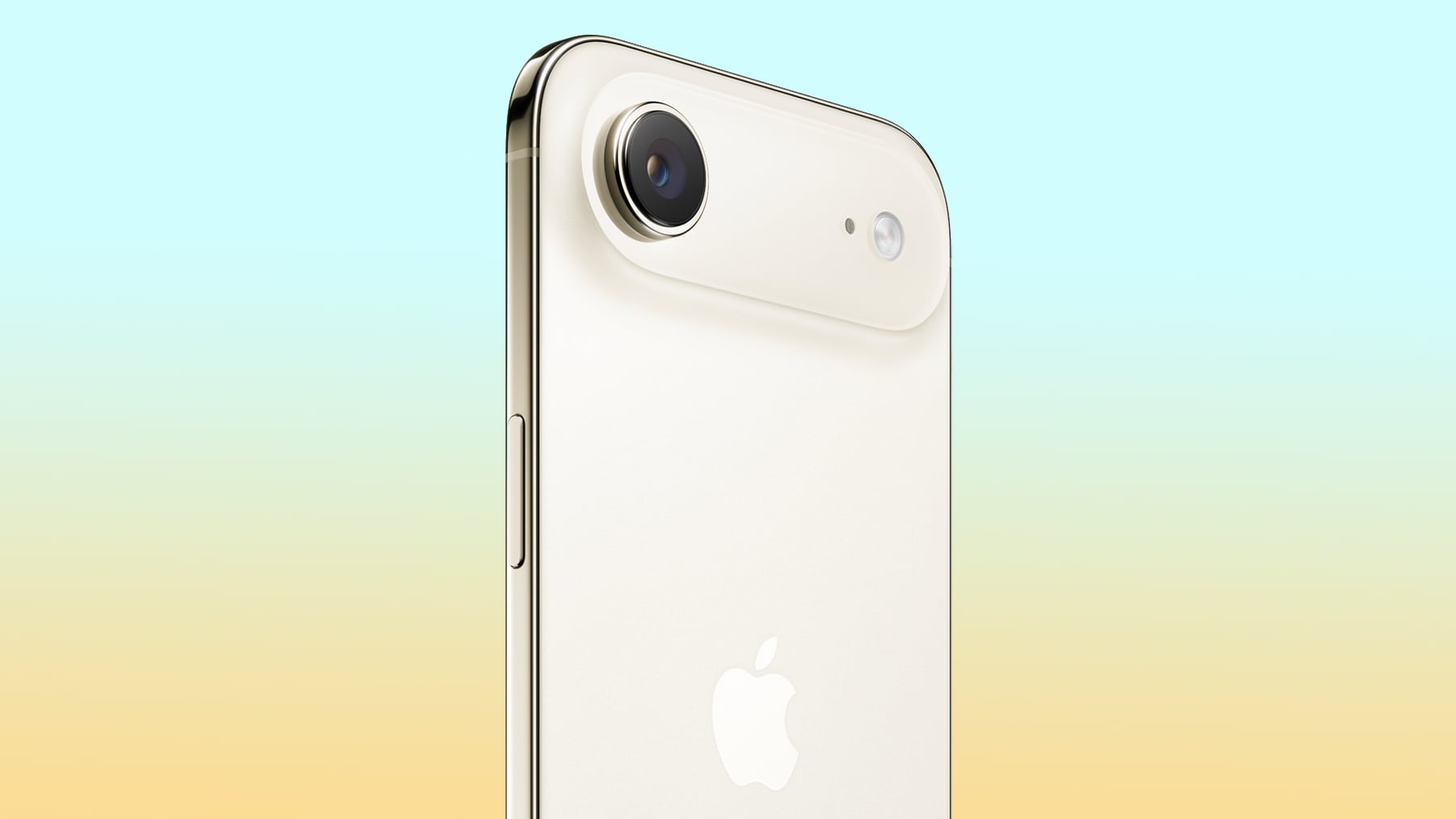
The Power Play: A Significant Boost in Battery Life
For many smartphone users, battery life is paramount. It dictates how long you can stay connected, productive, and entertained without scrambling for a charger. Apple, acutely aware of this, appears to be making a substantial push in this area for the iPhone Air 2. The first concrete rumor regarding this improvement comes from the reputable leaker Digital Chat Station, known for their insights into supply chain predictions.
11% More Juice: The 3,500mAh Advantage
According to these predictions, the iPhone Air 2 is expected to feature a 3,500mAh battery. To put that into perspective, the current iPhone Air model houses a 3,149mAh battery. This rumored upgrade represents an increase of approximately 11% in raw capacity. While an 11% bump might seem modest on paper, in the realm of high-performance smartphones, it can translate into a noticeable improvement in daily usage. This could allow users to get through a full day with greater confidence, even under heavy use. This is a crucial distinction, as even marginal gains in battery performance are highly valued by consumers.
Beyond the Numbers: What an 11% Increase Really Means
An 11% increase in battery capacity isn't just a number; it reflects Apple's dedication to optimizing the user experience. In practical terms, this could mean an extra hour or two of screen-on time, more time for navigation, streaming, gaming, or video calls before needing to recharge. For a device positioned as a premium offering, extended battery longevity directly enhances its appeal and perceived value. It also offers a competitive edge in a market where rivals are continuously striving to deliver all-day power. This kind of improvement addresses one of the most common user complaints and contributes significantly to overall satisfaction.
The Engineering Challenge: Fitting More Power into a Sleek Design
Achieving a larger battery capacity typically involves either integrating a physically larger battery or utilizing denser battery technology that packs more energy into the same physical volume. Given the iPhone Air's defining characteristic of being incredibly thin and light, simply making the device thicker to accommodate a larger battery seems unlikely. Apple's design philosophy often prioritizes sleekness and ergonomics. Therefore, it's more probable that Apple will employ a combination of strategies.
This could include further advancements in battery chemistry to increase energy density, or, more likely, a sophisticated redesign of the device's internal packaging. The internal layout of modern smartphones is akin to a complex, multi-layered puzzle where every millimeter of space is meticulously planned. Apple's engineers are masters at internal optimization, and they may find innovative ways to carve out additional space within the existing chassis dimensions to accommodate the larger 3,500mAh cell. This often involves repositioning or miniaturizing other components, or even creating custom-shaped batteries that fit into irregular spaces. The phrase "another tight squeeze" aptly describes the immense engineering effort required to achieve such a feat without compromising the device's iconic slim profile. This continuous push for internal efficiency is a hallmark of Apple's product development, constantly seeking to integrate more powerful features without sacrificing form factor.
Revolutionizing Photography: The Arrival of the Dual-Lens Camera
While battery life is critical, the camera system is arguably the second most important feature for many smartphone buyers. The current iPhone Air, despite its premium price point and innovative design, has faced criticism for its single rear Wide lens. This limitation made it less versatile in photography compared to even the more affordable iPhone 17 models, which typically boast multiple lenses for different photographic scenarios. Apple appears to be listening intently to this feedback, as multiple prior rumors have strongly suggested that the iPhone Air 2 will address this by adding a second camera.
Introducing the Ultra Wide Lens: Expanding Creative Horizons
Reports indicate that the iPhone Air 2 will specifically add an Ultra Wide lens. This is a significant enhancement for mobile photography on the Air series. A wide-angle lens is excellent for everyday shots, capturing detail and vibrant colors. However, an Ultra Wide lens opens up entirely new creative possibilities. It allows users to capture sweeping landscapes, impressive architectural shots, or large group photos without having to physically step back. It offers a much broader field of view, making it ideal for situations where you want to fit more into the frame, creating dramatic perspectives and adding depth to your images. This addition immediately brings the iPhone Air 2's photographic capabilities in line with its more established siblings, enhancing its appeal to a broader segment of users who value photographic versatility.
The Impact on User Experience and Versatility
The inclusion of an Ultra Wide lens significantly improves the iPhone Air 2's versatility. Imagine capturing the grandeur of a mountain range, the expanse of a city skyline, or a crowded indoor event, all with a single tap. This capability, currently absent in the first-generation iPhone Air, will bridge a significant gap between it and other premium smartphones. For users who rely on their iPhone as their primary camera, this upgrade means fewer missed opportunities and more dynamic, professional-looking photographs straight from their pocket. It transforms the iPhone Air from a device with a "good enough" camera into one with a truly comprehensive and capable imaging system, aligning it more closely with Apple's reputation for photographic excellence across its product lines.
Engineering a Dual-Lens System: Overcoming Internal Constraints
Fitting an additional camera module into the already compact and meticulously designed iPhone Air is no small feat. The original iPhone Air was specifically engineered with an internal "plateau" – a raised area within the device's chassis – which was reportedly used to maximize space for the battery and other crucial technologies. This design choice highlights Apple's prioritization of extreme thinness and battery optimization for the first generation. To accommodate a second camera, Apple would presumably need to undertake a significant internal redesign. This could involve re-engineering the layout of the logic board, speaker modules, and even the battery itself to free up the necessary space for the Ultra Wide lens and its associated components.
The big question is whether this internal overhaul will impact the battery packaging design. If space is tight, and it almost certainly is, engineers might have to make trade-offs. However, given the dual focus on both battery life and camera improvements, it's more likely that Apple is pursuing synergistic solutions. This could mean miniaturizing existing components, developing new, more compact camera modules, or leveraging innovations in other areas (like display thickness, as discussed later) to create the required headroom. The interplay between these design decisions—how to fit more cameras *and* a larger battery into a remarkably thin device—showcases the cutting-edge engineering challenges Apple consistently tackles.
The Brains of the Operation: A20 Chip and 2nm Process Technology
At the heart of every modern iPhone lies Apple's custom-designed silicon, and the iPhone Air 2 will be no exception. The device is expected to be powered by the advanced A20 chip, which is anticipated to be built on Apple's cutting-edge 2nm process technology. This represents a significant leap forward in semiconductor manufacturing and will have profound implications for both performance and, critically, battery efficiency.
The Significance of 2nm: Performance Meets Efficiency
The "nm" (nanometer) refers to the size of the transistors on the chip. A smaller nanometer process means that transistors are tinier and can be packed more densely onto the chip. This has two primary benefits:
- Increased Performance: More transistors in the same area allow for more complex calculations, faster processing speeds, and superior graphics capabilities. The A20 chip is expected to deliver a substantial performance boost across all applications, from everyday multitasking to demanding gaming and AI tasks.
- Enhanced Efficiency: Smaller transistors also consume less power to operate. This is where the 2nm process directly contributes to one of the iPhone Air 2's main goals: improved battery life. Even if the battery capacity remained the same, a more efficient chip would extend the device's runtime. With a rumored 11% larger battery alongside the A20 chip, the combined effect on battery longevity could be truly remarkable, offering users an unparalleled endurance experience.
Apple's Leadership in Custom Silicon
Apple's strategic decision to design its own chips has been a cornerstone of its success, enabling deep integration between hardware and software that few competitors can match. The transition to 2nm technology demonstrates Apple's continued leadership in this space, pushing the boundaries of what's possible in mobile computing. This allows them to tailor the chip precisely to the needs of the iPhone Air 2, optimizing for its specific features, form factor, and performance targets. The A20 chip won't just be faster; it will be smarter, more power-aware, and designed from the ground up to deliver a seamless and fluid user experience while maximizing every drop of battery life.
Beyond Battery: Future-Proofing with Advanced Processing
While battery life is a key focus, the A20 chip's capabilities extend far beyond mere efficiency. It will unlock new possibilities for on-device machine learning, advanced computational photography, and next-generation augmented reality experiences. For the iPhone Air 2, this means not only faster app launches and smoother animations but also more sophisticated camera processing, real-time AI enhancements for photos and videos, and improved performance for graphically intensive applications. It's an investment in the device's longevity and its ability to handle the increasingly demanding software and features that will emerge over its lifespan.
Pioneering Displays: CoE Technology for a Thinner Profile
In the relentless pursuit of thinness and efficiency, every component in a smartphone comes under scrutiny. The display, being one of the largest components, offers significant potential for innovation. According to a separate report, Apple is said to be adopting a Samsung-made OLED technology known as CoE (Color Filter on Encapsulation) for the iPhone Air 2's display. This technological advancement could play a pivotal role in achieving a thinner device profile while simultaneously allowing for a larger battery.
What is CoE and Why Does it Matter?
Traditional OLED displays often have multiple layers, including a color filter layer and an encapsulation layer to protect the organic light-emitting diodes from moisture and oxygen. CoE technology streamlines this process by integrating the color filter directly onto the encapsulation layer. This innovation effectively reduces the number of distinct layers within the display stack, leading to a significantly thinner panel. For a device like the iPhone Air, where every fraction of a millimeter counts, a thinner display is not just an aesthetic improvement; it's a strategic design advantage that creates valuable internal space.
Reclaiming Internal Space: A Larger Battery, Same Dimensions
The primary benefit of a thinner display for the iPhone Air 2 is the creation of additional internal space. By making the display unit more compact, Apple's engineers can reclaim precious millimeters within the device's chassis. This newly available volume can then be leveraged to "slide in a slightly larger battery while retaining the same device dimensions." This is a classic example of Apple's holistic approach to design, where advancements in one area (display technology) directly contribute to improvements in another critical area (battery capacity). It allows Apple to deliver the desired battery life increase without compromising the iPhone Air's signature thin and light form factor, which is crucial for its identity in the market.
Samsung's Role and Supply Chain Innovation
The report specifies that this CoE technology is Samsung-made, highlighting the strong partnership between Apple and its key display suppliers. Samsung Display has long been a leader in OLED panel innovation, and their ability to develop and scale advanced technologies like CoE is vital for Apple's product roadmap. This collaboration underscores the intricate web of global supply chains that power modern consumer electronics, with cutting-edge components often being custom-developed for specific products. For the iPhone Air 2, this means Apple is tapping into the best available display technology to achieve its ambitious design and performance goals, ensuring top-tier display quality alongside design innovation.
The iPhone Air 2 in Apple's Ecosystem: Positioning and Launch
The iPhone Air represents a distinct segment within Apple's expansive iPhone lineup, likely targeting users who prioritize an ultra-thin, lightweight, and premium experience. The second-generation model, the iPhone Air 2, is expected to make its debut in the first half of 2027. This launch window is significant as it will place the iPhone Air 2 alongside other anticipated models: the regular iPhone 18 and the more budget-friendly iPhone 18e.
A Diverse iPhone Lineup: Catering to Every User
Apple's strategy has increasingly leaned towards offering a diverse range of iPhones to cater to different customer needs and price points. The "regular" iPhone 18 will likely continue the tradition of offering a balanced blend of features and performance, appealing to the mainstream market. The "lower-cost" iPhone 18e would aim for a broader audience, providing core iPhone functionality at a more accessible price. In this ecosystem, the iPhone Air 2 would likely occupy a niche as the ultimate expression of Apple's design prowess – a premium device focused on delivering cutting-edge technology in the most refined, slim package possible, perhaps at a higher price point than the standard models.
Spring 2027: A Strategic Launch Window
While most flagship iPhones are typically unveiled in the fall, a spring launch for the iPhone Air 2 could indicate a unique marketing strategy for this particular line. It might allow the iPhone Air to have its own dedicated spotlight, differentiating it from the main fall iPhone releases. This could help emphasize its unique selling propositions – extreme thinness, advanced display, and targeted improvements – without being overshadowed by the broader iPhone family. A spring launch also allows Apple to refresh its lineup mid-cycle, keeping consumer interest high throughout the year and introducing new technologies outside the traditional September event. It enables Apple to leverage new components or manufacturing breakthroughs as soon as they are ready.
The Target Audience for iPhone Air 2
The iPhone Air 2, with its rumored focus on enhanced battery life, an improved camera system, a powerful A20 chip, and a thinner display, is clearly aimed at users who seek the pinnacle of mobile technology encased in an ultra-sleek and lightweight design. This might appeal to business professionals who travel frequently, tech enthusiasts who appreciate cutting-edge engineering, or simply those who value portability and refined aesthetics above all else. By addressing the previous model's limitations, Apple aims to solidify the iPhone Air's position as a desirable, high-end option within its ever-expanding portfolio, catering to a specific segment of the premium smartphone market.
Looking Ahead: The Future of iPhone Innovation
The rumored specifications for the iPhone Air 2 paint a picture of a device that is not just an incremental upgrade but a thoughtful evolution designed to address user feedback and push the boundaries of smartphone technology. From the significant boost in battery capacity to the much-anticipated dual-lens camera system, the integration of a powerful 2nm A20 chip, and the innovative CoE display technology, Apple appears to be packing a formidable array of enhancements into its next-generation ultra-thin iPhone.
A Holistic Approach to User Experience
What's particularly striking about these rumors is their interconnectedness. The thinner CoE display frees up space for a larger battery, which then works in tandem with the highly efficient 2nm A20 chip to deliver exceptional endurance. The internal redesign required for the dual-lens camera likely leverages similar space-saving techniques, showcasing Apple's holistic engineering approach. It's not just about adding features; it's about optimizing the entire package to create a seamless and superior user experience, where every component works in harmony to achieve a unified vision for the product.
Anticipating the Spring 2027 Unveiling
As we look towards spring 2027, anticipation will undoubtedly build for the official unveiling of the iPhone Air 2. While these are still early rumors, they offer an exciting glimpse into Apple's ambitions for this distinctive iPhone line. If these predictions hold true, the iPhone Air 2 could emerge as a compelling option for those seeking a premium smartphone that masterfully balances power, portability, and photographic prowess, setting a new standard for sleek and powerful mobile devices. It reinforces Apple's commitment to continuous innovation, ensuring that even their most niche products receive significant attention and technological advancement, ultimately benefiting the end-user with a more refined and capable device.
This article, "iPhone Air 2 Could Get an 11% Battery Capacity Boost" first appeared on MacRumors.com
Discuss this article in our forums
from MacRumors
-via DynaSage
