
iPhone 18 Pro Could Use Qualcomm Modem in the US and C2 Elsewhere
Leaked Information Suggests Future iPhone 18 Pro Will Use Different Modems Depending on Where You Buy It
A recent data breach at one of Apple's key manufacturing partners, Tata Electronics, has seemingly revealed significant details about the upcoming iPhone 18 Pro. The leaked information points to a fascinating strategy: future iPhone 18 Pro models will likely use different cellular modem chips based on the specific market they are sold in. This means that if you purchase the iPhone 18 Pro in the United States, it will likely come with hardware from Qualcomm, a well-known chip maker. However, if you buy the same phone internationally, it appears it will feature Apple's own internally developed C2 modem.
This revelation offers a rare glimpse into Apple's intricate supply chain and its ongoing efforts to develop more of its core components in-house, reducing reliance on third-party suppliers. The strategic decision to deploy different modems for different regions highlights both the technical challenges Apple faces and the unique demands of various global markets, particularly in the realm of 5G cellular technology.
How the Confidential Information Came to Light: The Tata Electronics Cyberattack
The discovery of these potential plans for the iPhone 18 Pro emerged from a major cyberattack on Tata Electronics. Tata, alongside other manufacturing giants like Foxconn, plays a crucial role in assembling Apple's iPhones. This makes them a prime target for cybercriminals seeking valuable and confidential information.
During this sophisticated cyberattack, a massive amount of sensitive data – over 630 gigabytes, to be precise – was illegally stolen by a ransomware group identifying itself as "World Leaks." Ransomware groups typically encrypt a victim's data and demand a payment to unlock it, often threatening to release the data publicly if their demands are not met. In this instance, the stolen material has indeed begun circulating online, creating a significant security incident for Tata and, by extension, for Apple.
It's important to clarify the nature of these leaks. Publications like MacRumors have not directly accessed the stolen files themselves, as doing so would involve interacting with illegally obtained material. Instead, the information has been analyzed by other reputable tech outlets. For example, AppleInsider undertook a detailed analysis of the circulating stolen files. After careful examination, they reported that they were able to confirm the authenticity of several key documents related to Apple's future products. This independent verification lends credibility to the claims about the iPhone 18 Pro's modem strategy, even if the original source material was obtained unlawfully.
The Core Revelation: Two Modems for One Phone
Among the vast quantity of information that has come to light, the most notable is a "bill of materials" — essentially a detailed list of parts required to build a product — specifically for the U.S. version of the iPhone 18 Pro. This document reportedly lists several components from Qualcomm, rather than showcasing Apple's own C2 modem, which is internally codenamed "Ganymede."
Qualcomm Hardware for U.S. Models: A Closer Look
The Qualcomm parts mentioned in the leaked bill of materials include several highly specific components: the SDX80M, SDR875, QDM8771, QDM8720, PMK75, PMX75, and QET7100A. These aren't just random components; they are a suite of hardware specifically associated with supporting mmWave 5G technology. To put it simply, these are the brains and radios that allow a phone to connect to and utilize the fastest, shortest-range version of 5G networks. The SDX80M, for instance, is expected to be a high-performance cellular modem, while the SDR875 is likely a radio frequency (RF) transceiver that handles sending and receiving signals. The other components are often related to power management and antenna modules crucial for mmWave connectivity.
Apple's C2 Modem for International Models: The In-House Solution
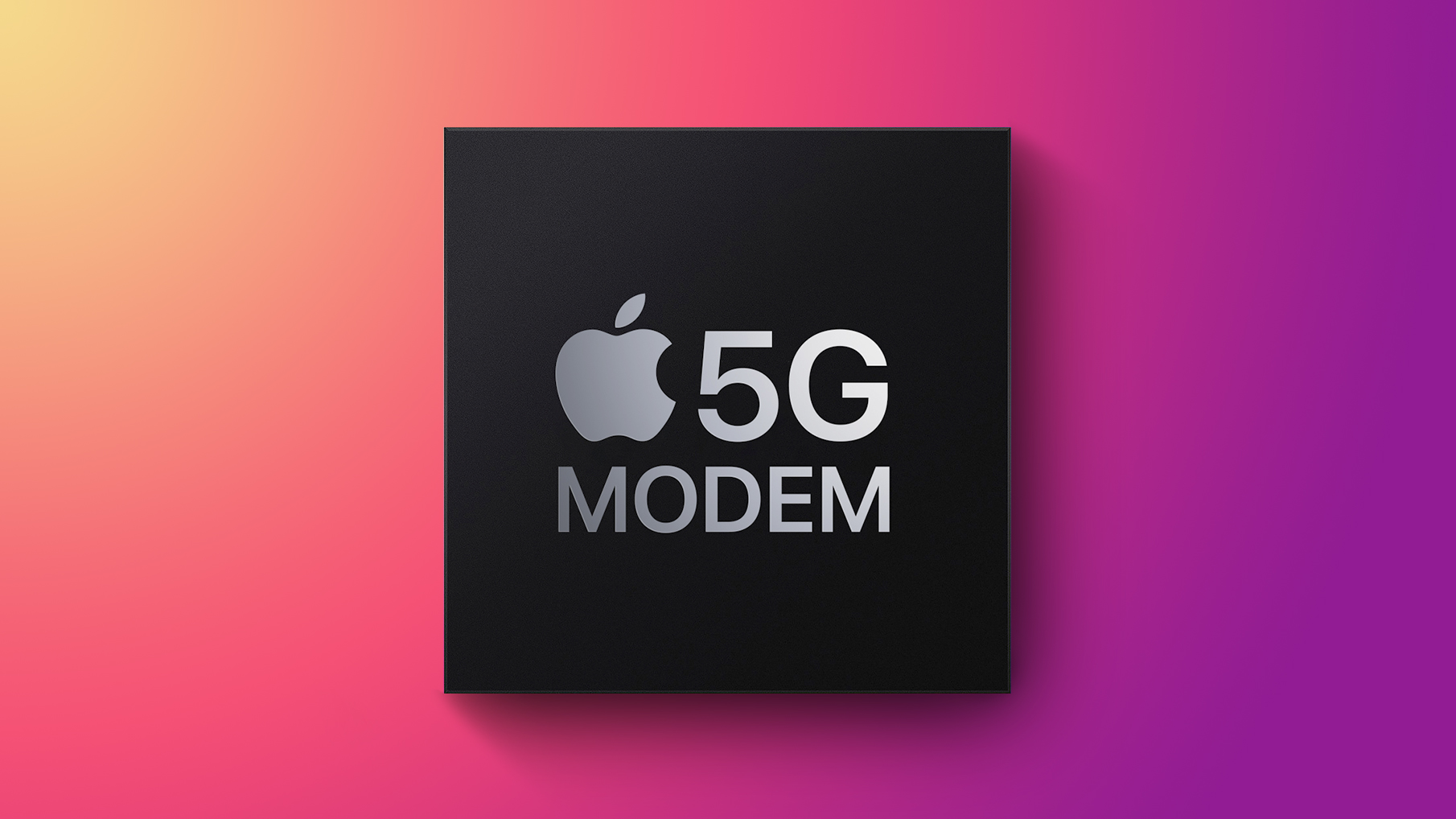
In stark contrast, the international versions of the iPhone 18 Pro are said to integrate Apple's "C2" modem. This C2 modem is the latest iteration in Apple's growing line of in-house cellular chips, designed to succeed its predecessors, the C1 and C1X modems. These earlier C1 and C1X modems are already in use in several of Apple's current devices, including the iPhone Air, the iPhone 17e, and the M5 iPad Pro. The transition to the C2 in the iPhone 18 Pro would mark a significant step forward for Apple's independent chip development strategy.
The C2 modem represents years of investment and engineering effort from Apple. By designing its own modems, Apple aims to gain greater control over its products' performance, power efficiency, and integration with its custom-designed processors, like the A-series chips in iPhones. This vertical integration — controlling both hardware and software — is a hallmark of Apple's product philosophy, allowing for highly optimized and cohesive user experiences.
Understanding mmWave 5G: The Key Differentiator
The critical implication of this dual-modem strategy, as AppleInsider astutely points out, is that Apple's C2 modem likely still lacks the capability to support mmWave 5G. This technical limitation forces Apple to continue relying on Qualcomm to bridge this gap, at least for the American market. But what exactly is mmWave 5G, and why is it so important?
What is mmWave?
mmWave, short for "millimeter wave," refers to a specific, ultra-high-frequency band of 5G cellular technology. Unlike the more common "sub-6GHz" 5G, which uses lower frequencies similar to existing 4G LTE networks, mmWave operates at much higher frequencies (typically 24 GHz to 100 GHz). Think of it like a very wide, very fast highway. Because of these high frequencies, mmWave can deliver incredibly fast download speeds—often multiple gigabits per second, which is significantly faster than standard 5G or 4G LTE.
However, there's a trade-off. These high-frequency waves are very good at carrying a lot of data quickly, but they have a very limited range. They struggle to penetrate obstacles like walls, trees, or even heavy rain. This means mmWave signals are primarily effective over short distances and require a much denser network of small cell towers or base stations. You'll typically find mmWave deployed in specific, high-traffic urban areas, stadiums, airports, or inside buildings, rather than as a widespread blanket coverage across entire cities or rural areas.
mmWave in the U.S. Market
In the United States, mmWave 5G has been a major focus for certain carriers, most notably Verizon. Verizon has heavily invested in building out its mmWave network, often marketing it as "Ultra Wideband" 5G, emphasizing its blistering speeds. AT&T and T-Mobile also have mmWave deployments, though perhaps not as extensively as Verizon.
For these carriers, especially Verizon, mmWave is a significant selling point and a way to differentiate their 5G networks. It allows them to offer theoretical peak speeds that truly push the boundaries of wireless technology, even if those speeds are only available in very specific locations. This investment and marketing push by U.S. carriers are a crucial factor in why Apple, despite its desire for independence, might still need Qualcomm's mmWave-capable modems for its U.S. iPhone models.
Implications for Users: Battery Life and Real-World Performance
The decision to use different modem technologies in different regions carries direct implications for the end-user experience, particularly concerning battery life and perceived speed.
The Battery Life Trade-Off
Apple's C1 and C1X modems, which serve as the foundation for the upcoming C2, are generally regarded as being more power-efficient than their Qualcomm counterparts. Apple prides itself on optimizing its hardware and software for maximum battery performance. If the C2 modem continues this trend of superior power efficiency, and if the Qualcomm modems with mmWave support consume more power, this creates a potential discrepancy:
- U.S. iPhone 18 Pro buyers may experience somewhat worse battery life compared to those purchasing the same device in international markets. This is because the Qualcomm components, particularly those handling mmWave, tend to draw more power. Even if a U.S. user is rarely in an mmWave coverage area, the phone's modem still needs to be capable of scanning for and connecting to these networks, which can consume additional power.
- International iPhone 18 Pro buyers, utilizing Apple's C2 modem, might enjoy slightly longer battery life due to its presumed greater power efficiency and the absence of the more power-hungry mmWave components.
For many users, battery life is a top priority, often outweighing the pursuit of maximum theoretical download speeds. This potential difference in power consumption could become a significant point of discussion once the devices are released.
Real-World Speed: Is mmWave Truly Noticeable?
Beyond battery life, the practical benefits of mmWave's extreme speeds are often debated. John Gruber, a respected technology analyst and writer for Daring Fireball, offered a compelling analysis of the real-world trade-offs involved. While his tests confirmed that 5G (including mmWave) generally outperforms LTE in terms of raw download speeds, Gruber argued that the difference often has no meaningful impact on how a user actually experiences their phone on a day-to-day basis.
Gruber used a vivid analogy to illustrate his point:
Having a phone that can pull 320 Mbps down over cellular is like having a car that can go 320 MPH — an interesting technical feat, but of no practical value to me whatsoever. I never feel like I'm waiting for anything to load because I'm on LTE. LTE is fast enough, and regular 5G is more than fast enough. 5G mmWave is simply a waste of battery life as far as I'm concerned.
This perspective resonates with many users. While it's impressive to see a speed test hit gigabit figures on mmWave, the truth is that for common tasks like browsing social media, streaming high-definition video, or downloading apps, even fast 4G LTE or standard sub-6GHz 5G provides more than enough bandwidth. Most applications and online services are designed to function smoothly on lower speeds, meaning the extra headroom provided by mmWave often goes unused from a practical standpoint. The difference between loading a webpage in 0.5 seconds versus 0.1 seconds, while technically measurable, is virtually imperceptible to the human eye and doesn't change the overall flow of using the device.
Why the Split? The Influence of Carrier Economics
Given the potential for reduced battery life and the questionable practical benefits of mmWave for the average user, the question naturally arises: why wouldn't Apple simply deploy its C2 modem everywhere, rather than retaining Qualcomm for the U.S. market? John Gruber directly addresses this, pointing the finger squarely at "carrier economics."
Carrier Bragging Rights and Investment
The reality is that major U.S. cellular carriers like Verizon and, to a lesser extent, AT&T, have invested colossal sums of money into building out their mmWave networks. For them, offering the fastest theoretical speeds via mmWave is a significant marketing tool and a point of pride. It's a way to differentiate their network from competitors and justify their massive capital expenditures. They want to be able to boast about "gigabit speeds" and "next-generation connectivity."
When a carrier has spent billions on a specific technology, they expect flagship phones sold on their network to support it. They don't want to sell a premium device that can't take advantage of their most advanced, and most heavily marketed, network features. Apple's flagship iPhones have supported these mmWave networks since 2020, making it a standard expectation for premium devices in the U.S. market.
Apple's Balancing Act
Apple, on the other hand, typically prioritizes aspects like longer battery life, consistent performance, and a smooth user experience that feels "fast enough" across a wide range of conditions. While Apple is certainly interested in delivering cutting-edge technology, it also understands that brute-force speed isn't always the most practical or user-beneficial metric, especially if it comes at the cost of other important features like battery longevity.
Therefore, if Gruber's analysis of the leaked Tata data is accurate, and Apple is indeed planning to use Qualcomm's modems specifically in iPhone 18 Pro models sold in the U.S., the primary reason is likely to appease these powerful U.S. carriers and their "bragging points," rather than to provide any truly practical user benefit that couldn't be achieved with Apple's own C2 modem over standard 5G. The consequence, as noted, may well be that U.S. iPhone 18 Pro models end up with slightly inferior battery life compared to their international counterparts.
Apple's Long-Term Vision: Reducing Reliance on Qualcomm
The C2 modem has been a rumored feature of the iPhone 18 Pro for years, fitting into a much broader and long-standing strategic objective for Apple: to reduce its reliance on Qualcomm. This effort isn't new; it stems from years of complex relationships, including legal disputes over patent licensing and supply agreements. Apple's ultimate goal is to design and produce nearly all of its critical components in-house, from its powerful A-series processors to its graphics chips, and eventually, its cellular modems.
Why In-House Modems?
There are several compelling reasons why Apple is so determined to develop its own modems:
- Control and Integration: By owning the modem technology, Apple gains complete control over its design and performance. This allows for tighter integration with its custom-designed processors and operating system, leading to potentially better performance, power efficiency, and unique features that aren't possible with off-the-shelf components.
- Cost Reduction: Licensing technology and purchasing chips from third-party suppliers like Qualcomm can be very expensive. Developing its own modem allows Apple to potentially reduce its bill of materials over the long term, improving profit margins.
- Supply Chain Security: Relying on a single supplier for a critical component carries risks. Geopolitical issues, production problems, or even disagreements with a supplier can disrupt Apple's ability to produce iPhones. Having an in-house alternative provides greater supply chain resilience.
- Innovation: With an in-house modem team, Apple can innovate more freely, tailor modem features to its specific product roadmap, and potentially introduce new cellular capabilities that set its devices apart.
The Journey to Full Independence
Developing a cutting-edge cellular modem is an incredibly complex undertaking. It requires deep expertise in radio frequency engineering, baseband processing, software stacks, and extensive testing to ensure compatibility with thousands of cellular networks worldwide. Qualcomm has decades of experience and a vast patent portfolio in this field, making them a formidable competitor.
Apple significantly boosted its modem development efforts by acquiring the majority of Intel's smartphone modem business in 2019. This acquisition brought thousands of engineers and a substantial intellectual property portfolio into Apple's fold, accelerating its progress. However, bringing a modem up to the performance and feature parity of Qualcomm's market-leading chips, especially for advanced technologies like mmWave, takes considerable time and resources.
A split deployment, where the C2 modem handles most of the world while Qualcomm still covers the U.S., represents a significant, albeit incomplete, step in Apple's journey toward modem independence. It demonstrates that Apple's modem is mature enough for widespread global deployment but still faces challenges in meeting the specific, and arguably niche, demands of the U.S. mmWave market. While it falls short of a complete transition to 100% in-house modems for all markets, it signals a clear trajectory toward that ultimate goal. The progress suggests that a fully Apple-designed modem across all iPhones, including full mmWave support, could be just a few more product generations away.
Looking Ahead: The iPhone 18 Pro and Beyond
The iPhone 18 Pro and iPhone 18 Pro Max are anticipated to be officially unveiled and launched in the fall, traditionally around September, alongside what is rumored to be Apple's first foldable iPhone. This generation of iPhones is shaping up to be one of the most intriguing, not just for its potential design innovations but also for these underlying component strategies.
The leaks from Tata Electronics provide an unprecedented look behind the curtain, showing the complex decisions Apple makes regarding its hardware. They highlight the ongoing tension between Apple's desire for complete vertical integration and the practical realities of global markets, carrier demands, and technological challenges.
For consumers, the key takeaway is that their experience with the iPhone 18 Pro might subtly differ depending on their region. U.S. buyers may gain access to the fastest theoretical 5G speeds but potentially at the cost of slightly less battery life. International buyers, on the other hand, might enjoy the benefits of Apple's optimized C2 modem, prioritizing efficiency over peak speed. This fascinating dual-modem strategy will undoubtedly be a major talking point once the iPhone 18 Pro is officially released.
This article, "iPhone 18 Pro Could Use Qualcomm Modem in the US and C2 Elsewhere" first appeared on MacRumors.com
Discuss this article in our forums
from MacRumors
-via DynaSage
