
I Have Now Seen Mega Gengar’s Tiny Feet And Am Very Uncomfortable
Unveiling the Mystery: Mega Gengar's Tiny Feet and the Depths of Pokémon Design
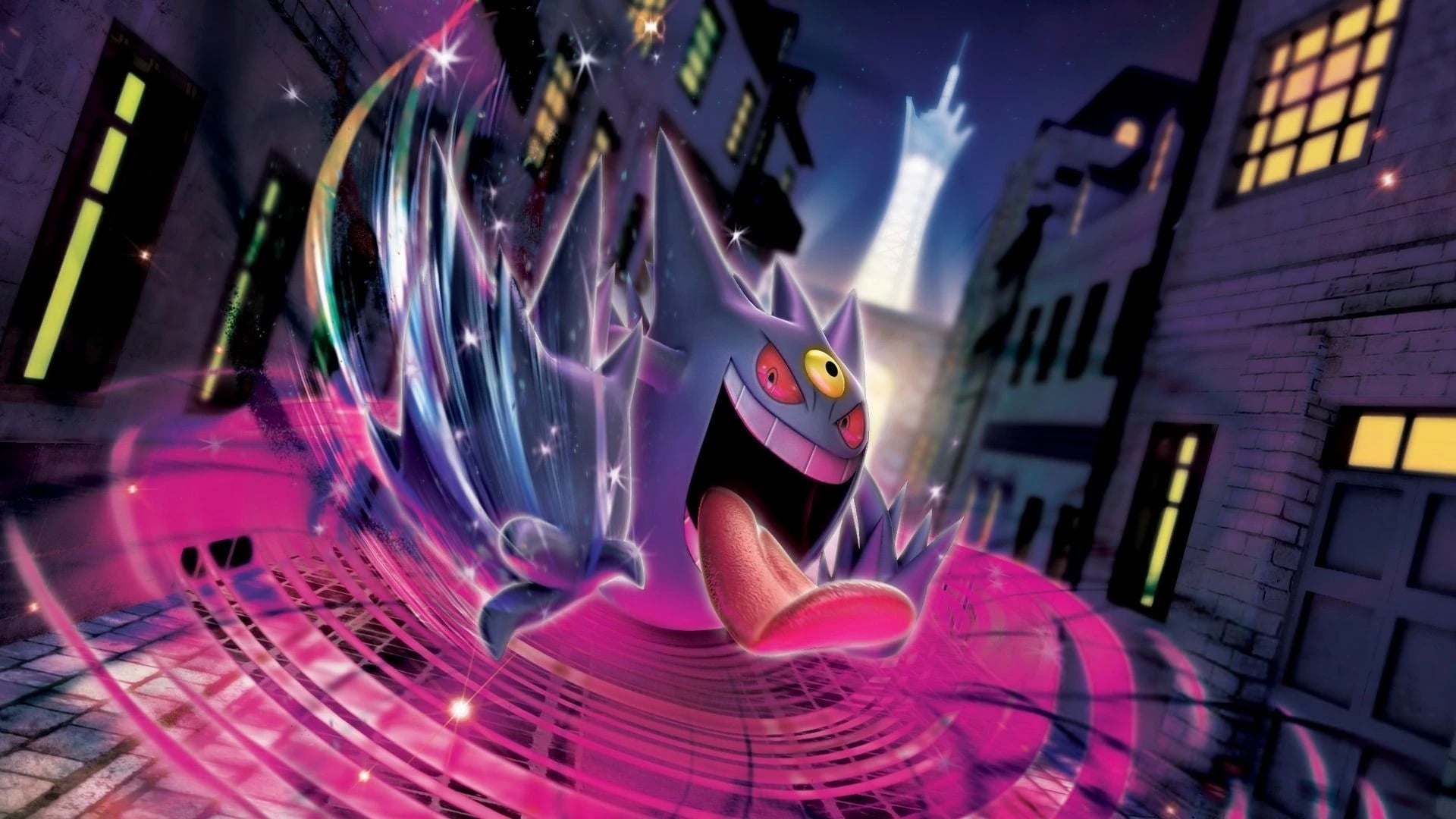
For years, trainers have been captivated by the enigmatic allure of Gengar, the iconic Ghost/Poison-type Pokémon. Known for its mischievous grin, shadowy form, and intimidating presence, Gengar has long been a fan favorite. Its Mega Evolution, Mega Gengar, takes this spectral power to an entirely new level, amplifying its menace and competitive prowess. However, a recent revelation from the new game, Pokémon Champions, has sent ripples through the Pokémon community, unveiling a surprising and often unseen detail about Mega Gengar: it has tiny little feet!
This seemingly minor detail has sparked considerable discussion and fascination, prompting fans to re-examine what they thought they knew about this beloved ghost monster. Often depicted as floating menacingly above the ground, the idea of Mega Gengar possessing diminutive appendages changes the perception of its physical form. This deep dive will explore Mega Gengar's design, lore, the impact of this discovery, and why these small revelations continue to enrich the vast world of Pokémon.
The Startling Revelation from Pokémon Champions
The news broke recently, courtesy of the highly anticipated title, Pokémon Champions. While the game promises a new era of Pokémon battles and adventures, it was a subtle animation or detailed model view that exposed a secret tucked away beneath Mega Gengar's shadowy form: tiny little feet. For many, this came as a genuine shock. Gengar, in its regular and Mega forms, is almost universally depicted as a floating entity. Its Pokedex entries often describe it as a Pokémon that "hides in shadows" or "drifts through the air," contributing to the popular image of a being untethered to the ground.
The surprise stems from how rarely these feet are visible. Most official artwork, animated appearances, and even in-game models in previous titles keep Gengar's lower body obscured or simply don't render discrete feet. The effect is usually one of a shadowy, amorphous mass, giving it a truly ghostly aesthetic. This newfound detail in Pokémon Champions suggests a level of anatomical completeness that players might not have expected, even for a creature of shadows. It makes us question how many other Pokémon might have hidden features that are only revealed under specific circumstances or in games with higher fidelity graphics.
Deconstructing Mega Gengar's Iconic Design
The Classic Gengar: A Shadowy Specter
Before diving into its Mega Evolution, it’s crucial to understand Gengar's foundational design. Introduced in Generation I, Gengar quickly became one of the most recognizable Ghost-type Pokémon. Evolving from Haunter (which evolves from Gastly), Gengar embodies a playful yet sinister presence. Its round body, piercing red eyes, and mischievous smile make it instantly memorable. Pokedex entries often paint Gengar as a prankster, hiding in shadows and scaring people for fun, but also a formidable opponent in battle. Its ghost-like quality, emphasized by its often-floating posture, is central to its identity. You can learn more about its lineage at the Gengar Bulbapedia page.
The Power of Mega Evolution
Mega Evolution, a temporary transformation introduced in Generation VI, allowed specific Pokémon to achieve a more powerful form during battle. This mechanic not only boosted stats but also dramatically altered a Pokémon's appearance, often reflecting an intensified version of its original design or hinting at new aspects of its lore. Mega Gengar stands out as one of the most visually striking Mega Evolutions, transforming an already iconic Pokémon into something truly fearsome.
Mega Gengar: A Form Reborn
When Gengar undergoes Mega Evolution, its appearance becomes even more intimidating and ethereal. Its body darkens, and its spikes become more pronounced, extending from its head and back. Perhaps the most notable features are the third eye that appears on its forehead, rumored to grant it heightened sensory perception, and the large, glowing red maw that seems to emanate from its core. Its arms and legs appear to fuse into its body, making it seem even more like a solidified shadow. The common visual interpretation is that Mega Gengar is a being of pure spectral energy, detached from the physical world, often shown partially submerged in the ground or hovering, leaving its lower body largely unseen.
This design reinforces the idea that it's a creature that exists between dimensions, a ghost that can pass through walls and manipulate shadows. The hidden feet, therefore, directly challenge this long-held visual narrative. If it has feet, however small, does it truly float, or does it merely levitate slightly above the ground, sometimes touching down? This tiny detail opens up a fascinating avenue for discussion on the physical nature of Ghost-type Pokémon.
Gengar's Lore and Its Battle Prowess
Ghost/Poison Typing: A Unique Combination
Gengar's Ghost/Poison typing is a fundamental aspect of its identity, both in lore and battle. As a Ghost-type, it is often associated with the paranormal, shadows, and the ability to traverse different planes of existence. The Poison typing adds another layer of menace, suggesting a toxic, debilitating presence. This combination grants it immunity to Normal and Fighting-type moves, and resistances to Bug and Poison, while making it weak to Ghost, Dark, Ground, and Psychic attacks. This typing informs its shadowy demeanor and its Pokedex descriptions, which frequently allude to its ability to drain life energy or hide in dark places.
Shadow Tag: A Competitive Edge
Mega Gengar's ability, Shadow Tag, is one of the most powerful in the game. This ability prevents opposing Pokémon from switching out, trapping them in battle unless they are also Ghost-type or holding specific items. This turns Mega Gengar into an unparalleled offensive threat, allowing it to easily set up or sweep weakened teams without fear of its targets escaping. The ability perfectly complements its spectral design – like a shadow that clings to its prey, preventing escape. This competitive dominance made Mega Gengar a staple in the Uber tier during the generations when Mega Evolution was active, highlighting its sheer power and strategic utility. For strategies involving Shadow Tag, check out Smogon's competitive analysis of Mega Gengar.
Pokedex Entries: Unveiling the Full Picture
Throughout the generations, Gengar's Pokedex entries have painted a consistent picture of a mischievous and often malevolent spirit. They describe it as:
- "It hides in shadows. It is said that if Gengar is hiding, it cools the area by nearly 10 degrees Fahrenheit." (Pokémon Red/Blue)
- "Said to emerge from darkness to steal the lives of those who get lost in mountains." (Pokémon Platinum)
- "Sometimes, on a dark night, your shadow cast by a streetlight may suddenly overtake you. It is actually a Gengar running past you, pretending to be your shadow." (Pokémon Sun)
- "The energy from Mega Evolution makes it impossible for it to stand still. It will just keep moving until its power runs out." (Pokémon Ultra Sun)
- "It's said that if you hear a Mega Gengar's cry, you're experiencing a sudden drop in temperature and chills. It hunts by sucking the life force out of its prey." (Pokémon Alpha Sapphire)
Artistic Interpretations and Fan Reactions
How Fan Art Depicted Gengar (Until Now)
For decades, fan artists have drawn Gengar and Mega Gengar in countless ways, almost always adhering to the "floating ghost" motif. Its body often seamlessly blends into the ground or fades into nothingness below its torso. This artistic convention was so ingrained that the idea of it having feet felt almost contradictory to its established visual language. Many artists would emphasize its ethereal nature, perhaps with smoky trails or an indistinct lower half, to enhance its ghostly appearance.
The revelation is likely to inspire a new wave of fan art, either humorously highlighting its tiny feet or integrating them into more "grounded" (pun intended) depictions. This kind of detail, while minor, often provides a fresh perspective for creators within the community, encouraging new interpretations of beloved characters.
The Community Buzz: Why Details Matter
The Pokémon community thrives on discovery, secrets, and discussion. Small details like this often spark enormous conversation because they add depth and realism (in a fantastical sense) to creatures that fans have known for years. It's a testament to the meticulous design efforts that go into these characters, even for features that are rarely seen. Discussions often revolve around:
- "Was this always there?" - Debates over whether previous models or artworks subtly hinted at it.
- "Does this change everything?" - Exaggerated but heartfelt reactions about how this detail alters perception.
- "What about other Pokémon?" - Speculation about other Pokémon that might have hidden anatomical features.
Game Models vs. Official Art: The Nuance of 3D
This situation also highlights the ongoing interplay between official 2D artwork and detailed 3D game models. While official art often takes artistic liberties for dramatic effect or to convey a specific essence, 3D models in modern games aim for anatomical consistency and detailed rendering from all angles. What might be a stylistic choice in a drawing (e.g., obscuring feet to emphasize floating) becomes a definitive detail in a high-fidelity 3D model, especially when camera angles allow for a closer, more revealing look.
It's not uncommon for newer games to reveal subtle details that were either missed or less prominent in earlier iterations. As technology advances and game engines allow for more intricate designs, previously hidden elements can come to light, enriching the visual lore of the Pokémon world.
The "Pokémon Champions" Context: A New Era of Detail
The fact that Pokémon Champions is the game to reveal this speaks volumes about its potential for visual fidelity and attention to detail. While the exact context of the reveal (a specific animation, a photo mode, or an in-game encyclopedia entry) isn't fully detailed here, it signifies a commitment to rendering Pokémon with unprecedented clarity.
This game seems to be pushing the boundaries of what players can observe about their favorite monsters. Perhaps it offers new camera angles in battle, a more interactive Pokémon Camp-like feature, or even a Pokedex that allows for 360-degree views and close-ups that were previously unavailable. Such features can significantly enhance the player's connection to their Pokémon, allowing them to appreciate the intricate designs in ways never before possible.
The impact of this approach could be significant for the series. If Pokémon Champions continues to unveil such previously unseen details, it could set a new standard for how Pokémon are designed and presented in future titles. It adds another layer of discovery for veteran players, making even the oldest Pokémon feel fresh and new.
The Significance of Hidden Details in Pokémon Design
Adding Depth to Beloved Creatures
Small details, often overlooked or intentionally hidden, are crucial to creating truly rich and memorable character designs. For Pokémon, these details contribute to their sense of being living, breathing creatures within their world. Even if a Pokémon is rarely shown to walk, the knowledge that it *can* or *has* physical appendages for it adds a layer of realism to its fantastical nature. It suggests a complete anatomical structure, even for a ghost.
This level of depth makes Pokémon feel more tangible and less like mere sprites or models. It encourages players to think beyond their immediate visual representation and consider the full biology and physiology (or "ghostology") of these creatures.
Re-evaluating Our Favorite Pokémon
Discoveries like Mega Gengar's feet challenge our preconceived notions and force us to re-evaluate Pokémon we thought we knew inside and out. It’s a moment of delightful disruption that reignites interest in older designs. This ongoing process of discovery ensures that the Pokémon franchise, even with its long history, remains dynamic and full of surprises for its dedicated fanbase. It’s a subtle reminder that there’s always more to learn and appreciate about the creatures that inhabit this vibrant world.
The Joy of Anticipation and Discovery
Ultimately, moments like these are what make the Pokémon experience so engaging. The anticipation of a new game, the joy of discovering a hidden detail, and the ensuing community discussion are all part of the magic. It’s a shared experience of uncovering secrets, big or small, that connect players across the globe. These "aha!" moments, whether they're about a new gameplay mechanic or a Pokémon's tiny feet, keep the passion alive and remind us why we fell in love with this franchise in the first place.
Conclusion: A Tiny Detail, A Grand Impact
The revelation that Mega Gengar, the ultimate shadowy specter, possesses tiny little feet in Pokémon Champions is far more than a trivial piece of information. It's a fascinating peek behind the curtain of Pokémon design, challenging long-held assumptions and sparking new discussions among fans worldwide. This detail not only adds a surprising layer of physical reality to a creature often perceived as purely ethereal but also highlights the increasing fidelity and meticulousness of modern Pokémon games.
As trainers continue their journey through the vast and ever-evolving Pokémon world, such discoveries serve as a testament to the franchise's enduring charm and depth. It reminds us that even after decades, there are always new mysteries to uncover and beloved Pokémon to look at with fresh eyes. Whether it's a new strategy, a hidden lore detail, or simply the presence of tiny feet on a floating ghost, the world of Pokémon continues to surprise and delight, proving that even the smallest details can have the grandest impact on our perception and appreciation of these incredible creatures.
Keep an eye out for more hidden gems in Pokémon Champions, and who knows what other secrets your favorite Pokémon might be keeping!
from Kotaku
-via DynaSage
