
Assassin’s Creed Black Flag Resynced Unit Sales Figures Are The First Ubisoft Has Released In Many Years
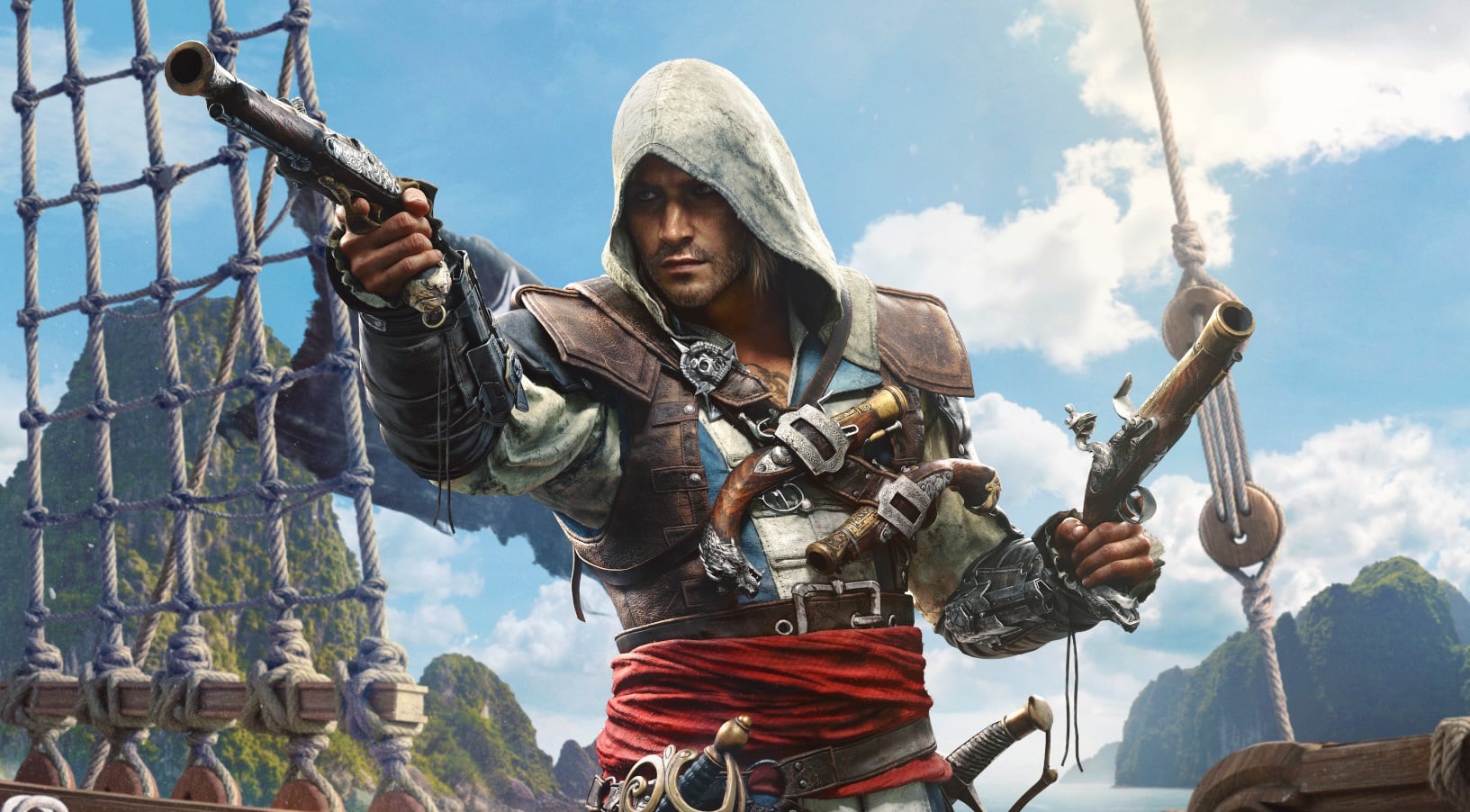
Is That Even Allowed? Diving Deep into the Boundless World of Assassin's Creed Black Flag
Imagine yourself on the deck of a mighty pirate ship, the salty air whipping through your hair, the roar of cannons echoing across the vast blue sea. You’re scanning the horizon for your next target – a merchant vessel laden with gold, perhaps, or a heavily armed man-o'-war begging for a challenge. As you grip the wheel, commanding your crew and charting a course through treacherous waters, a thought might cross your mind: Is that even allowed?
This simple question cuts to the heart of what makes Assassin's Creed IV: Black Flag such an unforgettable and revolutionary game. Released by Ubisoft, this title didn't just place players in a historical setting; it fully immersed them in the chaotic, thrilling, and morally ambiguous life of a pirate during the Golden Age. From its breathtaking open world to its gripping narrative and innovative naval combat, Black Flag dared to push boundaries, inviting players to embrace a life often deemed lawless. But in doing so, it constantly prompts us to consider the freedoms it offers, the history it reinterprets, and the sheer audacity of its design. Let's embark on a journey to explore why Black Flag feels so liberating and why its question of "allowance" is its greatest strength.
The Allure of Unfettered Freedom: What Can You Really Do?
At its core, Assassin's Creed Black Flag is a game about freedom. Not just the freedom of the open sea, but the freedom to define your own path within a sprawling, vibrant world. From the moment you step into the boots of Edward Kenway, you are handed the keys to the Caribbean. You're not just an Assassin following a strict creed; you are, first and foremost, a pirate. This distinction is crucial, as it allows for a level of player agency that was groundbreaking at the time and remains deeply satisfying today.
The game doesn't just tell you you're a pirate; it empowers you to embody one. You can commandeer your ship, the Jackdaw, and sail wherever the winds take you. Want to hunt whales in the icy northern waters? Go for it. Fancy exploring a hidden cove rumored to hold ancient treasure? The map is yours to uncover. Feel like ambushing a Spanish convoy and relieving them of their cargo? Prepare your cannons! This extensive array of choices makes every play session feel unique. The open-world design is a testament to this philosophy, presenting a massive, seamless environment dotted with major cities like Havana, Kingston, and Nassau, alongside countless smaller islands, ruins, and underwater wrecks waiting to be discovered. This genuine sense of exploration is a key part of the Black Flag experience, making you wonder, "Is it really allowed for a game to give me this much control?"
Sailing the High Seas: Naval Combat and Plunder – Is It Allowed to Be This Fun?
Perhaps the most celebrated aspect of Black Flag is its revolutionary naval combat. Building upon the rudimentary ship controls introduced in its predecessor, Assassin's Creed III, Black Flag refines and expands it into a core gameplay loop that is incredibly engaging. Piloting the Jackdaw feels powerful and responsive. You learn to read the wind, hoist and furl sails, brace for impact, and unleash devastating broadsides.
The thrill of engaging an enemy vessel is palpable. Whether you're carefully positioning your ship to expose a weak flank, raining cannon fire upon its hull, or swiveling your swivel guns to take out enemy masts and crew, every encounter is dynamic. And the culmination? Boarding. Leaping across to an enemy deck, leading your crew in a frantic melee, and then having the choice to sink the ship, repair your own, or add it to your fleet – it's a visceral, adrenaline-pumping experience. The sheer joy of successfully plundering a richly loaded brig, watching your coffers swell with sugar, rum, textiles, and metal, makes you forget any moral qualms. You’re a pirate, after all! This seamless blend of sailing, combat, and resource management is so addictive that it raises the question: "Is it allowed to make piracy this incredibly satisfying and fun?" The answer, in Black Flag's case, is a resounding yes, because it masterfully separates the fantasy from reality, allowing players to indulge in the thrill without real-world consequences.
Beyond the Horizon: Exploration and Discovery in a Vast Caribbean
The Caribbean of Black Flag isn't just a backdrop for pirate adventures; it's a character in itself. The map is incredibly diverse, stretching from lush, tropical islands with ancient Mayan ruins to bustling colonial port cities, and mysterious uncharted coves. Every corner of this world feels handcrafted and rich with detail. The game encourages exploration not just for the sake of ticking off map markers, but for the genuine sense of discovery it provides.
Beyond naval skirmishes, you can spend hours diving beneath the waves with a diving bell to explore sunken wrecks, fending off sharks and retrieving valuable cargo. You can hunt exotic animals on land, from jaguars to crocodiles, or engage in mini-games like whaling, which, while controversial for some, was historically accurate for the era. Hidden treasures, unique side quests, and environmental storytelling are scattered everywhere, rewarding curious players. This depth of exploration makes the world feel alive and reactive to your presence. The developers put so much effort into making every island, every reef, and every city feel distinct and worthy of exploration. This level of detail in an open world, inviting you to constantly deviate from the main story path to explore, hunt, or gather, truly makes you feel like the game is saying, "Yes, this is allowed, go and find your own adventure."
Edward Kenway: A Pirate with a Purpose (or Lack Thereof)?
At the center of this swashbuckling saga is Edward Kenway, a character who defies typical protagonist tropes. Unlike previous Assassin's Creed heroes, Edward isn't initially driven by a noble cause or a sense of duty. His motivations are far more grounded and, arguably, selfish: wealth, fame, and a desire for personal freedom. He stumbles into the Assassin-Templar conflict almost by accident, seeing an opportunity to profit rather than fulfilling a destiny.
This moral ambiguity is refreshing and adds significant depth to the narrative. Edward isn't a hero in the traditional sense; he's a rogue, a scoundrel, and a opportunist. Yet, through his journey, we see him evolve. He forms genuine bonds with his crew and other famous pirates like Blackbeard, Charles Vane, and Calico Jack. He witnesses the harsh realities of their transient, dangerous lives and begins to question his own choices. His transformation from a reckless fortune-seeker to a man who understands responsibility and the true meaning of freedom is subtly handled, making him one of the most compelling characters in the series. The narrative dares to present a protagonist who isn't immediately likable or virtuous, challenging the player to empathize with his flaws. This boldness in character development makes one ponder, "Is it allowed to have a main character so morally grey, yet so captivating?" Black Flag proves it absolutely is, by showing a realistic progression of a complex individual.
History vs. Fantasy: Where Does Black Flag Draw the Line?
One of the hallmarks of the Assassin's Creed series is its intricate blend of historical events and speculative fiction. Black Flag excels in this, crafting a vibrant depiction of the Golden Age of Piracy (roughly 1650-1730). It features real historical figures like Edward Thatch (Blackbeard), Benjamin Hornigold, and Mary Read, giving them significant roles in Edward Kenway's story. The historical settings are meticulously researched, from the architecture of Havana to the politics of the West Indies.
However, intertwined with this historical accuracy is the overarching science fiction narrative of the Assassin-Templar conflict and the ancient First Civilization artifacts, the Pieces of Eden. Edward, through his association with both factions, becomes an unwitting pawn in their age-old war. This fusion of verifiable history with fantastical elements is a balancing act, and Black Flag manages it with remarkable grace. It educates players about a fascinating historical period while also delivering an exciting, fictionalized adventure. Some might ask, "Is it allowed to take such liberties with history?" The game's success suggests that when done respectfully and creatively, blending history with fiction can create a richer, more engaging experience. It encourages players to learn more about the real history while enjoying the fictional wrapper.
The Ethics of Emulating Piracy: Is It Morally Sound?
The very nature of playing a pirate game, particularly one as immersive as Black Flag, can raise ethical questions. Are we, as players, glorifying violence, theft, and a lawless existence? Is it "allowed" to find enjoyment in virtual acts that would be unequivocally wrong in the real world?
This is a debate that often surfaces with games that feature morally ambiguous themes. However, it's crucial to distinguish between fantasy and reality. Video games offer a safe space for escapism, a canvas upon which players can explore scenarios and roles that are far removed from their everyday lives. Black Flag doesn't endorse real-world piracy; instead, it offers a romanticized, often exaggerated, portrayal of a historical period. It allows players to momentarily step into the shoes of someone who defies societal norms, fulfilling a primal fantasy of freedom and rebellion.
Moreover, the game does not shy away from depicting the harsh consequences of the pirate life. Many of Edward's pirate comrades meet grisly ends, often through betrayal or by the colonial authorities. The narrative itself shows Edward grappling with his actions and seeking redemption. This subtle commentary ensures that while the gameplay is thrilling, the underlying message isn't one of pure glorification. It's a nuanced exploration of a complex historical figure and an era that was far from black and white. So, when considering if it's "allowed" to enjoy this kind of game, the answer lies in understanding the context and purpose of interactive storytelling.
Game Design Masterclass: How Ubisoft Made Piracy Feel Right
Black Flag's success isn't just due to its appealing theme; it's a testament to brilliant game design. Ubisoft Montreal truly hit its stride with this installment, perfecting many of the systems that define the Assassin's Creed series while introducing groundbreaking new ones.
- Seamless World Integration: The transition from sailing to land exploration is fluid. You can sail up to an island, drop anchor, and immediately hop off your ship to explore, climb, and assassinate. There are no loading screens interrupting the flow, which greatly enhances immersion.
- Fluid Parkour and Combat: The signature parkour system, allowing Edward to fluidly traverse rooftops and jungle canopies, is as refined as ever. Combat is responsive, offering a blend of stealth and open conflict, with Edward's dual swords and pistol adding flair to every encounter.
- Progression and Customization: The Jackdaw is more than just a ship; it's a character in its own right. Players invest in upgrading its hull armor, cannons, swivels, and ram, seeing tangible improvements with each upgrade. This sense of progression fosters a deep connection to your vessel.
- Engaging Story and Side Content: Beyond the main narrative, the game is brimming with captivating side activities. From treasure maps that lead to hidden chests, to contracts for assassinations, and even naval strongholds to conquer, there's always something compelling to do. Each activity feels rewarding and contributes to the overall pirate fantasy.
This meticulous attention to detail and harmonious integration of gameplay elements make the pirate experience feel incredibly authentic and enjoyable. The developers didn't just allow piracy; they made it the most natural and exciting way to interact with the world.
The Enduring Legacy: Black Flag's Impact on Open-World Gaming
Assassin's Creed IV: Black Flag didn't just redefine its own series; it left a lasting mark on the entire open-world gaming landscape. Its successful blend of naval exploration, engaging combat, and compelling narrative paved the way for future titles. Games like Sea of Thieves clearly draw inspiration from Black Flag's pirate fantasy, while even later Assassin's Creed games like Assassin's Creed Odyssey and Valhalla expanded on the naval mechanics and open-world freedom that Black Flag pioneered.
It demonstrated that players crave agency and the ability to forge their own adventures within a richly detailed world. The seamless integration of land and sea exploration set a new standard for open-world design, proving that expansive environments don't need to be sectioned off by loading screens to be enjoyable. Black Flag showed developers that giving players genuine freedom, even if it meant venturing into morally complex territory, could lead to incredibly immersive and memorable experiences. It championed the idea that, within the safe confines of a game, almost anything is "allowed" if it contributes to the player's enjoyment and narrative depth.
Embracing the Unallowed: Black Flag's Daring Invitation
So, to revisit our initial question: "Is that even allowed?" When it comes to Assassin's Creed IV: Black Flag, the resounding answer is an enthusiastic yes. This game doesn't just allow you to be a pirate; it actively encourages it, celebrates it, and makes it feel incredibly natural and rewarding.
Black Flag dared to step away from some of the more rigid traditions of the Assassin's Creed series, embracing a swashbuckling adventure that prioritized player freedom, naval combat, and open-world exploration above all else. It delivered a charismatic, flawed protagonist, a rich historical setting brought to life with fantastical elements, and gameplay mechanics that were both innovative and immensely fun. It successfully navigated the ethical considerations of portraying piracy by framing it as a grand adventure within a fictionalized world, allowing players to indulge in a fantasy of rebellion and freedom without real-world repercussions.
In many ways, Black Flag represents a pinnacle of open-world design and historical fiction in gaming. It invited players to question the rules, both within the game's narrative and in their own perception of what a video game can be. It proved that sometimes, breaking free from conventions and embracing the "unallowed" is precisely what leads to true innovation and a truly unforgettable gaming experience. So, hoist the main sail, weigh anchor, and embrace the boundless freedom that Black Flag so generously offers – because in its world, everything is allowed.
from Kotaku
-via DynaSage
