
Andy Serkis, Why Do You Suck Now?
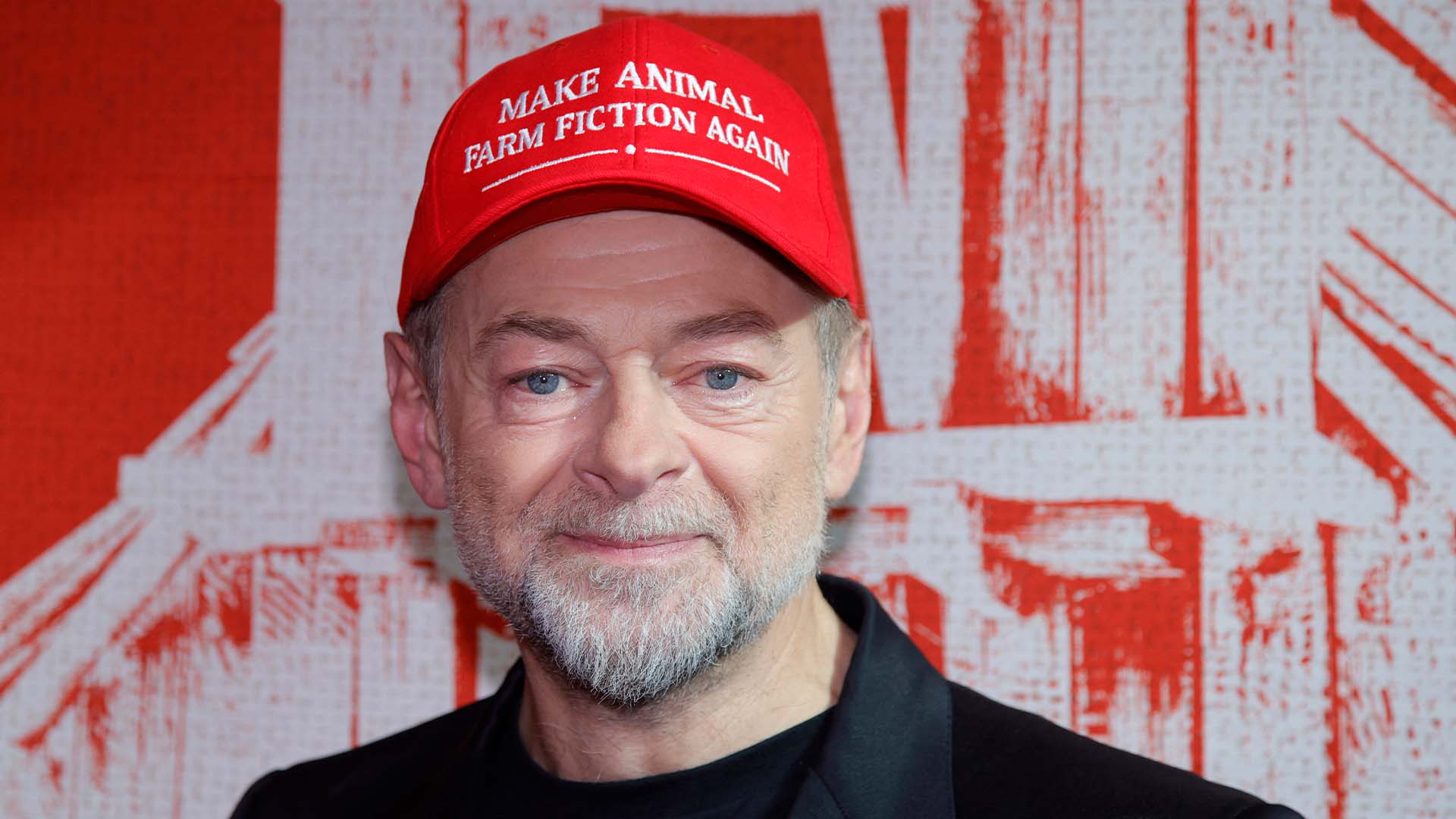
Andy Serkis: The Visionary Who Redefined Acting and the Shifting Sands of Public Opinion
Andy Serkis is a name that immediately brings to mind innovation in the world of movies. He's famous for being a pioneering actor, a thoughtful director, and a forward-thinking creative who has spent decades pushing the limits of what's possible in cinema, especially through his incredible skill in performance capture. He's the man behind iconic digital characters and has directed big Hollywood films, making his influence undeniable. However, like many important people at the forefront of changing industries, Serkis has recently been talked about for his strong opinions and creative choices. Some people have even called these "questionable." This isn't necessarily a criticism of his talent or what he means to do. Instead, it shows how much close attention and different interpretations come with being a trailblazer and expressing strong views in public. To truly understand these recent conversations, we need to look deeper into Serkis's unique career, his artistic ideas, and the complicated world of modern entertainment.
Who is Andy Serkis? A Journey from Stage to Screen Pioneer
Born in Ruislip, England, Andy Serkis (full name Andrew Clement Serkis) first wanted to work in visual arts before he found his true calling in acting. His early career was very much in traditional theatre, where he honed his acting skills. He developed a deep understanding of what makes a character tick, how to use his body to express feelings, and how to show deep emotions. This classical training turned out to be an unexpected but vital foundation for the revolutionary path he would later take in movies. Serkis's background in theatre gave him a special viewpoint, highlighting the main elements of acting that work no matter the medium, whether it's on a stage or in a digital world. He believed that true acting is about truly becoming a character, regardless of how that character is finally shown to the audience. This basic belief would become the core of his argument that performance capture is a legitimate form of acting.
When he moved into film, he took on various roles, but it was his part in Peter Jackson's epic movie series based on J.R.R. Tolkien's "The Lord of the Rings" that would forever change his career path and the history of cinema. As the voice and movements behind the character of Gollum, Serkis didn't just speak the lines; he *became* the creature. His subtle physical performance, captured using early motion-capture technology, was so powerful that it blurred the lines between actor and animation. This groundbreaking role not only made Serkis famous worldwide but also started a big debate about what acting truly means in the digital age. It was at this point that the groundwork was laid for his lasting reputation as the "king of motion capture," a title he would continue to earn through many more groundbreaking performances.
The Master of Motion Capture: Iconic Roles and Revolutionary Performances
Andy Serkis's contributions to performance capture are simply unmatched. He has consistently improved this art form, showing its power for deep storytelling and emotional impact. His characters, even though they are often entirely digital, are filled with so much humanity and complexity that they feel completely real. This ability to show raw emotion and intricate personalities through a digital figure is what makes Serkis stand out and has earned him praise from critics and admiration from audiences everywhere. Each role has been a masterclass in combining traditional acting methods with advanced technology, proving that the actor's skill remains central even in the most technologically advanced productions.
Gollum: The Ring's Slave in Middle-earth
It's impossible to talk about Andy Serkis without first mentioning his unforgettable portrayal of Gollum in "The Lord of the Rings" movies (The Fellowship of the Ring, The Two Towers, The Return of the King) and later The Hobbit: An Unexpected Journey. His performance was truly revolutionary. Serkis didn't just lend his voice to Gollum; he physically embodied the tortured creature, crawling, twisting his body, and expressing every bit of pain and obsession with amazing detail. The technology used to transfer his movements onto the digital character was still quite new, yet Serkis's performance made Gollum one of the most memorable and relatable villains in movie history. His work broke new ground, showing Hollywood that performance capture wasn't just a technical trick but a powerful tool for developing characters, capable of delivering performances worthy of serious critical attention. The famous "Gollum vs. Smeagol" scene in "The Two Towers" still stands as proof of his incredible range, where he essentially played two distinct characters in an internal conversation, an achievement that deeply resonated with both audiences and critics.
Caesar: The Soul of the Apes
After his success with Gollum, Serkis took on another role that would define his career: Caesar in the "Planet of the Apes" reboot trilogy (Rise of the Planet of the Apes, Dawn of the Planet of the Apes, War for the Planet of the Apes). This role solidified his position as the unmatched master of performance capture. Caesar was a fully developed, intelligent ape leader whose journey from an innocent young ape to a tired, wise revolutionary was portrayed with breathtaking depth. Serkis's ability to show complex emotions – love, sorrow, anger, hope, and leadership – through Caesar's non-human body was extraordinary. Audiences saw an ape, but they felt a character with a deeply human soul. The "Planet of the Apes" films, thanks in large part to Serkis's central performance, pushed the boundaries of visual effects and storytelling, earning widespread critical acclaim and doing very well at the box office. His work here wasn't just about bringing a creature to life; it was about giving the audience a main character they could fully understand and feel for, despite his digital appearance.
King Kong and Beyond: Expanding the Horizon
Serkis worked again with Peter Jackson for the 2005 remake of King Kong, where he once more gave an unforgettable performance as the giant ape. Beyond the sheer physical size, Serkis gave Kong a subtle emotional life, making the huge gorilla a sympathetic and tragic figure. His work in capturing Kong's raw power and tender vulnerability was amazing, further showing the emotional range that can be achieved through performance capture. His dedication even included researching how gorillas behave, which allowed him to add an incredible layer of authenticity to the character's movements and expressions. These roles, along with his work as Supreme Leader Snoke in the Star Wars sequel trilogy and even a small part as the chimpanzee Captain Haddock in The Adventures of Tintin, illustrate a career dedicated to exploring the full potential of performance capture as a valid and powerful form of acting. Every character, though digital, had a distinct personality and emotional core directly stemming from Serkis's deep understanding of performance.
Beyond the Suit: Directing, Producing, and The Imaginarium Studios
Andy Serkis's ambitions go far beyond just acting. He has steadily built an impressive career as a director and producer, further strengthening his position as a visionary in the film industry. His move into directing was a natural step for someone so deeply involved in the complex technical and artistic processes of filmmaking. He instinctively understands how to combine cutting-edge technology with engaging stories and authentic performances, a skill he refined over years of working on pioneering productions heavy with visual effects. This unique perspective allows him to approach directing with an innovative mindset, seeing possibilities that others might miss. His work behind the camera shows his comprehensive grasp of storytelling, from the broad strokes of epic narratives to the tiny details of character expression.
A significant part of Serkis's legacy as a creative force is The Imaginarium Studios, which he co-founded in 2011. This production company and advanced performance capture studio is dedicated to pioneering next-generation storytelling, not just in movies, but across television, video games, and other digital platforms. The Imaginarium is more than just a building; it's a hub for innovation, a place where actors, directors, writers, and technicians work together to push the boundaries of what performance capture can achieve. It embodies Serkis's belief that the actor's performance is most important, regardless of the technology used to bring it to life. The studio has been involved in many projects, helping to smoothly integrate performance capture into various productions and nurturing new talent in the field. It stands as a physical representation of his commitment to the art form, providing a platform for continuous experimentation and refinement.
As a director, Serkis has taken on a wide variety of projects. His directorial debut, Breathe (2017), was a deeply moving true-life drama, showing his ability to direct human-focused stories without relying on performance capture. This film demonstrated his versatility and skill in getting powerful performances from actors in a traditional setting. He then returned to his roots with Mowgli: Legend of the Jungle (2018), a darker, more realistic take on Rudyard Kipling's classic. This project was a massive undertaking, using advanced performance capture techniques to bring the jungle animals to life with unmatched realism and emotional depth. While it received mixed reviews, it was an ambitious effort that further pushed the technical and artistic limits of what Serkis and his studio could achieve. Most recently, he directed Venom: Let There Be Carnage (2021), a high-profile Marvel film that combined live-action with extensive computer-generated imagery (CGI) and performance capture. This experience further sharpened his skills in managing large-scale blockbusters and navigating the complexities of modern superhero filmmaking. Each directing venture highlights his commitment to exploring diverse stories and showing the expansive potential of both traditional and cutting-edge filmmaking techniques.
The Art and Debate of Performance Capture: Serkis's Unwavering Stance
A key part of Andy Serkis's career has been his passionate and often vocal support for performance capture as a legitimate and recognized form of acting. For years, the film industry struggled with how to classify these performances. Was it animation, visual effects, or was it truly acting? Serkis has been the leading voice arguing clearly for the latter. He maintains that the core of performance capture is exactly that: a human performance. The technology is simply a sophisticated costume, a digital tool that allows an actor to embody characters that would otherwise be impossible to portray. His strong stance on this issue hasn't always been accepted by everyone, sparking considerable debate within the acting community and among awards organizations. This is where some of the "questionable things" mentioned earlier come into play – not because his argument is flawed, but because it challenges long-held traditions and definitions, leading to uncomfortable but necessary conversations.
Serkis believes that denying performance capture actors recognition is to misunderstand the fundamental nature of their contribution. He argues that the emotional truth, the physical embodiment, and the creative interpretation come solely from the actor. The animators and VFX artists then interpret and enhance that performance, but they do not create the initial spark of the character. This viewpoint has led to strong discussions about whether performance capture deserves awards in traditional acting categories, such as the Academy Awards. While he has received numerous awards and nominations from critics' groups and industry bodies, the major mainstream awards have been slower to fully accept performance capture as equal to live-action performances. Serkis's persistence in championing this cause has been crucial in changing perceptions, forcing the industry to rethink its definitions of acting in an increasingly digital world. His work has shown that the actor's input is not lessened by the digital process; instead, it is often amplified and brought to life in ways previously unimaginable.
The "questionable" aspect of his outspokenness often comes from the challenge it poses to the existing power structures and traditions of Hollywood. For many traditionalists, the idea that an actor in a grey suit covered in dots could be considered for the same awards as someone delivering a powerful monologue on a physical set is confusing. Serkis's argument is that the grey suit and dots are no different in principle from elaborate makeup, prosthetics, or even a full body costume – all are tools that transform an actor, but the performance still comes from the individual. His clear and strong conviction on this point, while praised by many, can also be seen as forceful or even confrontational by those who prefer to keep stricter distinctions. However, it is precisely this unwavering belief and advocacy that has moved the needle, gradually fostering a greater understanding and appreciation for the craft involved in performance capture.
Recent Statements and Public Perception: Navigating a Changing Landscape
Recently, Andy Serkis has continued to be an important voice on various topics related to filmmaking, technology, and the future of creative industries. As a figure who has consistently worked at the meeting point of art and technology, his insights are often highly sought after, but also subject to intense scrutiny. The "questionable things" attributed to him are not typically scandals or controversies in the usual sense, but rather come from the strong opinions he holds and expresses about the changing nature of storytelling, the role of actors, and the impact of emerging technologies like Artificial Intelligence (AI) on film production. In an era where public figures' statements are analyzed and spread instantly through social media, even well-intentioned observations can be interpreted in countless ways, sometimes leading to unintended discussions or misunderstandings.
One area where Serkis's views might be seen as "questionable" by some revolves around his predictions for the future of filmmaking, especially regarding the close relationship between human performance and AI. Given his expertise in performance capture, which naturally combines human input with digital interpretation, he has a unique perspective on the potential for AI to both enhance and disrupt the creative process. His positive outlook on how AI tools could empower filmmakers and expand creative possibilities, while carefully emphasizing that AI should be a tool rather than a replacement for human creativity, can sometimes be misinterpreted. For actors and artists worried about losing jobs, any statement that hints at increased technological integration might be viewed with apprehension, even if Serkis's ultimate goal is to champion the artist within this new framework. His statements, while based on a deep understanding of technological evolution, challenge the current situation and can create unease among those who fear technology's unchecked advance into fields traditionally focused on humans.
Furthermore, his continued advocacy for the recognition of performance capture acting within traditional awards ceremonies sometimes resurfaces as a point of disagreement. While many now acknowledge the skill involved, the stubborn resistance from certain parts of the industry to fully integrate these performances into existing categories can lead to Serkis repeating his position with passion. This persistence, though entirely reasonable from his perspective as a practitioner and pioneer, can sometimes be seen by outsiders as overly insistent or even dismissive of traditional acting forms, which is rarely his intention. He is not arguing that one form is superior to another, but rather that all legitimate forms of acting deserve equal consideration. Yet, in the fast-paced world of short soundbites and headlines, the subtle details of his arguments can be lost, leading to perceptions that his comments are more provocative than intended.
Serkis also occasionally shares his thoughts on the creative integrity of large studio productions, especially given his experience directing major blockbusters. His insights into the challenges of balancing artistic vision with commercial demands, or the pressures of working within established franchises, can be quite frank. When a director of his standing speaks about the creative process or the state of the industry, these comments carry weight and can sometimes be interpreted as critical or controversial, even if they are simply observations born from extensive experience. His willingness to speak openly about these complexities contributes to the ongoing conversation about Hollywood's evolution, but also places him in a position where his words are constantly examined and often debated. Ultimately, the "questionable things" are less about actual wrongdoing and more about the challenging nature of being a vocal innovator whose perspectives inevitably clash with established views or worries about the future.
The Future of Performance Capture and Serkis's Enduring Legacy
As the film industry continues to change at an incredibly fast pace, Andy Serkis's influence is only set to grow. Performance capture, once a specialized technology, is now an essential tool in modern filmmaking, seen in everything from huge blockbusters to independent films. Serkis's pioneering work has not only made this art form legitimate but has also cleared the way for countless actors, animators, and filmmakers to explore new ways of telling stories. The future will undoubtedly bring even more sophisticated tools and techniques, blurring the lines between the digital and the physical even further. With technologies like real-time motion capture and advanced facial animation becoming more accessible, the opportunities for actors to create incredibly diverse and complex characters will expand greatly. Serkis and his Imaginarium Studios remain at the forefront of this evolution, continuously experimenting and pushing the boundaries of what is possible.
His legacy is diverse and rich. As an actor, he redefined what a "lead performance" could look like, proving that true acting goes beyond the physical form seen on screen. He gave us characters like Gollum and Caesar who are as emotionally impactful and memorable as any live-action performance, profoundly affecting how audiences connect with digital creations. As a director, he has shown a sharp understanding of both character-driven drama and large-scale spectacle, demonstrating his versatility and deep knowledge of filmmaking craft. Through The Imaginarium Studios, he has created an institution dedicated to nurturing this specialized field, ensuring that the innovations he started will continue to flourish and evolve with new generations of talent. Serkis is not just an actor or a director; he is an educator, an advocate, and a visionary who has dedicated his career to expanding the artistic tools available to storytellers.
Beyond the technical achievements, Serkis's most significant contribution might be his unwavering commitment to the idea that performance capture is, at its heart, about human performance. He has tirelessly championed the recognition of the actor's craft within this digital domain, fighting for the idea that technology should serve the art, not overshadow it. This philosophy has shaped the discussion around performance capture, ensuring that the human element remains central to its use. His ongoing outspokenness, even when some perceive it as "questionable," is merely an extension of this fundamental belief – a passionate defense of artistic integrity in a world rapidly changing through technology. He embodies the spirit of an artist who embraces change, but only on terms that respect and elevate the human creative spark.
Conclusion: An Enduring Impact on Cinema
Andy Serkis's career is a powerful example of artistic innovation and unwavering dedication. From his groundbreaking work as Gollum to his masterful portrayal of Caesar, and his ventures into directing and leading a studio, he has consistently challenged traditional ways of thinking and expanded the horizons of cinematic storytelling. His recent statements and actions, sometimes seen as "questionable," are more accurately understood as the bold declarations of a pioneer advocating for his craft and navigating the complex evolution of an industry he has helped to reshape. Far from being a negative, this outspokenness strengthens his role as a thought leader, sparking important conversations about the future of acting, technology, and artistic recognition.
Serkis has not just adapted to the changing landscape of filmmaking; he has actively shaped it. He has shown that the essence of acting—the ability to embody a character, convey emotion, and tell a compelling story—is timeless, regardless of the tools used to achieve it. His impact goes beyond specific film roles; he has inspired a generation of artists and technologists to see the endless possibilities at the intersection of human creativity and digital innovation. As the world of entertainment continues its rapid transformation, Andy Serkis remains a pivotal figure, a constant reminder that at the heart of even the most sophisticated visual effects lies the irreplaceable artistry of human performance. His work is a powerful ongoing story about the evolution of cinema itself.
from Kotaku
-via DynaSage
