
M5 Ultra Mac Studio Could Launch in 2026 With Up to 768GB of RAM
The Next Mac Studio: Power, Price, and What to Expect in 2026
Even with recent price increases affecting various Mac computers, Apple is reportedly still planning to release a new high-performance Mac Studio workstation sometime this year. This news comes from Bloomberg, a reliable source for Apple-related information, suggesting that creative professionals and power users might soon have an even more capable machine to consider for their demanding workflows.
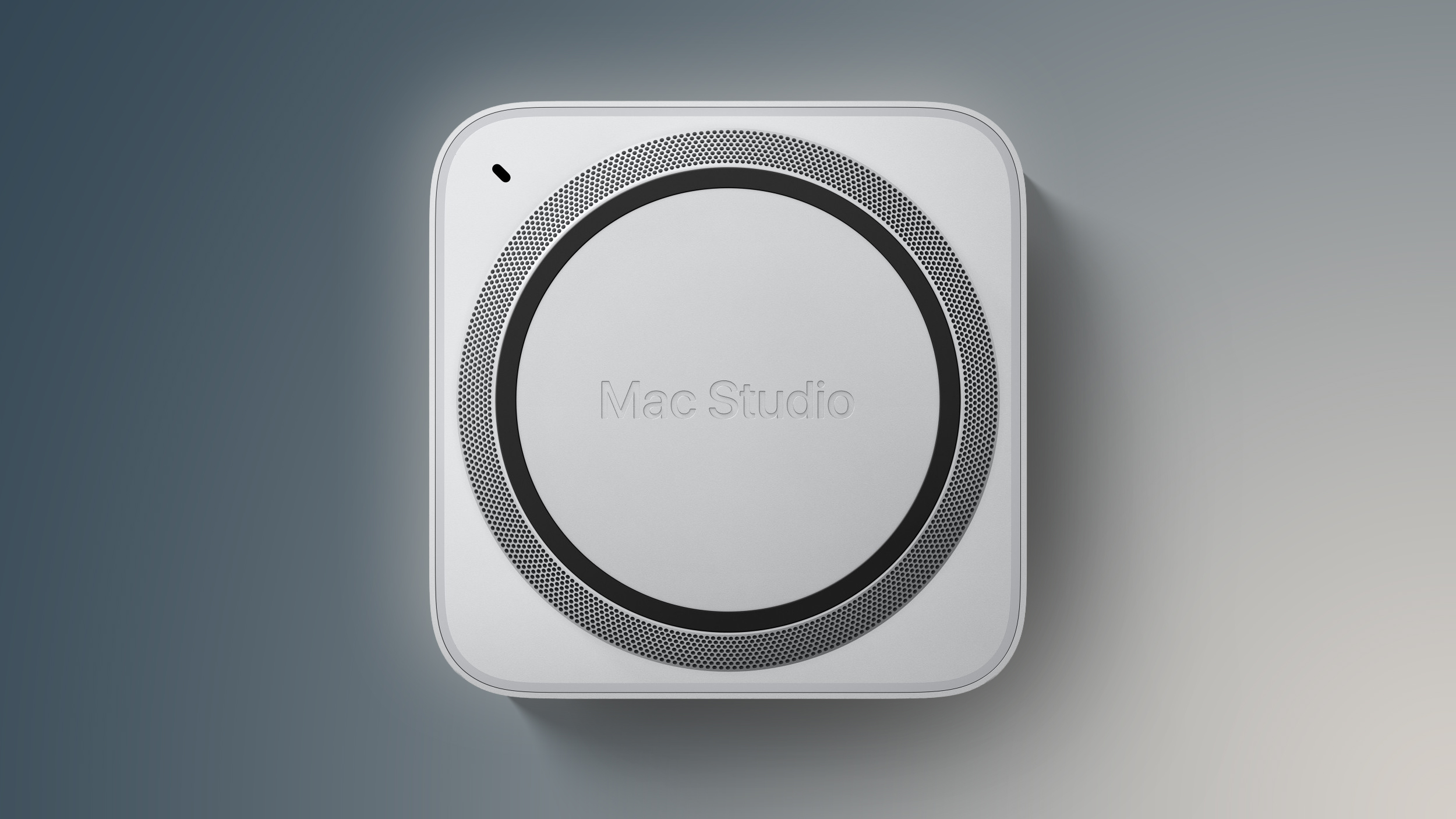
The Mac Studio has carved out a unique and important niche in Apple's desktop lineup. Positioned between the more consumer-focused Mac mini and iMac, and the ultra-high-end, modular Mac Pro, the Mac Studio is designed for users who need serious processing power and extensive connectivity without the extreme expandability or cost of a Mac Pro. It's a compact powerhouse, making it a favorite among video editors, graphic designers, music producers, software developers, and 3D artists who require robust performance in a desk-friendly form factor.
This upcoming model is expected to feature an M5 Ultra chip, which will serve as the most advanced option in the M5 series before Apple moves on to its next-generation processors like the M6, M7, M7 Pro, and M7 Max. The current Mac Studio hasn't received an update since March 2025, leaving many users eagerly anticipating a refresh that incorporates Apple's latest silicon technology.
The M5 Ultra Chip: A Deep Dive into Apple's Next-Gen Performance
At the heart of any Mac Studio lies its processor, and the M5 Ultra is poised to deliver a significant leap in performance. Apple's "Ultra" chips are renowned for combining the power of two "Max" chips into a single, incredibly potent system-on-a-chip (SoC). This integration allows for unprecedented levels of processing power, graphics capability, and unified memory bandwidth, all optimized to work seamlessly together.
What to Expect from the M5 Ultra
The M5 Ultra chip is anticipated to come equipped with around 36 CPU cores and 80 GPU cores. To put this in perspective, the current M3 Ultra offers up to a 32-core CPU and up to an 80-core GPU. While the raw core count increase might not seem dramatic compared to its immediate predecessor, it's important to remember that each new generation of Apple Silicon brings architectural improvements. These enhancements typically lead to better performance per core, increased energy efficiency, and faster neural engine capabilities for AI and machine learning tasks. This means that even with a similar core count, the M5 Ultra is expected to outperform the M3 Ultra, offering more raw power for complex computations, faster rendering times, and smoother handling of intensive applications.
The CPU cores are critical for tasks requiring heavy data processing, such as compiling large codebases, running virtual machines, or performing complex scientific simulations. A higher core count and improved architecture mean these operations will complete much faster, significantly boosting productivity for professionals. On the other hand, the numerous GPU cores are a game-changer for graphic-intensive tasks. Video editors will experience quicker exports and real-time playback of multiple high-resolution video streams, while 3D artists will see faster rendering of intricate scenes and smoother manipulation of complex models. Game developers and researchers working with machine learning models will also benefit immensely from the M5 Ultra's formidable graphics processing capabilities.
The Power of Unified Memory
One of the most revolutionary aspects of Apple Silicon is its unified memory architecture. Unlike traditional computers where the CPU and GPU have separate pools of RAM, unified memory allows all components of the SoC (CPU, GPU, Neural Engine) to access the same pool of high-bandwidth, low-latency memory directly. This eliminates the need for data to be copied between different memory types, drastically reducing latency and improving overall system performance, especially for professional applications that handle large datasets or require intense real-time processing.
The M5 Ultra is expected to support an astonishing amount of unified memory. Apple has reportedly tested configurations with up to 768GB of unified memory. This immense capacity would be a dream come true for professionals working with truly massive files and demanding applications. Imagine editing multiple streams of 8K video, running dozens of virtual machines simultaneously, working with enormous scientific datasets, or developing complex AI models that require hundreds of gigabytes of memory. For these specific, high-end use cases, 768GB of unified memory would be transformative, eliminating bottlenecks and allowing professionals to push the boundaries of their creativity and computation without compromise.
However, the availability of such high memory configurations is not guaranteed. The report mentions that "supply constraints could prevent it from launching with an option for that much memory." This isn't a new challenge for Apple; the company has faced memory supply issues before. In fact, earlier this year, Apple removed the 512GB RAM option for the M3 Ultra Mac Studio back in March, leaving the highest available configuration at 96GB. This suggests that memory chip supply is a persistent challenge, and even if tested, rolling out a 768GB option might depend heavily on the global supply chain stability at the time of launch.
Delays and Market Realities: Why the Wait for the New Mac Studio?
The refresh for the Mac Studio was initially anticipated to arrive earlier in 2026. However, various market forces and supply chain challenges seem to have pushed back its launch. Bloomberg previously reported in April that the Mac Studio update was now expected around October 2026. This delay highlights the complexities of bringing new technology to market, especially in the current global economic climate.
Memory Chip Supply Issues
One of the primary reasons cited for the postponement is ongoing memory chip supply issues. The global semiconductor industry has experienced significant fluctuations in recent years, with demand often outstripping supply. This has led to shortages and increased costs for critical components like DRAM (Dynamic Random-Access Memory), which forms the basis of Apple's unified memory. For a machine designed for professional use, where memory capacity and bandwidth are paramount, securing a consistent supply of high-quality, high-density memory chips is crucial. A shortage of these components can directly impact production schedules and limit the configurations Apple can offer to consumers.
These supply constraints are particularly relevant for high-capacity memory options. As seen with the removal of the 512GB RAM option for the M3 Ultra Mac Studio, Apple has had to temporarily cut back on higher-tier configurations. Currently, the M3 Ultra Mac Studio can only be purchased with a maximum of 96GB RAM. This move, while temporary, underscores the severity of the supply chain challenges Apple is navigating. It also sets a precedent that even if the M5 Ultra is capable of supporting 768GB, making that option widely available at launch could be difficult.
Rising Prices Across the Mac Lineup
Another factor contributing to the delay and impacting the market is the general trend of price increases across Apple's Mac lineup. These price adjustments can be influenced by several factors, including increased manufacturing costs, higher component prices (like memory chips), fluctuating exchange rates, and Apple's own pricing strategies to maintain profit margins. When the cost of building these sophisticated machines goes up, it often translates to higher prices for the end-user. This is a delicate balance, as Apple needs to offer competitive pricing while also delivering cutting-edge technology.
The October 2026 Target: Realistic or Aspiration?
While October 2026 has been floated as a potential launch window, there's still uncertainty surrounding this date. The report notes that current delivery estimates for the existing M3 Ultra Mac Studio already extend into October. If the current generation is already facing lead times this long, it could indicate that production bottlenecks or high demand are impacting Apple's ability to ramp up manufacturing for a new model quickly. A staggered release or initial limited availability wouldn't be unprecedented for Apple, especially for a high-demand professional machine like the Mac Studio. Users hoping to get their hands on the M5 Ultra Mac Studio might need to exercise patience, even if it is announced in October.
The Astronomical Cost: Balancing Performance with Budget
The discussion around the new Mac Studio cannot ignore the significant financial implications, especially given Apple's recent price adjustments. The Mac Studio has always been a premium product aimed at professionals, but the latest price hikes are a stark reminder of the investment required.
The Recent Price Jump
As the report highlights, the 96GB Mac Studio recently saw a substantial price increase, jumping from $3,999 to $5,299. This is an increase of $1,300, a significant sum even in the professional market. This price adjustment likely reflects the combined impact of rising component costs and Apple's updated pricing strategy for its high-end machines. For many professionals and small businesses, a $1,300 increase on a base configuration can be a challenging hurdle.
Speculating on the 768GB Model's Price
If Apple were to offer an M5 Ultra Mac Studio with the maximum 768GB of unified memory, the price would undoubtedly be "astronomically expensive." Given that the 96GB model now costs $5,299, and considering that 768GB is eight times more RAM, a configuration with such immense memory capacity could easily see the price soar well over $10,000. For reference, adding higher amounts of RAM to current Macs is already one of the most expensive upgrade options. During a period of memory crisis and increased component costs, this premium would only be magnified.
At this price point, the Mac Studio would begin to overlap with or even exceed the cost of some configurations of the Mac Pro, which traditionally offers more expandability and modularity. This raises questions for professionals: Is the compact form factor and integrated power of the Mac Studio worth a potentially five-figure price tag? For those who absolutely need the maximum possible unified memory and processing power in a desktop footprint, the answer might still be yes. However, it significantly narrows the target audience to only the most demanding and well-funded professionals and studios.
Value Proposition and Alternatives
The value proposition of the Mac Studio, particularly at these higher price points, becomes critical. Professionals need to weigh the tangible benefits of the M5 Ultra's performance and massive memory against its cost. For many, the efficiency gains and time savings offered by a powerful machine can quickly justify the investment. Faster rendering, quicker data processing, and the ability to handle more complex projects simultaneously directly translate to increased productivity and profitability.
However, as prices climb, potential buyers might increasingly look at alternatives. These could include high-end Windows workstations that often offer competitive performance with greater customization options, or even considering a Mac Pro for its long-term expandability, even if its base price starts higher. Apple's challenge will be to clearly articulate the unique advantages and value of the M5 Ultra Mac Studio at its premium price point, especially for those specific workflows that truly benefit from its unified memory architecture.
The Future of Mac Studio and Apple Silicon Roadmap
The introduction of the M5 Ultra Mac Studio represents a pivotal moment in Apple's Silicon journey. As the final "Ultra" chip in the M5 family, it acts as a bridge to the next wave of processors, promising continuous evolution and greater performance for future Mac models.
Beyond M5: The M6, M7, and Beyond
Apple's rapid chip development cycle indicates a clear long-term strategy. The M6, M7, M7 Pro, and M7 Max chips mentioned in the report signify that the company is continually pushing the boundaries of what's possible with custom silicon. Each generational leap typically brings improvements in CPU and GPU performance, neural engine capabilities for AI tasks, and increased power efficiency. This commitment to continuous innovation ensures that Mac users will have access to state-of-the-art processing power for years to come.
The M5 Ultra, therefore, isn't just about current performance; it's also a testament to the robustness of Apple's chip design and manufacturing capabilities. It allows Apple to maximize the current architecture before introducing new foundational changes with the M6 and subsequent generations. This phased approach helps ensure that each new chip generation offers meaningful improvements and sets a clear roadmap for future product enhancements across the entire Mac lineup.
The Mac Studio's Enduring Relevance
Despite the challenges of supply chain issues and rising costs, the Mac Studio remains an incredibly important product for Apple. It demonstrates the company's commitment to supporting professional users who need powerful, optimized workstations. The form factor, performance-per-watt, and the tight integration of hardware and software offered by the Mac Studio make it a compelling choice for many creative and technical professionals.
The upcoming M5 Ultra model will reinforce the Mac Studio's position as a premium desktop solution, offering performance levels that were once unimaginable in such a compact design. It solidifies Apple's strategy of providing a diverse range of Macs, each tailored to specific user needs, from the ultra-portable MacBook Air to the powerhouse Mac Pro, with the Mac Studio perfectly filling the gap for a high-performance, compact professional machine.
Conclusion: A Powerful, Pricey, But Highly Anticipated Refresh
The prospect of a new Mac Studio featuring the M5 Ultra chip in 2026 is exciting news for power users and creative professionals. Despite recent price increases across the Mac range and potential hurdles in memory chip supply, Apple appears committed to delivering a significant upgrade to its compact workstation. The M5 Ultra is set to offer enhanced CPU and GPU performance, building on the already impressive capabilities of Apple Silicon. The potential for up to 768GB of unified memory, while possibly limited by supply constraints and certainly coming with an "astronomical" price tag, signifies Apple's ambition to cater to the most demanding workflows imaginable.
However, potential buyers will need to carefully consider the financial investment. With base models already seeing substantial price hikes, and high-memory configurations potentially soaring past $10,000, the M5 Ultra Mac Studio will be a significant purchase. The reported delays, due to memory chip shortages and broader pricing adjustments, also add a layer of uncertainty regarding its exact launch date, even with an October 2026 target in mind.
Ultimately, the new Mac Studio promises to be a powerhouse machine, pushing the boundaries of performance in a desktop form factor. For professionals who require the absolute best in terms of raw power, graphic processing, and vast amounts of unified memory for their critical tasks, the M5 Ultra Mac Studio could very well be the ultimate tool, provided their budgets can accommodate its premium price. As Apple continues to innovate with its custom silicon, the Mac Studio remains a beacon of high-performance computing for the professional creative world.
This article, "M5 Ultra Mac Studio Could Launch in 2026 With Up to 768GB of RAM" first appeared on MacRumors.com
Discuss this article in our forums
from MacRumors
-via DynaSage
