
Leaked A20 Pro Image Hints at iPhone 18 Pro Performance Gains
iPhone 18 Pro Leak Unveils Groundbreaking A20 Pro Chip with New Packaging Technology
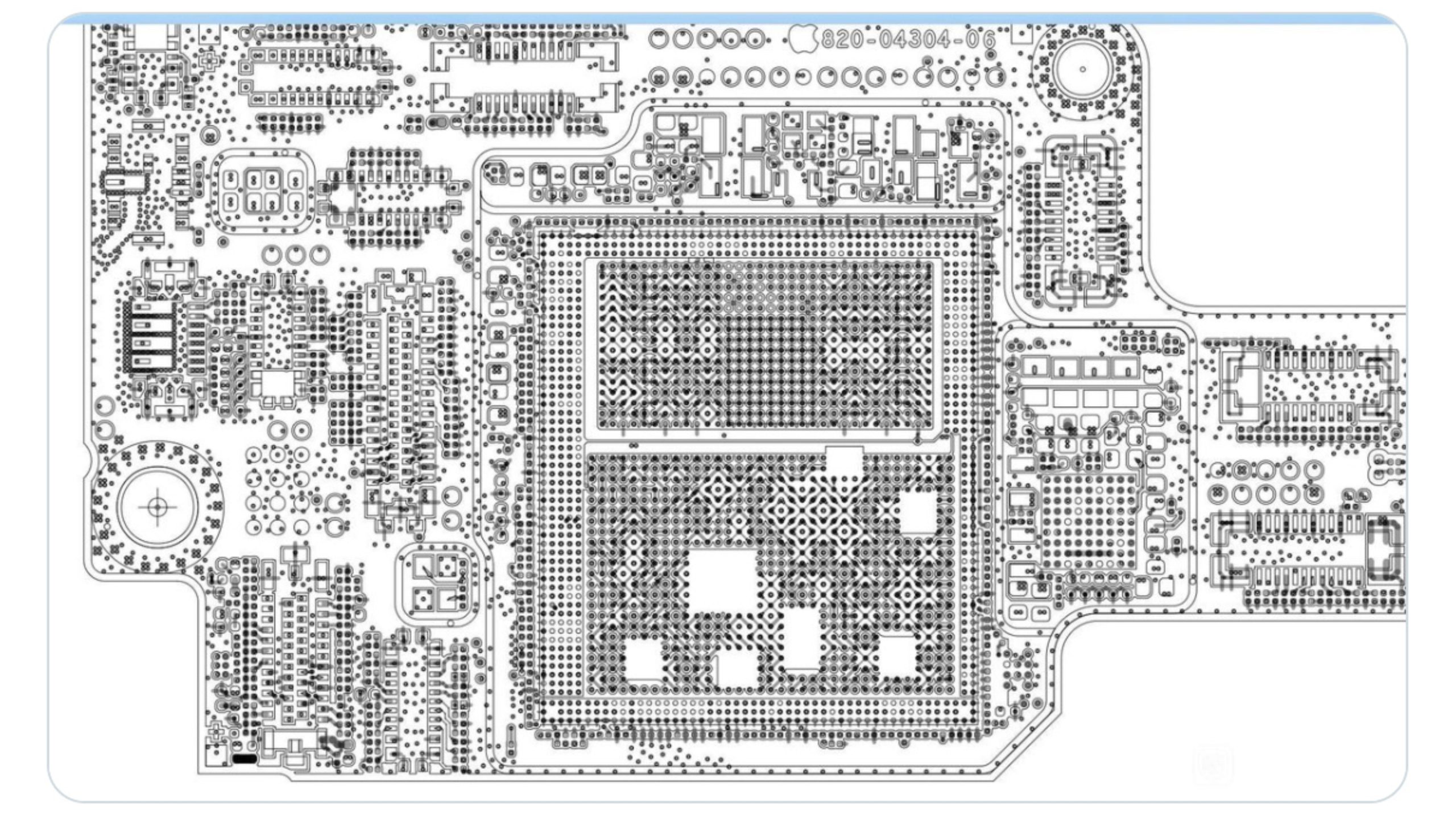
Excitement is building in the tech world following the alleged leak of an iPhone 18 Pro motherboard image. This intriguing glimpse into Apple's future hardware suggests a significant leap forward in performance for the upcoming A20 Pro chip. The core of this anticipated improvement lies in a brand-new packaging technology, promising substantial gains over its predecessors and potentially redefining what we expect from a smartphone processor.
For years, Apple's custom-designed A-series chips have been at the heart of the iPhone's unparalleled performance. Each new generation brings faster speeds, better graphics, and enhanced efficiency, setting industry benchmarks. The A20 Pro is no exception, but this leak hints at a more fundamental shift in its architecture, moving beyond mere incremental improvements to the processing cores themselves.

The Source of the Leak and the New Technology Revealed
The image, which quickly circulated across tech communities, was initially shared by prominent leakers "WHYLAB" and "Ice Universe" on Weibo, a popular Chinese social media platform known for breaking tech news and leaks. While unofficial leaks always come with a degree of uncertainty regarding their authenticity, the reputations of these sources often lend credibility to the information they share. If accurate, this leak provides an early and exciting look at the technological advancements Apple is preparing for its next flagship device.
The most striking detail in the leaked image is the apparent integration of the A20 Pro chip with TSMC's innovative Wafer-Level Multi-Chip Module (WMCM) technology. TSMC, or Taiwan Semiconductor Manufacturing Company, is the world's leading independent semiconductor foundry, responsible for producing the most advanced chips for companies like Apple. Their relentless pursuit of cutting-edge manufacturing processes and packaging solutions directly translates into the performance we see in our everyday devices. The adoption of WMCM by Apple, if confirmed, signals a major architectural evolution in mobile chip design.
What is Wafer-Level Multi-Chip Module (WMCM) Technology?
To understand the significance of WMCM, it's helpful to consider how traditional chips are built. Historically, a single, powerful processing unit—the 'brain' of the phone—would be fabricated on one silicon die, and then other essential components, like memory (DRAM), would be added around or on top of it. WMCM represents a more advanced approach to integrate multiple chip components, or "chiplets," more closely and efficiently at the wafer level, which is an early stage of chip manufacturing.
Imagine a large silicon wafer, the base material for chips. Instead of creating one monolithic processor on a single die, WMCM allows for the creation of several smaller, specialized chiplets (like the main processor and memory) on the same wafer. These chiplets are then precisely arranged and interconnected within a single package. This isn't just about putting more things together; it's about putting them together in a way that minimizes the distance data has to travel, improves communication speed, and allows for better thermal management. This modular approach offers greater flexibility, potentially higher yields, and significant performance benefits by optimizing the interaction between different functional blocks of the chip.
Moving Beyond Traditional PoP Designs: A Thermal Revolution
For many years, Apple, like many other chip designers, has relied on a packaging method known as Package-on-Package (PoP). In a PoP design, the dynamic random-access memory (DRAM) chips—which your phone uses for temporary data storage while apps are running—are stacked directly on top of the application processor. Think of it like a multi-story building where the living spaces (DRAM) are stacked right on top of the foundation (processor).
This method has several clear advantages. By stacking the memory directly on the processor, the physical distance between them is minimized. This leads to reduced electrical signal paths, which in turn results in lower power consumption because less energy is needed to send signals over shorter distances. It also significantly reduces latency, meaning the processor can access data from the memory much faster, leading to a snappier and more responsive user experience. Apps open quicker, multitasking feels smoother, and demanding tasks complete in less time.
However, the PoP design isn't without its drawbacks, and the most significant one relates to heat. When the processor and DRAM are stacked directly on top of each other, they both generate heat in the same concentrated area. The application processor, especially during intensive tasks like gaming, video editing, or complex AI computations, can become quite hot. When this heat is trapped within a confined package, it can lead to what's known as "thermal throttling."
Thermal throttling is a protective mechanism where the chip automatically reduces its operating speed to prevent overheating and potential damage. While this keeps your device safe, it directly impacts sustained performance. Your phone might feel incredibly fast for a few minutes of an intense game, but then the frame rate might drop as the chip throttles itself. This heat concentration has been a persistent challenge for engineers trying to push the boundaries of mobile performance in compact form factors.
WMCM's Strategic Redesign: Cooler, Faster, More Efficient
The leaked WMCM implementation for the A20 Pro chip proposes a radical solution to this thermal challenge. Instead of stacking the DRAM directly on top, the memory has been strategically moved to the side of the main processor package. Imagine our building analogy again, but this time, the living spaces (DRAM) are in an adjacent, connected building, rather than stacked on top of the foundation (processor).
This seemingly simple relocation has profound implications. By placing the DRAM next to the processor rather than on top, the "thermal coupling" between the two components is significantly reduced. Thermal coupling refers to how much heat transfers directly from one component to another. With the DRAM positioned to the side, heat generated by the processor has more pathways to dissipate into the surrounding environment and the phone's cooling system, rather than being trapped underneath the memory stack.
This improved heat dissipation is crucial for "sustained workloads." These are tasks that require the chip to operate at or near its peak performance for extended periods, such as running graphically intensive games, editing 4K video, or performing complex machine learning calculations. With better thermal management, the A20 Pro chip should be able to maintain its high performance for longer durations without experiencing aggressive thermal throttling, leading to a much more consistent and powerful user experience.
Beyond thermal management, the A20 Pro's design is also rumored to incorporate LPDDR6 memory with a 96-bit memory bus. LPDDR6 is the next generation of low-power double data rate memory, specifically designed for mobile devices. It offers higher bandwidth and improved energy efficiency compared to previous LPDDR standards. The "96-bit memory bus" refers to the width of the data highway between the processor and the memory. A wider bus allows more data to be transferred simultaneously, similar to adding more lanes to a highway.
Together, LPDDR6 and a 96-bit bus should provide "more energy-efficient bandwidth." This means the chip can move larger amounts of data to and from memory faster, using less power in the process. For users, this translates into faster app loading, smoother multitasking with more apps open simultaneously, quicker processing of large files, and an overall more fluid and responsive iPhone experience, all while contributing to longer battery life.
A Sharper Focus on AI: The Larger Neural Processing Unit
The leak also offers insights into Apple's ongoing commitment to artificial intelligence (AI) and machine learning (ML). While the overall chip size of the A20 Pro is said to remain roughly similar to its predecessor, the A19 Pro, a significant observation is the seemingly larger Neural Processing Unit (NPU). This suggests a deliberate and substantial investment by Apple in enhancing AI capabilities within the iPhone 18 Pro.
The NPU, or Neural Engine as Apple calls it, is a specialized part of the chip designed to accelerate machine learning tasks. While the main CPU and GPU can handle AI computations, an NPU is optimized specifically for these types of workloads, performing them much faster and with greater energy efficiency. This is critical for the growing number of AI-powered features in modern smartphones.
Today, the NPU powers a wide array of features on your iPhone, from the instant processing of computational photography (like Smart HDR, Deep Fusion, and Portrait mode effects) to on-device machine learning for tasks such as Face ID, Siri's intelligence, real-time language translation, and personalized suggestions. A significantly larger NPU in the A20 Pro strongly indicates that Apple is preparing for even more sophisticated and demanding AI applications.
We could see advancements in areas like more powerful on-device generative AI, allowing for complex tasks to be performed without relying on cloud servers, thus enhancing privacy and speed. This might include advanced image and video editing features that intelligently understand content, more intuitive voice assistants that learn user habits even better, or entirely new AR (augmented reality) experiences that require real-time environment understanding. A larger NPU is a foundational component for Apple to push the boundaries of what a smartphone can do in the age of pervasive AI.
Unconfirmed Leak, but Rumors Abound
It's important to reiterate that while the leaked image offers compelling details, its authenticity has not been officially confirmed by Apple. Tech leaks, even from reputable sources, should always be treated with a degree of caution until official announcements are made. However, the information presented in this leak aligns remarkably well with existing rumors and industry trends.
Specifically, the adoption of WMCM technology for the iPhone 18 Pro and iPhone 18 Pro Max has been repeatedly rumored for quite some time. This consistent speculation from various sources lends further credibility to the idea that Apple is indeed pursuing this advanced packaging solution. The repeated nature of these rumors suggests that the industry is well aware of Apple's strategic direction in chip design, making this leak less of a surprise and more of a visual confirmation of anticipated developments.
Beyond Packaging: The 2nm Process and N2 Technology
The A20 Pro chip's innovations aren't limited to just packaging. It's also expected to be manufactured using TSMC's cutting-edge 2nm process, often referred to as N2. The "nanometer" figure in chip manufacturing refers to the size of the transistors on the chip. A smaller number generally indicates a more advanced process, allowing for more transistors to be packed into the same area, or for existing transistor counts to be more power-efficient. In essence, smaller transistors mean more power in less space, or less power for the same amount of power.
This shrink to a 2nm process from the previous generation's 3nm (like the A17 Pro in the iPhone 15 Pro) is a monumental engineering feat. TSMC's N2 process is anticipated to bring significant performance improvements. Industry estimates suggest that chips built on the N2 process could be up to 15 percent faster than A19 chips while simultaneously being up to 30 percent more energy-efficient. These are not minor incremental gains; they represent a substantial leap forward in raw processing power and battery longevity.
Combined with the benefits of WMCM technology—which addresses thermal management and memory bandwidth—the 2nm process will allow the A20 Pro to deliver unprecedented levels of performance for a mobile device. Users can expect applications to launch and run even faster, games to achieve higher frame rates with more complex graphics, and demanding tasks like video rendering or AI computations to complete in a fraction of the time, all while extending the time between charges. This dual innovation in both chip manufacturing and packaging promises a truly next-generation mobile experience for the iPhone 18 Pro and the rumored foldable iPhone models.
Enhancing Power Delivery: SHPMIM Capacitors
Beyond the headline-grabbing 2nm process and WMCM packaging, TSMC's N2 technology introduces another critical innovation: new super-high-performance metal-insulator-metal (SHPMIM) capacitors into the chip's power delivery system. While perhaps not as immediately intuitive as processor speed or memory capacity, these capacitors play a vital, unsung role in a chip's stable and efficient operation.
Capacitors in a chip act like tiny, super-fast batteries. They store and release electrical energy to ensure a smooth and stable power supply to all the different parts of the chip. This stability is crucial, especially when the chip's workload rapidly changes – for instance, when an app suddenly demands a lot of power or when the chip switches between different power states to save energy. Without stable power delivery, a chip's performance can become erratic, or it might even crash.
The new SHPMIM capacitors more than double the capacitance density of the previous generation. "Capacitance density" refers to how much electrical charge a capacitor can store within a given area. Doubling this density means that these new capacitors can store significantly more energy in the same tiny footprint, or achieve the same energy storage with even smaller components. This translates directly to a more robust and responsive power delivery system within the A20 Pro chip.
Together with the adoption of WMCM and the 2nm process, the integration of SHPMIM capacitors is expected to boost overall performance globally, improve power stability, and further enhance energy efficiency. A more stable power supply allows the chip to operate closer to its theoretical maximum performance more consistently. It also means less energy is wasted due to voltage fluctuations, contributing to the impressive 30% efficiency gains anticipated from the N2 process. These capacitors are a testament to the intricate engineering involved in modern chip design, where every component, no matter how small, plays a critical role in the final product's performance and efficiency.
Other Anticipated Features and the Road to September
While the A20 Pro chip is undoubtedly the star of this leak, the information also touches upon other anticipated features for the upcoming iPhone 18 Pro, iPhone 18 Pro Max, and the rumored foldable iPhone models. These high-end devices are expected to share several key specifications, reinforcing Apple's strategy of offering a premium experience across its professional-tier lineup.
One significant shared feature is 12GB of RAM. Random Access Memory (RAM) is crucial for multitasking and running demanding applications smoothly. Increasing RAM from previous generations provides more headroom for users to keep numerous apps open simultaneously without background processes being prematurely terminated, ensuring a fluid and uninterrupted workflow. This also future-proofs the devices for increasingly complex apps and operating system features.
The models are also expected to feature 48-megapixel rear cameras. Apple has been steadily improving its camera systems, and a higher megapixel count typically translates to more detail in images, better low-light performance, and greater flexibility for computational photography techniques like pixel binning (combining pixels for better light capture) and cropping without significant loss of quality. This upgrade suggests Apple continues to prioritize photographic excellence.
Finally, these premium iPhones are expected to incorporate Apple's C2 modem. The modem is the component responsible for cellular connectivity, handling tasks like 5G communication, Wi-Fi, and Bluetooth. Apple has been working for years to develop its own in-house modems, aiming for greater control over performance, power efficiency, and integration with the rest of its hardware and software ecosystem. The C2 modem would represent another step towards this goal, potentially offering improved connectivity speeds, more reliable signal strength, and better battery life when using cellular data.
The culmination of these advanced technologies and features is anticipated to arrive in September this year, aligning with Apple's traditional iPhone release cycle. The launch of the iPhone 18 Pro, iPhone 18 Pro Max, and potentially the foldable iPhone will undoubtedly be a pivotal moment for the smartphone industry, showcasing Apple's vision for the future of mobile technology.
Conclusion: A Glimpse into Apple's Future
The alleged leak of the iPhone 18 Pro motherboard and its A20 Pro chip provides a fascinating, albeit unofficial, glimpse into Apple's relentless pursuit of innovation. The adoption of TSMC's WMCM packaging technology, the move to a 2nm process node, a larger Neural Processing Unit, and advanced SHPMIM capacitors all point towards an iPhone that is not just faster, but also smarter, more efficient, and more capable of sustaining peak performance than ever before. While we await official confirmation, these details paint a compelling picture of a device poised to set new standards in the mobile computing landscape. The iPhone 18 Pro, if these leaks hold true, promises to be a powerhouse of technology, ready to tackle the demands of the next generation of applications and user experiences.
This article, "Leaked A20 Pro Image Hints at iPhone 18 Pro Performance Gains" first appeared on MacRumors.com
Discuss this article in our forums
from MacRumors
-via DynaSage
