
iPhone 18e Won't Get ProMotion Display, Says Leaker
iPhone 18e Display Expectations: Sticking to 60Hz While the World Moves On
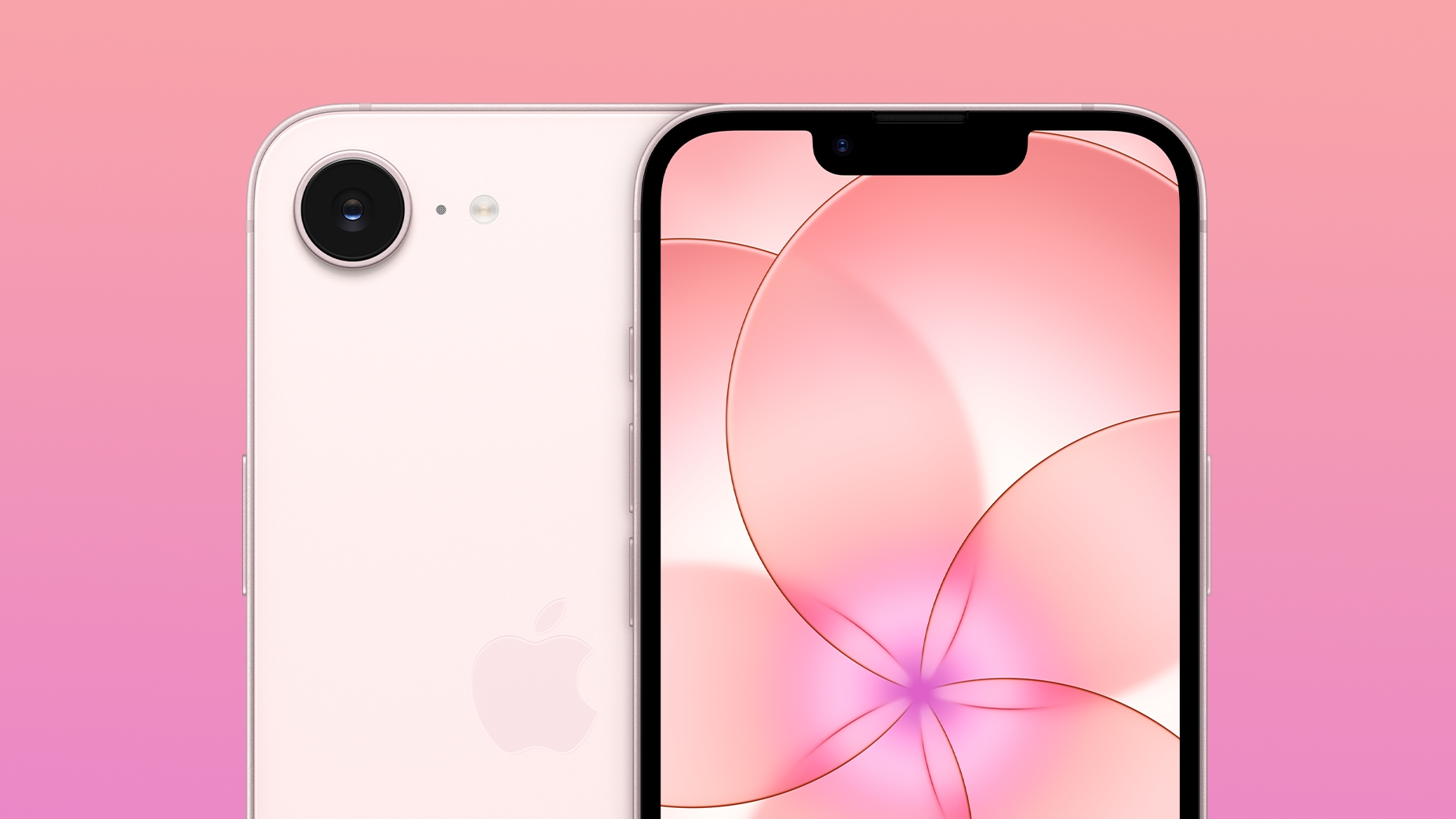
Get ready for the next iteration of Apple's budget-friendly iPhone, the iPhone 18e! However, if you were hoping for a major display upgrade, recent whispers from a well-known source suggest you might need to temper your expectations. According to a prominent Chinese leaker, the upcoming iPhone 18e will feature the same display refresh rate as its predecessor, the iPhone 17e. This news has sparked discussions among tech enthusiasts and potential buyers, especially when many competing phones in similar price ranges already offer more advanced screen technologies.
This report delves into what this means for the iPhone 18e, the technology behind these displays, Apple's broader strategy for its 'e' series, and what the future might hold for iPhone screens. We'll explore why a 60Hz display might be considered a limitation in today's market, examine the competitive landscape, and look ahead to Apple's potential plans for bringing cutting-edge display features to its more affordable devices.
The Persistent 60Hz: What It Means for the iPhone 18e
The news comes from Digital Chat Station, a well-respected leaker known for their accurate insights into future Apple products. In a Weibo post, they discussed Apple's product plans for 2027, specifically stating that the next generation of Apple's low-cost iPhone will continue to use the same 60Hz low-temperature polycrystalline silicon (LTPS) TFT panel as the current model. This affirmation indicates that the iPhone 18e will not gain the smooth 120Hz ProMotion refresh rate or the convenient Always-On display technology that is expected to be a standard feature across the rest of the higher-end iPhone 18 lineup, echoing a similar differentiation seen in the iPhone 17 series.
For many users, a 60Hz display is perfectly adequate for everyday tasks. It provides a standard visual experience for browsing, messaging, and watching videos. However, in an era where faster refresh rates are becoming increasingly common, sticking to 60Hz positions the iPhone 18e at a disadvantage compared to some of its rivals. This decision highlights Apple's careful balance between cost, performance, and feature differentiation within its diverse iPhone portfolio.
Understanding Display Refresh Rates: 60Hz vs. 120Hz ProMotion
To truly grasp the significance of this news, it's helpful to understand what a display refresh rate is. Simply put, the refresh rate measures how many times per second a screen refreshes its image. This is expressed in Hertz (Hz). A 60Hz display refreshes 60 times every second, while a 120Hz display refreshes 120 times every second. The higher the number, the smoother and more fluid the motion on the screen appears.
The Standard 60Hz Experience
For decades, 60Hz has been the standard for most screens, from televisions to computer monitors and smartphones. It's a reliable technology that offers a stable and consistent visual output. For the vast majority of activities, like reading emails, scrolling through social media, or watching standard video content, a 60Hz refresh rate performs perfectly well. Your eyes perceive motion as continuous, and there's no noticeable choppiness for typical use cases. The iPhone 18e, like many other smartphones, will deliver a perfectly functional and enjoyable visual experience at this refresh rate.
However, once you experience a higher refresh rate, it becomes difficult to go back. The difference, while subtle at first, becomes remarkably apparent when directly compared. This is why the continued use of 60Hz in a new device can be a point of contention for tech-savvy consumers.
Introducing 120Hz ProMotion
Apple's ProMotion technology, first introduced on the iPad Pro and later brought to the iPhone Pro models, dynamically adjusts the display's refresh rate up to 120Hz. This means the screen can refresh twice as fast as a standard 60Hz display. The immediate benefit is an incredibly smooth and responsive user experience. Scrolling through web pages, swiping between apps, or playing fast-paced games feels significantly more fluid and instantaneous. Animations appear seamless, and even simple interactions feel more polished and engaging.
The beauty of ProMotion isn't just its speed, but its intelligence. It dynamically adapts the refresh rate based on what's happening on screen. If you're scrolling rapidly, it ramps up to 120Hz. If you're looking at a static image, it can drop down to a much lower refresh rate (sometimes as low as 1Hz) to conserve battery life. This adaptive capability is crucial for balancing performance with power efficiency. The absence of ProMotion on the iPhone 18e means it won't offer this buttery-smooth scrolling or the advanced power management capabilities associated with dynamically adjusting the refresh rate.
For users who frequently engage in mobile gaming, the difference is often a game-changer. Higher refresh rates can reduce input lag and improve visual clarity in fast-moving scenes, offering a competitive edge and a more immersive experience. Even for casual users, the overall sensation of interacting with a 120Hz display is one of premium responsiveness, making the device feel faster and more sophisticated.
The 'e' Series: Apple's Strategy for Accessible iPhones
The iPhone 'e' series (hypothetically standing for 'essential' or 'economic') represents Apple's strategic entry into a more budget-conscious segment of the smartphone market. While Apple has traditionally focused on premium flagships, the 'e' models allow them to capture a broader audience by offering the core iPhone experience at a more accessible price point. This strategy typically involves making careful trade-offs, retaining key Apple features and ecosystem benefits, but sometimes opting for slightly less advanced hardware components to keep costs down.
Display technology is often one of the primary areas where these distinctions are made. By reserving features like ProMotion and Always-On display for its Pro and higher-end models, Apple creates a clear tiered structure within its iPhone lineup. This not only encourages users who desire the absolute best technology to opt for the more expensive devices but also helps manage manufacturing costs and supply chains for the more complex components.
However, this strategy also puts the 'e' series in direct competition with a bustling Android market, where innovation often trickles down to lower price points much faster. For a device like the iPhone 18e, its success will depend on how potential buyers weigh the overall Apple experience (software, ecosystem, design, build quality) against specific hardware specifications like the display refresh rate, especially when similar-priced Android phones might boast superior screen tech.
The Competitive Landscape: Android's 120Hz Advantage
The fact that the iPhone 18e will stick to a 60Hz display becomes particularly noteworthy when we consider the broader smartphone market. Many competing Android phones, available at similar price points to the iPhone 17e (and presumably the upcoming 18e), already offer 120Hz screens. This isn't just a feature found in high-end Android flagships; it has become increasingly common in mid-range devices from manufacturers like Samsung, Xiaomi, OnePlus, and others.
For a consumer walking into a store or browsing online, the spec sheet comparison can be stark. An Android phone priced similarly to an iPhone 'e' model might advertise a "smooth 120Hz AMOLED display," potentially making the iPhone's 60Hz LTPS TFT panel seem outdated by comparison. This difference might not bother everyone, especially loyal Apple users, but it presents a marketing challenge and could influence buyers who prioritize cutting-edge display technology for their money.
The reasons why Apple might continue this strategy are multifaceted. Firstly, maintaining distinct feature sets between their standard and Pro models is crucial for product segmentation. If the 'e' series offered a 120Hz display, it would erode one of the key differentiators for the more expensive Pro models. Secondly, integrating a 120Hz variable refresh rate display (which typically requires LTPO technology, as we'll discuss) adds to the manufacturing cost and complexity. Apple might be prioritizing other components or profit margins for these more affordable devices.
Additionally, Apple's control over its software and hardware integration often allows it to deliver a very smooth 60Hz experience that can sometimes feel comparable to higher refresh rates on less optimized Android devices. However, this argument becomes less convincing as Android software and hardware continue to mature and optimize for faster displays.
The Technology Behind the Panels: LTPS TFT vs. LTPO
The claim that the iPhone 18e will use a 60Hz LTPS TFT panel and lack ProMotion and Always-On display technology is further supported by a report out of Korea earlier this year. This report suggested that Apple would not implement a low-temperature polycrystalline oxide (LTPO) panel in its 'e' series until the fourth-generation model, which is anticipated to arrive in early 2028. This distinction between LTPS TFT and LTPO is key to understanding why some displays can achieve variable refresh rates and others cannot.
LTPS TFT: The Workhorse of Modern Displays
LTPS (Low-Temperature Polycrystalline Silicon) TFT (Thin-Film Transistor) panels have been a staple in high-resolution, high-performance displays for many years, including in iPhones. LTPS technology allows for smaller, more power-efficient transistors than older amorphous silicon (a-Si) TFTs. This enables manufacturers to pack more pixels onto a screen, achieving higher resolutions and pixel densities, which results in sharper images and text. It's a proven, reliable, and relatively cost-effective technology for manufacturing high-quality displays.
However, LTPS TFT panels typically have a fixed refresh rate, usually 60Hz or 90Hz. While they are efficient for their class, they lack the ability to dynamically adjust their refresh rate over a wide range. This limitation means they cannot easily support features like Apple's ProMotion (which requires varying the refresh rate from very low to very high) or an Always-On display (which needs to drop to extremely low refresh rates, like 1Hz, to save power when showing minimal information).
LTPO: The Key to Dynamic Refresh Rates and Always-On Displays
LTPO (Low-Temperature Polycrystalline Oxide) is a more advanced display backplane technology that combines LTPS and IGZO (Indium Gallium Zinc Oxide) transistors. The crucial advantage of LTPO is its ability to enable a much wider range of variable refresh rates, from as low as 1Hz all the way up to 120Hz. This dynamic adjustment is not possible with standard LTPS panels.
The adoption of LTPO would make the iPhone 18e's display technically capable of dynamically adjusting its refresh rate. This is precisely why current iPhone Pro models, which feature ProMotion and Always-On display, utilize LTPO panels. By being able to drop the refresh rate to very low levels (e.g., 1Hz), LTPO panels consume significantly less power when displaying static content, which is essential for the Always-On feature where the screen remains partially active even when the phone is locked.
The Korean report's implication is clear: until the 'e' series incorporates LTPO technology, it will be limited to a fixed refresh rate, thus preventing the inclusion of ProMotion and Always-On display capabilities. This directly confirms the leaker's claim about the iPhone 18e.
The Future of iPhone Displays: LTPO+ and the 2028 Horizon
The path to advanced display technology for the 'e' series seems to be intertwined with Apple's broader display innovation strategy, particularly the development of a next-generation "LTPO+" display technology. This more advanced iteration of LTPO is expected to incorporate oxide semiconductors in both switching and drive transistors, promising even greater power efficiency. This development is crucial because power consumption is a primary concern for any mobile device, and more sophisticated displays typically draw more power.
LTPO+: A Leap in Power Efficiency
LTPO+ is envisioned as a significant step forward, aiming to drastically reduce the battery power consumed by the display. By optimizing the semiconductor materials in critical display components, Apple seeks to achieve ultra-low power consumption, which is vital for enabling even more demanding display features without compromising battery life. This technology would allow for brighter screens, more complex dynamic refresh rate algorithms, and potentially longer Always-On durations without a substantial hit to the phone's endurance.
Apple reportedly plans to reserve this cutting-edge LTPO+ technology for its higher-end models in 2028. This includes new versions of premium devices like the hypothetical iPhone Air and, notably, its much-anticipated foldable iPhone. The foldable iPhone, in particular, will require extremely durable and power-efficient displays, making LTPO+ an ideal candidate for such an innovative product.
Trickle-Down Technology: Standard LTPO for the 'e' Series
If LTPO+ is successfully developed and deployed in the high-end 2028 models, it would free up the standard LTPO panels for the rest of the iPhone lineup. This "trickle-down" effect is a common strategy for Apple, where advanced technologies first appear in Pro or premium models and then gradually make their way to more affordable devices in subsequent generations. Under this scenario, the iPhone 19e, expected in early 2028, would finally receive the standard LTPO panel, enabling ProMotion and Always-On display for Apple's budget-friendly offering.
However, there's a significant caveat: the timeline is not set in stone. The report emphasizes that if the new LTPO+ technology isn't ready in time for the higher-end models, it could delay the availability of standard LTPO panels for the iPhone 19e. Developing and mass-producing new display technologies is incredibly complex and often faces unforeseen challenges and delays. So, while the 2028 timeline offers hope for a 120Hz iPhone 'e', nothing is entirely certain yet.
Impact on Users and Apple's Market Position
The decision to keep the iPhone 18e at 60Hz will undoubtedly have an impact on potential buyers and Apple's position in the fiercely competitive smartphone market. For many users, particularly those upgrading from older iPhones or less sophisticated Android devices, a 60Hz display will still feel perfectly acceptable. The overall seamless experience of iOS, combined with Apple's strong ecosystem, excellent cameras, and powerful processors, often outweighs specific hardware deficiencies for loyal customers.
However, for a segment of the market that is more tech-aware and cross-shops with Android devices, the absence of a 120Hz display could be a dealbreaker. As mentioned, the feature is becoming commonplace even in mid-range Android phones. This means Apple risks being perceived as lagging in certain specifications, especially when directly compared on a feature-by-feature basis.
The long-term vision, as indicated by the LTPO+ development, suggests Apple is deeply committed to pushing display technology forward. The delay in bringing these advancements to the 'e' series likely reflects a strategic decision to maintain product differentiation, manage manufacturing costs, and potentially wait for their own proprietary display technologies to mature before wide deployment. It also underscores Apple's meticulous approach to integration, often waiting until a technology is fully optimized and refined before rolling it out across its entire product line.
Conclusion: A Glimpse into Apple's Strategic Choices
The news that the iPhone 18e will likely stick with a 60Hz display, foregoing ProMotion and Always-On features, paints a clear picture of Apple's careful product segmentation. While other companies are aggressively pushing higher refresh rates into more affordable segments, Apple appears to be holding back these premium display technologies for its higher-tier models and for future innovations like LTPO+. This strategy allows Apple to maintain clear distinctions within its lineup, enticing users who desire the absolute latest features to invest in their Pro models, while offering a solid, reliable experience in the more budget-friendly 'e' series.
For potential iPhone 18e buyers, this means they can expect a familiar, high-quality display that is perfectly capable for daily use, but without the buttery smoothness and power-saving advantages of dynamic refresh rate technology. The waiting game continues for a 120Hz 'e' series iPhone, with the earliest possibility now pointing towards the iPhone 19e in 2028, contingent on the successful development and deployment of Apple's advanced LTPO+ technology.
Ultimately, Apple's decision reflects a calculated balance of cost, innovation, and market positioning. While some may see it as a missed opportunity for the 18e to keep pace with competitors, others will appreciate the brand's focus on overall user experience and ecosystem advantages. As always with Apple, the story of its future displays is one of strategic evolution, with significant advancements often reserved for specific product tiers and timed for maximum impact, ensuring that the iPhone remains a compelling choice across its diverse offerings.
This article, "iPhone 18e Won't Get ProMotion Display, Says Leaker" first appeared on MacRumors.com
Discuss this article in our forums
from MacRumors
-via DynaSage
