
Apple's OLED 'MacBook Ultra' Will Stick With M5 Pro and M5 Max Chips
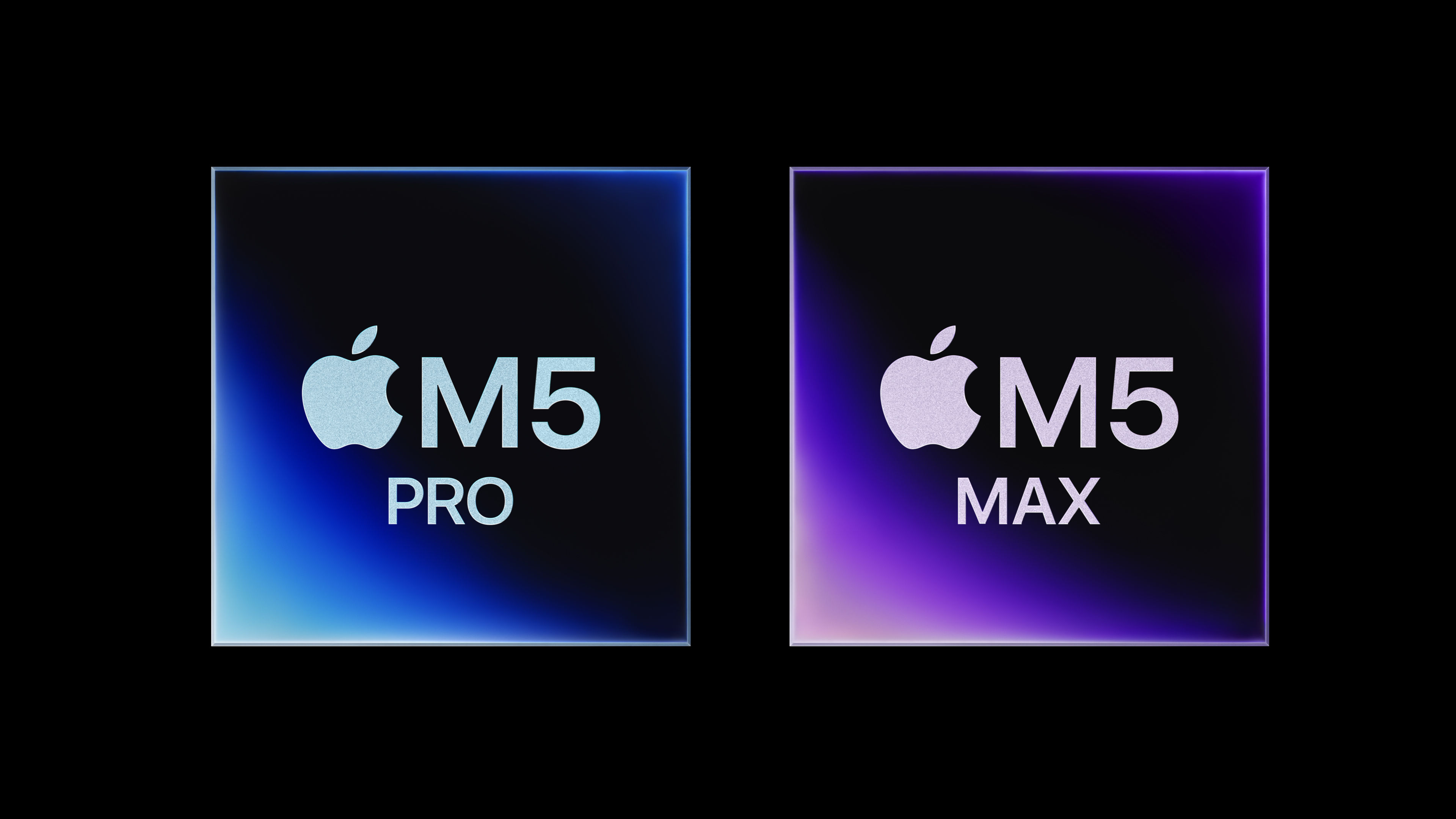
Get ready for a significant leap in Apple's laptop lineup! Reports from Bloomberg's Mark Gurman suggest that Apple is gearing up to release a groundbreaking, high-end MacBook model. This isn't just any MacBook; it's expected to feature a stunning OLED touchscreen display, marking a notable shift in how users might interact with their Mac computers. What's even more interesting is the choice of internal power for this revolutionary device: it will run on Apple's current M5 Pro and M5 Max chips.
This upcoming machine is set to redefine the MacBook experience, bringing touch capabilities and the vibrant visuals of OLED to the macOS platform for the first time in a major way. It signifies Apple's continuous push for innovation, blending powerful hardware with a user-centric design approach. While the M5 chips are already incredibly potent, their selection for this premium model also hints at a strategic roadmap for Apple's silicon development, especially as the company looks towards future generations of chips with a strong focus on artificial intelligence.
Introducing the Revolutionary Touchscreen OLED MacBook
The highly anticipated, top-tier MacBook model is projected to make its debut "between late this year and early next year." This timeline positions it as a major product launch, likely generating significant excitement among Apple enthusiasts and professionals alike. The most talked-about feature, undoubtedly, is the inclusion of an OLED touchscreen display.
The Brilliance of OLED Displays
OLED stands for Organic Light Emitting Diode, a display technology renowned for its superior visual quality compared to traditional LCD (Liquid Crystal Display) screens. Unlike LCDs, which use a backlight to illuminate pixels, each pixel in an OLED display generates its own light. This fundamental difference brings several profound advantages:
- Perfect Blacks: When an OLED pixel is off, it's truly off, resulting in absolute black levels. This creates an infinite contrast ratio, making images pop with incredible depth and realism.
- Vibrant Colors: OLED screens are known for their ability to produce incredibly rich, vivid, and accurate colors. This is crucial for creative professionals like graphic designers, photographers, and video editors who rely on precise color representation.
- Improved Contrast: The combination of perfect blacks and bright colors leads to unparalleled contrast, making details stand out even in dark scenes.
- Faster Response Times: OLED pixels can switch on and off much faster than LCD pixels, leading to smoother motion and reduced blur, which is beneficial for fast-paced video editing, gaming, and general user interface responsiveness.
- Wider Viewing Angles: Colors and brightness remain consistent even when viewed from extreme angles, ensuring a great viewing experience for collaborative work or sharing content.
- Energy Efficiency (for dark content): Since individual pixels can be turned off, OLED displays can be more power-efficient than LCDs when displaying dark content, potentially extending battery life for certain tasks.
Bringing OLED to the MacBook will not only elevate the visual experience to an unprecedented level but also further solidify Apple's reputation for delivering premium hardware. Imagine watching movies, editing photos, or designing intricate graphics on a display that offers such incredible fidelity. It promises to be a feast for the eyes.
The Touchscreen Experience: A New Era for macOS?
For years, Apple has maintained a clear distinction between its macOS and iPadOS operating systems, famously resisting the idea of a touchscreen MacBook. Steve Jobs himself was famously skeptical of touchscreen laptops. However, with the iPad blurring the lines between tablet and laptop functionality, and competitors offering a range of touch-enabled devices, the introduction of a touchscreen MacBook signals a significant evolution in Apple's product philosophy. This move will likely bring:
- Intuitive Interaction: Touch gestures could provide a more natural and direct way to interact with macOS, especially for tasks like scrolling, zooming, and navigating applications.
- Creative Potential: For artists and designers, direct manipulation on the screen with fingers or perhaps even a future Apple Pencil for Mac could unlock new creative workflows, making the MacBook an even more versatile tool.
- App Ecosystem Evolution: While macOS apps are not designed primarily for touch, this development could prompt developers to optimize their applications for touch input, or even lead to a greater convergence with iPadOS apps over time.
- Enhanced Accessibility: Touch interfaces can offer improved accessibility options for users with various needs, providing alternative input methods beyond the trackpad and keyboard.
This isn't just adding a feature; it's potentially reshaping the entire user experience of the MacBook, making it more dynamic and versatile than ever before. It will be fascinating to see how macOS itself adapts and evolves to fully embrace this new input method, striking a balance between traditional desktop interaction and modern touch gestures.
A Fresh Design and the Dynamic Island
Beyond the display, this new MacBook is also expected to feature a "new design." Apple is known for its meticulous industrial design, so a refresh could mean anything from thinner bezels, new materials, or refined chassis aesthetics. A significant design element mentioned is the inclusion of an iPhone-style Dynamic Island.
First introduced on the iPhone 14 Pro, the Dynamic Island replaces the traditional notch with a pill-shaped cutout that dynamically expands and contracts to display alerts, notifications, and ongoing background activities like calls, timers, or music playback. On a MacBook, the Dynamic Island could offer a similar real-time interactive notification and activity hub, elegantly integrating system alerts and live activity into the user interface without being intrusive. Imagine controlling music, seeing incoming messages, or checking a timer all within an adaptive, fluid element at the top of your screen. This could be a sophisticated way to manage information and multitasking on a larger display, further bridging the gap between Apple's mobile and desktop experiences.
Display Sizes and Code-names
Like the popular MacBook Pro line, the touchscreen MacBook will be available in two display sizes: 14-inch and 16-inch. These models are internally known by the code-names "K114" and "K116," respectively. Offering both sizes allows Apple to cater to different professional needs – the 14-inch for those prioritizing portability, and the 16-inch for users who demand maximum screen real estate for intensive tasks such as video editing, coding, or complex design work. This ensures that users can choose a form factor that best suits their workflow and preferences, maintaining the versatility expected from a high-end MacBook.
The Premium Price Point
As expected for such an innovative and feature-rich device, this new MacBook will likely come with a premium price tag. It is anticipated to be "more expensive than the M5 Pro MacBook Pro, which now starts at $1,999 as of Apple's recent price rises." Given the advanced OLED display technology, the touchscreen capabilities, and the likely new design elements, a starting price significantly above $2,000, potentially ranging into the $2,500-$3,000+ bracket, seems plausible for the base configuration. This positions the device squarely in the ultra-premium laptop segment, targeting professionals and power users who are willing to invest in cutting-edge technology for enhanced productivity and creative output.
Powering the Innovation: M5 Pro and M5 Max Chips
Perhaps one of the more surprising details is the decision to power this new, high-end MacBook with the existing M5 Pro and M5 Max chips, rather than waiting for the next-generation M6 versions. This strategic choice is quite telling about Apple's silicon development roadmap and its priorities for this particular product launch.
The Evolution of Apple Silicon
To understand the significance of the M5 chips, it's helpful to briefly recall Apple's journey with its custom silicon. Starting with the M1 chip in 2020, Apple embarked on a revolutionary transition away from Intel processors, designing its own System on a Chip (SoC) solutions specifically optimized for its hardware and software ecosystem. This move brought about unprecedented gains in performance per watt, efficiency, and seamless integration across macOS, iOS, and iPadOS devices. Each subsequent generation – M2, M3, M4, and now the M5 series – has built upon this foundation, offering incremental yet significant improvements in CPU (Central Processing Unit) performance, GPU (Graphics Processing Unit) capabilities, Neural Engine (for AI tasks), and unified memory architecture.
Capabilities of M5 Pro and M5 Max
The M5 Pro and M5 Max chips represent the pinnacle of Apple's current M-series architecture for professional-grade devices. They are designed to handle the most demanding tasks with remarkable speed and efficiency:
- Multi-core CPU: Featuring a combination of high-performance and high-efficiency cores, these chips can tackle intensive computing tasks like compiling code, rendering 3D graphics, or complex scientific simulations.
- Powerful GPU: With a substantial number of GPU cores, the M5 Pro and M5 Max deliver exceptional graphics performance, crucial for video editing, professional visual effects, and even demanding gaming.
- Neural Engine: Dedicated hardware for machine learning and artificial intelligence tasks, the Neural Engine accelerates AI-powered features in applications, from image recognition to voice processing.
- Unified Memory Architecture: This innovative approach allows the CPU, GPU, and Neural Engine to access the same pool of high-bandwidth, low-latency memory, dramatically improving overall system performance and efficiency by eliminating redundant data copies.
- Media Engines: Dedicated ProRes and H.264/H.265 encoders and decoders ensure incredibly fast video processing, a boon for filmmakers and video editors.
In essence, the M5 Pro and M5 Max are not merely fast; they are purpose-built for sustained, professional workloads, offering a balance of raw power and energy efficiency that few competitors can match. They are more than capable of handling the demands of a high-end laptop, including the processing requirements for a high-resolution OLED touchscreen and touch interactions.
Why M5 Instead of M6 for this Model? A Strategic Decision
The choice to use the M5 Pro and M5 Max chips for this new, high-end MacBook, even with the M6 generation on the horizon, suggests a deliberate strategy by Apple. It's likely that Apple wants to bring the revolutionary OLED touchscreen experience to market as quickly as possible without delaying for the development and mass production of an entirely new generation of its most powerful chips (the M6 Pro/Max variants). By leveraging existing, highly capable silicon, Apple can accelerate the launch of this groundbreaking device.
This decision underscores Apple's focus on feature innovation – in this case, the OLED display and touchscreen functionality – as the primary differentiator for this specific model. The M5 Pro and M5 Max are already so powerful that they offer more than enough performance for virtually any professional workflow. Waiting for an M6 Pro or M6 Max might introduce unnecessary delays for a product whose main selling points are its display and interactive capabilities. It allows Apple to introduce a new form factor and interaction paradigm, gathering user feedback, while continuing to refine its next-generation silicon for future, even more powerful iterations.
Therefore, while some might expect the absolute latest chip in a brand-new top-tier device, the M5 Pro and M5 Max are far from a compromise. They are state-of-the-art processors that will ensure the new touchscreen MacBook delivers exceptional performance for years to come, enabling users to push the boundaries of creativity and productivity without hesitation.
A Glimpse into the Future: Skipping M6 Pro/Max for the AI-Focused M7 Series
The plot thickens with Gurman's additional revelations. Yesterday, he revealed that Apple plans to skip what would have been the "M6 Pro" and "M6 Max" chips entirely for the highest-end segment, jumping straight to more powerful "M7 Pro" and "M7 Max" chips. This is a bold and strategic move that signals Apple's clear direction for the future of its silicon: an intense focus on artificial intelligence.
The Rise of AI and Apple's Response
The technology industry is currently experiencing an unprecedented surge in artificial intelligence capabilities, particularly with the advent of generative AI models. From sophisticated language models that can write code and prose to advanced image generation and intelligent assistants, AI is rapidly transforming how we interact with technology. Apple, known for its privacy-centric approach and on-device processing capabilities, is positioning itself to be a leader in this AI revolution by integrating powerful AI acceleration directly into its silicon.
Skipping the M6 Pro/Max for an M7 series that is "focused on intense AI workloads" is a clear indication that Apple believes the next significant leap in computing performance and user experience will be driven by AI. Instead of incremental upgrades across the board, Apple is making a strategic decision to dedicate its top-tier chip development towards a future where on-device AI is paramount. This allows for faster, more secure, and more personalized AI experiences, as data doesn't always need to be sent to the cloud for processing.
The M7 Series: Built for the AI Era
The M7 series of chips is described as being specifically designed for these "intense AI workloads." This focus will manifest in several key architectural improvements:
- Upgraded Neural Accelerators: The Neural Engine within Apple's chips is dedicated to machine learning tasks. For the M7, these accelerators will see significant enhancements. This means the M7 chips will be dramatically more efficient and powerful at handling AI algorithms. Imagine much faster processing for features like advanced Siri queries, real-time language translation, sophisticated photo and video editing effects (like object removal or style transfer), on-device generative AI capabilities, and intelligent content creation tools. These upgraded neural accelerators will be the backbone of Apple's push to bring more sophisticated AI directly to user devices, enabling a new generation of smart features that are both powerful and private.
- Graphics Enhancements: While often associated with visual rendering, modern AI models heavily rely on powerful GPUs for training and inference, especially in areas like computer vision, scientific simulations, and large language models. The "graphics enhancements" in the M7 series will likely go beyond just better gaming performance; they will be optimized to accelerate the complex mathematical operations inherent in AI algorithms. This means faster AI-driven video analysis, more realistic virtual and augmented reality experiences, and quicker processing of large datasets.
- Increased Memory Bandwidth: AI models, especially large ones, require vast amounts of data to be moved rapidly between the processor and memory. "Increased memory bandwidth" is critical for this. More bandwidth means the CPU, GPU, and Neural Engine can access data much faster, preventing bottlenecks and allowing complex AI tasks to run more smoothly and efficiently. This is paramount for handling the sheer volume of data processed by advanced AI applications, leading to quicker results and a more responsive user experience.
These combined improvements indicate that the M7 chips won't just be faster; they will be fundamentally redesigned to excel in the burgeoning field of artificial intelligence, providing a foundational platform for Apple's future software innovations. This AI-first approach will likely manifest in smarter operating systems, more capable applications, and a more personalized computing experience across the Apple ecosystem.
When to Expect the M7 Chips
The M7 Pro and M7 Max chips are planned for release toward the end of 2027. This timeline suggests that a successor to the initial OLED touchscreen MacBook, likely a second-generation model, will be the first high-end device to benefit from these AI-focused processors. This strategic staggered release allows Apple to introduce a revolutionary display technology now, while simultaneously developing the next frontier of silicon for a future, even more capable iteration of its premium laptops.
The M6 Chip: Still Expected for Entry-Level MacBook Pro
While the M6 Pro and M6 Max chips for the highest-end devices are reportedly being skipped, it's important to note that an entry-level MacBook Pro with the standard M6 chip is still expected to launch later this year. This clarifies that the M6 generation isn't entirely bypassed but rather strategically deployed.
The standard M6 chip will likely follow Apple's typical generational updates, offering improved CPU and GPU performance, enhanced efficiency, and possibly a slightly upgraded Neural Engine compared to the M5. This M6-powered entry-level MacBook Pro would serve as a solid upgrade for users coming from older Intel-based Macs or even earlier M-series models, providing a powerful and efficient laptop experience for general productivity, creative tasks, and light-to-moderate professional workloads. It maintains Apple's commitment to offering a range of performance options within its professional laptop lineup, ensuring there's a MacBook Pro for various needs and budgets, even as the company pushes the boundaries with its ultra-premium offerings.
Expanding the Silicon Universe: Mac Studio and M7 Ultra
Apple's chip roadmap extends beyond just MacBooks. The company is also planning to refresh its powerful desktop workstation, the Mac Studio, with M7 Max and M7 Ultra chip options in 2028. The Mac Studio is designed for the most demanding creative and scientific professionals, requiring extreme performance and connectivity.
The M7 Max will bring the same AI-focused advancements seen in the MacBook Pro line to a desktop form factor, providing exceptional power for desktop-bound workflows. The M7 Ultra, however, is where the Mac Studio truly shines. The "Ultra" designation typically signifies an even more powerful configuration, essentially combining two Max chips into a single, incredibly robust package. This means double the CPU cores, double the GPU cores, double the Neural Engine capabilities, and even higher memory bandwidth, pushing the boundaries of what's possible in a compact desktop workstation. For tasks like high-end 8K video editing, complex 3D rendering, scientific computing, and massive AI model training, the M7 Ultra-equipped Mac Studio will offer unparalleled performance, solidifying Apple's commitment to professionals who require the absolute peak of computing power.
The 2028 timeline for the Mac Studio refresh further illustrates Apple's staggered approach to chip deployment, ensuring that each product category receives its cutting-edge silicon when it's most impactful for its specific user base and workflow requirements. This methodical rollout strategy allows Apple to maximize the impact of each chip generation across its diverse product portfolio.
Apple's Strategic Vision and Market Impact
The collective information about Apple's upcoming products paints a clear picture of a company focused on strategic innovation and a future deeply integrated with artificial intelligence. The introduction of an OLED touchscreen MacBook is not merely an incremental update; it represents a significant step towards a more interactive and visually stunning computing experience on macOS.
This move positions Apple to directly compete in a market segment that has long been dominated by Windows-based touch-enabled laptops and 2-in-1 convertibles. By finally embracing touch, Apple can offer a more versatile and intuitive experience, potentially attracting users who appreciate the flexibility of touch input alongside the robust capabilities of macOS. The integration of an iPhone-style Dynamic Island further emphasizes Apple's ecosystem strategy, blurring the lines between its mobile and desktop platforms and offering a more cohesive user experience.
The decision to skip the M6 Pro/Max for an AI-focused M7 series for its high-end chips is particularly forward-thinking. It shows that Apple is not just reacting to the current AI wave but actively shaping its future, embedding AI capabilities deeply into the very foundation of its hardware. This commitment to on-device AI will enable faster, more private, and more powerful intelligent features across the Apple ecosystem, from enhanced voice assistants to advanced creative tools. It positions Apple to maintain its leadership in innovation and offer truly differentiated experiences in a crowded tech landscape.
Overall, these developments suggest a future where Apple's devices are more interactive, visually stunning, and intelligently capable, catering to the evolving needs of professionals and consumers alike. The convergence of hardware prowess, software innovation, and a clear vision for AI-driven experiences ensures that Apple remains at the forefront of the technology industry, continuously pushing the boundaries of what a personal computer can achieve.
Conclusion
Apple's upcoming high-end MacBook, featuring an OLED touchscreen display and powered by the formidable M5 Pro and M5 Max chips, marks a pivotal moment for the company's laptop lineup. This device promises to deliver an unparalleled visual and interactive experience, reshaping how users engage with macOS. While the use of M5 chips for this initial groundbreaking model highlights a strategy focused on feature innovation and timely market entry, Apple's broader silicon roadmap is even more compelling.
The strategic decision to skip the M6 Pro and M6 Max for a powerful, AI-centric M7 series signals Apple's clear vision for the future of computing, where on-device artificial intelligence plays a crucial role. With upgraded neural accelerators, enhanced graphics, and increased memory bandwidth, the M7 chips are poised to revolutionize AI workloads on Mac devices, setting the stage for future generations of intelligent, capable, and efficient machines. Meanwhile, the M6 chip will find its place in an updated entry-level MacBook Pro, ensuring continuous performance improvements across the board, and the Mac Studio will receive its own M7 refresh, maintaining Apple's commitment to high-performance desktops.
As Apple continues to innovate across its hardware and software, these exciting developments reinforce its position as a leader in the tech industry, promising a future of enhanced productivity, creativity, and a truly immersive user experience for everyone.
This article, "Apple's OLED 'MacBook Ultra' Will Stick With M5 Pro and M5 Max Chips" first appeared on MacRumors.com
Discuss this article in our forums
from MacRumors
-via DynaSage
