
Apple Watch Ultra 4 Expected Later This Year
Anticipation Builds: Apple Watch Ultra 4 and Series 12 Poised for Unveiling This Year
Excitement is mounting in the tech world as whispers of Apple's next generation of smartwatches grow louder. According to the highly reputable Mark Gurman of Bloomberg, Apple is on track to unveil not one, but two significant updates to its wearable lineup later this year: the Apple Watch Ultra 4 and the Apple Watch Series 12. This news sets the stage for what could be a pivotal moment for Apple's health and fitness ecosystem, bringing advanced capabilities to users worldwide.
Mark Gurman's Insights: A Glimpse into Apple's Future
Mark Gurman, a journalist renowned for his accurate predictions regarding Apple's product pipeline, shared these insights in his latest Power On newsletter. His reports are often based on deep industry connections and provide a valuable window into Apple's strategic plans. In this particular newsletter, Gurman didn't just touch upon the Apple Watch; he laid out an extensive product roadmap for the remainder of the year. This broader picture includes anticipation for the next flagship smartphones, such as the Phone 18 Pro and Pro Max, and even hints at the company's first foldable iPhone. Within this ambitious product launch schedule, Gurman explicitly stated, "That flurry of devices should also include an Apple Watch Series 12 and Ultra 4."
This confirmation from such a reliable source amplifies the buzz around these new smartwatches. It suggests that Apple is not just planning incremental updates but potentially significant advancements across its entire ecosystem, with the Apple Watch playing a central role in its vision for personal technology and health monitoring.
The Evolution of the Apple Watch Ultra: A Timeline
The Apple Watch Ultra series has carved out a unique niche since its introduction, targeting adventurers, athletes, and anyone needing a more rugged and feature-rich smartwatch experience. Unlike the standard Apple Watch Series, which typically sees an annual update, the Ultra model has followed a slightly less predictable release schedule, making the prospect of an Ultra 4 even more noteworthy.
The Genesis: Apple Watch Ultra (2022)
The original Apple Watch Ultra debuted in 2022, marking a bold new direction for Apple's wearables. It was designed from the ground up to be more durable, featuring a robust titanium casing, a larger and brighter display, and an extended battery life that significantly surpassed the standard Apple Watch models. A distinctive element was the customizable Action Button, providing quick access to specific functions, and advanced GPS capabilities crucial for outdoor activities. This model immediately appealed to a demographic that pushed their devices to the limit, from deep-sea divers to marathon runners.
Incremental Refinements: Apple Watch Ultra 2 (2023)
Following the original's success, the Apple Watch Ultra 2 arrived in 2023. This update brought under-the-hood improvements rather than a dramatic redesign. Key enhancements likely included a more powerful and efficient processor (such as an upgraded S-series SiP, or System in Package), potentially an even brighter display for better readability in harsh sunlight, and minor tweaks to existing sensors for improved accuracy. These iterative updates are typical for Apple, refining performance and efficiency while maintaining the established design language.
A Pause for Reflection: The 2024 Update
Interestingly, 2024 saw a departure from the typical update cycle for the Ultra. Instead of a new generation with hardware upgrades, Apple reportedly offered only a new black color option. The underlying hardware remained unchanged, leading some to speculate about Apple's long-term strategy for the Ultra line. This pause might have been a strategic decision, allowing Apple to consolidate its technology or prepare for more substantial changes in future iterations. It's not uncommon for Apple to stagger major redesigns, ensuring that each generation feels distinct when it finally arrives.
The Return to Form: Apple Watch Ultra 3 (2025)
The Ultra 3, arriving in 2025, would have resumed the more regular update cadence. We can infer that this model likely brought a new generation of internal components, perhaps further optimizing battery life, enhancing sensor accuracy, or introducing minor software-driven features. The fact that an Ultra 4 is expected to follow in 2026, without skipping a year, strongly suggests that Apple is committed to the Ultra line and possibly has significant innovations ready to be implemented. This continuous yearly refresh, after a brief hiatus, signals renewed focus and accelerated development.
The Apple Watch Ultra 4: Redesign and Advanced Sensing Capabilities
The most intriguing rumors surrounding the Apple Watch Ultra 4 point to a "full redesign." A May 2026 DigiTimes report highlighted this possibility, though specifics remain elusive. A complete redesign for a device as distinctive as the Ultra could encompass several exciting changes, potentially making the device even more appealing to a broader audience while retaining its core rugged identity.
Potential Redesign Elements
- Form Factor Refinements: Could the Ultra 4 feature a thinner profile or a slightly more streamlined design that makes it less bulky on the wrist without compromising durability? Apple has a history of making its devices sleeker over time.
- New Materials: While titanium is excellent for ruggedness, perhaps Apple could explore new alloys or finishes. Lighter materials could appeal to athletes concerned about wrist weight during performance.
- Display Enhancements: Beyond just brightness, a redesign could involve a more edge-to-edge display, minimizing bezels, or even a subtly curved screen for a more immersive visual experience.
- Action Button Evolution: Could the Action Button become more versatile, perhaps with haptic feedback or even a new form factor?
- Strap Mechanism: While the current strap system is robust, Apple is known for innovation. Could there be a new, even more secure or easily interchangeable strap attachment?
- Color Options: Expanding beyond the natural titanium and the rumored black, new color options could allow for greater personalization.
Any redesign would need to carefully balance aesthetics with the Ultra's core mission of being the most robust and functional Apple Watch. The challenge for Apple lies in evolving the design without alienating the core user base who value its current rugged utilitarianism.
Significant Upgrade to Sensing Functions
Equally exciting is the rumor of a "significant upgrade to sensing functions." While vague, this phrase opens the door to a multitude of possibilities, ranging from improvements to existing health sensors to the introduction of entirely new biometric capabilities. Wearable technology's ultimate goal is to provide comprehensive, real-time insights into our health, and the Ultra 4 could push those boundaries further.
- Enhanced Heart Rate Monitoring: Already highly accurate, new algorithms or improved optical sensors could lead to even more precise heart rate tracking, especially during high-intensity workouts or in challenging environments.
- Advanced Blood Oxygen Sensing: Better accuracy and faster readings, potentially with continuous background monitoring, could provide more actionable insights into respiratory health.
- Improved ECG Readings: Enhanced fidelity for detecting atrial fibrillation (AFib) and potentially identifying other cardiac irregularities with greater precision.
- Temperature Sensing for Beyond Sleep: While currently used for sleep tracking and cycle insights, improved temperature sensors could provide more robust early illness detection or even serve as a more dynamic indicator for workout recovery.
- GPS and Altimeter Precision: For the Ultra's target audience, superior GPS accuracy in challenging terrain and more precise altimeter readings are paramount. This could involve new multi-band GPS capabilities or more sophisticated data fusion.
- New Environmental Sensors: Could the Ultra 4 integrate sensors for air quality, UV exposure, or even deeper insights into barometric pressure changes for weather prediction?
- Workout and Recovery Metrics: Leveraging all these enhanced sensors, watchOS 27 could introduce more sophisticated workout load tracking, recovery advisors, and personalized training plans previously only available with dedicated sports watches.
The phrase "significant upgrade" suggests not just minor tweaks but potentially a generational leap in how the Apple Watch Ultra collects and interprets physiological data, providing users with deeper and more actionable health insights.
The "Holy Grail" of Health Monitoring: Noninvasive Blood Glucose Monitoring
One of the most anticipated, and technically challenging, features in wearable health technology is noninvasive blood glucose monitoring. The current reports indicate that Apple is actively developing this technology, but it is still considered "a few years away" from commercial readiness. The primary hurdle remains "further miniaturization" of the necessary components.
Why is it the "Holy Grail"?
For millions worldwide living with diabetes, continuous blood glucose monitoring is essential for managing their condition. Current methods often involve pricking fingers or wearing invasive sensors. A truly noninvasive solution on a device like the Apple Watch would be revolutionary, offering unprecedented convenience and a better quality of life. Beyond diabetes management, continuous glucose insights could also be incredibly valuable for general health and wellness, helping users understand how diet and exercise impact their blood sugar levels, even for those without diabetes.
The Technical Challenges
Achieving accurate, noninvasive blood glucose monitoring from the wrist is a formidable scientific and engineering challenge. Blood glucose levels are dynamic and affected by numerous factors. Existing research into noninvasive methods often involves complex optical sensors, spectroscopy, or other advanced techniques that require precise calibration and minimal interference from skin, sweat, and movement. Fitting such sophisticated technology into a compact, power-efficient smartwatch without compromising accuracy is a monumental task. Apple's focus on "miniaturization" highlights the difficulty of scaling down laboratory-grade equipment into a consumer-friendly wearable.
Despite the "few years away" estimate, the fact that Apple is dedicating significant resources to this endeavor underscores its commitment to leading the health technology space. When it eventually arrives, this feature could fundamentally transform personal health management.
Biometric Authentication: Touch ID for Apple Watch
Security and convenience are paramount for any personal device, and the Apple Watch is no exception. Leaked Apple code has hinted that the company is experimenting with biometric authentication for its 2026 Apple Watch lineup, specifically in the form of Touch ID. While the implementation details are unclear, this could represent a significant upgrade to how users secure and interact with their watches.
Potential Implementations
- Under-Display Touch ID: This is a highly anticipated technology for many devices. Integrating a fingerprint sensor directly under the Apple Watch's OLED display would offer a seamless and invisible authentication method. Users could simply touch the screen to unlock, authorize payments, or access secure apps.
- Side Button Integration: Another plausible option is to integrate Touch ID into the existing side button, similar to how it's implemented on some iPad Air and iPad mini models. This would leverage an existing physical control point, making it intuitive for users.
Enhancing Security and Convenience
The primary benefit of Touch ID on the Apple Watch would be to "reduce reliance on numerical passcodes for unlocking." While the Apple Watch already boasts a "wrist authentication feature" that keeps it unlocked as long as it's on your wrist and detects a pulse, Touch ID could add an extra layer of security for specific actions. For example:
- High-Value Purchases: For larger Apple Pay transactions, Touch ID could provide a more robust confirmation than just a double-click of the side button.
- App-Specific Lock: Certain sensitive health or financial applications could require Touch ID authentication upon launch, even if the watch is already unlocked.
- Unlocking After Removal: If the watch is removed from the wrist, Touch ID would offer a quick and secure way to re-authenticate without having to input a passcode.
- Sharing/Multi-User Scenarios: While less common for a personal device, Touch ID could facilitate more secure temporary access or even differentiate between users in specific contexts.
Given Apple's strong emphasis on user privacy and data security, the introduction of Touch ID would align perfectly with their philosophy, offering a balance of convenience and robust protection for personal information.
Future Display Technology: High-Mobility Oxide (HMO) OLED
Looking further into the future, a significant display technology shift is on the horizon for the Apple Watch. Apple is reportedly considering LG Display's high-mobility oxide (HMO) thin-film transistor technology for its 2027 Apple Watch OLED displays. This move, planned for devices beyond the Ultra 4, signifies Apple's continuous pursuit of greater efficiency and performance in its display components.
Understanding Display Technology
Current high-end Apple Watch models utilize LTPO (Low-Temperature Polycrystalline Oxide) display technology. LTPO is crucial because it allows the display's refresh rate to vary dynamically, from as high as 60Hz down to a mere 1Hz. This variable refresh rate is a key enabler for features like the Always-On Display, where the screen can dim and update very infrequently (e.g., once per second) to conserve battery power, while still showing essential information like the time.
The Advantages of HMO
HMO (High-Mobility Oxide) technology represents the next evolution in display backplane technology. Compared to LTPO, HMO increases electron mobility. What does this technical term mean for the end-user and the device itself?
- Lower Power Consumption: This is arguably the most significant benefit. Increased electron mobility means the transistors can switch faster and more efficiently, requiring less energy to drive the pixels. For a device like the Apple Watch, where battery life is always a critical factor, any power saving is invaluable. This could lead to significantly longer battery life or allow Apple to integrate more power-hungry features without compromising daily usage.
- Higher Brightness Potential: More efficient electron flow can also contribute to brighter displays without a proportional increase in power draw. A brighter display enhances readability in direct sunlight, a crucial factor for a wearable device.
- Improved Lifespan: Reduced stress on the display components due to improved efficiency could potentially extend the overall lifespan of the OLED panel.
- Enhanced Performance for Future Features: Greater display efficiency frees up battery capacity that can be reallocated to new sensors, more powerful processors, or more complex software features, pushing the boundaries of what the Apple Watch can do.
By adopting HMO, Apple can ensure that its future Apple Watch models maintain or improve battery life even as they integrate more advanced features and potentially brighter, more vibrant displays. This strategic move highlights Apple's long-term commitment to optimizing every component for maximum user benefit.
Expected Release and watchOS 27
The Apple Watch Ultra 4 and Apple Watch Series 12 are expected to make their grand debut in September, aligning with Apple's traditional annual launch event alongside the new iPhone models. This coordinated release underscores the tight integration between Apple's flagship smartphone and its advanced wearable.
The Power of watchOS 27
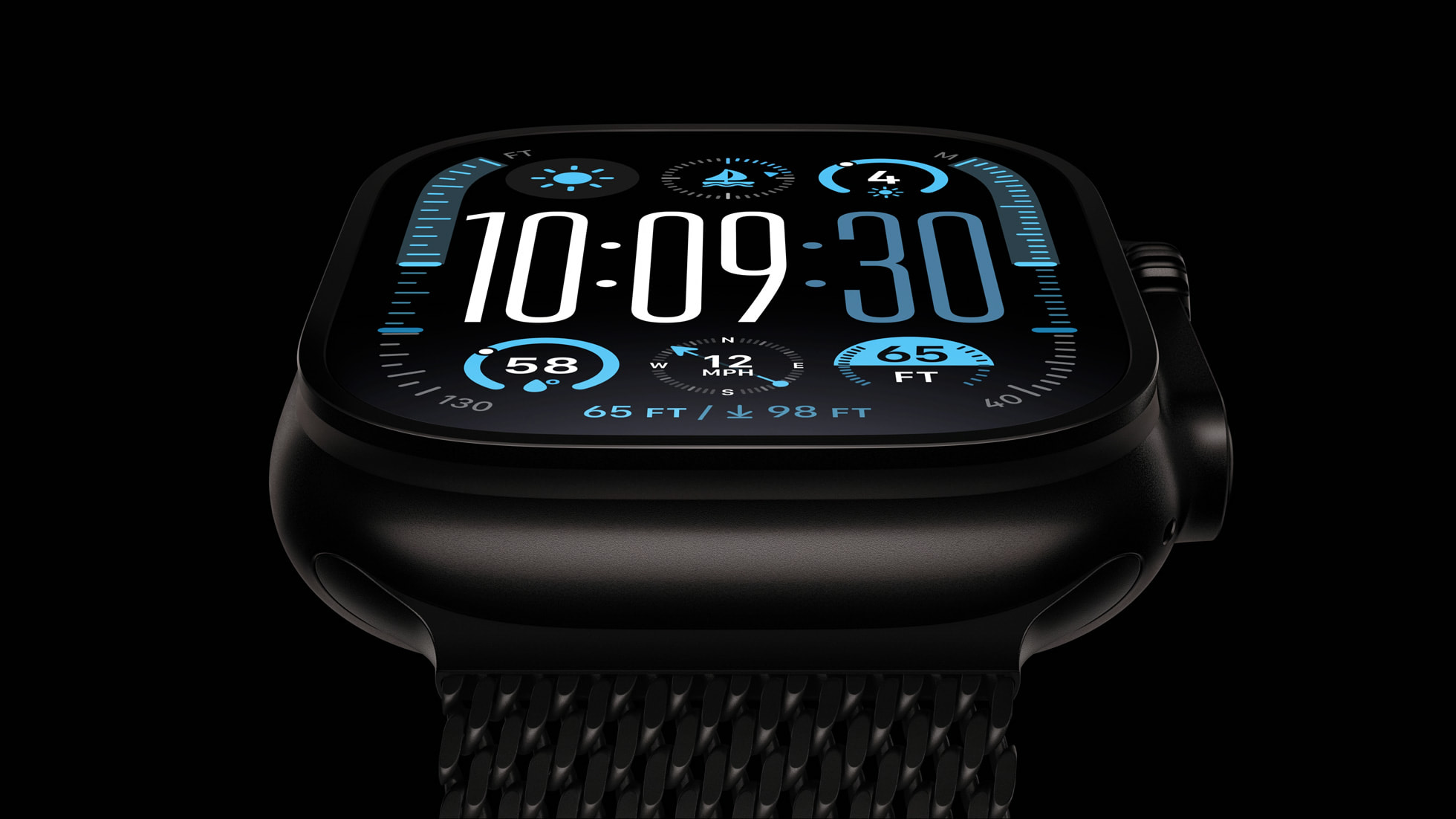
Hardware advancements are always accompanied by software innovation. The new watches will undoubtedly run on watchOS 27, the latest iteration of Apple's operating system for its wearables. While specific details for watchOS 27 are still under wraps, the report mentions that it "will add new watch faces to the new devices, including a variant of the Modular Ultra face."
Watch faces are a crucial aspect of the Apple Watch experience, allowing users to personalize their device and access information at a glance. The Modular Ultra face, known for its ability to display a wealth of complications (small widgets showing information like heart rate, weather, activity goals, and more), is particularly popular among power users. A new variant suggests further customization options, perhaps allowing for even more data density or new visual styles that leverage the Ultra's larger display.
Beyond Watch Faces: What to Expect from watchOS 27
Typically, new watchOS versions bring a suite of enhancements that span various aspects of the user experience:
- Health and Fitness Enhancements: Expect new workout types, more sophisticated metrics, improved sleep tracking algorithms, and potentially deeper integration with the Health app on iPhone. New sensors on the Ultra 4 would directly feed into these software improvements.
- Performance and Efficiency: General optimizations for speed, responsiveness, and battery life across all compatible Apple Watch models.
- Communication Features: Improvements to messaging, calling, and walkie-talkie functionalities.
- Smart Home Integration: Enhanced control over HomeKit devices directly from the wrist.
- Accessibility Features: Apple consistently introduces new accessibility options to make its devices usable for a wider range of individuals.
- App Ecosystem: New APIs and frameworks for developers, enabling more powerful and innovative third-party applications on the Watch.
The synergy between the new hardware (Ultra 4 and Series 12) and the capabilities of watchOS 27 will be key to defining the user experience, offering a more robust, intelligent, and personalized wearable platform.
Conclusion: A Future of Enhanced Wearable Technology
The anticipation for the Apple Watch Ultra 4 and Apple Watch Series 12 marks another exciting chapter in the evolution of wearable technology. From the rugged durability and advanced features of the Ultra line to the broad appeal of the standard Series, Apple continues to push the boundaries of what a smartwatch can do for health, fitness, communication, and daily convenience.
With strong indicators pointing towards a potential "full redesign" for the Ultra 4, coupled with "significant upgrades to sensing functions," biometric authentication like Touch ID, and a long-term vision for even more efficient display technology, Apple is clearly investing heavily in the future of its wrist-worn devices. While groundbreaking features like noninvasive blood glucose monitoring are still some years away, their active development underscores Apple's ambition to create the ultimate personal health companion.
As September approaches, all eyes will be on Apple to see how these rumors translate into tangible products. The Apple Watch Ultra 4 and Series 12 are not just new gadgets; they represent Apple's continued commitment to integrating cutting-edge technology into our daily lives, empowering us with deeper insights into our health and a more seamless connection to the digital world right from our wrists.
What new features are you most excited to see in the next generation of Apple Watches? Will the Ultra 4's rumored redesign convince you to upgrade, or are you holding out for advanced health features?
This article, "Apple Watch Ultra 4 Expected Later This Year" first appeared on MacRumors.com
Discuss this article in our forums
from MacRumors
-via DynaSage
