
Apple Vision Pro Just Got Even More Expensive
Apple Vision Pro Just Got Even More Expensive: Understanding Apple's Sweeping Price Hikes
In a significant move that reverberated across the tech world, Apple recently implemented a sweeping round of price increases across its lineup, most notably affecting its groundbreaking Vision Pro headset. The futuristic device, which has been the subject of intense discussion since its debut, saw its price jump from $3,499 to $3,699 for the base model, further cementing its position as an ultra-premium offering in the burgeoning spatial computing market.
This adjustment didn't happen in isolation. The change came after Apple's online store was briefly taken offline earlier today, a familiar prelude to major product updates or pricing revisions. When the digital storefront reappeared, it unveiled new pricing across a vast array of Apple's popular devices, affecting everything from smart speakers to high-performance computers. While the Vision Pro's increase garnered the most attention, it's crucial to understand this decision within the broader context of Apple's strategic and economic considerations.
The Vision Pro's Elevated Price Tag: A Deep Dive
The Apple Vision Pro, an innovative device designed to seamlessly blend digital content with the physical world, launched in February 2024 with a starting price of $3,499 for its 256GB base configuration. This figure was, at the time, widely acknowledged as a significant financial hurdle, posing a substantial barrier to widespread consumer adoption. Today's increase pushes that entry price to $3,699, adding another $200 to an already premium investment. But the adjustments didn't stop there. The 512GB configuration also saw a corresponding rise to $3,899, and the top-tier 1TB model now commands an impressive $4,199. These price points underscore Apple's commitment to positioning the Vision Pro as a high-end, specialized tool, rather than a mass-market consumer gadget.
For a product that is still in its nascent stages of market penetration, a price increase of this magnitude, even if relatively modest in percentage terms, is noteworthy. It sends a clear signal about Apple's confidence in the Vision Pro's technology and its target demographic. While many analysts and reviewers have consistently pointed to the Vision Pro's cost as its primary weakness, Apple seems to be leaning into its premium status, potentially prioritizing profitability and perceived value over broader market share for this particular device.
A Broader Swath of Price Hikes Across Apple's Ecosystem
The Vision Pro was not an anomaly; its price adjustment was part of a much larger initiative impacting several key product lines. Consumers browsing Apple's online store would have noticed new price tags on a variety of devices, including the HomePod mini, the larger HomePod, and the Apple TV. The popular iPad lineup also saw increases, encompassing the iPad, iPad mini, iPad Air, and the professional-grade iPad Pro. Even Apple's powerful Mac computers weren't spared, with price changes affecting the MacBook Neo, MacBook Air, MacBook Pro, iMac, Mac mini, and both configurations of the powerful Mac Studio.
This extensive list paints a picture of a company making widespread strategic adjustments. It's rare for Apple to implement such broad price increases across so many core product categories simultaneously. The impact on consumers, particularly those looking to upgrade multiple devices or enter the Apple ecosystem, could be significant. It forces potential buyers to re-evaluate their budgets and purchasing timelines, especially in an economic climate where discretionary spending is often scrutinized.
Interestingly, some product lines were seemingly left untouched by this wave of price adjustments. The iPhone, Apple's most popular and highest-volume product, along with AirPods, the Studio Display, and accessories such as the Apple Pencil, appear to have maintained their existing price points. This selective approach suggests that Apple might be strategically protecting its highest-volume and most competitive product categories, or perhaps these products have different cost structures or market sensitivities that allowed them to be exempt from the current round of increases.
The Vision Pro's "Price Baggage": A Historical Perspective
No Apple product launched in recent memory carries more "baggage" around its price tag than the Vision Pro. From the moment it was unveiled, its $3,499 entry price immediately became a focal point of discussion, often overshadowing its technological marvels. Critics and consumers alike flagged it as a major impediment to mainstream adoption, predicting that only a niche audience of developers, early adopters, and affluent tech enthusiasts would embrace the device.
The high price placed the Vision Pro in a unique market segment, far removed from other popular consumer electronics. It was presented as a device for "spatial computing," a new paradigm shift, rather than just another virtual or augmented reality headset. This positioning aimed to justify its premium cost by emphasizing its distinct capabilities and revolutionary potential. However, the reality of its limited applications at launch and the significant investment required meant that its reach was inherently curtailed.
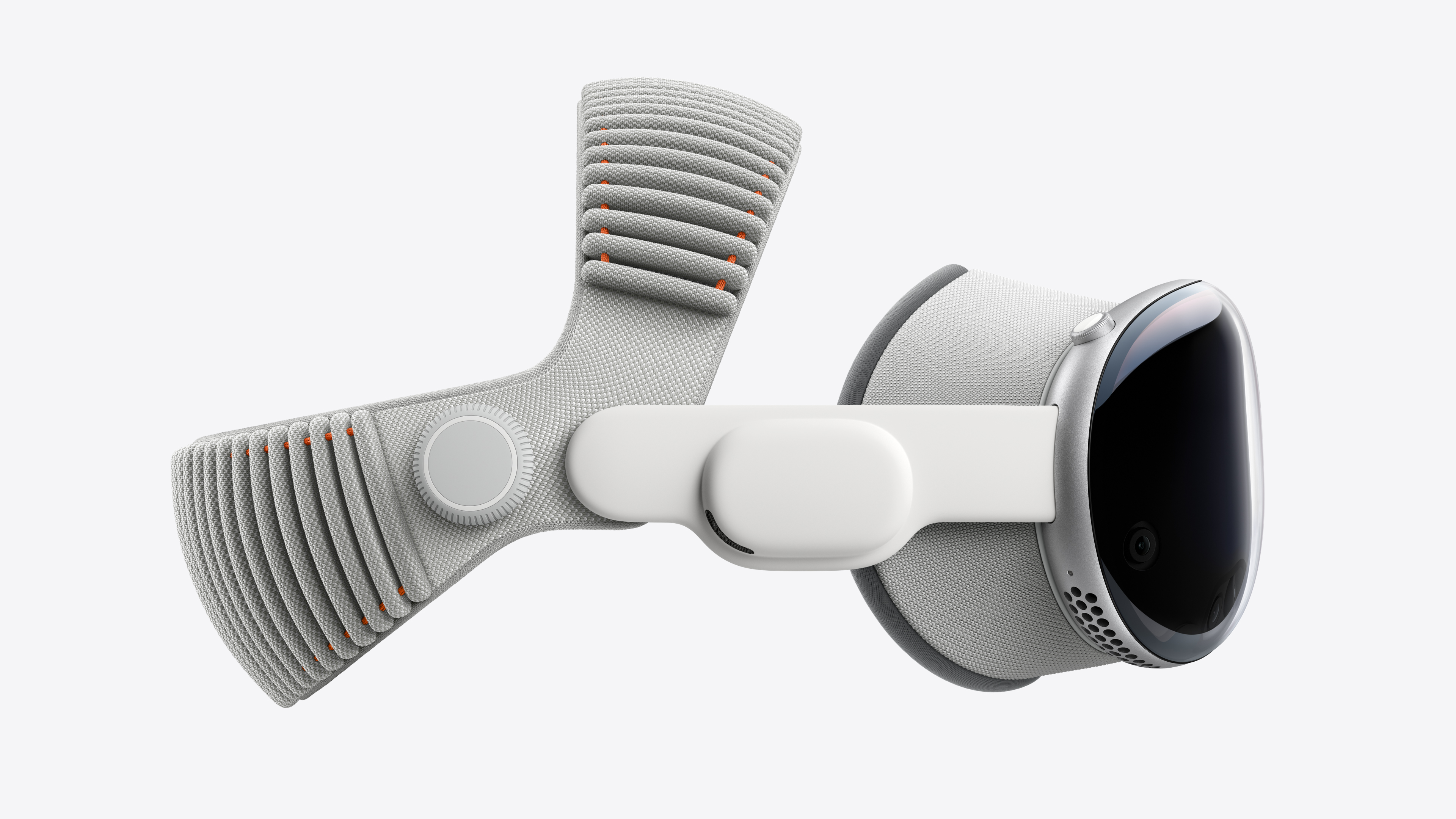
Even when Apple refreshed the Vision Pro in October 2025, introducing an updated M5 chip and a new Dual Knit Band designed for enhanced comfort, the company conspicuously kept the starting price at $3,499. This decision at the time was interpreted by many as an acknowledgment of the already high barrier to entry and a reluctance to increase it further. The fact that Apple has now chosen to raise the price, despite the persistent concerns about its affordability, signals a shift in strategy or a response to unavoidable external pressures.
Vision Pro vs. The Competition: A Stark Price Disparity
The price gap between the Apple Vision Pro and its primary competitors in the extended reality (XR) market has always been immense, and today's increase only widens that chasm. For instance, Meta's highly popular Quest 3, a formidable player in the VR/AR space, is priced at a significantly more accessible $499.99. This means the Vision Pro, even at its original price, was roughly seven times more expensive than a device offering a comparable (though functionally different) experience in the XR landscape.
Reviewers and industry analysts have consistently highlighted this vast price difference as the Vision Pro's defining weakness. While Apple's device boasts unparalleled display technology, advanced sensors, and a polished user interface, its cost fundamentally limits its addressable market. The contrast in market share vividly illustrates this point: estimates suggest that the Vision Pro's share of the XR market hovers around 5%, while Meta commands a dominant roughly 75%. This striking disparity directly reflects how badly the price has constrained the Vision Pro's reach, despite its ambitious technical capabilities and Apple's brand power.
The differing price strategies of Apple and Meta reveal their distinct visions for the future of XR. Meta aims for broad accessibility, seeking to bring immersive experiences to as many people as possible through more affordable hardware. Apple, on the other hand, seems to be pursuing a strategy of premium innovation, targeting a high-end segment that values cutting-edge technology and a seamless ecosystem experience, regardless of the cost. The latest price hike suggests Apple is doubling down on this premium positioning, even if it means further ceding market share to more affordable alternatives.
The Unavoidable Truth: Rising Component Costs
The underlying reason for this widespread increase, including for the Vision Pro, points to a broader, industry-wide challenge: rising operational and manufacturing costs. Apple CEO Tim Cook shed light on this issue last week in an interview with The Wall Street Journal, stating that price increases across Apple's lineup had become "unavoidable." He specifically attributed this necessity to the soaring cost of memory and storage chips, essential components in virtually all modern electronic devices.
The global technology industry has been grappling with supply chain disruptions, increased demand, and inflationary pressures for several years. The cost of raw materials, manufacturing processes, logistics, and labor have all seen significant upticks. Memory chips (like RAM) and storage chips (like NAND flash used in SSDs) are foundational components that dictate the performance and capacity of devices ranging from iPhones to Mac Studios and, critically, the Vision Pro. When the cost of these fundamental building blocks rises dramatically, it puts immense pressure on manufacturers like Apple to either absorb the costs, reduce profit margins, or pass some of the increase on to consumers.
Beyond chip costs, other factors likely contribute to these "unavoidable" increases. Geopolitical tensions can impact supply routes and the availability of critical minerals. Currency fluctuations can make imported components more expensive. Increased research and development expenditures for new technologies, like those found in the Vision Pro, also need to be recouped. For a company operating at Apple's scale, even marginal increases in component prices can translate into billions of dollars in added costs across its vast product portfolio. Passing these costs on is a difficult but often necessary decision to maintain healthy profit margins and continue investing in future innovation.
Consumer Impact and Apple's Strategic Calculus
While an increase for a product like the MacBook Air by $200 is an unwelcome change for consumers, it's a shift on a product with an enormous addressable market. Many rely on a MacBook for work, education, and daily computing, making it a more 'essential' purchase for a wider demographic. For these products, price increases can affect purchasing cycles and potentially drive some consumers to consider older models or competitors, even if Apple's ecosystem remains compelling.
However, the impact of a $200 increase on the Vision Pro is viewed through a different lens. An additional $200 on a device already priced in the realm of premium laptops or high-end professional equipment might seem less significant in absolute terms to its target market. Yet, it further solidifies the perception of the Vision Pro as a luxury or specialist item. For a product struggling to find its mainstream footing, any increase, no matter how small in percentage, risks alienating potential buyers who were already on the fence due to the initial cost. It reinforces the idea that the Vision Pro is not for everyone, nor is it intended to be.
Apple's strategic calculus here appears complex. On one hand, maintaining profitability in the face of rising costs is paramount for any publicly traded company. On the other, continuously increasing prices for niche products like the Vision Pro could limit its potential for growth and broader ecosystem integration in the long run. Perhaps Apple is choosing to focus on capturing maximum value from its early adopters and professional users for the Vision Pro, while hoping that future generations of the technology, or alternative, more affordable models, will eventually drive wider adoption. This could be a calculated move to sustain the Vision Pro's premium brand image and ensure its development is adequately funded, even if it means sacrificing immediate market share.
The Road Ahead: What This Means for Apple and the XR Market
These price increases could have several long-term implications for Apple and the broader tech industry. For Apple, it signals a period where maintaining profit margins in a challenging economic environment takes precedence. This might lead to further price adjustments across products in the future, or it could incentivize Apple to explore new ways to optimize its supply chain and manufacturing processes.
For the XR market, the Vision Pro's elevated price tag reinforces the current bifurcation between high-end, specialized devices and more accessible, consumer-oriented headsets. While Apple pushes the boundaries of spatial computing with an uncompromising vision, companies like Meta continue to chip away at the mainstream market with more affordable and versatile offerings. This dynamic will shape the pace of innovation and adoption in the XR space for years to come. Will Apple's premium strategy eventually pay off with a loyal, high-value user base, or will it create too wide a gap for the Vision Pro to ever truly break into the broader consumer consciousness?
Ultimately, Apple's recent round of price increases, led by the Vision Pro, is more than just a financial adjustment. It's a statement about the current economic landscape, the challenges of advanced tech manufacturing, and Apple's strategic positioning within an evolving global market. As consumers and the industry watch closely, the true impact of these changes will unfold over the coming months and years, shaping the future of spatial computing and the broader Apple ecosystem.
This article, "Apple Vision Pro Just Got Even More Expensive" first appeared on MacRumors.com
Discuss this article in our forums
from MacRumors
-via DynaSage
