
Apple Hikes M4 Pro Mac Mini Starting Price Amid Rising Memory Costs
Apple's Mac mini M4 Pro Price Soars: Understanding the $200 Hike Amidst Rising Tech Costs
In a significant development for tech enthusiasts and Apple users, the starting price of the powerful Mac mini featuring the M4 Pro chip has increased by a substantial $200. This adjustment brings the higher-tier model to $1,599 on Apple's official online store. This move reflects broader shifts within the technology industry, primarily driven by an escalating demand for critical components.
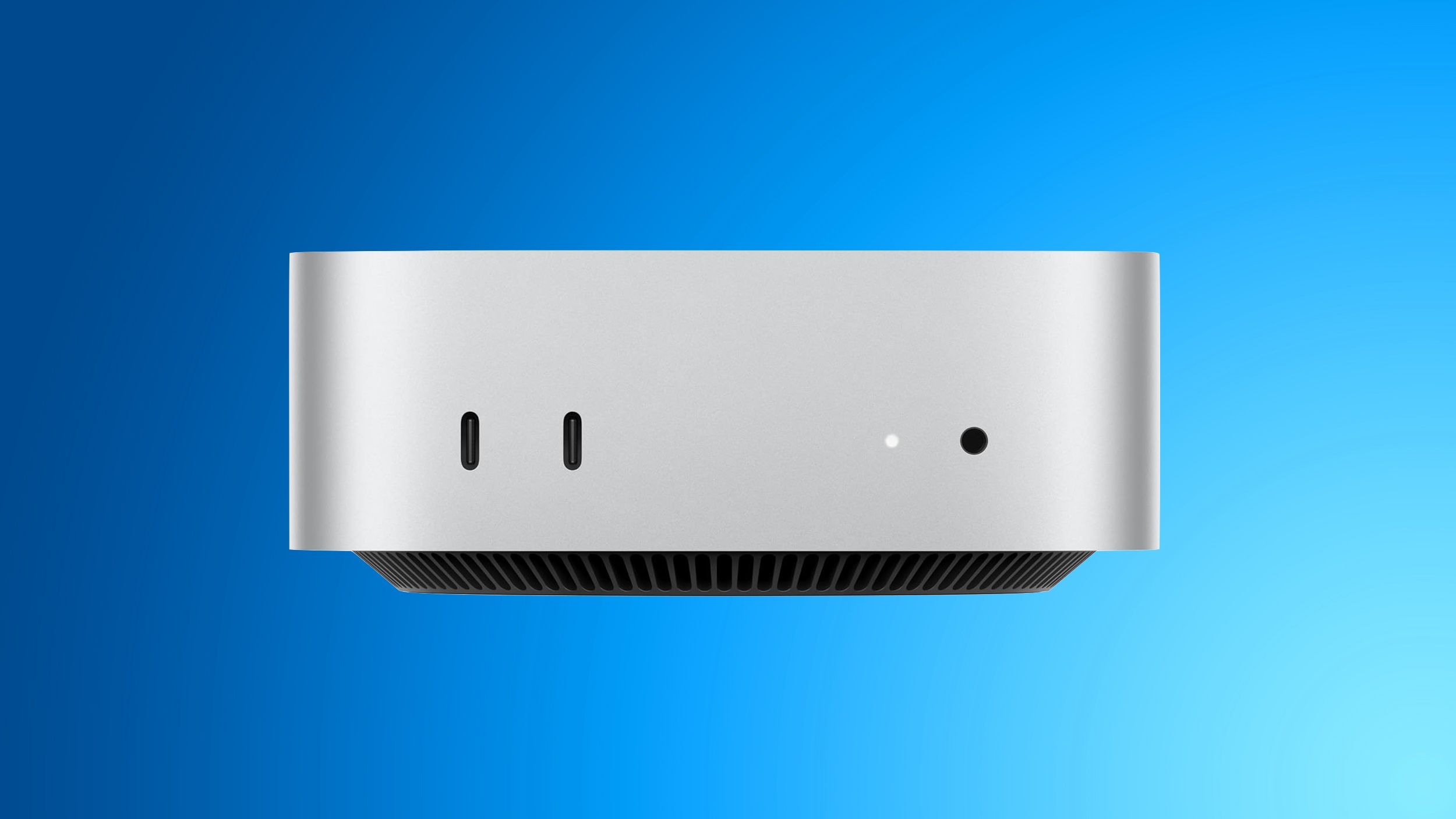
When the Mac mini M4 Pro model first debuted in October 2024, it was introduced with a starting price of $1,399. The recent price change highlights how quickly market dynamics can influence consumer costs, especially in an era of rapid technological advancement. The core reason behind this sudden increase, according to industry analysis, is the explosive expansion of AI (Artificial Intelligence) data centers. These massive computing facilities are voraciously consuming memory and storage chips, creating unprecedented demand across the entire tech sector and consequently driving up prices for all manufacturers, including Apple.
The Mac mini M4 Pro: A Closer Look at What's Affected
The Mac mini, known for its compact design and impressive performance, has long been a favorite among users seeking a powerful yet unobtrusive desktop computer. The M4 Pro variant elevates this experience considerably. Powered by Apple's custom-designed M4 Pro silicon, this particular model boasts advanced capabilities, typically featuring configurations with a 12-core CPU, 16-core GPU, generous 24GB of unified memory, and 512GB of fast SSD storage. Such specifications are ideal for demanding tasks like professional video editing, complex software development, graphic design, and advanced data processing, making it a crucial tool for many creative professionals and power users.
The sudden $200 price jump for such a capable machine is not merely a minor adjustment; it represents a significant increase in the barrier to entry for users looking to leverage Apple's cutting-edge M4 Pro performance in their workflow. This specific model, previously available at $1,399, now requires a $1,599 investment, signaling a new pricing reality for high-performance computing components.
Understanding the "Why": The AI Data Center Effect on Chip Prices
The primary catalyst for this and other recent price hikes across the tech industry is the burgeoning field of Artificial Intelligence. Specifically, the "rapid expansion of AI data centers" is creating an insatiable demand for high-performance memory (RAM) and storage (SSD) components. To truly grasp the impact, it's essential to understand what these data centers are and why they are so resource-intensive.
What Are AI Data Centers and Why Are They So Demanding?
AI data centers are highly specialized facilities designed to house vast networks of powerful servers and supercomputers. Their purpose is to train, run, and host complex AI models, particularly large language models (LLMs) like those powering generative AI applications, advanced analytics, and machine learning platforms. Training these models involves feeding them astronomical amounts of data—terabytes, even petabytes—to learn patterns, understand contexts, and generate new content or predictions. This process is incredibly compute-intensive and memory-hungry.
During the training phase, AI models require simultaneous access to massive datasets and numerous model parameters. This necessitates enormous quantities of ultra-fast memory (DRAM) and high-speed storage (NAND flash, packaged as SSDs) to avoid bottlenecks that would slow down the training process. The sheer scale of these operations means that companies like Google, Microsoft, Amazon, Meta, and various AI startups are investing billions into building and equipping these centers, buying up vast quantities of the most advanced memory and storage chips available. These components often include high-bandwidth memory (HBM) for specialized AI accelerators and vast arrays of enterprise-grade DDR5 RAM and NVMe SSDs.
The Supply Chain Ripple Effect
The unprecedented demand from AI data centers has a profound impact on the global semiconductor supply chain. Manufacturers of DRAM (Dynamic Random-Access Memory) and NAND flash (the technology behind SSDs) are facing immense pressure. They are increasingly prioritizing the production of higher-margin, specialized components for these AI applications, which offer better returns compared to the standard consumer-grade chips found in devices like Macs and iPads. This shift in manufacturing focus leads to:
- Constrained Supply for Consumer Devices: Fewer chips are available for traditional consumer electronics, as a significant portion of manufacturing capacity is diverted to enterprise-level AI hardware.
- Increased Raw Material Costs: The overall surge in demand pushes up the prices of raw materials and manufacturing processes needed for these chips.
- Basic Economics in Action: With supply struggling to keep pace with soaring demand, the fundamental economic principle of supply and demand dictates that prices will rise. This affects not just the finished products but also the components Apple needs to build its devices.
Therefore, the Mac mini M4 Pro's $200 price increase is a direct consequence of this global market phenomenon, demonstrating how a specialized segment of the tech industry (AI) can have far-reaching effects on the pricing of general consumer electronics.
A Look Back: Other Mac mini Pricing Adjustments and Market Dynamics
This recent M4 Pro price hike isn't the only pricing adjustment the Mac mini line has seen in recent times, underscoring a broader trend of shifting costs. It's important to differentiate between the premium M4 Pro models and the more accessible entry-level Mac mini configurations. Just a few months prior to this latest increase:
The May 2026 Discontinuation and Its Aftermath
In May 2026, Apple had already raised the effective starting price for the *base* Mac mini model by discontinuing a more budget-friendly configuration. This was the $599 model, which typically came with 16GB of RAM and a 256GB SSD. The removal of this configuration meant that the cheapest Mac mini available became the $799 model, which usually features a 512GB SSD. For many users, particularly those on a tighter budget or those needing a secondary machine, the $599 option represented a crucial entry point into the macOS ecosystem.
The absence of the $599 model effectively raised the baseline cost for new Mac mini ownership by $200. This earlier move was likely an initial response to the same underlying cost pressures, as memory (RAM) and storage (SSD) are two of the most expensive components in any computer. Having 16GB of RAM is generally considered the sweet spot for modern multitasking, and 256GB of storage, while modest, is sufficient for many basic users. The shift to a minimum 512GB SSD at $799 meant that even the most basic Mac mini buyer was now paying more for storage they might not immediately need, rather than the core RAM capacity.
The Nuance of Reinstatement
Interestingly, the original text notes a subtle, yet potentially confusing, detail: "the 16GB RAM / 256GB storage option has now been reinstated, but the $799 starting price remains." This suggests a recalibration in Apple's offerings. While the *configuration* of 16GB RAM and 256GB storage may be available again, it is no longer offered at the ultra-low $599 price point. Instead, it's likely now an option within the $799 base model or potentially at a higher custom configuration price. The crucial takeaway is that despite this configuration returning, the actual lowest entry price for a *base* Mac mini remains at $799, and for the M4 Pro model, it is now an even higher $1,599.
These sequential pricing adjustments for both entry-level and high-performance Mac mini models paint a clear picture: Apple is systematically responding to escalating component costs, adapting its product lineup and pricing structure to maintain profitability in a challenging market environment.
Apple's Official Stance: Unprecedented Component Price Increases
In response to inquiries regarding these price changes, Apple released a telling statement to The Wall Street Journal, emphasizing the severity of the market conditions. The company stated, "We have now reached a point where we need to begin raising prices." This sentiment was underscored by an even more stark admission: "We have never seen a component price increase this much, this quickly."
Analyzing Apple's Statement
These words from Apple are highly significant for several reasons:
- Acknowledgement of Severity: For Apple, a company known for its premium pricing and strong control over its supply chain, to explicitly state the necessity of price hikes indicates that the external pressures are profound and unavoidable. They typically absorb minor cost fluctuations to maintain stable pricing within a product generation.
- Unprecedented Pace: The phrase "never seen a component price increase this much, this quickly" highlights the extraordinary nature of the current market. This isn't a gradual trend but a rapid escalation, likely fueled by the sudden and massive demand from the AI sector.
- Impact on Profit Margins: If Apple were to maintain its previous pricing despite these rising component costs, it would significantly erode its profit margins. As a publicly traded company, Apple has a responsibility to its shareholders, which often necessitates passing on unavoidable cost increases to consumers.
- Transparency (to a degree): While Apple typically remains tight-lipped about its supply chain and internal costs, this statement offers a rare glimpse into the significant challenges it's currently facing on the hardware procurement front. It effectively communicates that these are not arbitrary price increases but rather a direct consequence of external market forces beyond their immediate control.
This candid admission from one of the world's largest technology companies serves as a powerful indicator of the current state of the global semiconductor market, where the AI revolution is reshaping supply and demand dynamics at an unprecedented speed.
Beyond the Mac mini: Broader Price Adjustments Across Apple's Ecosystem
The price hike for the Mac mini M4 Pro is not an isolated incident; it's part of a wider series of adjustments across Apple's product portfolio. The day these changes went into effect, Apple briefly took down its online store, a common practice for major product announcements. However, this time, when the store reappeared, there were no new products or revolutionary features. Instead, customers were greeted with higher price tags across multiple product lines.
Mac Computers and iPads Affected
According to reports, price tags for various Mac computers rose approximately 15 percent to 20 percent. This indicates that other models, such as the MacBook Air, MacBook Pro, and potentially even the Mac Studio or Mac Pro, could have also seen significant price increases, depending on their configuration and reliance on memory and storage components. Similarly, iPad prices experienced a hike of between 15 percent and 25 percent. This applies to a range of iPad models, from the standard iPad to the more powerful iPad Air and iPad Pro, all of which rely heavily on efficient and ample memory and storage.
The fact that these price increases affect multiple product categories underscores that the underlying issue—the escalating cost of components—is systemic, not specific to just one product line. Any Apple device that utilizes a significant amount of RAM and NAND flash storage is vulnerable to these market pressures. The broad nature of these adjustments confirms Apple's statement about widespread and rapid component cost inflation.
No Other Changes: A Pure Cost Adjustment
Crucially, the original report states, "Apart from the price hikes, there were no other changes to the site." This detail is vital. It means that these are purely cost-driven adjustments, not accompanied by new features, hardware upgrades, or new product introductions that might otherwise justify a price increase in the eyes of the consumer. Buyers are paying more for the exact same hardware they could have purchased at a lower price just a day earlier. This reinforces the narrative that these are reactive measures by Apple to maintain financial health in the face of unprecedented supply chain challenges, rather than proactive steps to enhance product value or launch new innovations.
The Ripple Effect: What This Means for Consumers and the Tech Market
The recent price adjustments from Apple, particularly the $200 hike for the Mac mini M4 Pro, have significant implications for both individual consumers and the broader technology market.
For Consumers: A Higher Barrier to Entry
For individuals and businesses considering an upgrade or a new purchase, these price increases translate directly into higher costs. The Mac mini M4 Pro, already a premium device, now demands an even greater investment. This could lead to several consumer behaviors:
- Delayed Purchases: Some users might postpone their upgrades, hoping for future price stability or a return to previous pricing, though this seems unlikely in the short term.
- Exploring Alternatives: Others might start looking at competing brands or different operating systems that offer comparable performance at a lower price point. While Apple's ecosystem has strong loyalty, a substantial price increase can push some to reconsider their options.
- Holding Onto Older Devices: Many users may opt to extend the lifespan of their current Macs and iPads, rather than investing in new models at inflated prices.
- Strategic Buying: Consumers might become more selective about configurations, perhaps opting for less RAM or storage than they ideally want, or choosing base models over upgraded ones to manage costs.
Ultimately, these price changes make Apple's powerful and popular devices less accessible, potentially impacting market share among budget-conscious buyers or those who previously found the entry-level options more appealing.
For the Broader Tech Market: A Bellwether Moment
Apple's actions often serve as a bellwether for the wider tech industry. As one of the largest purchasers of semiconductor components globally, its decision to raise prices due to component costs signals that this is a pervasive problem. Other hardware manufacturers, if they haven't already, are likely to face similar pressures and may follow suit with their own price adjustments. This could lead to a general increase in prices across various consumer electronics, from laptops and smartphones to gaming consoles and smart home devices.
Furthermore, the "AI arms race" is unlikely to slow down. As more companies invest in AI development and deployment, the demand for high-performance memory and storage will continue to be a dominant force in the semiconductor market. This ongoing demand could lead to:
- Continued Volatility: Component prices may remain volatile or continue their upward trajectory for the foreseeable future.
- Innovation in Manufacturing: It could spur greater investment in new manufacturing capacities or alternative memory and storage technologies to alleviate bottlenecks.
- Shift in Focus: More chip manufacturers may permanently shift their R&D and production efforts towards specialized AI-centric components, potentially slowing down advancements or increasing costs for general consumer components.
The Mac mini M4 Pro price hike, therefore, is more than just an Apple story; it's a critical indicator of the evolving economics and technological priorities shaping the entire global tech landscape.
Navigating the New Landscape: Tips for Buyers
In light of these significant price increases, consumers planning to purchase a new Mac mini or other Apple devices need to approach their decisions with careful consideration. Here are a few tips to navigate this new pricing landscape:
- Evaluate Your Needs Critically: Before buying, thoroughly assess your actual requirements for RAM and storage. While more is generally better, buying significantly more than you need, especially at higher prices, might not be the most economical choice. For example, if you primarily use cloud storage, a smaller SSD might suffice.
- Consider Refurbished or Older Models: Apple's official refurbished store can offer substantial savings on devices that are often indistinguishable from new, and they come with the same warranty. Older generations of the Mac mini (e.g., M2 or M3 models) might still offer excellent performance for your tasks at a lower price point, especially if your workload doesn't demand the absolute latest M4 Pro chip.
- Look for Sales and Discounts: Keep an eye out for sales from authorized resellers (like Amazon, Best Buy, B&H Photo Video) or special educational discounts if you qualify. While official Apple Store prices are now higher, third-party retailers sometimes offer promotions.
- Prioritize Essential Upgrades: If budget is a constraint, prioritize the components that are not user-upgradeable. For Mac mini, this means RAM (unified memory) and the SSD storage. You can always add external storage later, but upgrading internal RAM or the SSD after purchase is not possible.
- Future-Proof Wisely: Given the increased investment, it's wise to consider future-proofing your purchase as much as possible. Buying a configuration that slightly exceeds your immediate needs might pay off in longevity and sustained performance, making the higher initial cost more palatable over time.
Making an informed decision is more important than ever as the cost of premium technology continues to be influenced by global market forces.
Conclusion: A New Era of Tech Pricing?
The $200 price increase for the Mac mini with the M4 Pro chip, along with broader price adjustments across Apple's Mac and iPad lineups, marks a significant moment in the consumer technology market. It underscores how the rapid and massive expansion of AI data centers is fundamentally reshaping the supply and demand dynamics for critical components like memory and storage chips. Apple's explicit acknowledgment of "unprecedented" component cost increases highlights the severity of these market pressures.
For consumers, this means a higher financial commitment to access Apple's powerful and integrated ecosystem. For the tech industry, it signals a new era where the relentless pursuit of AI capabilities will likely continue to influence hardware pricing and availability across the board. As the digital landscape evolves, driven by breakthroughs in artificial intelligence, so too will the economic realities of bringing cutting-edge technology to the hands of users. Navigating these changes will require both manufacturers and consumers to adapt to an increasingly dynamic and cost-sensitive market.
This article, "Apple Hikes M4 Pro Mac Mini Starting Price Amid Rising Memory Costs" first appeared on MacRumors.com
Discuss this article in our forums
from MacRumors
-via DynaSage
