
MacBook Neo Expected to 'Reshape' Laptop Market in Major Way
The MacBook Neo: Apple's Bold Move to Reshape the Laptop Market
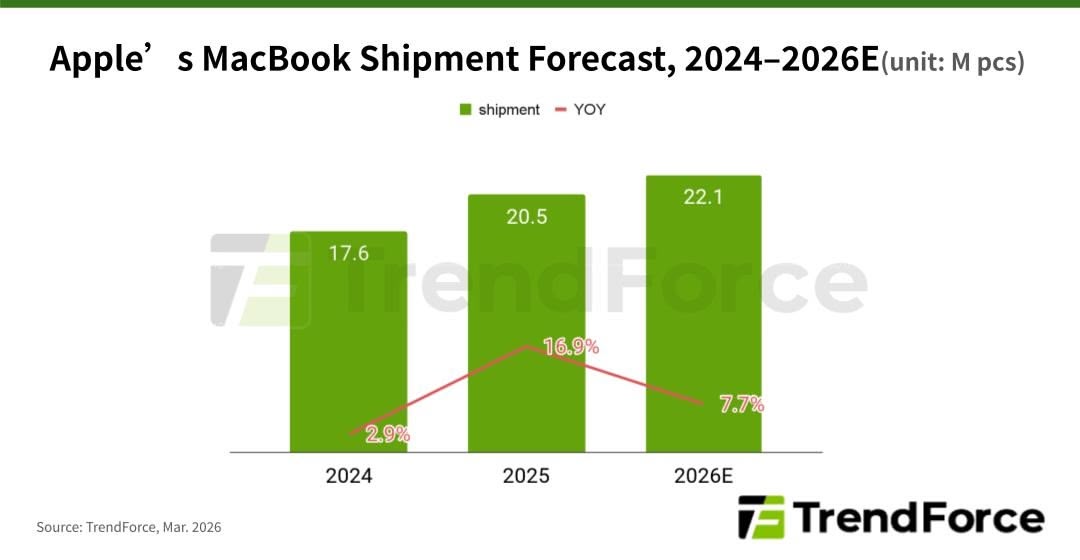
The tech world is buzzing with anticipation following Apple's latest announcement: the new MacBook Neo. This device isn't just another addition to Apple's premium lineup; it represents a significant strategic shift, positioning the Cupertino giant to capture a substantial new segment of the market. According to a new report from TrendForce, this affordable new laptop is projected to drive Apple's notebook shipments up by nearly 8% this year, a remarkable feat considering the broader laptop market is facing a challenging downturn.
This move is particularly striking because it comes at a time when most of the tech industry is bracing for, or already experiencing, significant headwinds. While other manufacturers are playing it safe, Apple is making a decisive leap into uncharted territory for its MacBook brand. The MacBook Neo, with its aggressive pricing and powerful A18 Pro chip, is poised to disrupt the traditional dynamics of the entry-level and mainstream laptop segments, areas where Apple has historically had little presence.

A Market in Flux: The Global Notebook Downturn
To truly appreciate Apple's bold strategy, it's essential to understand the current state of the global laptop market. The research firm TrendForce paints a grim picture, estimating that worldwide notebook shipments will decline by a substantial 9.2% year-over-year in 2026. This isn't just a minor blip; it reflects a significant contraction, with the potential for even steeper declines if consumer demand continues to weaken. Several factors contribute to this challenging environment.
Firstly, the post-pandemic surge in PC sales has largely subsided. During the initial phases of the global health crisis, remote work and online learning drove unprecedented demand for laptops and other computing devices. Many consumers and businesses upgraded their equipment, leading to an accelerated refresh cycle. Now, with many returning to offices and schools, and a saturation point reached in many households, that artificial boost has dissipated.
Secondly, macroeconomic pressures are taking their toll. High inflation, rising interest rates, and the looming threat of recession in various economies have made consumers more cautious with their spending. Disposable income is stretched, and big-ticket items like laptops are often among the first purchases to be postponed or reconsidered. Businesses, too, are tightening their belts, delaying large-scale hardware upgrades.
Thirdly, the very components that make laptops run are becoming more expensive. TrendForce specifically highlights rising memory and CPU costs as a major hurdle. These increased input costs directly impact the profitability of PC manufacturers. To mitigate these pressures, most PC makers have adopted a conservative approach. They are paring back their product lines, reducing the variety of models offered, and meticulously managing inventory to avoid being stuck with unsold stock that depreciates in value. Innovation in the budget and mid-range segments often slows down as companies prioritize cost control over aggressive new feature introductions.
This cautious stance from traditional Windows OEMs and Chromebook manufacturers creates a void, particularly in the mainstream segment where consumers are increasingly value-conscious. It's into this very vacuum that Apple, defying conventional wisdom, is launching its most accessible MacBook ever.
Apple's Daring Entry: The MacBook Neo Breaks the Mold
While competitors retreat, Apple charges forward. Announced on a Wednesday, the MacBook Neo comes with an astonishing starting price of $599. This figure alone is groundbreaking for Apple, but it becomes even more significant when considering its educational discount, which brings the price down to an unprecedented $499. For years, the MacBook lineup has been synonymous with premium pricing, with a floor typically well above $1,000. The Neo shatters this perception, making the macOS ecosystem accessible to a much broader audience.
The target market for the MacBook Neo is clear: the $500-$800 mainstream segment. This territory has traditionally been dominated by Windows laptops and Chromebooks, which have thrived by offering affordability and functionality for everyday tasks. These devices are particularly popular in the education sector, among students, and general productivity users who don't require the high-end specifications of professional workstations. Apple's entry into this segment with a fully-fledged MacBook changes the game entirely.
Imagine a student or a family looking for a reliable, capable laptop for schoolwork, browsing, streaming, and light productivity. Until now, a MacBook was likely out of their budget. The MacBook Neo brings Apple's renowned build quality, ecosystem integration, and the powerful, user-friendly macOS experience within reach. This isn't just about selling more laptops; it's about introducing a whole new generation of users to the Apple ecosystem, potentially turning them into lifelong customers for iPhones, iPads, and other Apple services.
The inclusion of Apple's A18 Pro chip in the MacBook Neo is another critical differentiator. This custom silicon promises exceptional performance and power efficiency, far exceeding what many competing budget laptops can offer. It means that even at a lower price point, users can expect a fluid, responsive experience that stands apart from the often-compromised performance of entry-level Windows machines or the web-centric nature of Chromebooks.
The Numbers Don't Lie: Projections and Market Share Shifts
TrendForce's projections underscore the potential impact of the MacBook Neo. The firm forecasts that Apple's notebook shipments will grow by a healthy 7.7% in 2026. This growth isn't just about incremental gains; it’s a direct consequence of the Neo’s strategic positioning. The report specifically attributes a significant portion of this surge to the new budget-friendly model, estimating that the MacBook Neo alone could account for a staggering 4 to 5 million units shipped.
These millions of units aren't just boosting Apple's sales figures; they're also set to significantly increase macOS market share. TrendForce projects that macOS will climb to 13.2% of the global notebook market. While this might still be a minority share compared to Windows, it represents a substantial gain in a declining market and solidifies Apple's position as a formidable player. Each percentage point gained when the overall pie is shrinking is a testament to the strength and appeal of Apple's offerings.
For context, consider the competitive landscape. Windows machines still dominate the market, primarily due to the vast array of manufacturers and price points. Chromebooks have made significant inroads, particularly in education, due to their simplicity and low cost. The MacBook Neo directly targets these segments, offering a premium experience at a competitive price. If Apple captures 4-5 million units with the Neo, that's 4-5 million users who might have otherwise purchased a Windows laptop or a Chromebook, representing a direct shift in market dynamics.
This projected success is not merely a matter of quantity but also quality of users. Attracting students and general users to macOS at an early stage can foster loyalty and encourage them to integrate further into Apple's ecosystem, from iCloud services to app purchases. This long-term strategy of user acquisition at the entry level is far more valuable than just immediate sales figures.
Apple's Secret Sauce: In-House Silicon and Strategic Sourcing
How is Apple able to pull off such an aggressive pricing strategy when its competitors are struggling with rising component costs? TrendForce credits two core strengths unique to Apple: its in-house silicon and its highly standardized product specifications, which translate into stronger bargaining power with suppliers.
The Power of In-House Silicon (A18 Pro Chip)
Apple's move to design its own custom silicon, beginning with the M1 chip and now evolving to the A-series for the Neo (likely a variant or derivative optimized for laptops, leveraging iPhone/iPad chip expertise), has been a game-changer. By developing chips like the A18 Pro internally, Apple significantly reduces its dependence on external CPU suppliers like Intel or AMD. This independence offers several critical advantages:
- Cost Control: Apple eliminates the licensing fees and margins associated with purchasing chips from third-party vendors. They control the entire design-to-production pipeline for the core processor, leading to more efficient cost management.
- Optimized Performance and Efficiency: Apple designs its chips specifically for its hardware and software. This tight integration results in unparalleled performance, power efficiency, and thermal management. The A18 Pro chip in the Neo will likely deliver a much snappier and longer-lasting experience than similarly priced laptops running generic processors, making the 8GB memory configuration more effective.
- Supply Chain Stability: By controlling chip production, Apple can better manage its supply chain, reducing vulnerability to global chip shortages or price fluctuations from external suppliers. This foresight allows them to plan production more reliably and predict costs accurately.
- Innovation and Differentiation: In-house silicon allows Apple to introduce unique features and performance benchmarks that competitors struggle to match without similar vertical integration. This becomes a powerful selling point, even in a budget device.
Standardized Specs and Concentrated Memory Configurations
Beyond the chip, Apple's approach to product development is inherently more streamlined than its rivals. Unlike Windows OEMs, which often offer dozens, if not hundreds, of different laptop configurations across various price points, Apple maintains a relatively concentrated and standardized product portfolio. This "less is more" strategy has profound cost benefits:
- Manufacturing Efficiency: Fewer SKUs (stock keeping units) mean simpler manufacturing processes, reduced tooling costs, and larger volume orders for specific components. This drives down the per-unit cost of production.
- Stronger Bargaining Power: When it comes to components like memory (RAM) or storage (SSD), Apple's concentrated configurations mean they order vast quantities of a few specific types of chips. This massive purchasing volume gives them immense leverage with suppliers. They can negotiate better prices, even when component costs are generally rising across the industry.
- Reduced Complexity: Managing a simpler product line reduces overhead in design, engineering, inventory, and customer support. These efficiencies contribute to better profit margins even at lower selling prices.
This is a stark contrast to the predicament of Windows OEMs. These companies typically operate with highly fragmented product portfolios, offering a dizzying array of models with different processors, RAM configurations, storage options, screen types, and form factors. While this offers choice to consumers, it makes cost management incredibly difficult. When component costs are volatile, these OEMs find it harder to negotiate favorable deals due to smaller, more diverse orders. This directly impacts their ability to compete on price without severely eroding their margins, a challenge Apple neatly sidesteps with its vertically integrated and standardized approach.
The 8GB Memory Question: A Potential Hurdle?
Despite the overwhelmingly positive outlook, TrendForce’s report highlights one potential "deciding factor": how consumers will respond to the 8GB memory configuration, especially since Apple doesn't offer a RAM upgrade option for the MacBook Neo. This is a common point of discussion whenever Apple releases a base model with 8GB of unified memory.
On traditional Windows laptops, 8GB of RAM can sometimes feel limiting, especially if running multiple applications, memory-intensive tasks, or virtual machines. However, Apple's unified memory architecture on its custom silicon is a different beast. The CPU, GPU, and neural engine all share the same high-bandwidth memory pool, allowing for incredibly efficient data transfer and utilization. This means that 8GB of unified memory on an Apple Silicon Mac often performs comparably to, or even better than, 16GB of traditional RAM on an Intel-based machine for many common tasks.
For the MacBook Neo's target audience – students, casual users, and those focused on general productivity, web browsing, email, word processing, and light creative tasks – 8GB of unified memory with the A18 Pro chip is likely more than sufficient. macOS is also highly optimized to run efficiently with available resources. For many, the seamless performance and efficiency will easily outweigh any initial concerns about the raw numbers.
Apple's decision to offer a fixed 8GB configuration without an upgrade option is also a strategic one. It helps maintain the aggressive price point, simplifies the supply chain, and clearly differentiates the Neo from its more expensive MacBook Air and MacBook Pro siblings. Users who genuinely need more RAM for demanding professional tasks will likely be directed towards those higher-tier models, which offer configurable memory options. This strategy avoids cannibalizing sales of its more profitable machines while still capturing the entry-level market.
Ultimately, consumer response will depend on the real-world experience. If the Neo delivers a consistently smooth and responsive performance, as Apple Silicon usually does, then the 8GB memory configuration is unlikely to be a significant deterrent for its intended demographic.
Reshaping the Market: Beyond Sales Figures
The implications of the MacBook Neo extend far beyond Apple's internal sales targets. TrendForce's most intriguing claim is that if the Neo gains significant traction in the entry-level segment, it "could reshape the pricing dynamics across the global notebook market." This is a profound statement, suggesting a ripple effect that could impact every other laptop manufacturer.
Here’s how the MacBook Neo could fundamentally alter the industry:
- Pressure on Windows OEMs: With Apple offering a premium experience at a mainstream price, competitors will be forced to respond. They will either need to lower their prices, improve the performance and build quality of their budget offerings, or innovate more aggressively with features to differentiate their products. This could lead to a "race to the top" in terms of value, where consumers get better devices for their money.
- Elevated Consumer Expectations: Once users experience the smooth performance, robust build quality, and integrated ecosystem of a MacBook for $599 (or $499 with discount), their expectations for what an "entry-level" laptop should be will undoubtedly rise. This will make it harder for manufacturers to sell less capable or poorly built machines in the same price bracket.
- Innovation in Chromebooks: Chromebooks, traditionally dominant in the education sector due to their low cost and ease of management, will face direct competition. While they still have a strong niche, Apple's entry could push Google and its partners to further enhance Chromebook capabilities, perhaps by offering more powerful hardware or richer offline experiences.
- New Market Segments: Apple's strategy could open up entirely new considerations for laptop buyers. The choice might no longer be just between Windows and Chromebooks in the budget segment, but a genuine three-way contest that forces consumers to weigh the merits of each ecosystem more carefully.
- Ecosystem Expansion: For Apple, the Neo isn't just a product; it's a gateway. Bringing more users into the macOS world at an affordable price point means more potential subscribers to Apple Services (Apple Music, Apple TV+, iCloud+, Apple Arcade), more app purchases, and ultimately, more loyalty to the brand's entire product ecosystem.
This strategic move is less about chasing market share percentage points for their own sake and more about long-term ecosystem growth and setting new benchmarks for value and performance in segments where Apple has traditionally been absent. It showcases Apple's confidence in its vertical integration and supply chain prowess to disrupt established market norms.
The Launch and Beyond: What Lies Ahead
The MacBook Neo launches next Wednesday, March 11, and the tech world will be watching closely. Initial sales figures, customer reviews, and comparative benchmarks against Windows and Chromebook rivals will provide the first real-world insights into its market reception. Given Apple's track record and the Neo's compelling value proposition, strong initial demand is highly anticipated.
We can expect extensive reviews focusing on the A18 Pro's performance, battery life, the actual user experience with 8GB unified memory, and how it stacks up against traditional budget laptops. The education market, in particular, will be a key battleground. If schools and universities embrace the Neo, it could secure Apple's foothold in a vital segment for future growth.
Beyond this initial launch, the MacBook Neo could pave the way for future iterations or even inspire similar strategic pricing from Apple in other product categories. It signals a willingness from Apple to be more competitive on price without sacrificing its core values of quality, design, and performance, thanks to its unique technological advantages.
Conclusion: Apple's Masterstroke in a Shifting Landscape
Apple's MacBook Neo is much more than just a new laptop; it's a strategic masterstroke designed to invigorate Apple's notebook shipments and dramatically expand its market reach. In a global laptop market facing significant declines, Apple is poised for growth, leveraging its in-house silicon and efficient production to offer unprecedented value. The $599 starting price (dropping to $499 for education) makes macOS accessible to a mainstream audience previously priced out of the ecosystem.
TrendForce's projections of 7.7% growth for Apple's notebooks and 4-5 million Neo units underscore the immense potential. This success is rooted in Apple's unique ability to control costs through custom chips like the A18 Pro and standardized product lines, giving it a significant advantage over competitors bogged down by fragmented portfolios and volatile component costs. While the 8GB memory configuration might raise some eyebrows, the efficiency of Apple Silicon is expected to deliver a stellar experience for its target users.
Ultimately, the MacBook Neo is set to "reshape" the global notebook market's pricing dynamics. It will challenge rivals to innovate, elevate consumer expectations for budget laptops, and introduce millions of new users to the Apple ecosystem. As it launches on March 11, all eyes will be on Apple to see how this bold strategy unfolds, cementing its role not just as a premium brand, but as a disruptive force across all market segments.
This article, "MacBook Neo Expected to 'Reshape' Laptop Market in Major Way" first appeared on MacRumors.com
Discuss this article in our forums
from MacRumors
-via DynaSage
