
Latest iOS 26.4 Beta Adds New Emoji Characters
Get Ready to Express More! Apple's Latest Betas Bring Nine Exciting New Emoji
The digital world is constantly evolving, and a big part of how we communicate visually is through emoji. These small, powerful icons have become an indispensable part of our daily conversations, adding nuance, humor, and emotion that plain text often lacks. Today marks an exciting milestone for emoji enthusiasts, as Apple has just released the fourth beta versions of iOS 26.4, iPadOS 26.4, and macOS Tahoe 26.4 to developers. These updates aren't just about stability and performance; they introduce a fresh wave of nine brand-new emoji characters, expanding our digital vocabulary in delightful ways. This latest rollout reaffirms Apple's commitment to enriching user expression and keeping its platforms at the forefront of digital communication trends.
For many users, the arrival of new emoji is a highly anticipated event. Each new set offers novel ways to convey feelings, describe situations, or simply add a touch of personality to messages. From whimsical creatures to practical objects and vivid expressions, the upcoming additions promise to make our chats even more engaging and diverse. As developers begin to explore these betas, the general public eagerly awaits the stable release, keen to get their hands on these fresh icons. Let's dive into what these new emoji are, where they come from, and what they mean for the future of digital expression on your favorite Apple devices.
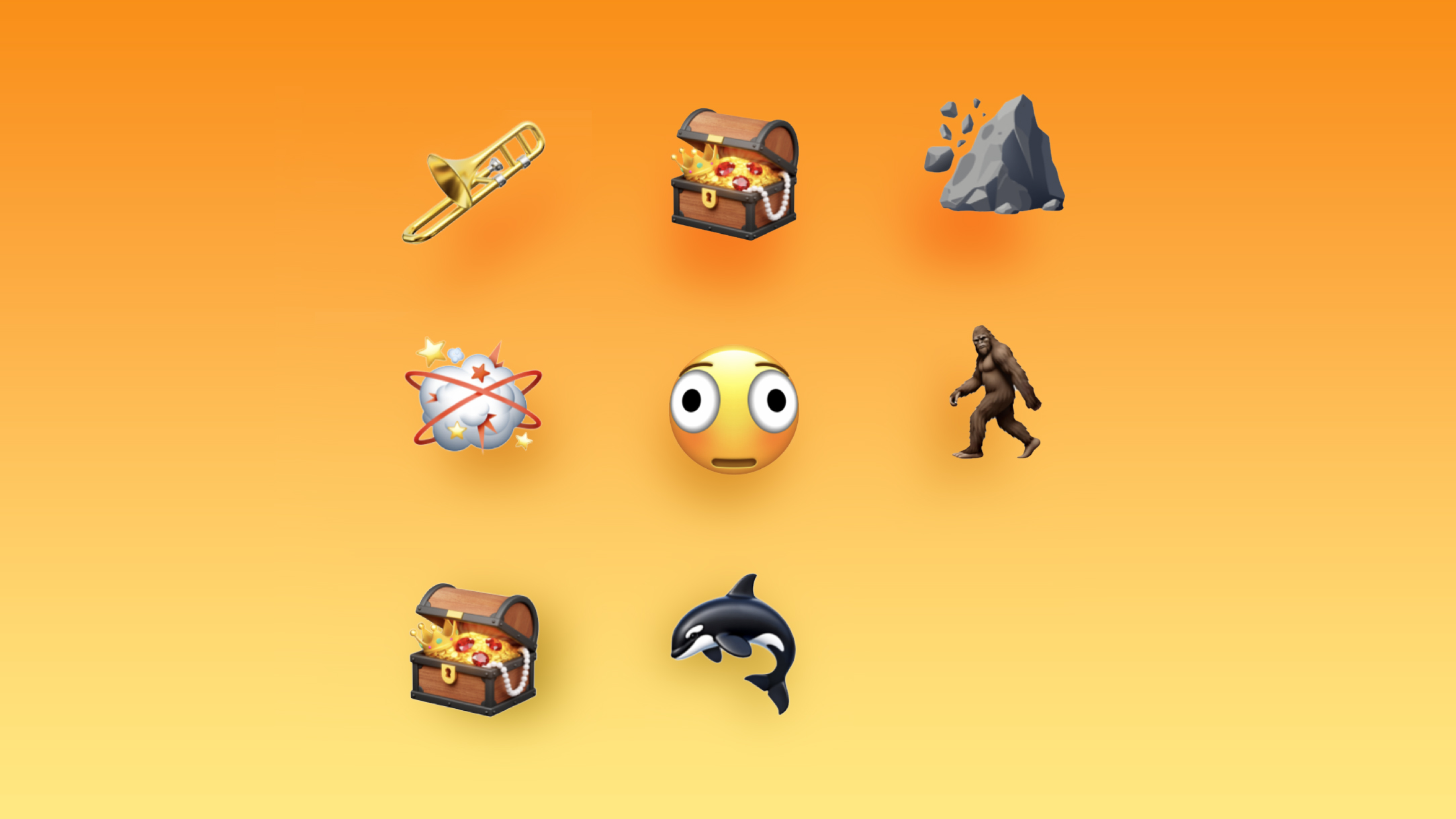
The Fresh Batch: Nine New Emoji Explained
The latest beta updates are packed with visual treats, offering a diverse range of characters that are sure to find a place in your everyday conversations. These aren't just random additions; each emoji has been carefully selected and designed to fill gaps in our visual communication toolkit. Here's a closer look at the nine new emoji characters making their debut in iOS 26.4, iPadOS 26.4, and macOS Tahoe 26.4:
- Trombone: This musical instrument emoji brings a new dimension to expressing musicality, jazz, or even a dramatic pause. Whether you're a musician yourself or simply appreciating a good tune, the trombone can now be part of your digital ensemble. It's perfect for announcing music lessons, concert attendance, or just adding a touch of brassy flair to your messages.
- Treasure Chest: Ahoy, adventure seekers! The treasure chest emoji is perfect for anything involving discovery, wealth, secrets, or even just a fun surprise. Planning a scavenger hunt? Sharing exciting news about a windfall? Or perhaps just feeling like you've found something truly special? This emoji has got you covered. It evokes feelings of excitement, mystery, and hidden potential.
- Distorted Face: This emoji is a fantastic addition for conveying a wide range of intense emotions that go beyond a simple frown or grin. Think of it as the ultimate expression for confusion, overwhelming surprise, disbelief, or even feeling completely mind-blown. It's a highly expressive face that captures moments where words alone might not suffice, adding a comical or exaggerated touch to your reactions.
- Hairy Creature (aka Bigfoot or Sasquatch): For fans of folklore, mystery, or just a good laugh, the hairy creature emoji is a playful nod to the legendary Bigfoot or Sasquatch. Use it when you're feeling elusive, talking about cryptids, or simply adding a whimsical touch to a story about something unbelievable or hard to find. It's a fun, unique character that taps into popular culture.
- Fight Cloud: Remember those cartoon dust clouds that appeared during a scuffle? That's exactly what the fight cloud emoji represents! It's an excellent way to visually depict an argument, a disagreement, a struggle, or even just a playful rough-and-tumble. It adds a dynamic, action-oriented element to conversations about conflict, whether serious or lighthearted, without having to use explicit violent imagery.
- Orca: Majestic and powerful, the orca emoji celebrates marine life. This beautiful creature, often known as the 'killer whale,' can be used to represent oceans, conservation efforts, intelligence, strength, or simply an admiration for sea animals. It's a visually striking emoji that brings the wonders of the deep sea directly into your chats.
- Landslide: A more serious but equally descriptive emoji, the landslide is vital for discussing natural disasters, overwhelming situations, or feeling completely buried under a task or problem. While it can depict literal geological events, it's also powerful for metaphorical use, such as feeling like you're facing a "landslide" of work or problems. It provides a quick and clear visual for significant, impactful events.
Embracing Inclusivity: Skin Tone Modifiers and Gender-Neutral Options
Beyond the seven distinct new characters, Apple's latest beta updates continue to champion inclusivity and representation in digital communication. This is a crucial aspect of modern emoji design, ensuring that these visual tools reflect the diversity of the global user base. The new betas introduce:
- New skin tone modifiers for people wrestling and dancers with bunny ears. This expansion means that users can now choose a skin tone that better represents themselves or the people they are depicting in these specific activities. It’s a small but significant step towards making emoji more personal and representative for everyone. The wrestling emoji, for example, can now more accurately represent individuals from various backgrounds engaging in the sport, while the fun, celebratory bunny ear dancers can reflect a broader spectrum of performers.
- A much-requested gender-neutral option for the ballet dancer emoji. Previously, the ballet dancer was primarily represented as female. The addition of a gender-neutral alternative allows for more inclusive representation of dancers, recognizing that ballet is an art form enjoyed and practiced by people of all genders. This aligns with broader efforts across the emoji ecosystem to offer more fluid and inclusive gender representations, moving away from binary-only options where appropriate.
These additions underscore the ongoing commitment of Apple and the Unicode Consortium to evolve emoji not just in terms of quantity but also quality and representation. Emoji are powerful symbols, and ensuring they reflect the world's diversity is key to their universal appeal and utility. Every step towards greater inclusivity helps users feel more seen and represented in their digital interactions.
The Journey of an Emoji: From Unicode Proposal to Your Screen
Have you ever wondered how new emoji make it to your iPhone or Mac? It's a fascinating and often lengthy process that involves international collaboration and meticulous design. The emoji characters you'll see in iOS 26.4 are part of the broader Unicode 17 update. This update was first previewed by the Unicode Consortium in the fall of 2025.
The Unicode Consortium is a non-profit organization responsible for standardizing text and characters across all computing systems. They are the global authority that decides which new emoji get approved and assigned a unique code, ensuring they look (roughly) the same across different devices and platforms like Apple, Google, Samsung, and Microsoft. When new emoji concepts are proposed, they undergo a rigorous review process, considering factors like expected usage frequency, distinctiveness, and whether they can be easily recognized.
Once Unicode approves a new set of emoji, the work for companies like Apple truly begins. It often takes Apple several months to implement new emoji characters because new art needs to be drawn for each one. This isn't a simple copy-and-paste job. Each emoji must be designed from scratch in Apple's distinct visual style, ensuring it's clear, recognizable, and consistent with the hundreds of other emoji already on their platforms. This involves intricate graphic design work, testing, and fine-tuning to make sure every pixel is perfect. The details matter, from the exact shade of green on the orca to the specific lines on the distorted face, all contribute to the overall aesthetic and user experience.
This explains why there's often a gap between when Unicode announces new emoji and when they actually appear on your device. The process, while time-consuming, is essential for maintaining the high quality and uniformity that users expect from Apple. This careful implementation ensures that when you send a 'Trombone' emoji to a friend, it looks just as intended on their device, regardless of whether they're on an iPhone, iPad, or Mac. Updated emoji are commonly rolled out to Apple devices in the spring, typically integrated into .4 software updates, following this pattern of meticulous development and strategic release.
A Look Back: Previous Emoji Updates and Their Impact
Apple has a long history of integrating new emoji into its operating systems, consistently enriching the ways we communicate. The addition of emoji isn't a new phenomenon; it's a continuous evolution that responds to cultural shifts and user demands. Before this latest batch, Apple last added new emoji characters in iOS 18.4, and that update brought with it a memorable collection that quickly became staples in many users' digital dialogues.
The iOS 18.4 update introduced a fascinating array of characters, each designed to fill a specific communicative niche:
- Bags Under Eyes Face: A universally relatable emoji for those long nights, early mornings, or simply feeling utterly exhausted. It quickly became a go-to for expressing fatigue without needing a single word.
- Fingerprint: Useful for themes of security, identity, biometrics, or simply leaving a mark. It's a versatile icon that found its place in both serious and playful contexts.
- Leafless Tree: A poignant emoji that can represent winter, sadness, barrenness, or even the passage of time. Its simplicity allows for deep emotional resonance.
- Root Vegetable: A broad category represented by a single, illustrative icon, this emoji is perfect for talking about healthy eating, gardening, or anything underground and earthy. It brought more natural and food-related options to the emoji keyboard.
- Harp: Adding another musical instrument to the collection, the harp emoji evokes elegance, classical music, and heavenly sounds. It's ideal for cultural references or expressing peaceful melodies.
- Shovel: A practical tool that can be used literally for gardening or digging, or metaphorically for 'digging into' a topic, 'unearthing' information, or even 'shoveling' through work.
- Splatter: A dynamic and messy emoji, the splatter can be used for anything from art projects gone wrong to expressing a chaotic situation, or simply making a bold, colorful statement.
Each of these additions from iOS 18.4 demonstrates the continuous effort to provide users with a broader palette of visual expressions. They reflect a combination of practical needs (like tools and food) and emotional nuances (like exhaustion or solemnity). The steady stream of new emoji ensures that our digital language remains vibrant, relevant, and capable of keeping pace with the complexities of human experience and communication.
Glimpse into the Future: What's Next for Emoji in iOS 27?
The world of emoji never stands still, and even as we anticipate the release of the latest characters in iOS 26.4, our gaze naturally turns to what's on the horizon. The Unicode Consortium is always working ahead, and new proposals for future emoji are already being reviewed and approved. Looking forward to next year, specifically with iOS 27, we could get another exciting wave of new emoji characters as part of Unicode 18.
These potential future additions promise to further enrich our digital lexicon, offering new ways to convey feelings, objects, and actions. Here's what might be coming our way in iOS 27:
- Squinting Face Emoji: This face could be perfect for expressing skepticism, intense concentration, or perhaps a moment of playful mischief. It offers a subtle but distinct facial expression that adds more emotional depth to conversations.
- Monarch Butterfly: A beautiful and iconic insect, the monarch butterfly would be a lovely addition for themes of nature, transformation, beauty, or even migration. It brings a touch of delicate wonder to the emoji keyboard.
- Left- and Right-Pointing Thumb Gestures: While we have various hand gestures, specific left- and right-pointing thumbs would enhance directional communication, voting, or simply indicating approval or disapproval in a clear, unambiguous way. These are incredibly useful for giving clear instructions or feedback.
- Pickle: A long-requested food item, the pickle emoji will delight fans of this tangy treat. It's great for foodies, talking about specific cravings, or perhaps even using it metaphorically for being in a 'pickle' (a difficult situation).
- Lighthouse: A symbol of guidance, safety, and coastal beauty, the lighthouse emoji would be versatile for discussions about travel, finding your way, or even a beacon of hope.
- Meteor: Representing astronomical events, impact, or something fast and destructive, the meteor emoji would be a dynamic icon for science enthusiasts, expressing surprise, or discussing celestial phenomena.
- Eraser: A practical tool that could symbolize correction, starting over, removing mistakes, or even just school supplies. It's a simple yet powerful emoji with both literal and metaphorical uses.
- Net with a Handle: This specific tool could be used for catching things, sports like fishing or butterfly catching, or perhaps even metaphorically for 'netting' a deal or capturing an idea.
Each proposed emoji undergoes careful consideration by the Unicode Consortium before being finalized. The process is designed to ensure that new additions are globally relevant, distinct, and add meaningful value to digital communication. As Apple meticulously designs its own versions of these approved emoji, we can look forward to another exciting update that will further personalize and enliven our daily interactions in the not-too-distant future.
The Ever-Growing Impact of Emoji on Digital Communication
It’s hard to imagine digital conversations without emoji today, yet they are a relatively recent phenomenon in the long history of human communication. What started as simple emoticons (like :-) has blossomed into a complex, rich visual language that transcends linguistic barriers and adds unparalleled emotional depth to text. The continuous addition of new emoji, like those in iOS 26.4, highlights their enduring and growing importance.
Emoji serve multiple critical functions in our digital lives:
- Conveying Emotion: Perhaps their most obvious role, emoji allow us to express feelings that are difficult or time-consuming to type out. A simple 👍 can communicate approval faster than "That's good." A 😂 can clarify that a sarcastic comment is meant in jest, preventing misunderstandings.
- Adding Context and Tone: Text alone can often be ambiguous. Is someone being serious or joking? An emoji can instantly set the tone. It acts like body language or vocal inflection in a face-to-face conversation.
- Bridging Language Barriers: Emoji are largely universal. While cultural interpretations can vary slightly, a happy face or a heart is understood globally, making communication easier across different languages. This is particularly valuable in an increasingly interconnected world.
- Enhancing Storytelling: With a broader range of characters, users can create mini-narratives purely through emoji, making messages more engaging and visually appealing. The new treasure chest or hairy creature, for example, opens up new storytelling possibilities.
- Personal Expression: Emoji allow individuals to express their unique personality and style. The choices we make in emoji often reflect who we are and how we wish to present ourselves digitally.
- Marketing and Branding: Businesses and brands have also embraced emoji to connect with audiences, make their messages more approachable, and add personality to their campaigns.
- Efficiency: In a fast-paced digital environment, emoji offer a quick and efficient way to respond or react without needing to type lengthy sentences.
The ongoing development and expansion of the emoji lexicon, driven by the Unicode Consortium and implemented by tech giants like Apple, ensures that this visual language remains dynamic and relevant. Each new set, including the one in iOS 26.4, reflects evolving cultural trends, technological capabilities, and the diverse needs of billions of users worldwide. As digital communication continues to intertwine with our daily lives, emoji will undoubtedly continue to play a pivotal role in making our interactions richer, clearer, and more expressive.
How to Get Your Hands on the New Emoji
The excitement around new emoji is palpable, and naturally, everyone wants to know when they can start using them. As mentioned, these nine new emoji characters are currently available in the fourth beta versions of iOS 26.4, iPadOS 26.4, and macOS Tahoe 26.4. This means they are primarily accessible to developers and public beta testers who have opted into Apple's beta programs.
If you're a developer or a public beta tester, you can update your devices to the latest 26.4 betas to start using these emoji right away. However, for the vast majority of iPhone, iPad, and Mac users, patience is key. Apple typically releases these beta features to the general public after several weeks of testing and refinement.
Historically, new emoji introduced in beta versions around this time of year tend to roll out to all users in the spring. This aligns perfectly with Apple's pattern of releasing `.4` software updates during this season. Therefore, you can reasonably expect the stable, public versions of iOS 26.4, iPadOS 26.4, and macOS Tahoe 26.4, which will include these new emoji, to be released sometime in the coming weeks or months.
To ensure you get the new emoji as soon as they are publicly available, simply keep your device's software up to date:
- For iOS/iPadOS: Go to Settings > General > Software Update.
- For macOS: Go to System Settings (or System Preferences) > General > Software Update.
When the official public release of 26.4 arrives, your device will prompt you to download and install the update. Once installed, the new emoji will automatically appear on your emoji keyboard, ready for you to use and add fresh flair to all your messages and social media posts. Until then, you can enjoy reading about them and planning how you'll incorporate the trombone, treasure chest, or distorted face into your conversations!
Conclusion: The Future is Expressive
The introduction of nine new emoji in the latest iOS 26.4, iPadOS 26.4, and macOS Tahoe 26.4 betas is more than just a minor update; it's another step forward in the evolution of digital communication. Each new character, from the whimsical Hairy Creature to the powerful Orca and the dramatic Landslide, enriches our ability to express ourselves more fully and creatively in the online world. The continuous effort by the Unicode Consortium and Apple to expand the emoji lexicon, coupled with a growing focus on inclusivity through skin tone modifiers and gender-neutral options, ensures that these tiny icons remain relevant, representative, and universally beloved.
As we eagerly await the public release of these updates, it's clear that emoji are not just fleeting fads but an integral and expanding part of how we connect, share, and understand each other across digital platforms. They add color, emotion, and personality to our messages, often saying more with a single tap than words ever could. Get ready to update your devices and explore a whole new universe of expression!
What are your favorite new emoji from this batch? Which ones are you most excited to use? Share your thoughts and join the conversation!
This article, "Latest iOS 26.4 Beta Adds New Emoji Characters" first appeared on MacRumors.com
Discuss this article in our forums
from MacRumors
-via DynaSage
