
ChatGPT Revamps Shopping Features, Drops In-App Checkout
ChatGPT Transforms Shopping: From Simple Buys to Smart Product Discovery
OpenAI is making big changes to how you shop using its ChatGPT app. The focus is shifting dramatically, moving away from a straightforward "Instant Checkout" feature to a much more advanced system built around helping you discover the perfect products. This overhaul comes after the company realized its previous instant purchase option didn't quite hit the mark with users.
For months, users could quickly buy items directly from retailers like Etsy, Walmart, and Shopify right within ChatGPT. This "Instant Checkout" launched last September with the promise of making shopping frictionless. However, in a new update, OpenAI admitted that this standalone feature wasn't offering the kind of flexibility and seamless experience they envisioned. It simply "did not offer the level of flexibility that we aspire to provide," which led to the decision to move in a different direction.
Why the Change? Moving Beyond Simple Transactions
To understand this shift, it's important to consider the strengths of an advanced AI like ChatGPT. While convenient, a simple "buy now" button in an AI often competes directly with established e-commerce platforms that have spent years perfecting their checkout flows, security, and customer service. ChatGPT's real power lies in its ability to understand complex language, process vast amounts of information, and provide intelligent recommendations. Trying to force it into a transactional role, where users simply click to buy, didn't fully leverage these core capabilities.
The original "Instant Checkout" might have faced several challenges. Users are often wary of making purchases through new, unfamiliar interfaces, especially when it comes to payment details. Retailers, too, might have found it limiting, as it potentially bypassed their own loyalty programs, personalized offers, and extensive customer support systems. Furthermore, the range of products and the depth of information available for a quick checkout might have been too shallow compared to going directly to a retailer's website.
OpenAI's pivot indicates a recognition that AI is not just about completing tasks, but about enhancing the entire user journey. Instead of being a mere conduit for a transaction, ChatGPT is evolving into a sophisticated personal shopping assistant, making the act of finding products more intelligent, personalized, and engaging.
Introducing the New Era: Richer Visual Shopping Tools
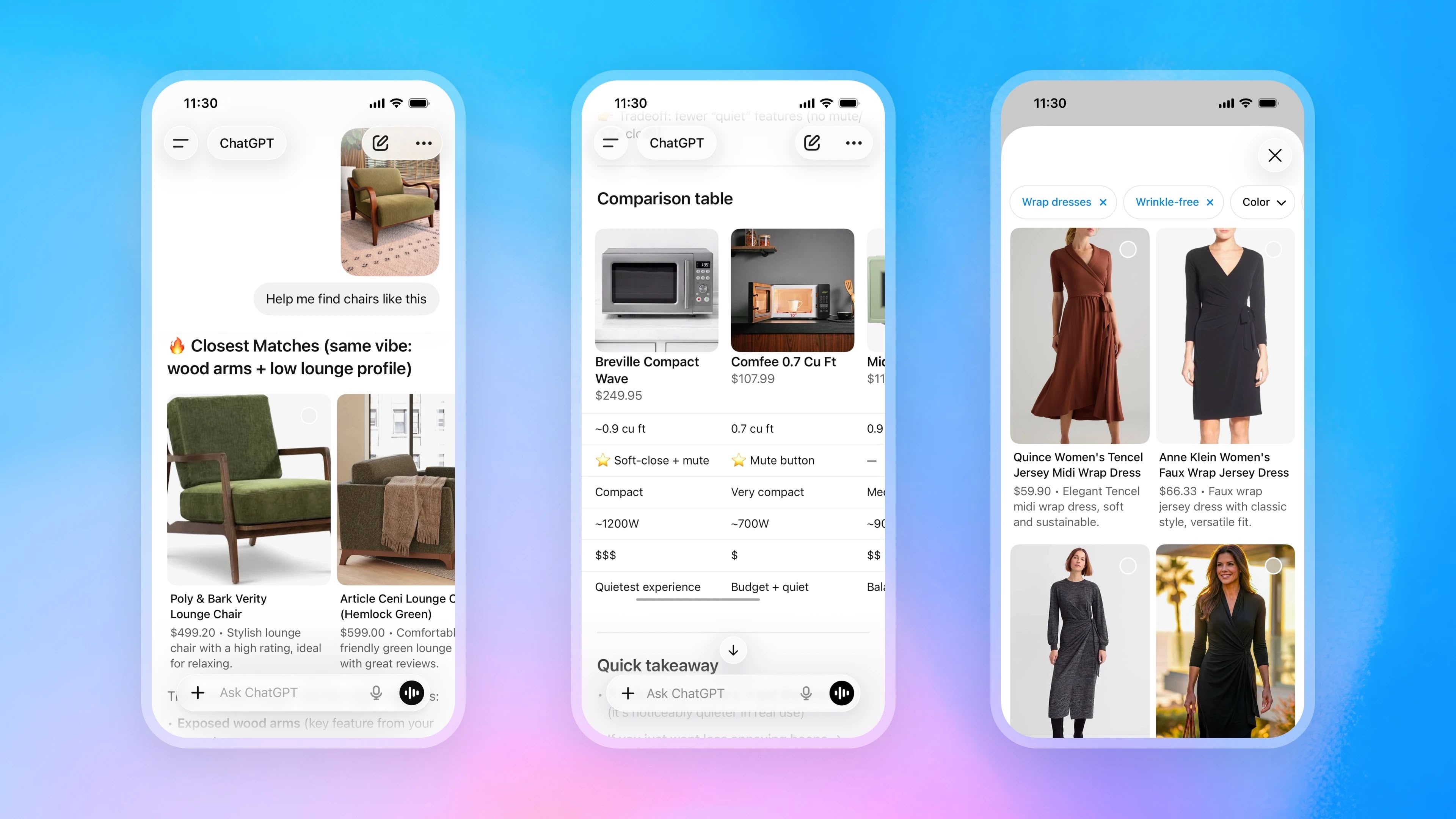
In place of the deprioritized Instant Checkout, ChatGPT is now equipped with a suite of much more powerful and intuitive shopping tools. These new features are designed to make product discovery a truly interactive and visually rich experience, leveraging the AI's core strengths in understanding context and processing complex data.
1. Side-by-Side Product Comparisons
One of the standout new features is the ability to conduct side-by-side product comparisons. Imagine you're trying to decide between two different models of a laptop, a pair of running shoes, or even two types of coffee makers. Instead of opening multiple browser tabs and manually sifting through specifications, reviews, and prices, you can simply ask ChatGPT to compare them for you.
The AI will then present a clear, organized comparison, highlighting key differences, pros and cons, customer ratings, and pricing information. This isn't just about showing data; it's about intelligent summarization and contextual understanding. ChatGPT can identify what aspects are most important to you based on your previous queries or stated preferences, making the comparison highly relevant. For instance, if you mentioned you care about battery life, the comparison might explicitly emphasize that metric.
This feature dramatically reduces the effort and time involved in researching products, empowering users to make more informed decisions quickly. It transforms ChatGPT into a trusted advisor, much like a knowledgeable sales associate who can clearly articulate the nuances between different options.
2. Image-Based Search for Similar Items
Another exciting addition is image-based search. Have you ever seen a piece of furniture in a magazine, a stylish jacket on a friend, or a unique gadget in a video, and wished you could find it or something similar online? Now, with ChatGPT, you can simply upload an image (or point to one online) and ask the AI to find similar items.
This technology utilizes advanced computer vision and machine learning algorithms. ChatGPT can analyze the visual characteristics of an item – its shape, color, texture, style, and even brand identifiers – to scour product catalogs for matching or closely related products. This goes beyond simple keyword searching, offering a more intuitive and visually driven way to shop.
The potential applications are vast. From fashion inspiration ("Find me a dress similar to this one but in green") to home decor ("Show me sofas that match this aesthetic"), image search unlocks a new dimension of product discovery that mimics how we often get inspiration in the real world. It makes abstract desires concrete and searchable, turning visual cues into actionable shopping leads.
3. Conversational Result Filtering
Perhaps the most "ChatGPT-native" of the new features is conversational result filtering. This is where the AI's natural language understanding truly shines. Instead of navigating complex filter menus on an e-commerce website, you can simply talk to ChatGPT and refine your search results in a natural, conversational manner.
For example, you might start by asking, "Show me running shoes." ChatGPT will present an initial set of options. You can then follow up with, "Okay, now only show me options under $100," then, "And just from Nike or Adidas," and further, "Focus on shoes with excellent reviews for arch support." The AI understands these sequential requests, applying filters dynamically and presenting updated results.
This iterative filtering process feels incredibly natural and powerful. It allows users to explore products with a level of nuance and flexibility that traditional search interfaces struggle to match. It's like having a personal shopper who remembers your preferences and helps you narrow down choices based on evolving criteria, making the entire discovery process more efficient and user-friendly.
The Engine Behind the Scene: Agentic Commerce Protocol
These sophisticated updates aren't magic; they are powered by a significant expansion of what OpenAI calls its "Agentic Commerce Protocol." This protocol is the backbone that allows merchants to connect their product catalogs and promotions directly into ChatGPT's ecosystem. It's a crucial piece of the puzzle, enabling the AI to access real-time, comprehensive, and structured product data.
What is an Agentic Commerce Protocol?
In essence, an "agentic" system refers to an AI that can act on behalf of a user or system, often by interacting with external tools and data sources. In this context, the Agentic Commerce Protocol is a standardized way for retailers to feed their entire inventory information – including product descriptions, specifications, images, pricing, stock levels, promotions, and even customer reviews – directly into ChatGPT's knowledge base. This means ChatGPT isn't just searching the open web; it's querying a rich, structured database provided directly by the merchants themselves.
Benefits for Merchants:
For retailers, this protocol offers a powerful new channel for product visibility and discovery. By integrating their catalogs, they gain:
- Wider Reach: Their products become discoverable by millions of ChatGPT users who are actively seeking recommendations and information.
- Enhanced Discoverability: The AI's intelligent search and recommendation capabilities mean their products can be found by users who might not have explicitly searched for them but whose needs align with what they offer.
- Rich Data Integration: Merchants can ensure that the AI has the most accurate and up-to-date information about their products, including real-time stock and pricing.
- Targeted Promotion: The protocol can potentially allow for dynamic promotion integration, ensuring that special offers or new arrivals are surfaced effectively.
Benefits for Users:
For users, the protocol translates directly into a better shopping experience:
- Accuracy and Freshness: Product information is more likely to be current and accurate, as it comes directly from the source.
- Depth of Information: ChatGPT can access a much richer set of details about each product, leading to more comprehensive comparisons and recommendations.
- Diverse Options: With more retailers on board, users will have a broader array of products to discover.
This protocol represents a strategic move to build a more robust and scalable foundation for AI-powered commerce, moving beyond ad-hoc integrations to a systematic approach for connecting AI with the retail world.
Major Retailers Are On Board
The success of such a system hinges on participation from key players in the retail industry. OpenAI has already secured partnerships with a impressive list of major retailers, signaling strong confidence in this new direction. Companies like Target, Sephora, Nordstrom, Best Buy, and The Home Depot are already feeding their product catalogs and promotions into ChatGPT's system. This diverse group covers a wide range of consumer goods, from general merchandise and electronics to beauty products and home improvement, ensuring that users will find a broad spectrum of products available for AI-powered discovery.
The involvement of such prominent names underscores the potential impact of ChatGPT in the e-commerce landscape. It suggests that these retailers see value in being at the forefront of AI-driven shopping experiences, recognizing that consumers are increasingly turning to intelligent assistants for their needs.
Walmart's Deeper Dive: A Dedicated ChatGPT Experience
While many retailers are leveraging the Agentic Commerce Protocol, Walmart, one of the largest retailers globally, is taking an even more integrated approach. Walmart is launching a dedicated in-app ChatGPT experience. This isn't just about feeding products into ChatGPT; it's about creating a more comprehensive and personalized shopping journey within the ChatGPT environment that deeply links with Walmart's own ecosystem.
This dedicated experience will support features such as:
- Account Linking: Users can link their existing Walmart accounts, allowing ChatGPT to access their past purchase history, preferences, and saved lists. This enables highly personalized recommendations and a more tailored shopping experience.
- Loyalty Programs: Integration with Walmart's loyalty programs means users can earn and redeem rewards seamlessly, making their AI-powered shopping contribute directly to their existing benefits.
- Walmart's Own Payment System: By leveraging its established payment system, Walmart can offer a secure and familiar checkout process, building trust and reducing friction for its customers who choose to shop via ChatGPT.
Walmart's commitment to a dedicated experience highlights a deeper strategic partnership. It suggests that major retailers are not just seeing ChatGPT as another sales channel, but as a platform for building truly integrated, AI-enhanced customer relationships. This level of integration could set a precedent for how other large retailers might engage with AI platforms in the future.
Rollout and Accessibility
The rollout of these exciting new features is happening this week. OpenAI is making them available to all tiers of ChatGPT users, including those on the Free, Go, Plus, and Pro plans. This broad accessibility ensures that a wide audience can immediately begin exploring and benefiting from the enhanced product discovery capabilities, democraticizing access to advanced AI-powered shopping assistance.
This broad availability is key to gathering widespread feedback and accelerating the development and refinement of these features. It positions ChatGPT as a ubiquitous tool for shopping, accessible to anyone regardless of their subscription level.
The Broader Impact: The Future of AI in E-commerce
This strategic pivot by OpenAI has significant implications for the future of e-commerce. It signals a move towards "agentic commerce" where AI plays a central, proactive role in assisting users throughout their shopping journey, rather than just being a search engine or a transactional interface.
Personalized and Proactive Shopping
Imagine an AI that truly understands your style preferences, dietary needs, budget constraints, and even your mood. ChatGPT's new features are a step towards that vision. The AI can learn from your interactions, suggest items you didn't even know you needed, and proactively alert you to deals on products you've shown interest in. This level of personalization far exceeds what traditional e-commerce sites can offer without extensive manual configuration.
Reducing Decision Fatigue
The sheer volume of choices available online can often lead to decision fatigue. ChatGPT's ability to filter, compare, and summarize information quickly helps alleviate this burden. By acting as an intelligent intermediary, it streamlines the discovery process, allowing users to focus on what truly matters to them.
A New Competitive Landscape
This development also reshapes the competitive landscape for traditional e-commerce platforms. While platforms like Amazon, eBay, and Shopify remain dominant for transactions, ChatGPT is positioning itself as a powerful front-end for *discovery*. Retailers who integrate with AI platforms like ChatGPT could gain a significant advantage in reaching customers at the very beginning of their shopping journey.
Ethical Considerations and Trust
As AI becomes more deeply embedded in commerce, ethical considerations around data privacy, algorithmic bias, and transparency will become increasingly important. OpenAI and its retail partners will need to ensure that user data is handled responsibly, recommendations are fair, and the AI's role is clearly understood. Building trust will be paramount for the widespread adoption of agentic commerce.
In Related News: OpenAI's Strategic Focus
In other news from OpenAI, the company recently announced that it is ending support for its Sora AI video app, a mere six months after its initial launch. While seemingly unrelated to shopping, this decision highlights OpenAI's willingness to rapidly iterate, pivot, and focus its resources on initiatives that show the most promise or align best with its evolving strategic vision. Discontinuing a product like Sora, despite its innovative nature, suggests a sharp focus on optimizing resources and pursuing core strengths, which in the context of ChatGPT, now clearly includes advanced product discovery.
Conclusion: A Smarter Way to Shop
The revamp of ChatGPT's shopping features marks a significant evolution in how artificial intelligence will interact with e-commerce. By moving away from a rudimentary in-app checkout to a sophisticated suite of product discovery tools, OpenAI is leaning into the true strengths of conversational AI. Features like side-by-side comparisons, image-based search, and intelligent conversational filtering promise a more intuitive, personalized, and efficient way to find what you need online.
Backed by the Agentic Commerce Protocol and partnerships with major retailers like Target, Sephora, Nordstrom, Best Buy, The Home Depot, and a deeply integrated experience with Walmart, ChatGPT is poised to become a powerful personal shopping assistant for millions of users. This isn't just about buying things; it's about transforming the entire shopping journey into a smarter, more engaging, and ultimately more satisfying experience. The future of shopping is here, and it's conversational.
This article, "ChatGPT Revamps Shopping Features, Drops In-App Checkout" first appeared on MacRumors.com
Discuss this article in our forums
from MacRumors
-via DynaSage
