The Original iPod Went on Sale 25 Years Ago Today
On November 10, 2001, Apple officially released the original Apple iPod, changing portable audio and personal consumer technology forever. Priced at $399 with a 5GB hard drive holding up to 1,000 songs, this landmark digital music player paved the way for Apple to expand far beyond personal computers into a global tech giant.
When the original Apple iPod went on sale 25 years ago today, few observers anticipated how drastically it would reshape the technology industry. Although it initially catered exclusively to Mac users, its groundbreaking hardware design, massive storage capacity, and seamless iTunes integration laid the foundation for decades of mobile innovation.
Over the past quarter-century, the iPod evolved from a single hard-drive-based player into an extensive product lineup that included the iPod mini, iPod nano, iPod shuffle, and iPod touch. Looking back at where it all began offers a fascinating glimpse into how Apple turned a controversial, highly criticized device into one of the most iconic consumer products in history.
How Was the Original Apple iPod First Unveiled?
The story of the original iPod began just over two weeks before it reached store shelves. On October 23, 2001, Apple co-founder Steve Jobs took the stage at a small press event held in the Town Hall auditorium at Apple headquarters at Infinite Loop in Cupertino, California.
Leading up to the announcement, media expectations were intense. Apple had sent out invitations promising the debut of a "breakthrough digital device" while explicitly clarifying that the product was not a Mac computer. This led to widespread media speculation about what the company was preparing to reveal.
Industry analysts and tech journalists offered a wide variety of predictions ahead of the keynote. Various media reports suggested that Apple might introduce a dedicated portable music player, a home stereo accessory, or a handheld digital device featuring advanced handwriting recognition.
Interestingly, the actual name of the product leaked right before the event. A MacRumors rumor roundup published just two days before the official presentation correctly included the name "iPod."
When Steve Jobs finally introduced the device, he pitched it with a simple yet unforgettable slogan: "1,000 songs in your pocket." The presentation highlighted how Apple planned to solve the major limitations of existing digital music players by combining high-capacity storage, rapid transfer speeds, and pocket-sized portability.
What Were the Technical Specifications of the First iPod?
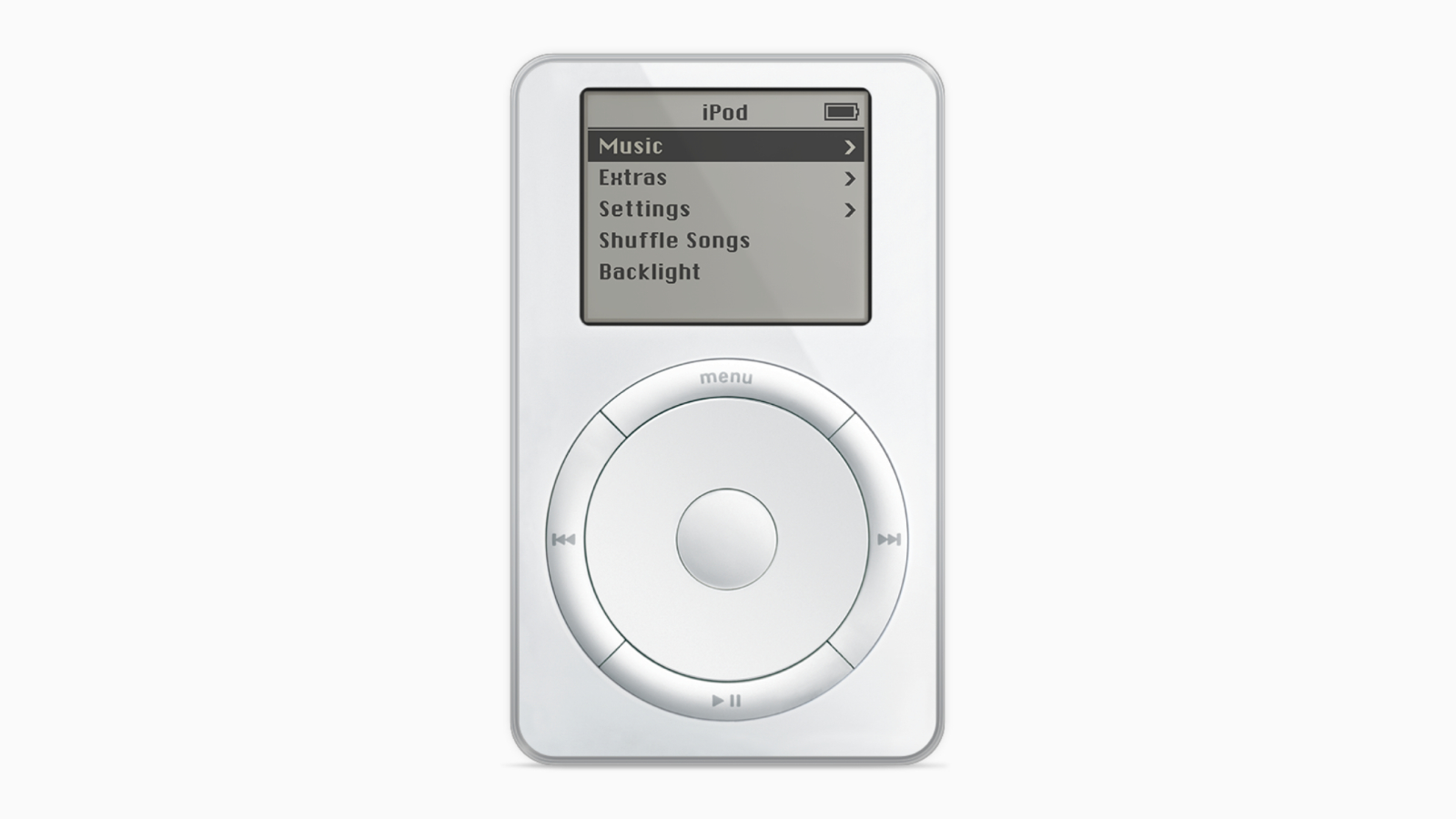
The original Apple iPod introduced a combination of hardware and software features that set it apart from contemporary MP3 players. Rather than relying on low-capacity flash memory or bulky CD media, Apple built the device around an ultra-compact 5GB hard drive.
This internal hard drive allowed users to carry an entire music library with them wherever they went. Beyond storing audio tracks, the hard drive could also function as a portable storage unit for personal documents and digital files.
To navigate large music collections easily, Apple introduced a mechanical scroll wheel on the front of the unit. This tactile wheel made scrolling through hundreds of artist names and song titles swift and intuitive, working alongside a clear monochrome LCD display.
Here is a detailed breakdown of the key hardware specifications found in the original digital music player:
- Storage Capacity: 5GB internal hard drive holding approximately 1,000 songs.
- Display: Monochrome LCD display with crisp text formatting.
- User Interface: Mechanical scroll wheel with surrounding navigation buttons.
- Battery Life: Up to 10 hours of continuous audio playback per charge.
- Connectivity: High-speed FireWire port for data transfer and battery charging.
- System Requirements: Required a Mac computer running iTunes for music management.
Speed was another core advantage of the original iPod. While competing players relied on slow USB 1.1 transfers that took hours to load music, Apple utilized FireWire connectivity. This allowed users to transfer an entire CD from their Mac in under 10 seconds, or import a full collection of 1,000 songs in less than 10 minutes.
Software synchronization was handled seamlessly by iTunes. Through automatic synchronization, plugging the iPod into a Mac immediately copied updated songs, albums, and playlists from the user's iTunes library without manual file management.
What Was the Initial Reaction to the Original Apple iPod?
Despite the grand vision presented by Steve Jobs, the announcement of the original Apple iPod received a distinctly mixed response from the public, tech commentators, and online community members.
Much of the initial skepticism centered on the device's steep $399 retail price. Many critics argued that consumers would be unwilling to spend nearly four hundred dollars on a standalone portable music player, particularly during an economic slowdown.
Another major point of criticism was compatibility. Because the device initially worked exclusively with Mac computers, the vast majority of PC users running Windows were completely locked out of using it.
Looking back at MacRumors original coverage reveals just how doubtful early readers were about the product's long-term significance and market viability.
Forum commenters openly questioned Apple's strategic direction. One skeptical reader famously described the music player as "far from revolutionary," while another frustrated poster wrote, "all this hype for something so ridiculous!"
Early community discussions also focused heavily on practical hardware concerns. Users debated how easily fingerprints and scratches accumulated on the mirror-polished stainless steel rear enclosure, noted that the unit generated noticeable heat while charging via FireWire, and discussed the sound quality of the included white earbuds.
Despite these early doubts, early adopters quickly fell in love with the device's convenience, fast transfer speeds, and clean user experience. Demand grew rapidly, setting the stage for Apple to refine and expand the product line over the coming years.

How Did Hardware Revisions Shape the iPod Classic Era?
Apple moved quickly to iterate on its breakthrough audio player, releasing rapid hardware revisions that added new features, expanded platform compatibility, and updated control mechanics.
The second-generation iPod brought a touch-sensitive solid-state scroll wheel, replacing the mechanical wheel of the original model. It also expanded storage options and brought official compatibility to Windows PCs through third-party software tools.
In 2003, Apple introduced the third-generation model, which debuted a brand-new 30-pin Dock Connector. This proprietary port became an industry standard across Apple accessories for nearly a decade, handling both data transfer and charging duties.
The full-size lineup continued to evolve rapidly with significant display and multimedia upgrades over the next two years:
- 2004 Color Display: The full-size model added a vibrant color LCD screen, allowing users to view album artwork and personal photos.
- 2005 Video Playback: The fifth-generation model introduced video playback capabilities, enabling TV shows, music videos, and personal video files to be played on the device.
A major milestone in iPod history arrived in January 2004 with the announcement of the iPod mini. Representing the very first extension of the core product line, the mini offered a dramatically smaller footprint wrapped in a lightweight anodized aluminum enclosure.
The iPod mini was sold in five distinct metallic colors: silver, gold, pink, blue, and green. More importantly, it introduced the iconic Click Wheel, which clever integrated the four playback control buttons directly into the touch-sensitive scrolling surface.
The Click Wheel proved to be such a design success that Apple adopted the exact same control mechanism for the fourth-generation full-size iPod released later in 2004, cementing it as the signature interface of the entire classic era.
How Did the iPod Family Expand with Shuffle, Nano, and Touch?
As consumer demand for portable audio accelerated worldwide, Apple expanded its strategy in 2005 by introducing two entirely new product lines aimed at different market segments: the iPod shuffle and the iPod nano.
The iPod shuffle took minimalism to the extreme by omitting a screen entirely. Designed as an entry-level, budget-friendly device, it focused on lightweight wearability and randomized music playback, making it popular for workouts and sports.
In contrast, the iPod nano replaced the popular mini outright. Utilizing solid-state flash memory rather than a spinning hard drive, the nano featured an astonishingly thin profile that easily slipped into small pockets.
Over successive generations, Apple used the iPod nano line to experiment with bold new hardware features and form factors:
- Video Playback: Later nano designs gained color displays capable of playing video content.
- Video Camera Integration: Fifth-generation models added a built-in video camera on the back of the device.
- Multi-Touch Screen: The square sixth-generation model introduced in 2010 replaced physical controls with a small Multi-Touch screen.
- Wearable Design: Because of its compact square shape, third-party accessory makers created watch straps that transformed the sixth-generation nano into an early precursor to the smartwatch.
Driven by these diverse form factors, sales numbers exploded globally. By April 2007, Apple officially announced that it had sold 100 million iPods, reaching that milestone less than six years after the original model went on sale. By October 2011, total global sales had surpassed 304 million units.
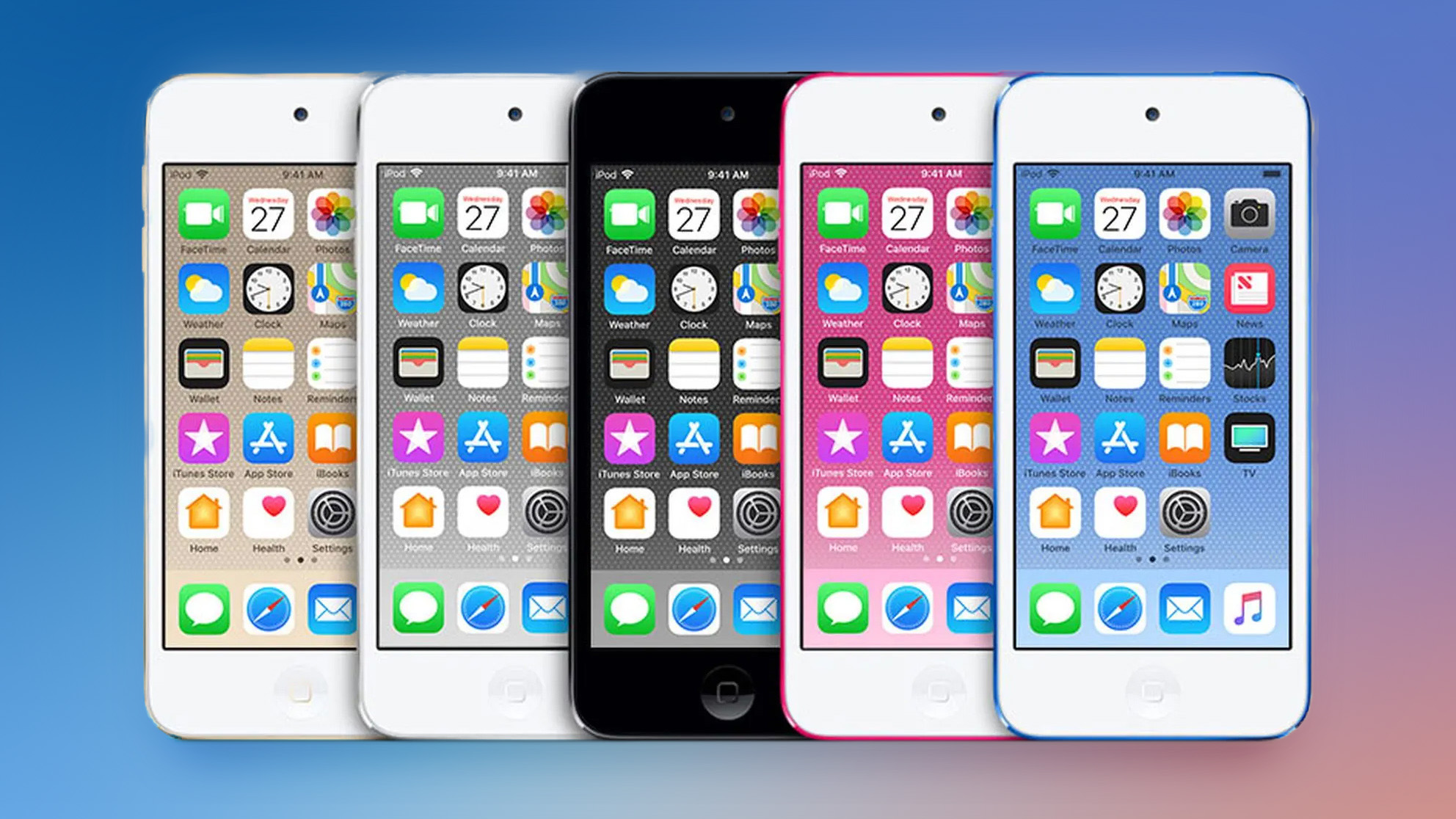
The lineup experienced another massive leap forward in September 2007 with the debut of the iPod touch. Arriving just months after the revolution caused by the first iPhone, the touch featured a 3.5-inch Multi-Touch screen, built-in Wi-Fi, and the Safari web browser, giving users access to the internet and mobile app ecosystem without requiring a cellular contract.
When and Why Did Apple Sunset the iPod Product Line?
As smartphones became ubiquitous and streaming services transformed how media was consumed, demand for dedicated standalone music devices began to fall. Apple gradually phased out individual models across the product family over an eight-year period.
The wind-down process began when Apple quietly discontinued the iPod classic in September 2014, five full years after its final hardware update. Its loss marked the end of hard-drive-based music players at Apple.
Three years later, in July 2017, Apple stopped selling the iPod nano and iPod shuffle simultaneously. This move left the iPod touch as the last remaining standalone music player in Apple's lineup.
The final hardware refresh arrived in May 2019, when Apple updated the seventh-generation iPod touch with an A10 Fusion chip and up to 256GB of internal storage. The device remained on sale without additional updates until May 10, 2022, when Apple official announced its discontinuation, confirming it would only remain available while supplies lasted.
Here is a summary timeline of when each major model was retired:
- September 2014: iPod classic discontinued after 13 years of evolution.
- July 2017: iPod nano and iPod shuffle removed from Apple's store simultaneously.
- May 2022: Seventh-generation iPod touch discontinued, bringing the product line to an official close.
In its official sunset announcement, Apple explained that standalone music devices were no longer necessary because music playback had been seamlessly integrated across every modern product line.
Greg Joswiak, Apple's senior vice president of worldwide marketing, emphasized this legacy by noting that "the spirit of iPod lives on" across Apple's broader ecosystem, including the iPhone, Apple Watch, HomePod mini, Mac, iPad, and Apple TV.
Conclusion: The Lasting Legacy of the Original iPod
Twenty-five years after the original Apple iPod first arrived on store shelves on November 10, 2001, its influence on consumer technology remains undeniable. What started as a niche $399 Mac peripheral transformed Apple into a powerhouse of mobile consumer electronics, paving the way directly for the iPhone and iPad.
While dedicated digital music players have largely been replaced by modern smartphones and cloud streaming services, the original iPod will always be remembered as the device that put 1,000 songs in our pockets and forever changed how the world listens to music.
Related Forum: iPod touch and iPod
This article, "The Original iPod Went on Sale 25 Years Ago Today" first appeared on MacRumors.com
Discuss this article in our forums
from MacRumors
-via DynaSage

Post a Comment