
iFixit's Galaxy Z Fold8 Teardown is a Preview of Apple's Foldable Challenges
The Folding Frontier: What Samsung's Z Fold8 Teardown Reveals for Apple's Upcoming iPhone Ultra
The world of smartphones is constantly evolving, pushing the boundaries of what these devices can do and how they look. Among the most exciting innovations in recent years has been the advent of foldable phones. These devices promise the convenience of a compact phone with the expansive screen real estate of a tablet, all in one elegant package. Earlier this month, Samsung, a pioneer in this space, unveiled its latest creation: the Galaxy Z Fold8. This new foldable immediately captured attention, not just for its own merits, but because its design and rumored features align remarkably well with whispers about Apple's highly anticipated iPhone Ultra. It's almost as if Samsung has inadvertently offered us a sneak peek into the challenges and triumphs Apple might face with its own entry into the foldable arena.
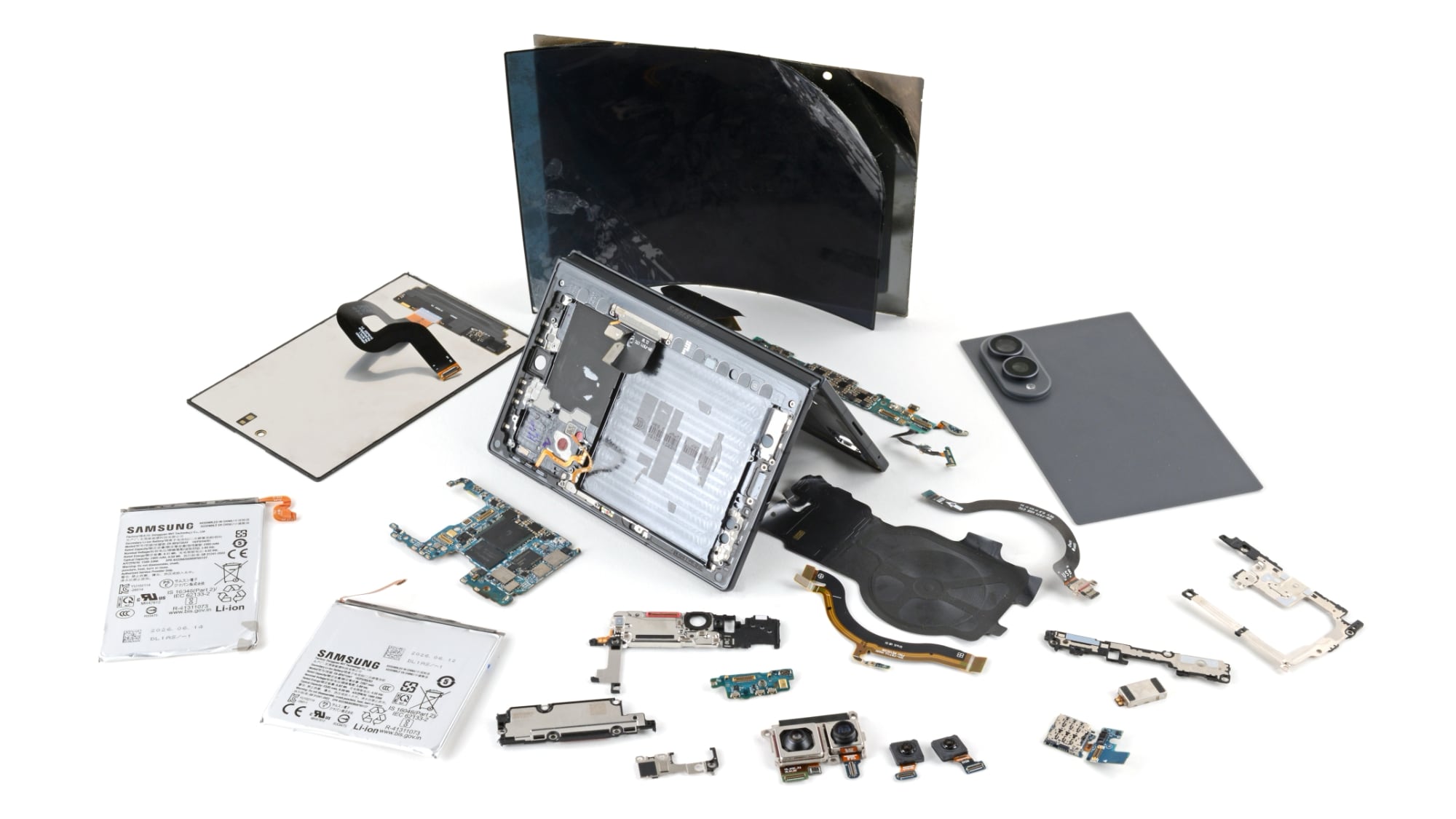
Given the striking similarities between the Z Fold8 and the eagerly awaited iPhone Ultra, understanding Samsung's latest foldable becomes incredibly relevant for anyone tracking Apple's progress. This is precisely why iFixit's detailed teardown of Samsung's smartphone offers such a fascinating and critical insight. iFixit, known for its deep dives into device repairability and internal design, meticulously dissects new gadgets to reveal their inner workings, exposing both their engineering brilliance and their potential vulnerabilities. Their findings on the Z Fold8 raise a crucial question: Will Apple's first foldable encounter similar hurdles and design compromises, or has the tech giant, famous for its meticulous approach, managed to engineer solutions to the persistent issues that have plagued foldable smartphones thus far?
The Achilles' Heel: Why the Hinge Remains a Foldable Challenge
At the heart of every foldable smartphone lies its hinge, the complex mechanical marvel that allows the device to transform from a compact slab to an expansive display. Historically, this very component has proven to be the most common point of failure for foldable devices, and it’s a design riddle that even seasoned manufacturers like Samsung have struggled to fully conquer. Despite years of iteration and refinement, the Galaxy Z Fold8, Samsung's most advanced foldable to date, still grapples with fundamental issues related to its hinge mechanism.
Understanding IP Ratings and the Dust Dilemma
The Z Fold8 boasts an IP48 ingress protection rating. Let's break down what this means. The 'IP' stands for Ingress Protection, and the two digits that follow indicate a device's resistance to solids (the first digit) and liquids (the second digit). The '8' in the liquid resistance rating (IP48) is excellent, signifying that the Z Fold8 is well-protected against water immersion, typically up to a certain depth and duration. This means splashes, rain, or even accidental drops into water are unlikely to harm the device. However, it's the '4' in the dust resistance rating (IP4X, with the X being a placeholder indicating that it hasn't been tested or rated for smaller particles) that tells a more concerning story. An IP4X rating indicates that the Z Fold8 offers protection against solid objects 1 millimeter (mm) in size and larger. While this might sound reasonable, it leaves the device vulnerable to the most common and pervasive threat: fine dust particles.
The ubiquity of dust in our daily lives makes this limitation particularly problematic for a device with moving parts like a hinge. Dust isn't just an annoyance; it's an insidious enemy for delicate mechanisms. When microscopic dust particles inevitably find their way into the intricate workings of the hinge, they don't just sit there. Instead, they act as abrasive agents, gradually grinding down components, accumulating into sticky clogs, and ultimately gumming up the precision-engineered mechanism. This obstruction can lead to stiff, unreliable folding, and in the worst-case scenario, complete hinge failure, rendering the foldable aspect of the smartphone useless. For a device whose primary selling point is its ability to fold, a failing hinge represents a catastrophic design flaw, undermining its very purpose and value proposition.
iFixit's Grueling Dust Test: A Real-World Scenario
To rigorously test the Z Fold8's dust resistance, iFixit conducted a controlled experiment that simulated real-world exposure to fine particulates. They intentionally introduced various types of dust and sand into the device's hinge mechanism. The results were not just disappointing but alarming, painting a grim picture of the hinge's vulnerability. As iFixit meticulously documented, the device began exhibiting "truly awful crunching and grinding noises" almost immediately after exposure. This ominous symphony of mechanical distress signaled the friction and damage occurring within the hinge. The situation quickly deteriorated, leading to the device ceasing to open normally. The elegant, fluid motion expected from a high-end foldable was replaced by stiffness, resistance, and ultimately, immobility.
While iFixit's teardown did reveal that some of the internal, sealed portions of the phone managed to keep dust at bay, successfully protecting sensitive electronics, this offered little consolation. The core functionality of a foldable smartphone hinges (pun intended) on its ability to fold and unfold smoothly and reliably. If the hinge mechanism fails, rendering the device unable to fully open or close, then the entire purpose of its innovative design is compromised, regardless of how well its internal components are sealed. A foldable that doesn't fold is, at best, a very expensive and awkward non-folding phone.
The root of this problem lies in the disconnect between the Z Fold8's IP4X rating and the reality of microscopic dust. As mentioned, an IP4X rating guarantees resistance only to particles 1mm in size and larger. However, the world is filled with much finer particulate matter. iFixit's measurements highlighted this critical gap: common beach sand, for instance, measured a mere 0.16mm, while the even finer powder used in their tests came in at an astonishingly small 0.04mm. These minute particles are vastly smaller than the 1mm threshold the Z Fold8 is rated to resist, allowing them to effortlessly bypass the hinge's defenses and wreak havoc on its delicate internal gears and lubricants. This makes the device highly susceptible to damage in common environments where dust, lint, or fine sand are prevalent – essentially, almost everywhere a smartphone is used.
The Enduring Crease: A Visual Reminder of Foldable Compromise
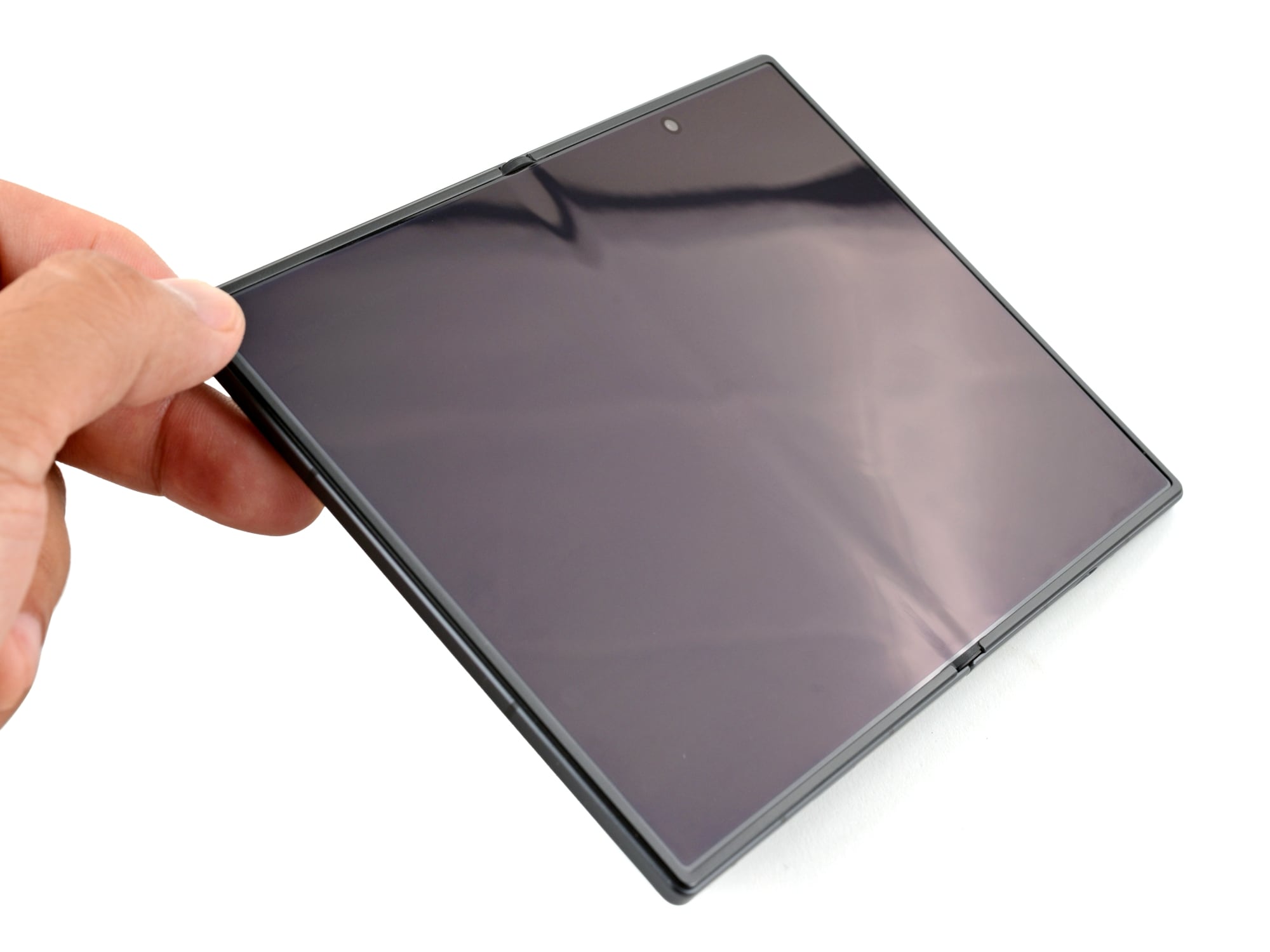
Beyond the structural integrity of the hinge, another persistent challenge for foldable displays is the "crease" – the visible line or indentation that appears where the screen folds. For many users, this crease can be a significant aesthetic and functional drawback, disrupting the seamless experience expected from a premium display. Samsung has been at the forefront of tackling this issue, continuously refining its display technology and hinge designs to minimize its appearance.
For the Galaxy Z Fold8, Samsung introduced a new hinge design and a titanium-reinforced display structure. These innovations were specifically engineered to allow the screen to open flatter, theoretically reducing the prominence of the crease. While these efforts did yield some improvements, iFixit's teardown, combined with real-world usage reports, confirmed that Samsung was still unable to eliminate the crease entirely. The physical nature of folding a flexible display inherently creates a stress point, and preventing a visible deformation at that point requires overcoming significant material science and engineering hurdles.
The problem isn't just initial visibility; creases in foldable displays have a tendency to become more pronounced and noticeable over time. As the device is repeatedly opened and closed through countless cycles, the constant flexing and unfolding can exacerbate the crease, making it deeper, wider, or more reflective. A recent review from Tom's Guide on the Z Fold8 explicitly highlighted this phenomenon, reporting that the crease in their test unit became noticeably more visible after just seven days of use. This rapid deterioration in display quality can be a significant concern for consumers investing in a high-end device, as it impacts the long-term visual appeal and user experience. A prominent crease can interrupt content, create uneven lighting, and serve as a constant reminder that the technology is still a work in progress rather than a perfectly integrated solution.
The Repairability Nightmare: When Innovation Comes at a Cost
For many tech enthusiasts and everyday consumers alike, the ease of repairing a device is a growing concern. In an era of increasing environmental awareness and economic pressure, the ability to fix a broken smartphone rather than replace it outright is becoming more important than ever. Unfortunately, iFixit's assessment of the Galaxy Z Fold8's repairability paints a grim picture, earning it a dismal score of 4 out of 10. This low score signifies that the Z Fold8 is an incredibly challenging device to repair, even for experienced technicians, translating into high repair costs and increased e-waste.
The teardown revealed several specific design choices that contribute to this poor repairability. For instance, the bezel surrounding the inner, folding display proved to be remarkably fragile. During the removal process, it tended to break into multiple pieces, making reassembly or even careful disassembly a near-impossible task without causing further damage. This fragility means that even a simple repair requiring access to internal components can quickly escalate into a more complex and costly endeavor. Moreover, iFixit highlighted that accessing the crucial hinge mechanism – the very part prone to dust ingress and failure – is convoluted. There is simply "no way to get to the hinge without removing the display." This design choice creates a cascading repair challenge: if the hinge fails, the expensive and delicate main folding display must be painstakingly removed, increasing the risk of damaging it and significantly driving up repair costs. Given the display's integral role and high cost, this makes hinge repairs particularly prohibitive.
Even seemingly routine repairs, such as replacing the battery, are fraught with difficulty. Batteries, being consumable components, are typically among the first parts to degrade over the lifespan of a smartphone. Easy battery replacement is a key indicator of a repairable device. However, on the Z Fold8, replacing the battery necessitates the removal of the outer display, an equally complex and risky procedure. This means that extending the life of the phone through a simple battery swap becomes an "expensive, painful repair even when everything goes right," as iFixit candidly stated. Such design decisions not only make repairs costly and time-consuming but also contribute to a shorter lifespan for the device in practice, pushing consumers towards replacement rather than repair, and adding to the growing problem of electronic waste.
The Z Fold8's Form Factor: A Glimpse into Apple's Foldable Future?
Beyond its internal mechanics, the external design and form factor of the Galaxy Z Fold8 also offer tantalizing clues about the direction Apple might take with its own foldable. Traditionally, many of Samsung's earlier foldable models, like previous Z Fold iterations, adopted a tall and relatively narrow form factor when closed. This made them feel more like an elongated remote control in one hand, opening up to a larger screen that was still somewhat narrow but vertically expansive. The Z Fold8, however, marks a notable departure from this trend.
This latest model presents a more tablet-like look and feel, both when closed and when open. It features a generous 5.5-inch screen on the outside when folded, providing a highly usable smartphone experience without needing to unfold. When opened, it reveals a sprawling 7.6-inch main display, offering an expansive canvas for productivity, media consumption, and gaming. This shift towards a squarer, more tablet-like dimension is significant because its overall dimensions closely match those that have been widely rumored for Apple's own foldable device, the iPhone Ultra. Specifically, the Z Fold8's open form factor resonates strongly with the beloved iPad mini, known for its compact yet powerful tablet experience.
This convergence in form factor between Samsung's Z Fold8 and the rumored iPhone Ultra is not likely a coincidence. It suggests that both companies may be converging on an optimal design that balances portability with a truly useful larger display. A squarer, more mini-tablet-like form factor could offer several advantages: better aspect ratios for watching videos and multitasking, a more comfortable landscape typing experience, and a more natural feel for tablet-optimized apps. For Apple, which has meticulously refined the iPad mini experience over the years, adopting a similar dimension for its foldable would allow for a seamless transition for users and optimized app experiences from day one. It indicates a potential industry consensus on what the "ideal" foldable tablet-phone hybrid should feel like in hand and how it should be used.
Apple's Patient Approach: Learning from Early Movers
Apple has a long-standing reputation for not being the first to market with new technologies, but rather for waiting, observing, and then entering a category with a highly polished and often category-defining product. This strategy appears to be precisely what Apple is employing with foldable smartphones. The company has deliberately held back from launching a foldable iPhone because it wanted to ensure it could deliver a device that boasted a minimal, if not entirely absent, crease. This singular focus on eliminating the crease highlights Apple's commitment to user experience and aesthetic perfection, understanding that a visible crease is a significant compromise for many consumers.
Rumors swirling within the industry provide fascinating insights into how Apple might achieve this ambitious goal. It's suggested that Apple plans to utilize an advanced display panel created by Samsung Display, a leader in flexible screen technology. This partnership could provide Apple with access to cutting-edge panel technology specifically engineered for superior folding characteristics. Furthermore, speculation points to Apple employing "liquid metal" for the hinge mechanism. Liquid metal alloys are renowned for their exceptional strength, elasticity, and durability, potentially allowing for a more robust yet compact hinge that can withstand countless folding cycles without developing play or exhibiting mechanical issues. The use of liquid metal could also contribute to a smoother, more resilient folding action, directly addressing the Z Fold8's hinge vulnerabilities.
Perhaps the most intriguing rumored solution for the crease involves the use of an "optically clear adhesive." This specialized adhesive would be applied between the display layers, not just to bond them, but to fill any microscopic gaps or irregularities that might cause light refraction and thus make a crease visible. By meticulously filling these imperfections, Apple aims to create a surface that appears perfectly flat and seamless when unfolded, allowing the display to appear as a single, uninterrupted pane of glass. This multi-pronged approach – combining advanced display panels, innovative hinge materials, and clever adhesive technology – underscores Apple's determination to solve the crease problem that has plagued earlier foldable generations. They are not just seeking to reduce the crease but to make it effectively "disappear" from the user's perception, upholding their brand promise of premium, uncompromising design.
Anticipating the Foldable iPhone Ultra: The Ultimate Test
The lessons learned from the Samsung Galaxy Z Fold8 teardown provide invaluable context as we look forward to the eventual release of Apple's foldable iPhone Ultra. When Apple finally unveils its highly anticipated device, the tech community, and certainly iFixit, will be watching with bated breath. We can confidently expect iFixit to perform the same rigorous hinge and durability tests on the foldable iPhone as they did on the Z Fold8. Their findings will be critical in determining whether Apple's innovative design choices – from the rumored liquid metal hinge to the optically clear adhesive – truly manage to "solve" the pervasive crease and hinge issues that have defined the first generation of foldables.
The stakes are incredibly high for Apple. With its reputation for delivering exceptionally polished and reliable products, any significant flaw in its first foldable offering could be a major setback. Consumers expect nothing less than perfection from an Apple device, especially one that will undoubtedly carry a premium price tag. If the iPhone Ultra demonstrates similar vulnerabilities to dust ingress or visible crease development, it would not only disappoint eager fans but also cast a shadow over Apple's capability to innovate in this challenging new product category. Conversely, if Apple manages to overcome these hurdles, delivering a genuinely crease-minimal and durable foldable, it could set a new benchmark for the industry and solidify its position as a leader in mobile technology once again. The foldable iPhone Ultra is currently expected to make its grand debut at Apple's annual September event, where it will likely share the spotlight with the much-anticipated iPhone 18 Pro models, marking a pivotal moment in the evolution of smartphones.
The Competition Heats Up: Google's Pixel 11 Pro Fold
While much of the foldable conversation often revolves around Samsung and the anticipation of Apple's entry, it's crucial not to overlook other major players who are also pushing the boundaries of this technology. Google, a significant force in the Android ecosystem, is also making waves with its own foldable offering. The company's new Pixel 11 Pro Fold is another device that will challenge the status quo and push the envelope in terms of foldable design and durability.
One of the most noteworthy features of the Pixel 11 Pro Fold is its robust IP68 dust-and-water-resistance rating. Unlike the Z Fold8's IP48 rating, the '6' in IP68 signifies superior dust protection – it is effectively dust-tight, offering complete protection against the ingress of dust, even fine particles. This makes the Pixel 11 Pro Fold theoretically much more resilient to the kind of dust-related hinge failures that plagued the Z Fold8. Additionally, Google is implementing a "gearless hinge design." Traditional foldable hinges often rely on intricate gear mechanisms, which, while precise, can be complex, bulky, and prone to issues if components wear down or are exposed to contaminants. A gearless design could potentially simplify the mechanism, reduce friction points, and enhance overall durability and longevity, especially in the face of dust exposure. With these advanced features, the Pixel 11 Pro Fold is presumably poised to fare significantly better than the Z Fold8 in rigorous dust exposure tests. This makes its upcoming launch, scheduled for August 20, a critical event for understanding the evolving landscape of foldable technology and setting new expectations for durability and reliability in this nascent market segment.
Conclusion: The Future of Foldables Hangs in the Balance
The journey of foldable smartphones has been a fascinating one, marked by incredible innovation alongside persistent challenges. Samsung's Galaxy Z Fold8, while a testament to engineering progress, vividly illustrates the ongoing struggles with hinge durability, dust ingress, and the ever-present crease. These aren't just minor kinks; they are fundamental issues that impact the user experience, device longevity, and repairability, making them crucial considerations for consumers investing in these premium devices.
As we stand on the cusp of Apple's rumored entry into the foldable market with the iPhone Ultra, the insights gleaned from iFixit's teardown of the Z Fold8 become even more pertinent. Apple has a unique opportunity to learn from the experiences of its predecessors and rivals. Its patient, meticulous approach, coupled with rumored advancements like liquid metal hinges and optically clear adhesives, suggests a determined effort to sidestep the pitfalls that have hindered earlier foldables. The question isn't just whether Apple can build a foldable phone, but whether it can build one that truly embodies the seamless, durable, and intuitive experience that users have come to expect from the brand.
The race to perfect the foldable smartphone is far from over. With Google's Pixel 11 Pro Fold also stepping up its game with superior dust resistance and innovative hinge designs, the competition is fierce. Ultimately, the success of the next generation of foldables, including Apple's forthcoming device, will hinge on their ability to move beyond being mere technological novelties and transform into genuinely reliable, long-lasting, and user-friendly devices that justify their premium price tags. The coming months will undoubtedly reveal whether the foldable frontier will finally yield the robust, crease-free, and dependable devices we've all been hoping for.
This article, "iFixit's Galaxy Z Fold8 Teardown is a Preview of Apple's Foldable Challenges" first appeared on MacRumors.com
Discuss this article in our forums
from MacRumors
-via DynaSage
