Apple's Camera-Equipped AirPods: All the New Rumors
Apple's Next Big Leap: AirPods with Cameras and the Dawn of Everyday AI
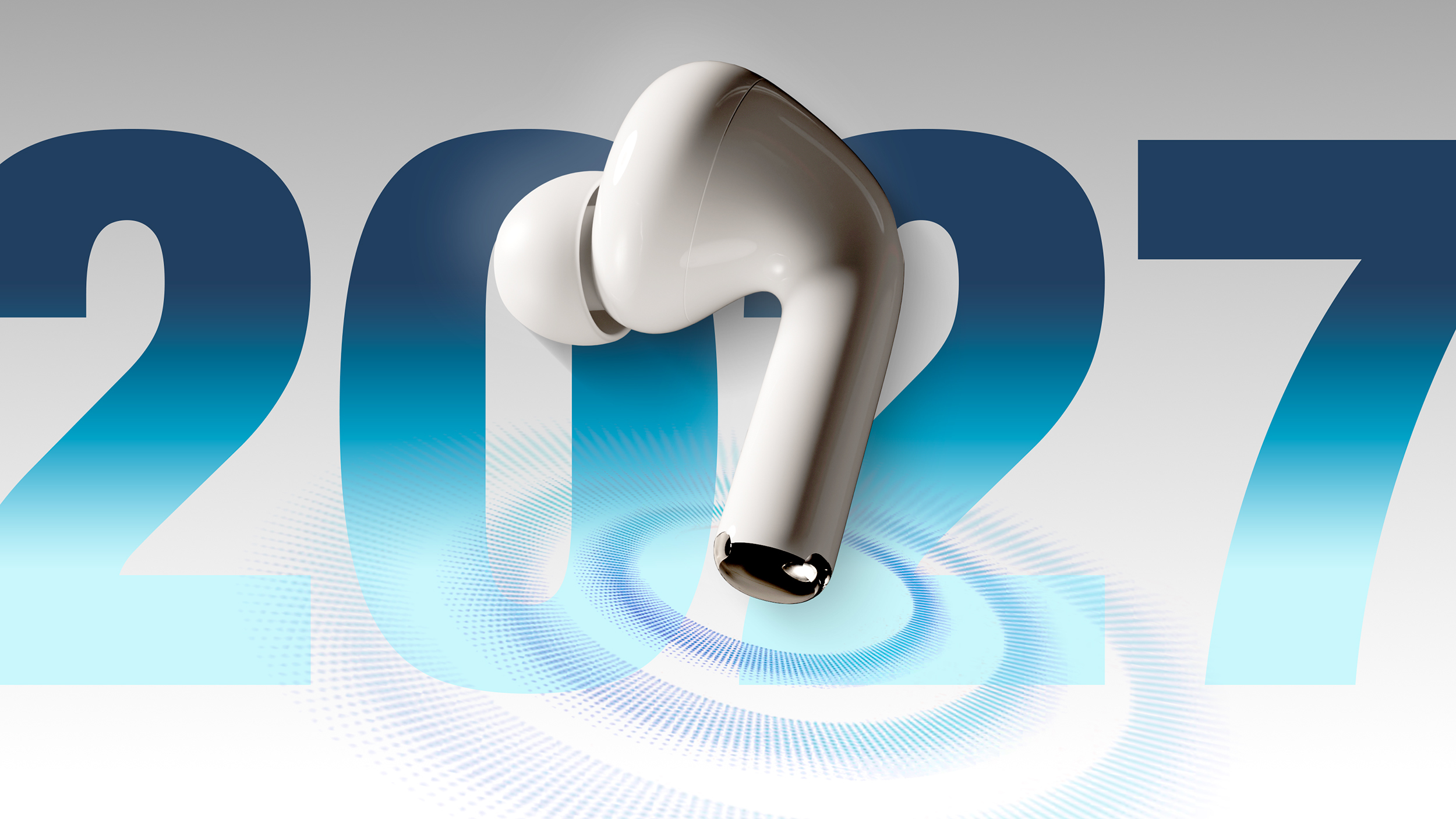
Imagine your AirPods not just playing music or taking calls, but actively understanding the world around you. This isn't science fiction; Apple is making it a reality. The tech giant is currently developing groundbreaking new AirPods that will feature built-in cameras, designed to feed crucial information directly to Siri. These revolutionary earbuds are set to become Apple's very first wearable device focused entirely on artificial intelligence, promising to change how we interact with technology and our environment. While excitement is building, we expect these cutting-edge AirPods to launch sometime in 2027, signaling a significant shift in personal computing.
This isn't just about adding a camera; it's about giving Siri "eyes" and transforming our daily routines with a new level of intelligent awareness. From helping you navigate unfamiliar streets to remembering a book title you just saw, these AirPods aim to make your world more savable and understandable, all without needing to pull out your iPhone. They represent a bold step into a future where our devices seamlessly blend with our perception, offering real-time assistance and information through advanced AI.
A Glimpse into the Future: The Accidental Leak
The first concrete evidence of these camera-equipped AirPods didn't come from an official announcement, but from an unexpected source: an accidental leak. In mid-August, Apple inadvertently left a demo video featuring these rumored AirPods within a release candidate of macOS Tahoe 26.7. For those unfamiliar, macOS Tahoe is the operating system that powers Apple's Mac computers, and a "release candidate" is essentially a final test version before a public launch. This kind of slip-up is rare for Apple, highlighting how far along the development process for these AirPods truly is.
The leaked demo video offered an intriguing look at the AirPods in action. In the short clip, a person is shown holding up a book. The key detail here is that the cameras embedded in the AirPods are designed to "see" the title of that book. The accompanying voiceover then states, "With Visual Intelligence, your world becomes savable. See something you like? Just ask me to save it for later." This simple scenario immediately painted a vivid picture of the AirPods' core functionality: capturing visual data from the wearer's surroundings and processing it through an advanced AI system.
This leak was a monumental moment for tech enthusiasts, offering not just a confirmation of the rumors but also a direct demonstration of the intended user experience. It showed that Apple isn't just experimenting with cameras on earbuds; they are building a sophisticated system for contextual understanding. The concept of "Visual Intelligence" takes center stage here, promising to make the world around us digitally accessible and actionable.
Here is your first look at AirPods with Cameras in action using Visual Intelligence.
— Aaron (@aaronp613) August 18, 2026
This video file came from macOS 26.7 RC pic.twitter.com/yo7RI4MCeu
The cameras on these new AirPods will serve as the eyes for Apple's Visual Intelligence platform. This means the earbuds will constantly or selectively feed visual information to Visual Intelligence, allowing Siri to become incredibly smart about the wearer's immediate surroundings. Instead of just hearing your questions, Siri will also be able to "see" what you're referring to. For example, you could ask Siri, "What's this building?" while looking at a landmark, and it could provide historical facts or architectural details in real time. Or, as the demo suggested, you could ask Siri to "save this" when looking at a product, a piece of art, or a restaurant menu, and it would log that information for later retrieval.
The integration goes deeper than just answering questions. There's a direct reference within the leaked code to setting up Visual Intelligence on the AirPods, indicating that it's a core, configurable feature. This suggests a personalized experience where users can tailor how Visual Intelligence processes and uses environmental data. Furthermore, Apple has considered practical usage scenarios: if your hair or clothing happens to cover the AirPods' cameras, you'll receive an alert. The system will prompt you, "To get the most accurate information about things in your environment, make sure AirPods are not covered," ensuring you always get the best performance from the visual sensors. This attention to detail underscores Apple's commitment to delivering a reliable and intuitive user experience for its first AI wearable.
Unraveling the Mystery: Two Versions in Development
The journey of camera-equipped AirPods through the rumor mill has been somewhat convoluted, largely due to Apple's internal development processes. For a while, most of the whispers pointed to a single product known by the codename B798. This model was frequently discussed by prominent Apple analyst Mark Gurman, who in June, suggested that these camera-equipped AirPods had faced delays. The reason for the holdup was reportedly issues related to Siri's AI capabilities, pushing their anticipated launch to September 2027, potentially aligning with the 20th anniversary of the iPhone.
However, the narrative took an interesting turn in early August when Gurman updated his predictions. He revealed that Apple was close to launching another version of camera AirPods, this one bearing the codename B790. It became clear that the B790 AirPods had been progressing in parallel with the B798 model. Gurman explained that Apple is "famously creates competing versions of the same product internally," a common strategy for innovation where different teams or approaches are allowed to develop simultaneously, with the most promising one eventually making it to market. At this point, B790 appeared to be much closer to launch than B798.
This newfound clarity was short-lived. In mid-August, the aforementioned multiple references to the B790 version were spotted directly within macOS Tahoe 26.7, solidifying its existence. Yet, shortly after this discovery, Gurman revised his stance once more, claiming that the AirPods were no longer on Apple's immediate release schedule, and that Apple had no plans to release camera-equipped AirPods before 2027. This back-and-forth highlights the fluid nature of product development at Apple and the challenges in predicting its exact timeline.
Despite the fluctuating launch schedule, Gurman provided crucial distinctions between the two codenames. He indicated that B790 is essentially a version of the AirPods Pro 3, but with the added functionality of cameras. This suggests an evolution of an existing and popular product line. In contrast, B798 is described as a future AirPods Pro model that will also incorporate cameras, implying a more advanced or perhaps a next-generation design beyond the current Pro lineup. This strategy allows Apple to explore different implementations and potentially offer varying tiers of camera-equipped AirPods in the future, catering to different user needs and price points.
Familiar Look, Revolutionary Tech: The Design
When it comes to the design of these camera-equipped AirPods, Apple appears to be opting for a strategy of subtle integration rather than a radical overhaul. The new AirPods are expected to maintain a familiar aesthetic, looking very similar to the current AirPods Pro 3. This is good news for users who appreciate the comfortable fit and iconic design of Apple's premium earbuds. The primary visual difference will be the discreet inclusion of cameras, which are anticipated to be seamlessly embedded within the stem of each earbud.
This design choice is crucial for user adoption. By sticking to a recognizable form factor, Apple reduces the learning curve and ensures that the new features are integrated into a device that users already love and are comfortable wearing for extended periods. The stem of the AirPods Pro is an ideal location for the cameras, offering a clear line of sight to the wearer's environment without being overly obtrusive or impacting the overall balance and comfort of the earbuds.
However, with the introduction of cameras, privacy becomes a paramount concern, both for the wearer and for those around them. Apple is known for its strong stance on user privacy, and this is reflected in a rumored design element: the inclusion of a subtle indicator light. This light is expected to illuminate whenever visual data from the AirPods' cameras is actively being sent to the cloud for processing. The purpose of this LED is twofold: it provides transparency to the wearer, assuring them when the cameras are in use, and more importantly, it offers a clear visual cue to people in the wearer's vicinity that the cameras are active. This is a thoughtful privacy feature, akin to the green light on a MacBook's webcam, ensuring that others are aware when they might be in view.
Beyond the camera integration and the privacy light, expect most other aspects of the design to remain consistent. The overall size, shape, and fit of the earbuds are likely to be largely unchanged, maintaining the ergonomic comfort that AirPods Pro users have come to expect. Similarly, the charging case is also expected to retain its familiar design and functionality, continuing to offer convenient wireless charging and extended battery life. This continuity in design ensures that the focus remains on the groundbreaking AI capabilities and the new ways these AirPods will enhance our interaction with the world, all within a package that feels both familiar and advanced.
Unlocking New Worlds: Revolutionary Features
The addition of cameras to AirPods is not merely a gimmick; it's a foundational change that will unlock an entirely new suite of features, fundamentally altering how we interact with Siri and the world around us. At its core, the cameras will be used to send visual data about the wearer's surroundings directly to Siri. This means Siri will no longer be limited to understanding your voice commands or accessing data from your phone; it will gain "eyes," providing it with a much richer, real-time understanding of where you are, what you're looking at, and what's nearby.
Enhanced Situational Awareness for Siri
Imagine being able to ask Siri questions about objects or scenes you're observing. For instance, you could be in a new city, look at a historic building, and simply ask, "Siri, what's this?" The AirPods' cameras would capture the image, Visual Intelligence would process it, and Siri could instantly provide historical context, architectural style, or opening hours. This transforms Siri from a voice assistant into a truly context-aware intelligent companion.
Beyond Basic Navigation: Contextual Directions
One of the most exciting potential applications for camera-equipped AirPods is in navigation. While iPhones already offer turn-by-turn directions, adding visual input from the AirPods could enable incredibly precise, turn-by-turn directions specifically for walking. Instead of just "turn left in 50 feet," Siri could guide you with commands like "walk past the green building and turn left at the coffee shop with the red awning." This hyper-contextual guidance would be invaluable in busy urban environments or unfamiliar places, making navigation far more intuitive and less reliant on constantly staring at your phone.
Intelligent Reminders and 3D Mapping
The capabilities extend far beyond navigation. Imagine walking past a store you wanted to remember, or seeing a specific item in a shop window. You could simply say, "Siri, remind me about this later," and the AirPods would log the visual context along with your reminder. This would create a new category of "contextual reminders" that are tied to specific locations or objects in your environment. Furthermore, the stereo vision provided by two cameras (one in each earbud) could contribute to advanced 3D mapping. This real-time spatial data could be invaluable for future augmented reality (AR) applications, allowing the AirPods to feed highly accurate environmental information into Apple's broader AR ecosystem, including devices like the Apple Vision Pro.
Visual Intelligence: Unleashed
The iPhone already boasts a powerful feature called Visual Intelligence (or Visual Look Up), which uses AI to identify various elements in photos – plants, animals, landmarks, art, books, and more. With camera-equipped AirPods, this capability becomes vastly more accessible and immediate. Instead of having to take a picture with your iPhone and then use the Camera app or Photos app to analyze it, the AirPods will be able to supply data for Visual Intelligence passively and in real-time. This means instant identification and information about your surroundings, freeing your hands and allowing for a more natural, continuous interaction with the digital world. You simply look, and the AirPods intelligently identify, providing information through Siri, all while your phone remains in your pocket.
The Brain Behind the Vision: The H3 Chip
Powering these sophisticated new features will require equally advanced internal hardware. Apple is reportedly developing an upgraded audio chip, tentatively named the H3 chip, which is expected to make its debut in these camera-equipped AirPods. The H-series chips are custom-designed by Apple specifically for its audio products, playing a crucial role in everything from noise cancellation and spatial audio to seamless device switching.
The H3 chip is anticipated to bring significant improvements that are vital for an AI-centric wearable. Two key areas of focus are latency and audio quality. "Latency" refers to the delay between when an action occurs (like the cameras capturing an image or your voice command being spoken) and when the system responds. For a device that's meant to provide real-time visual and audio intelligence, low latency is paramount. Imagine asking Siri about something you're looking at; you wouldn't want a noticeable delay before receiving an answer. The H3 chip's improvements in this area will ensure that interactions feel instantaneous and natural, creating a truly responsive and fluid user experience.
Beyond responsiveness, the H3 chip is also expected to deliver better audio quality. While the primary focus of these new AirPods is visual AI, they are still, first and foremost, audio devices. Enhanced audio quality means a richer, more immersive listening experience for music and podcasts, clearer calls, and a more precise delivery of Siri's responses. This is particularly important when Siri is delivering detailed information based on visual input; crisp, clear audio ensures that you can understand the nuances of the AI's insights without strain.
The development of a dedicated H3 chip underscores the complexity and ambition behind these camera-equipped AirPods. It's not just about adding cameras; it's about integrating those cameras with a powerful, low-latency processing unit that can handle the demands of real-time Visual Intelligence, all while maintaining the premium audio experience that AirPods users expect. This chip will be the "brain" that orchestrates the seamless flow of visual data, AI processing, and audio output, making the entire intelligent wearable experience possible.
Under the Hood: Technical Details Revealed
The code found within macOS Tahoe 26.7 didn't just confirm the existence of camera-equipped AirPods; it also offered a tantalizing glimpse into the precise technical specifications of how these cameras will function. These details reveal a sophisticated system tailored for AI processing rather than general-purpose photography or video recording. Interestingly, there was no mention of an infrared sensor, despite earlier rumors suggesting its inclusion, which would typically be used for depth sensing or low-light performance. This omission might indicate a different approach to spatial understanding or a focus on color vision for intelligence tasks.
- Two Cameras for Stereo Vision: A crucial detail is the presence of individual camera sensors in both the left and right earbuds. This isn't just about having backup; it implies a stereo vision system. Two cameras, positioned slightly apart, can capture the same scene from two different angles, mimicking human binocular vision. This setup is fundamental for depth perception, allowing the AirPods' Visual Intelligence to understand the distance and three-dimensional layout of objects in the environment. This is vital for applications like precise navigation and 3D mapping.
- Paired Color Images for AI: The cameras are designed to capture synchronized RGB still images, each with the same frame ID. These images can be up to 1 megapixel in resolution. The key here is "paired" and "synchronized." This ensures that Visual Intelligence receives two perfectly aligned color images of the exact same moment from slightly different perspectives, providing the rich data needed for accurate object recognition, spatial awareness, and contextual understanding. It's about feeding precise visual information to the AI, not necessarily about high-resolution photos for sharing.
- No Video Recording Capability: A significant insight from the code is that there is no video recording option. This clearly delineates the purpose of these cameras: they are for AI input, not for user-initiated video capture. This decision likely focuses on battery life, processing power, and user privacy. Instead of continuous video streams, the AirPods will capture a series of still images, which is much more efficient for real-time AI processing and allows for selective data capture only when needed for Visual Intelligence tasks.
- Adaptive Resolution Modes: The cameras operate in different resolution modes depending on the task. In an "active" mode, likely triggered when the wearer specifically activates Siri or requests visual information, the AirPods capture a 640x640 image. This higher resolution provides more detail for specific queries. In contrast, a separate "passive" mode captures a smaller 320x320 image. This lower resolution is more power-efficient and suitable for background environmental awareness. While the sensors themselves might be capable of higher quality images, Apple appears to be optimizing for specific image sizes that are most effective and efficient for its Visual Intelligence algorithms.
- Passive Image Capture for Context: The "passive capture mode" is particularly intriguing. It suggests that the AirPods can capture images in the background, without direct user prompting, to maintain environmental awareness. This mode appears to be triggered by various contextual cues, such as nearby speech (if someone asks you a question), changes in audio (like a sudden loud noise), posture changes (if you turn your head to look at something), head rotation, and more. This "always-on but intelligently aware" approach allows the AirPods to build a continuous understanding of your surroundings, ready to provide immediate context when you interact with Siri.
- Head Movement Correction: To ensure the visual data fed to Visual Intelligence is always clear and stable, the cameras in the AirPods incorporate distortion correction. This technology actively compensates for head movements, which are natural and frequent when wearing earbuds. Furthermore, the system can "reject images that have excessive movement," preventing blurry or disoriented visual input from confusing the AI. This ensures that even when you're walking or moving your head, the AirPods are still capturing reliable and usable visual information.
- On-Device Processing for Speed and Privacy: Some of the visual content processing will occur directly on the AirPods themselves. An example given is "person detection." Performing tasks like this on the device offers several advantages: it's faster because data doesn't need to be sent to the cloud and back, and it enhances privacy by processing sensitive information locally before any relevant, anonymized data might be sent for further cloud-based AI processing. This hybrid approach leverages the power of the H3 chip for immediate, localized intelligence while still allowing for more complex, cloud-based AI tasks when necessary.
- Hardware Indicator Lights for Transparency: Reinforcing Apple's commitment to privacy, the code suggests that the AirPods will feature a hardware indicator light. This physical light will illuminate to let people know when still images are actively being captured by the cameras. This is a crucial transparency feature, giving both the wearer and those in their environment clear visual confirmation of when the cameras are in use, fostering trust and awareness.
What's in a Name? AirPods Pro vs. AirPods Ultra
With groundbreaking new technology often comes speculation about its branding, and the camera-equipped AirPods are no exception. There have been ongoing rumors suggesting that these advanced earbuds might adopt the "AirPods Ultra" moniker, moving beyond the "Pro" designation to signify a premium, high-end offering, much like Apple's Apple Watch Ultra. However, the most compelling evidence to date points in a different direction.
The macOS Tahoe 26.7 file, which provided so many of the crucial leaks about these new AirPods, specifically labels the device as "AirPods Pro," not "AirPods Ultra." While it's always possible for a codename or an early reference to be a placeholder, this direct internal label strongly suggests that Apple intends to keep these camera-equipped earbuds within the existing AirPods Pro family. This would position them as the next generation of Apple's premium earbuds, enhancing a well-established product line rather than creating an entirely new one.
However, the idea of an "AirPods Ultra" isn't entirely off the table. Apple might have, at some point, planned to use the "AirPods Pro" name for a version of the camera-equipped AirPods that ultimately won't make it to release, or perhaps the "Pro" refers to the B790 model (AirPods Pro 3 with cameras), while a future B798 model could still potentially be an "Ultra." Bloomberg's renowned Apple analyst, Mark Gurman, did mention in March that Apple was exploring the "Ultra" name for several new high-end devices. This list included a foldable iPhone Ultra, AirPods Ultra, and even an OLED MacBook Ultra.
This internal consideration for an "Ultra" lineup shows Apple's desire to differentiate its absolute top-tier products. While the macOS leak leans towards "AirPods Pro," the broader strategic context leaves a sliver of possibility for an "AirPods Ultra" down the line, especially if future iterations introduce even more radical features or a distinct industrial design. For now, "AirPods Pro" seems to be the most likely official name for the initial release of Apple's camera-equipped earbuds, signifying a powerful evolution of an already beloved product.
Anticipated Pricing: A Premium for Innovation
As with any unreleased Apple product, the exact pricing for the camera-equipped AirPods remains unconfirmed and is a subject of much speculation. However, we can make an educated guess based on Apple's current pricing structure and the advanced technology packed into these new earbuds. Currently, the AirPods Pro 3, which are Apple's flagship premium earbuds without cameras, typically sell for $249.
Given the significant leap in technology and functionality that the cameras and integrated Visual Intelligence bring, it is highly probable that the new version will command a higher price point. Adding sophisticated camera hardware, a new H3 chip, and the complex AI processing capabilities all contribute to increased manufacturing costs and research & development investments. Apple typically prices its cutting-edge technology at a premium, reflecting the innovation and advanced user experience it delivers.
Therefore, potential buyers should anticipate that these camera-equipped AirPods will likely be more expensive than the current AirPods Pro 3. While a precise figure is difficult to predict, a price anywhere from $299 to $349 or even higher is conceivable. This premium pricing would align with Apple's strategy for its "Pro" or potentially "Ultra" branded devices, which are designed for users who demand the very best and are willing to pay for advanced features and capabilities. The value proposition will clearly lie in the unique AI-driven visual intelligence that these AirPods offer, transforming them from mere audio devices into powerful, context-aware smart companions.
The Apple Intelligence Ecosystem: Essential Compatibility
The camera-equipped AirPods are not just standalone devices; they are integral components of Apple's broader artificial intelligence ecosystem. To fully leverage their revolutionary features, particularly the ability to feed visual data to Siri for intelligent processing, these new AirPods will require an iPhone that supports Apple Intelligence. This crucial detail highlights that these earbuds are designed to work in tandem with Apple's most advanced AI platform, creating a seamless and powerful user experience.
Apple Intelligence is a suite of powerful generative AI models and features that enhance privacy, personalization, and productivity across Apple's devices. It enables features like advanced writing tools, image generation, and a deeper, more context-aware Siri. Because the AirPods' cameras will be directly informing and expanding Siri's capabilities through Visual Intelligence, having an iPhone capable of running Apple Intelligence is non-negotiable for accessing the full potential of these earbuds.
As of its introduction, Apple Intelligence is available only on specific, high-end iPhone models: the iPhone 15 Pro and later. This means that if you own an older iPhone model, even a relatively recent one like the iPhone 14, you will not be able to unlock the full AI capabilities of the camera-equipped AirPods. This compatibility requirement serves as a strong incentive for users to upgrade to Apple's latest Pro-level iPhones, positioning the camera AirPods as a premium accessory that thrives within Apple's most sophisticated AI environment. It underscores Apple's strategy to integrate its hardware and software tightly, creating an ecosystem where devices work together intelligently to deliver unparalleled experiences.
Mark Your Calendars: The 2027 Launch
Despite the excitement generated by their unexpected appearance in macOS Tahoe 26.7, the camera-equipped AirPods are not an immediate release. All current information and analyst predictions point to a launch well into the future, specifically in 2027. This timeline suggests that Apple is taking its time to perfect this groundbreaking technology, ensuring a polished and robust user experience for what is set to be its first AI-centric wearable.
The most commonly cited launch window is September 2027. This timing is particularly significant as it is expected to coincide with a major milestone for Apple: the 20th anniversary of the original iPhone. Apple often reserves its most impactful product unveilings for special occasions, and a 20th-anniversary iPhone event would be an ideal stage to introduce a device as revolutionary as AI-powered, camera-equipped AirPods. Such a dual launch would amplify the excitement, showcasing Apple's vision for the future of personal technology, where iPhone and AirPods work in powerful synergy within the Apple Intelligence ecosystem.
While 2027 may seem like a distant future, the leaks and detailed technical information confirm that Apple is deeply committed to this project. The extended development period will allow Apple to refine the Visual Intelligence algorithms, optimize the H3 chip's performance, enhance battery life, and ensure seamless integration with iOS and the broader Apple Intelligence platform. This careful approach is characteristic of Apple when introducing entirely new product categories or fundamentally transforming existing ones. The wait, therefore, promises to be for a truly refined and impactful product that could redefine how we perceive and interact with our digital and physical worlds.
This article, "Apple's Camera-Equipped AirPods: All the New Rumors" first appeared on MacRumors.com
Discuss this article in our forums
from MacRumors
-via DynaSage

Post a Comment