Apple Reportedly Lays Off 60 Vision Products Group Employees
Apple's Shifting Vision: Layoffs, Canceled Projects, and a New Focus on Smart Glasses
Recent reports suggest a significant turning point in Apple's ambitious journey into "spatial computing." According to AppleInsider, citing internal sources, Apple has reportedly laid off an entire team dedicated to virtual reality (VR) development. This move saw at least 60 employees from the Apple Vision Group, the division responsible for the groundbreaking Vision Pro headset, lose their positions.
This news isn't just about job cuts; it signals a potentially dramatic shift in Apple's strategy for its future in immersive technologies. The Vision Pro, launched with much fanfare and positioned as a revolutionary device for spatial computing, appears to be undergoing a major re-evaluation within the Cupertino giant. The decisions being made now could redefine how Apple approaches augmented reality (AR) and virtual reality in the years to come, moving away from high-end, immersive headsets towards more subtle, everyday wearable technology.
Such a substantial restructuring within a key product group raises many questions about the current state of the Vision Pro and Apple's long-term vision. It suggests that the path to widespread adoption of complex mixed-reality devices might be more challenging than initially anticipated, prompting Apple to recalibrate its approach and explore alternative avenues for integrating spatial computing into users' lives. This strategic pivot could ultimately lead to a more accessible and impactful future for Apple's ventures in this exciting technological frontier.
The Vision Pro's Rocky Start
What is Spatial Computing?
Before diving deeper into the Vision Pro's journey, it's important to understand what Apple means by "spatial computing." Unlike traditional computing, which typically involves interacting with screens in a two-dimensional space, spatial computing aims to blend digital content with the physical world. It allows users to interact with applications, watch movies, and communicate in a three-dimensional environment that seamlessly integrates with their surroundings. The Vision Pro was designed to be the ultimate expression of this concept, offering an unparalleled immersive experience where digital objects appear to coexist with real-world elements, controlled by intuitive eye and hand movements.
The Vision Pro promised to transform everything from entertainment and productivity to communication, envisioning a future where digital interfaces are no longer confined to a desktop or a phone screen but float freely around you. This grand vision positioned the headset not just as another gadget, but as a paradigm shift, akin to the introduction of the Mac or the iPhone. It was presented as a device that could change how we work, play, and connect with information and each other, blurring the lines between the digital and physical realms with remarkable fidelity and innovative interaction methods.
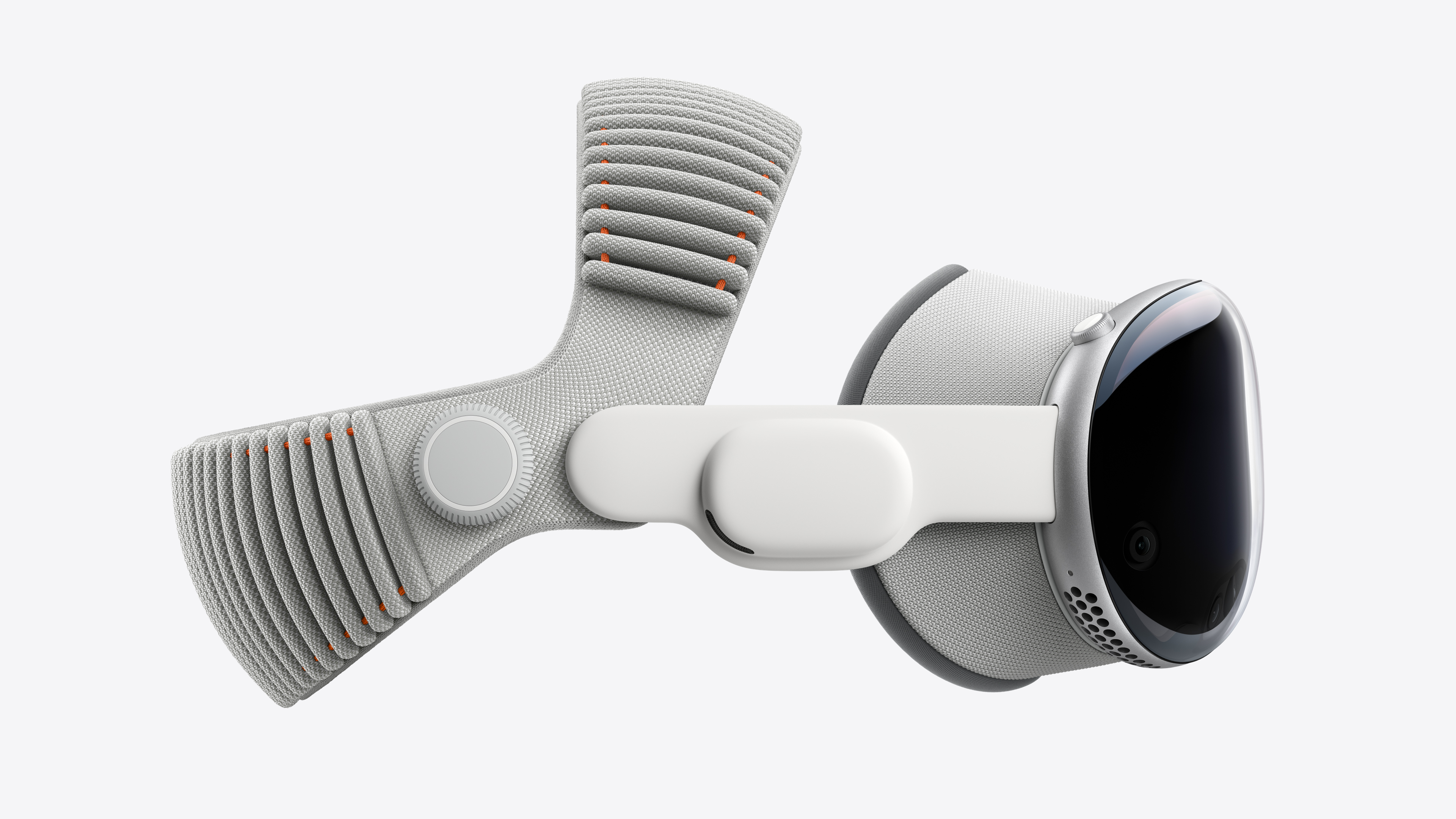
The Vision Pro: A Grand Ambition
When Apple first unveiled the Vision Pro, it generated immense excitement. Touted as Apple's first major new product category since the Apple Watch, it represented years of secret development and a massive investment in cutting-edge technology. The device boasted an incredibly high-resolution display, advanced eye-tracking, precise hand-tracking, and a powerful custom chip to deliver an experience unlike anything else on the market. Initial demonstrations showcased breathtaking capabilities, from watching movies on a giant virtual screen to collaborating with colleagues in a shared digital workspace.
The marketing around the Vision Pro emphasized its potential to unlock new ways of interacting with technology, promising an "infinite canvas" for apps and an unprecedented sense of presence. It was clear that Apple wasn't just building a VR headset; it was attempting to define an entirely new computing platform. The price tag, starting at $3,499, positioned it as a premium, professional-grade device, signaling Apple's intent to target early adopters and developers who would help shape the future of spatial computing. The company presented it as a device that would revolutionize personal computing, just as the Macintosh and iPhone had done in their respective eras.
Apple's strategic launch, focusing on the quality of experience over mass-market appeal initially, was typical of its approach to new categories. The idea was to establish a high bar for the technology, foster a developer ecosystem, and gradually expand its reach. The initial limited availability and carefully curated user experience aimed to ensure that early impressions were overwhelmingly positive, laying the groundwork for future iterations and broader consumer adoption down the line. It was a calculated risk on a new frontier, designed to showcase Apple's unparalleled engineering prowess and design philosophy.
Signs of Trouble: Weak Reception
Despite the initial hype, reports soon emerged suggesting that the Vision Pro's reception wasn't as strong as Apple might have hoped. Mark Gurman of Bloomberg previously reported that the Vision Pro team was disbanded and its members redistributed across other projects following the October 2025 refresh of the Vision Pro and the headset's "weak reception." This internal shuffling was a clear indicator that something wasn't going according to plan, prompting a strategic rethink at the highest levels of the company.
Several factors likely contributed to this "weak reception." The prohibitive price point of $3,499 immediately limited its appeal to a niche market. For many consumers, this was simply too expensive for a first-generation device, especially one that wasn't yet perceived as essential. Beyond cost, user feedback often highlighted issues with comfort and practicality. The headset, while technologically advanced, was relatively heavy and bulky, making extended use challenging for some. The external battery pack, while innovative, added another layer of complexity and tethered the user in a way that felt restrictive. This often led to what some termed "fatigue" after short periods of use.
Furthermore, the initial application ecosystem, while growing, didn't immediately present a "killer app" that justified the investment for the average consumer. While demonstrations of spatial video and immersive entertainment were impressive, the everyday utility for productivity or communication wasn't universally compelling enough to drive mass adoption. The novelty factor was high, but the long-term value proposition for many users remained unclear. Apple is known for creating products that seamlessly integrate into users' lives; the Vision Pro, despite its advancements, still felt like a separate, somewhat cumbersome experience for many, rather than a natural extension of their digital world.
The learning curve for spatial computing, while praised for its intuitive eye and hand tracking, still required users to adapt to new interaction paradigms. This, combined with the limited availability and the high entry barrier, meant that the Vision Pro struggled to capture the imagination of the wider public in the same way the iPhone or iPad did. Apple, ever sensitive to market feedback and product viability, seems to have taken these signals to heart, leading to the recent strategic adjustments and the reported layoffs within the Vision Products Group, indicating a clear need to refine its approach to this nascent category.
Canceled Futures: Vision Pro 2 and Vision Air
The End of the Road for Successors
Adding to the news of layoffs, reports also indicate that incoming Apple CEO John Ternus has reportedly signed off on canceling both a second-generation Vision Pro and a cheaper, slimmer "Vision Air." This decision, if true, marks a profound shift in Apple's product roadmap for spatial computing. Instead of iterating on the existing headset design with incremental improvements or offering a more accessible version, Apple appears to be pulling back from its initial strategy entirely. The cancellation of both the high-end successor and the more affordable option suggests a fundamental re-evaluation of the form factor and market approach.
This move is particularly significant because it reflects a candid acknowledgment from Apple that its initial vision for mixed-reality headsets, at least in their current form, may not be the most viable path forward for widespread consumer adoption. Typically, Apple follows a pattern of releasing a premium product, gathering feedback, and then introducing more affordable or refined versions. The decision to halt both projects simultaneously indicates a more drastic course correction, signaling that the challenges with the original Vision Pro were not just about refinement or price, but perhaps more fundamental to the concept itself as a mass-market device.
For a company known for its meticulous long-term planning, canceling two significant future products in a nascent category is a bold and telling move. It suggests that the internal data, market feedback, and financial projections for these devices did not align with Apple's stringent standards for success. This redirection frees up significant engineering and financial resources, which are now being channeled into a different, potentially more promising, direction – "smart glasses."
Vision Pro 2: Incremental Improvement Halted
The cancellation of a second Vision Pro model suggests that Apple believed an incremental update would not sufficiently address the core issues plaguing the first generation. A Vision Pro 2 would likely have focused on improvements like a lighter design, enhanced displays, longer battery life, and potentially more powerful processors. However, if the fundamental issue was the very concept of a bulky, expensive headset for spatial computing, then even significant upgrades might not have moved the needle enough to justify the continued investment and market positioning.
Apple's decision here implies that the company might be seeking a more radical change rather than a simple refinement. Pushing ahead with a Vision Pro 2 might have led to similar lukewarm reception, further cementing the perception of VR/AR headsets as niche products. By shelving this project, Apple avoids pouring more resources into a direction that may have diminishing returns, allowing it to regroup and focus on a completely different approach that could offer a breakthrough in user experience and accessibility, rather than just technical specifications. It's a strategic pause to re-evaluate the entire category and its place in the Apple ecosystem.
Vision Air: A Lighter, Cheaper Dream
Perhaps even more indicative of Apple's shift is the cancellation of the "Vision Air," a planned cheaper and slimmer version of the Vision Pro. This product was widely seen as Apple's gateway to the mainstream market for spatial computing. The "Air" moniker, successfully applied to the MacBook Air and iPad Air, typically signifies a more affordable, lightweight, and accessible entry point into an Apple product line. A Vision Air would have aimed to tackle the primary barriers of price and bulk, making spatial computing a reality for a much broader audience.
Last month, The Elec reported that Apple had suspended development of the display for a cheaper, lighter version of the Vision Pro that it originally planned to launch in the next few years. This suspension of display development, a crucial component, essentially confirms the Vision Air's fate. The idea behind Vision Air was likely to offer a more comfortable, less intrusive experience, potentially sacrificing some of the Vision Pro's cutting-edge features for mass appeal and daily wearability. Its cancellation is a strong signal that Apple is no longer convinced that a scaled-down headset, even one designed for comfort and affordability, is the right immediate path to conquer the spatial computing market.
The shelving of Vision Air means that Apple is bypassing the conventional strategy of democratizing technology by making it cheaper and lighter. Instead, they are seemingly opting for a more fundamental redesign, focusing on a form factor that inherently addresses the issues of wearability, social acceptance, and seamless integration into daily life. This suggests that the current perception of headsets, even lighter ones, as somewhat isolating or cumbersome for everyday use, may have played a significant role in this strategic pivot away from the entire headset category for the near future.
The New Horizon: Smart Glasses
A Strategic Pivot
With the Vision Pro team undergoing restructuring and both successors canceled, Apple's focus has now reportedly shifted entirely to "smart glasses." This pivot represents a significant strategic redirection, moving away from the immersive, powerful, yet inherently bulky and costly VR/AR headsets towards a more discreet and potentially more mass-market-friendly form factor. It suggests that Apple believes the future of seamlessly integrated spatial computing lies not in a device that commands your full attention and isolates you from your surroundings, but one that enhances your perception and interaction with the world in a subtle, ambient manner.
This shift indicates that Apple might be acknowledging that the current technological capabilities and consumer readiness for full-blown virtual and augmented reality headsets are not yet aligned for mainstream success. Instead of forcing consumers into an immersive experience they may not be ready for, smart glasses offer a path to introduce spatial computing concepts gradually, in a way that feels more natural and less intrusive. It's about augmenting reality without replacing it, providing just enough digital information to enhance daily life without overwhelming the user or causing social awkwardness.
The move to smart glasses also aligns with Apple's broader ecosystem strategy. Imagine a world where your glasses are as seamlessly integrated with your iPhone, Apple Watch, and AirPods as they are today. This strategic pivot isn't just about a new product; it's about re-envisioning the interface between humans and technology, making it more personal, always-on, and less noticeable. It's a gamble, but one that could potentially unlock a much larger market than the high-end Vision Pro ever could, by making spatial computing an effortless part of daily existence rather than a dedicated experience.
Smart Glasses vs. VR/AR Headsets
It's crucial to understand the fundamental difference between smart glasses and devices like the Vision Pro. VR/AR headsets are designed for deep immersion. They typically cover a user's eyes completely or project digital content onto a translucent screen, offering a wide field of view and powerful processing to create rich, interactive virtual or augmented worlds. They are excellent for gaming, professional design, or fully immersive entertainment, but their size, weight, and often their aesthetic make them less suitable for all-day, everyday wear in public.
Smart glasses, on the other hand, prioritize discreet integration and subtle augmentation. They aim to look and feel like regular eyeglasses, with small, transparent displays that project information directly into the wearer's field of vision. The focus is less on creating entire virtual worlds and more on providing contextual information, notifications, navigation cues, or light AR overlays that enhance the real world without obscuring it. They are designed for convenience, glanceable information, and hands-free interaction, rather than deep, isolating immersion. The key is to augment, not replace, reality.
This distinction is critical to Apple's new direction. While the Vision Pro was about "spatial computing" in a dedicated, powerful device, smart glasses would aim to bring elements of spatial computing to the user in a less obtrusive, more integrated way. Think of them as an evolution of the Apple Watch, offering information and interaction directly in your line of sight, seamlessly woven into your daily activities without requiring you to pull out a phone or wear a bulky headset. The emphasis shifts from an "experience" to an "enhancement" of everyday life, making technology truly disappear into the background.
Apple's Potential Smart Glasses Vision
If Apple is indeed focusing on smart glasses, what might their vision entail? Given Apple's design philosophy, their smart glasses would likely prioritize style, comfort, and seamless integration with the existing Apple ecosystem. Imagine a pair of glasses that look fashionable and feel lightweight, yet can subtly display incoming notifications from your iPhone, provide turn-by-turn navigation overlayed onto your view of the road, or even translate foreign languages in real-time as you look at text or listen to someone speak.
These glasses could incorporate advanced audio capabilities, perhaps building on AirPods technology, to deliver crystal-clear sound for calls or music without needing separate earbuds. They might also leverage spatial audio to enhance your awareness of your surroundings or direct your attention. Interaction could be intuitive, perhaps through subtle gestures, voice commands (Siri integration would be paramount), or even direct neural input if future technologies allow. The core idea would be to provide "information at a glance" and "hands-free interaction" in a socially acceptable form factor.
Furthermore, Apple's smart glasses could become a central hub for augmented reality experiences that are more grounded in reality than the Vision Pro. Instead of placing virtual objects in your living room, they might provide helpful information about landmarks as you walk by, identify plants in your garden, or offer interactive overlays for museum exhibits. The focus would be on practical utility and enriching the real world, rather than creating separate digital environments. This approach would democratize AR, making it a subtle, everyday tool rather than a niche, high-tech experience, potentially transforming how we consume information and interact with our environment.
Challenges and Opportunities
Developing successful smart glasses comes with its own set of formidable challenges. Battery life is a major hurdle; integrating displays, cameras, and processing power into a small, lightweight frame while maintaining all-day battery performance is incredibly difficult. Display technology also needs to advance further to create bright, clear, transparent images without being distracting or obvious to onlookers. Furthermore, making smart glasses that are genuinely fashionable and appealing to a wide range of tastes is a significant design challenge, especially after the public's mixed reactions to past smart glass attempts from other companies.
Privacy concerns are also paramount. Cameras and microphones embedded in glasses raise questions about constant recording and data collection, which Apple would need to address with robust privacy features and clear user controls. Social acceptance is another key factor; users need to feel comfortable wearing these devices in public without feeling self-conscious or intrusive. However, the opportunities are immense. If Apple can overcome these challenges, smart glasses could become the next truly ubiquitous personal computing device, seamlessly integrating digital information into our physical world in a way that feels natural and enhances our daily lives without replacing them.
The potential for smart glasses to augment our everyday experiences, from navigating city streets to receiving urgent notifications without breaking stride, represents a huge market opportunity. For Apple, this is a chance to define a new product category that leverages its expertise in mobile computing, miniaturization, and user experience. If executed correctly, smart glasses could become another tentpole product, driving further integration within the Apple ecosystem and reinforcing its position at the forefront of personal technology, making spatial computing truly invisible and ever-present.
The Broader Implications and Industry Context
What This Means for Apple's AR/VR Future
These developments signify more than just a product cancellation; they represent a fundamental strategic recalibration for Apple's entire AR/VR future. Instead of pushing forward with a technology that, while impressive, faced significant hurdles in terms of cost, comfort, and mass appeal, Apple is reportedly taking a step back to re-evaluate the core problem it's trying to solve. This doesn't mean Apple is abandoning AR/VR entirely; rather, it's refining its approach, seeking a more viable and universally accepted entry point into spatial computing.
The extended timeline – with Mark Gurman not expecting another headset before late 2028 at the earliest – suggests that Apple is in no rush to release a half-baked product. This delay provides ample time for technological advancements in areas like battery efficiency, display miniaturization, and chip performance, all of which are crucial for the discreet and powerful smart glasses Apple likely envisions. It allows Apple to learn from its initial Vision Pro experiment, gather more data on user behavior, and observe the broader market before committing to its next big move. This pause is not a retreat but a strategic repositioning for a longer game.
This pivot could ultimately strengthen Apple's position in the long run. By focusing on smart glasses, Apple aims to solve different problems than immersive VR headsets, targeting daily utility rather than dedicated experiences. If they can crack the code on comfortable, stylish, and genuinely useful smart glasses, it could open up a much larger market than the niche VR/AR segment. This new direction signals Apple's commitment to making spatial computing truly personal and ubiquitous, aligning with its history of simplifying complex technology into user-friendly devices.
Lessons from the Past
Apple has a history of launching groundbreaking products that didn't immediately hit the mark, only to iterate or pivot and eventually achieve massive success. Think of the original Newton PDA, a pioneering device that was ahead of its time but ultimately canceled, with lessons learned contributing to the later success of the iPhone. Or the original HomePod, which struggled to gain traction against cheaper smart speakers, leading to a refined strategy with the HomePod mini. This current situation with the Vision Pro and the shift to smart glasses echoes those past instances of Apple adapting its strategy in response to market realities and technological readiness.
This willingness to re-evaluate and even cancel projects, despite significant investment, is a hallmark of Apple's product development philosophy. It demonstrates a commitment to delivering the best possible user experience, even if it means acknowledging that an initial approach was flawed or premature. The company doesn't shy away from admitting that a product, no matter how technologically impressive, might not yet fit seamlessly into users' lives. This ability to course-correct, even in the public eye, is a testament to Apple's long-term vision and its focus on enduring product categories rather than fleeting trends. The lessons from Vision Pro will undoubtedly inform the development of future smart glasses, leading to a more refined and impactful product.
The Competitive Landscape
Apple's strategic shift also has implications for the broader competitive landscape. Companies like Meta have heavily invested in virtual reality with their Quest line of headsets, aiming to build a metaverse where users can work, play, and socialize in virtual worlds. Google has also experimented with smart glasses, albeit with mixed results (remember Google Glass). This move by Apple suggests a different path forward than Meta's, indicating that the fully immersive metaverse vision, at least in its current form, might not be Apple's immediate priority for mass adoption.
By focusing on smart glasses, Apple is effectively carving out its own niche, prioritizing subtle AR and real-world enhancement over deep VR immersion. This could intensify competition in the smart glasses segment, pushing other players to innovate more aggressively in terms of design, utility, and user experience. It also means that consumers might see a bifurcation in the market: powerful, dedicated VR/AR headsets for specific uses, and discreet smart glasses for everyday augmentation. Apple's entry into the latter could validate the category and accelerate its development, potentially leading to a new era of wearable computing that is more integrated and less intrusive than current offerings.
Looking Ahead: Apple's Next Move
A Delayed Return
The report from Mark Gurman that Apple doesn't expect to launch another headset before late 2028 at the earliest is a crucial piece of information. This isn't just a delay; it's a significant pause, indicating that Apple is taking its time to fundamentally rethink its approach to spatial computing hardware. A four-year hiatus in a rapidly evolving tech sector is substantial, suggesting that the company needs this time for fundamental breakthroughs in technology, design, and perhaps even a clearer understanding of consumer needs.
During this period, Apple will likely be investing heavily in research and development for its smart glasses project. This includes advancing display technology for transparent lenses, miniaturizing components, improving battery efficiency, and developing an intuitive operating system that feels natural in a glasses form factor. It also gives Apple time to observe the market, watch how competitors evolve, and refine its strategy without the pressure of an immediate product release. This patient, deliberate approach is characteristic of Apple, which often waits for the technology and user experience to be truly exceptional before launching a new product category.
The extended timeline also implies that whatever Apple eventually releases in the smart glasses space will be a highly polished and potentially revolutionary product. It won't be an incremental update but rather a device that aims to set a new standard for the category, much like the original iPhone redefined smartphones. This period of intense, focused development away from public scrutiny could allow Apple to overcome the complex technical and social challenges inherent in creating truly mass-market smart glasses, ensuring that their next foray into spatial computing is not just innovative but also genuinely impactful and widely adopted.
Innovation Under Pressure
Despite the setbacks with the Vision Pro, Apple's reputation for innovation remains strong. The company has a track record of entering established markets late but with a product that redefines the category. This time, they are navigating a relatively nascent field, and the pressure to deliver a compelling product that justifies the strategic pivot is immense. The layoffs and canceled projects are difficult decisions, but they highlight Apple's pragmatism and its willingness to make tough choices for the sake of long-term success.
The shift to smart glasses represents a bet on a different future for spatial computing – one where technology is more integrated, less obtrusive, and seamlessly woven into the fabric of daily life. If Apple can succeed in making smart glasses that are both functional and desirable, it could once again set a new benchmark for personal technology, proving that even amidst challenges, the company can adapt, innovate, and continue to shape the future of how we interact with the digital world. The journey of spatial computing at Apple is far from over; it's simply taking a different, and perhaps more promising, route.
Conclusion
The news of layoffs within Apple's Vision Products Group and the reported cancellations of future Vision Pro models mark a pivotal moment in Apple's journey into spatial computing. It signals a strategic recalibration, moving away from high-end, immersive VR/AR headsets like the Vision Pro towards a more discreet and potentially mass-market-friendly future centered around smart glasses. This difficult but necessary pivot reflects Apple's pragmatism and its commitment to delivering products that genuinely resonate with consumers, even if it means rethinking initial strategies.
While the Vision Pro showcased incredible technological prowess, its challenges in terms of price, comfort, and mass appeal have prompted Apple to explore a different path. By focusing on smart glasses, Apple is aiming to integrate spatial computing more seamlessly and subtly into daily life, promising a future where technology enhances our reality without overwhelming it. This strategic shift, coupled with a longer development timeline, suggests that Apple is diligently working towards a future where spatial computing becomes as ubiquitous and indispensable as the iPhone, redefining how we connect with information and the world around us.
This article, "Apple Reportedly Lays Off 60 Vision Products Group Employees" first appeared on MacRumors.com
Discuss this article in our forums
from MacRumors
-via DynaSage

Post a Comment