5 Apple Products to Get OLED Displays
Apple's Brilliant Future: OLED Displays Coming to More iPads and Macs by 2029
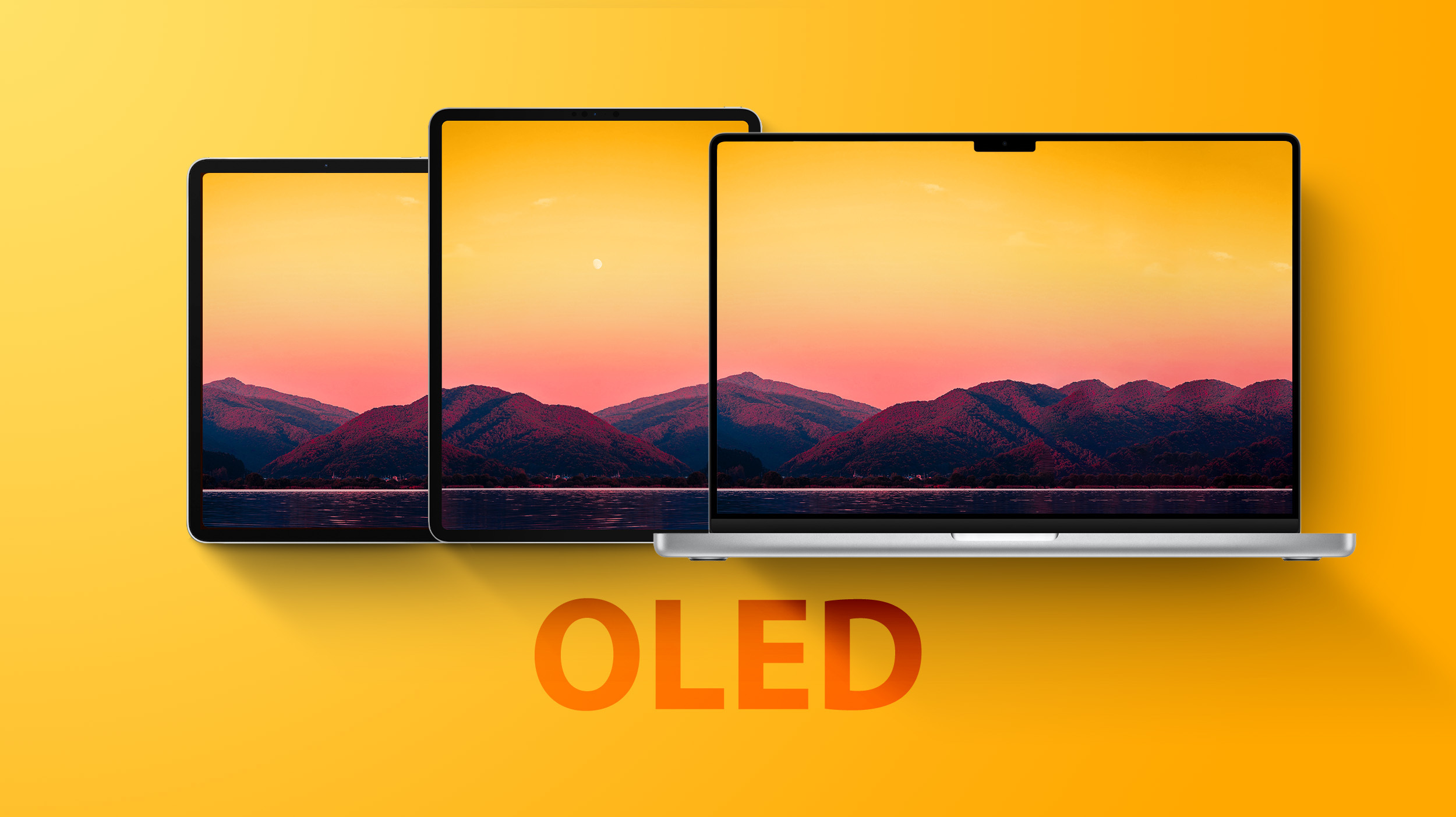
Get ready for a visual revolution! Apple, a company synonymous with cutting-edge technology and premium user experiences, is reportedly gearing up to bring its stunning OLED display technology to a wider range of its popular devices. Over the next three years, several iPads and Macs are slated to receive this significant upgrade, promising users richer colors, deeper blacks, and an overall more immersive viewing experience.
This exciting news comes from a detailed DigiTimes report, a well-respected Taiwanese publication known for its insights into the tech supply chain. Their industry sources indicate a phased rollout between 2026 and 2029, signaling Apple's commitment to pushing the boundaries of display quality across its product lines.
What is OLED, and Why Does It Matter?
Before exploring which devices are getting this upgrade, let's understand OLED technology and its advantages over traditional LCD screens. OLED stands for Organic Light-Emitting Diode. Unlike LCDs, which use a backlight to illuminate all pixels, each pixel in an OLED display generates its own light. This crucial difference allows for unparalleled control over light and color.
The Magic of Self-Emitting Pixels
This individual pixel control is where OLED truly shines. When an OLED pixel needs to display black, it simply turns off completely. This capability leads to a host of incredible visual benefits:
- True Blacks and Infinite Contrast: Pixels that are completely off create perfect, inky blacks. This provides an "infinite" contrast ratio, making images incredibly vivid and giving them a lifelike depth that LCDs cannot match.
- Richer, More Accurate Colors: OLED panels can reproduce a broader spectrum of colors with greater saturation and accuracy. This makes photos, videos, and graphics appear more vibrant and true to life.
- Wider Viewing Angles: Colors and brightness remain consistent even when viewing the screen from extreme angles, crucial for collaborative work or group viewing.
- Faster Response Times: OLED pixels can switch on and off almost instantaneously, virtually eliminating motion blur. This results in incredibly smooth scrolling, fluid animations, and crisp visuals in fast-paced content like games and action movies.
- Improved Power Efficiency for Dark Content: While OLEDs can consume more power for very bright, all-white content, they are significantly more efficient when displaying dark themes or content with a lot of black. Off pixels consume no power, potentially extending battery life on devices using dark modes or showing dark media.
- Thinner Designs: Without the need for a separate backlight layer, OLED panels can be made much thinner, contributing to sleeker device designs.
In essence, OLED technology delivers a viewing experience that is more vibrant, detailed, and immersive, bringing content to life with unparalleled realism. This is why Apple has strategically implemented it in its high-end products.
Apple's Current OLED Commitment: Where We Are Now
Apple has already embraced the superior qualities of OLED in several key products:
- iPhone: Since the iPhone X in 2017, most new iPhone models have featured OLED displays, dramatically enhancing photos, videos, and app experiences.
- Apple Watch: From its inception, the Apple Watch has used OLED, crucial for a small screen device demanding bright, crisp visuals and power efficiency.
- iPad Pro: Recent iPad Pro models utilize advanced "Tandem OLED" technology, layering two OLED panels for increased brightness and lifespan. Combined with ProMotion (up to 120Hz refresh rate), the iPad Pro offers a supremely smooth and responsive visual experience for professionals.
The success of OLED in these devices confirms Apple's vision for this technology across its broader product portfolio.
The Roadmap to a Brighter Future: Upcoming OLED Devices (2026-2029)
The DigiTimes report outlines a clear, albeit gradual, plan for five key Apple devices to receive OLED displays. This phased approach balances manufacturing capabilities, cost, and strategic product differentiation.
1. iPad mini (2026)
The compact iPad mini is expected to be one of the first new devices to receive an OLED panel by 2026. This is excellent news for users valuing portability without sacrificing display quality. An OLED screen would significantly enhance media consumption, e-reading, and mobile gaming, where rich colors and deep blacks truly shine on a smaller display. The OLED mini would provide a premium viewing experience for entertainment and on-the-go productivity.
2. MacBook Pro (Late 2026 or Early 2027)
Bringing OLED to the MacBook Pro will be a monumental step, especially for creative professionals. Designers, video editors, photographers, and animators will immediately benefit from the perfect blacks and accurate colors, crucial for color grading and precise graphic design. While current MacBook Pro models already feature excellent mini-LED displays with ProMotion, OLED will push the boundaries further with infinite contrast and even greater color precision. Given its "Pro" status, the MacBook Pro will likely adopt the advanced "Tandem OLED" technology, ensuring industry-leading brightness, exceptional longevity, and 120Hz ProMotion support, making it the ultimate mobile workstation display.
3. iPad Air (2027)
The iPad Air, positioned as a versatile tablet for a broad audience, is slated for an OLED upgrade in 2027, bringing premium display technology to a more accessible price point. The report notes the iPad Air will feature a "single-stack OLED display and an LTPS backplane." This implies certain differences from the iPad Pro: it will likely have lower peak brightness and a standard 60Hz refresh rate, rather than the Pro's 120Hz ProMotion. These choices are strategic, allowing Apple to offer core OLED benefits (true blacks, rich colors) at a lower cost, maintaining the iPad Air's competitive pricing. For most users, this will still be a visually stunning improvement for web browsing, media, and casual gaming.
4. iMac (2028 or 2029)
Bringing OLED to the iMac, Apple's iconic all-in-one desktop computer, will transform the desktop experience with a large, stunning display anticipated around 2028 or 2029. An expansive OLED screen will make working, creating, or relaxing incredibly immersive, with perfect contrast and vibrant colors. For professional creative tasks, desktop media consumption, and even casual use, the OLED iMac will deliver an unparalleled visual feast. Apple would undoubtedly implement sophisticated software and hardware mitigation techniques to address any potential burn-in concerns for static desktop elements, ensuring durability. Given its premium positioning, the iMac will likely feature "Tandem OLED" technology for top-tier performance and longevity.
5. MacBook Air (2028 or 2029)
The popular MacBook Air is also on the list for an OLED upgrade, expected around 2028 or 2029. This is significant as it democratizes OLED technology within Apple's laptop lineup. The OLED MacBook Air will instantly elevate the user experience, offering superior visuals for everyday tasks, media streaming, and video calls. Its renowned thinness and battery life could also be enhanced; while OLED can draw more power for bright white content, its efficiency with dark content (like macOS's Dark Mode) could lead to even better battery performance. Similar to the iPad Air, the MacBook Air will likely feature a "single-stack" OLED to maintain its attractive price point, representing a monumental upgrade over its current LCD Retina display.
Understanding the Different OLED Flavors: Single-Stack vs. Tandem OLED
The distinction between "single-stack" and "Tandem OLED" is key to Apple's display strategy, allowing for differentiated features based on product tier and cost.
- Single-Stack OLED: This is the more conventional structure, with a single layer of organic light-emitting material. It's generally thinner, lighter, and more cost-effective, offering true blacks, infinite contrast, and vibrant colors. However, it typically has lower peak brightness and a shorter lifespan when pushed to very high brightness. Paired with LTPS backplanes, it usually supports refresh rates up to 60Hz. Apple will likely use this for devices like the iPad Air, iPad mini, and MacBook Air, where core OLED benefits at a competitive price are the goal.
- Tandem OLED (Two Stacks): This advanced technology layers two OLED light-emitting stacks. Its primary benefits are significantly higher brightness (often double that of single-stack) and dramatically improved longevity, as the workload is split. It's typically paired with LTPO backplanes, enabling variable refresh rates (ProMotion) from 1Hz to 120Hz. Tandem OLED is more complex and expensive. Apple reserves it for "Pro" devices like the iPad Pro, and likely future MacBook Pro and iMac, where maximum brightness, durability, and features like ProMotion are essential for professional users.
This tiered approach allows Apple to offer OLED benefits across various price points while clearly distinguishing its "Pro" lineup with even more advanced display technology.
Beyond the List: Studio Display XDR and Entry-Level Devices
The DigiTimes report also offers insights into other areas of Apple's display strategy.
Studio Display XDR: An OLED Future?
It's "unclear if Apple ever plans to release a Studio Display XDR with an OLED display." Apple's current high-end monitors use mini-LED backlighting, which offers excellent brightness and contrast. An OLED Studio Display XDR would be ideal for professionals, but large-format OLED monitors face challenges: exceptionally high cost, burn-in risks from static UI elements (despite Apple's mitigation techniques), and the need for sustained high brightness for SDR content, which mini-LED currently handles very well. Apple might be waiting for further advancements in large-panel OLED or even Micro-LED technology.
Entry-Level Devices: Sticking with LCD
The report confirms that "entry-level iPad and MacBook Neo are expected to stick with LCD displays." This is a sensible product strategy. LCD technology is mature, reliable, and significantly less expensive. For entry-level products, maintaining an accessible price point is crucial. While not offering OLED's ultimate fidelity, Apple's modern LCD Retina displays still provide excellent sharpness, good brightness, and accurate colors, perfectly suiting the needs of users seeking functional and affordable devices. This approach also maintains a clear product hierarchy, offering compelling upgrade paths to OLED devices.
Why the Gradual Rollout? The Complexities Behind the Scenes
The multi-year timeline for these OLED upgrades reflects the intricate challenges of integrating advanced display technology across a vast product ecosystem:
- Supply Chain and Scale: Ramping up production of advanced OLED panels for millions of devices requires massive investment from manufacturers and refinement of complex processes, ensuring consistent quality and sufficient volume over time.
- Cost Implications: OLED panels are more expensive. Apple must carefully manage these costs to maintain profit margins while delivering value at different price points. Gradual rollout allows for cost optimization as production matures.
- Technological Refinement: Integrating OLED into new categories, especially large screens, demands rigorous testing for longevity and burn-in mitigation. Apple's strict quality control ensures technologies are fully mature and reliable.
- Strategic Product Segmentation: The phased rollout and use of different OLED variations allow Apple to create distinct tiers, offering clear reasons for consumers to choose more premium devices and maintaining unique value propositions.
The Future is Bright (and Deeply Black!)
Apple's reported plans for OLED displays across the iPad mini, MacBook Pro, iPad Air, iMac, and MacBook Air mark an exciting chapter in display technology. This commitment underscores Apple's relentless pursuit of visual perfection, bringing a richer, more immersive, and more engaging experience to a wider audience. The future of Apple's displays is incredibly bright, filled with vibrant colors, unparalleled contrast, and the deepest blacks imaginable. Get ready to see your content like never before.
This article, "5 Apple Products to Get OLED Displays" first appeared on MacRumors.com
Discuss this article in our forums
from MacRumors
-via DynaSage

Post a Comment