
A World Of Warcraft Plague Kills Players And Fills Inns With Nasty Contagious Goo
World of Warcraft's 'Corrupted Blood 2.0': A Plague of Pixels and Unprecedented Toxicity
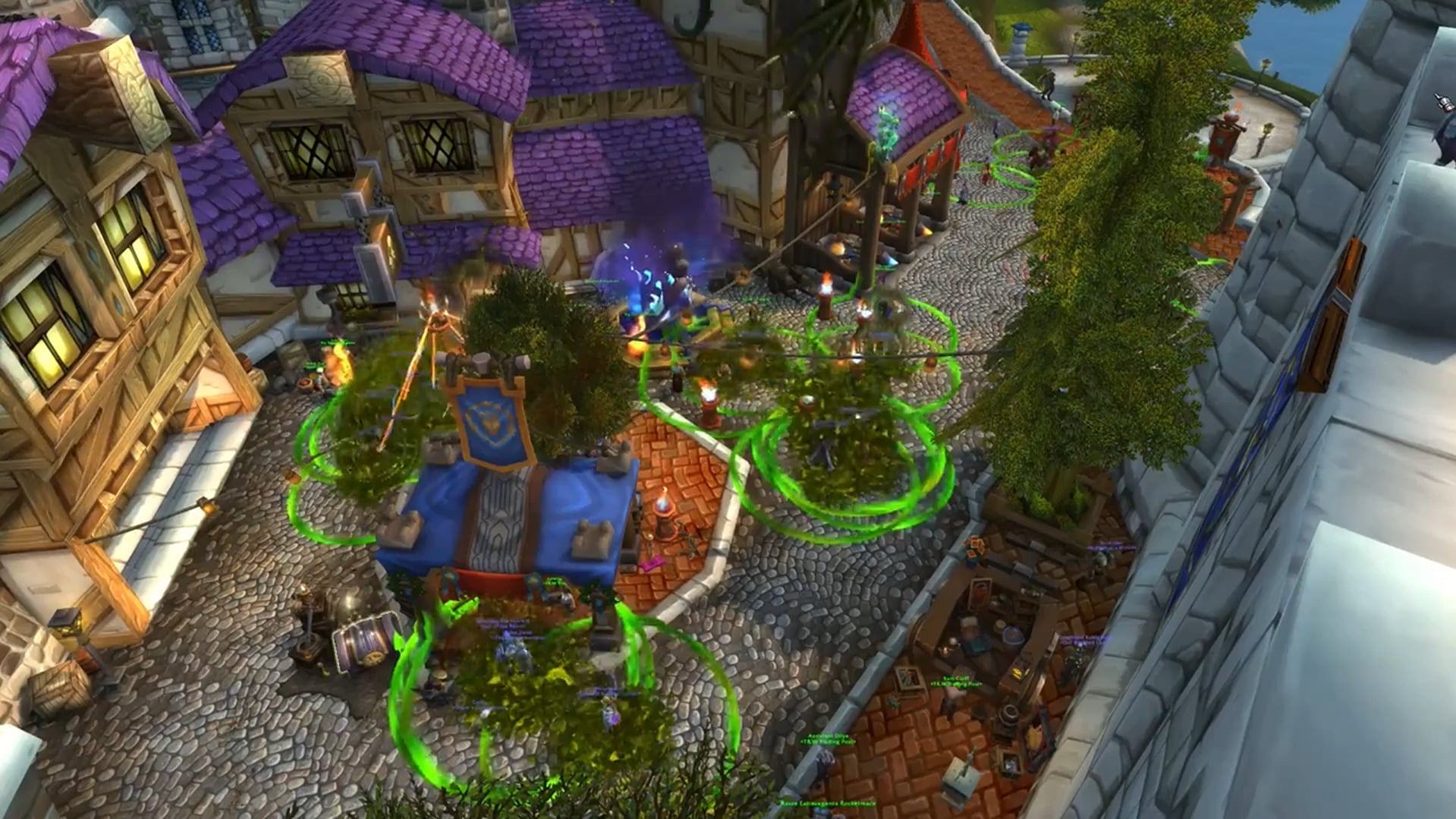
The world of Azeroth has always been a place of grand adventures, epic battles, and memorable moments. For nearly two decades, millions have explored its continents, defeated its villains, and forged lasting friendships. But every now and then, something truly unexpected happens, something that shakes the very foundations of the game and its community. We're talking, of course, about game-wide events that spiral out of control, revealing the best and worst of player behavior. Most veterans instantly recall the infamous "Corrupted Blood Incident" of 2005, a virtual plague that accidentally escaped a raid dungeon and infected the entire game world, providing real-world scientists with valuable insights into epidemic modeling.
Fast forward to a recent in-game event, now colloquially dubbed the "Corrupted Blood Incident 2.0," and the virtual realm was once again plunged into chaos. However, this time, the consequences were arguably far more profound and, for many players, far more disheartening. While the original incident was a fascinating, albeit accidental, social experiment that saw a mix of altruism and panic, the new iteration of a game-wide plague seemed to amplify everything negative about online gaming communities. It didn't just challenge players' in-game strategies; it challenged their patience, their ethics, and ultimately, the very fabric of World of Warcraft's social contract. The "Corrupted Blood 2.0" didn't just make the game harder; it made it undeniably more toxic than usual, leaving a lasting impression that reverberates through the player base even now.
The Echo of the Past: Remembering the Original Corrupted Blood
To truly understand the impact of "Corrupted Blood 2.0," we must first revisit its predecessor. In September 2005, Blizzard introduced the Zul'Gurub raid dungeon. Inside, players faced Hakkar the Soulflayer, who applied a highly damaging, debuff called "Corrupted Blood" to raid participants. This debuff was meant to be contained within the raid, but a critical oversight allowed it to spread. Hunter and Warlock pets, upon dismissing and resummoning, could retain the debuff and carry it out into the open world. Similarly, players could teleport out of the raid while afflicted, bringing the disease to major cities.
The results were immediate and dramatic. Major cities like Orgrimmar and Stormwind became death zones. Low-level characters, unable to withstand the high damage of the debuff, died within seconds. Even high-level characters found themselves struggling. The situation quickly spiraled into a full-blown virtual pandemic. Players reacted in various ways: some tried to help by healing infected players, others self-quarantined in remote areas, while a significant number, either out of curiosity or malice, intentionally spread the plague, becoming "patient zeroes" for new outbreaks. The incident was so significant that real-world epidemiologists studied it as a model for how human populations might react to a large-scale biological threat, as documented in various scientific papers and news reports, such as those found on PubMed Central.
Blizzard's response involved multiple hotfixes, attempts at soft quarantines, and eventually, a full server restart combined with a patch that made Corrupted Blood no longer affect pets or spread to the open world. It was a chaotic, unforgettable chapter in WoW's history, often remembered with a strange mix of horror and nostalgia. The original Corrupted Blood incident taught us about emergent gameplay, player ingenuity, and the unpredictable nature of massive online communities. It was a bug that became a legend.
The Genesis of 'Corrupted Blood 2.0': A New Threat Emerges
The "Corrupted Blood 2.0" event was not, strictly speaking, an accidental bug. It was a deliberately designed in-game event, intended to be a narrative precursor to a new expansion, much like the Scourge Invasion pre-patch events. This new plague, called the "Whispering Blight," was introduced as a potent magical affliction originating from the newly unveiled "Shadowfell Depths" raid. Unlike Corrupted Blood, Whispering Blight had several unique mechanics specifically designed to test player cooperation and decision-making under pressure, but ultimately pushed the community to its breaking point.
The Whispering Blight manifested as a powerful, stacking debuff that inflicted significant shadow damage over time and progressively reduced a player's healing received. What made it particularly insidious was its "contagion vector": players afflicted with Whispering Blight, upon dying, would release a burst of blight energy, creating a small, persistent "Blight Cloud" that would re-infect anyone who entered its radius. These clouds lingered for several minutes and dealt continuous damage. Crucially, the debuff could only be removed by a specific new consumable item, the "Purification Totem," which was rare, expensive, and had a lengthy cooldown, or by a powerful dispel ability available only to a select few specialized healers.
Initial Spread and the Mechanics of Chaos
The initial spread was contained within the Shadowfell Depths, infecting raid groups as they progressed. However, just like its predecessor, a design oversight or perhaps an intended narrative element allowed it to escape. Players who received the Whispering Blight debuff in the raid could, through a combination of teleportation spells or hearthstone usage, carry it into major cities. Upon arriving, many players, overwhelmed by the debuff's damage and lack of immediate purification, would die in populated areas. This death immediately spawned Blight Clouds, turning normally safe zones into deadly traps.
The rate of infection was alarming. The Blight Clouds, unlike the original Corrupted Blood, were stationary yet constantly active. A single player dying in a bank or auction house could create a persistent hazard, leading to chain reactions of deaths as unaware players walked into the cloud, got infected, and then subsequently died, creating new clouds. The "Whispering" aspect came from an in-game chat effect: infected players would occasionally have their chat messages replaced with distorted, ominous whispers, adding to the atmosphere of dread and confusion. This was Blizzard's attempt to make the plague feel more immersive and impactful on player interaction, but it inadvertently fueled frustration and mistrust.
Player Reactions: A Society Under Stress
The response from the player base was immediate and multifaceted, but with a distinct tilt towards conflict and negativity compared to the original incident. The unique mechanics of Whispering Blight, particularly the lingering Blight Clouds and the difficulty of removal, fostered an environment ripe for exploitation and griefing.
The Few Helpers, The Many Exploiters
Initially, there were those who mirrored the altruism seen in 2005. Healers with the rare dispel ability dedicated themselves to purifying others, often at great personal risk and resource cost. Players attempted to organize "safe zones" in less populated areas or outside city gates, warning others away from contaminated areas. Some even crafted the expensive Purification Totems to distribute freely. However, these acts of kindness were quickly overshadowed by more destructive behaviors.
The persistent Blight Clouds proved to be a powerful tool for griefing. Players would intentionally die in high-traffic areas – the auction house, the bank, quest hubs – to create Blight Clouds, effectively denying access to essential services or killing low-level players who couldn't survive the damage. This wasn't merely accidental spread; it was calculated disruption. Unlike Corrupted Blood which eventually faded from a player, the Blight Clouds remained, acting as static, malicious monuments to the plague's spread. Griefers reveled in the chaos, often boasting in general chat about their "contributions" to the blight, egging on further acts of sabotage. The anonymity of the internet, often a shield for such behavior, became a powerful amplifier in this high-stress situation.
The Erosion of Trust and the Rise of "Plague Lords"
The economic impact was also significant. The rare Purification Totems became incredibly valuable, creating a new market for exploitation. "Plague Lords" emerged – players who cornered the market on these totems, selling them at exorbitant prices to desperate players. Others even charged a fee for dispels, refusing to help unless paid. This monetizing of suffering, while perhaps a reflection of real-world scarcity and supply-demand, felt particularly jarring and further damaged the community's sense of solidarity. Trust evaporated; every player became a potential carrier, a potential victim, or a potential exploiter.
Furthermore, the "whispering" chat effect, intended to be atmospheric, became a source of paranoia. Players started using it to send misleading or frightening messages, adding to the general panic and confusion. It became difficult to discern genuine warnings from malicious hoaxes, leading to further breakdown in communication and a heightened sense of individual isolation amidst the digital crowd.
Toxicity Unleashed: Why 2.0 Was Fundamentally Different
While the original Corrupted Blood incident had its share of chaos, "Corrupted Blood 2.0" propelled the game into an unprecedented level of toxicity. The reasons for this escalation are complex, stemming from a combination of the event's mechanics, the current state of online communities, and player psychology.
Stress, Frustration, and Intentional Griefing
The mechanics of the Whispering Blight were designed to be more punishing and less easily escapable. The lingering Blight Clouds meant that even after dying, the infection's footprint remained, constantly reminding players of the danger and disrupting normal gameplay. This persistent, unavoidable threat led to immense frustration. When players are frustrated, they are more likely to lash out. The ability to intentionally create these disruptive clouds provided a direct, tangible way for players to express that frustration, or simply to derive perverse satisfaction from the suffering of others.
The key difference was the shift from accidental spread to intentional malice. In 2005, many of the "spreaders" were likely unaware of the full implications, or were simply curious. In 2.0, the actions were deliberate. Players explicitly sought to create Blight Clouds in the most inconvenient locations, targeting quest NPCs, flight masters, and auctioneers. This wasn't just a bug; it was an active form of griefing, often accompanied by taunts and mocking in chat channels, turning the virtual plague into a weaponized social tool.
Erosion of Community Spirit and the Anonymity Factor
Modern online gaming communities, particularly in long-running MMOs, have evolved. While vibrant communities still exist, there's also a prevalent undercurrent of anonymity and a reduced sense of personal responsibility. The "Corrupted Blood 2.0" event tapped directly into this. With the stakes being virtual, and the consequences for toxic behavior often feeling minimal or delayed, players felt empowered to act in ways they never would in real life. The lack of direct eye contact, the ease of logging off, and the sheer volume of players meant that individual acts of malice could be swallowed by the crowd.
This anonymity, combined with the event's inherent stress, fractured what remained of server communities. Instead of uniting against a common in-game foe (the plague), players turned against each other. Public channels became battlegrounds of accusations, insults, and threats. Players formed "anti-blight" vigilante groups that clashed with "plague cultists" who embraced and spread the infection, creating a meta-game of ideological warfare that far surpassed the scope of the original event.
The Role of Game Design in Amplifying Toxicity
While player behavior is ultimately responsible, it's worth considering how the design choices for Whispering Blight might have inadvertently amplified toxicity. The scarcity and high cost of Purification Totems, coupled with the limited dispel capabilities, created bottlenecks and exacerbated feelings of helplessness. If the cure had been more accessible, perhaps the desperation that fueled both exploitation and griefing would have been less intense. The persistent nature of the Blight Clouds, compared to the transient nature of the original Corrupted Blood debuff, also provided a longer window and a more visible impact for griefers, making their actions more "rewarding" in a perverse sense.
Furthermore, the narrative framing of the event, intended to be dark and apocalyptic, seemed to give tacit permission for players to lean into the darker aspects of human behavior. When the game world itself becomes a place of suffering and death, some players will inevitably embrace that chaos rather than fight it.
Blizzard's Response: A Tightrope Walk in a Blighted World
Blizzard Entertainment found itself in a difficult position. Unlike the original Corrupted Blood, which was an unintended bug, Whispering Blight was a planned event. This meant they had to balance fixing the emergent toxicity with maintaining the intended narrative and challenge of the pre-expansion event. Their response was a multi-stage process, reflecting the complexity of the situation.
Initial Hotfixes and Attempts at Containment
Initially, Blizzard implemented rapid hotfixes. They increased the drop rate and vendor availability of Purification Totems, trying to alleviate the economic exploitation and provide players with more tools to manage the infection. They also attempted to make the Blight Clouds despawn faster and introduced "Purification Zones" in major cities where players would be automatically cleansed and unable to spread the plague. However, these zones were often immediately outside cities, meaning players still had to run a gauntlet of Blight Clouds to reach them, often dying in the process.
A more drastic measure was the introduction of server-wide debuffs that intermittently reduced the potency of Whispering Blight or temporarily removed all existing Blight Clouds. These were essentially "soft resets" designed to give the servers a breathing room, but they were met with mixed reactions. Some appreciated the relief, while others felt it undermined the seriousness of the event and the efforts of players who were actively trying to manage it. The temporary nature of these solutions meant the problem always returned, fueling a sense of futility among players.
Moderation and Long-Term Solutions
Perhaps the most significant difference in Blizzard's response compared to 2005 was their increased focus on moderation. Recognizing the high level of intentional griefing, they issued warnings and temporary bans to players found deliberately creating Blight Clouds in disruptive locations or openly boasting about spreading the plague. This was a direct acknowledgment that the social contract of the game was being broken, and that while emergent gameplay was interesting, outright malicious behavior was not tolerated. This proactive moderation, while welcome to many, also sparked debates about player freedom and Blizzard's role in policing player behavior during "open-ended" events.
Ultimately, the Whispering Blight event was concluded with a large-scale server-wide "cleansing ritual" tied into the new expansion's narrative, effectively removing all traces of the plague from Azeroth. However, the lasting impact on the community lingered. Blizzard also acknowledged, in post-event developer blogs and forum posts, that while they valued emergent gameplay, they would re-evaluate the mechanics of future global events to prevent such widespread toxicity. They specifically mentioned looking into ways to prevent direct player-to-player griefing without stifling player agency or the sense of danger.
The Lasting Scar: What '2.0' Means for WoW's Future
The "Corrupted Blood 2.0" event left a deep scar on the World of Warcraft community. While the plague itself is gone, the memory of the widespread griefing, exploitation, and overall negativity remains vivid. For many, it exposed an ugly side of the player base that had been simmering beneath the surface, revealing how quickly a virtual society can descend into chaos when given the tools and opportunity.
This incident serves as a crucial case study not just for Blizzard, but for all online game developers. It highlights the delicate balance between creating dynamic, immersive world events and safeguarding the mental well-being and social cohesion of the player community. Emergent gameplay, while exciting, can be a double-edged sword. When players are empowered to significantly impact the game world and other players, the potential for both incredible cooperation and unprecedented toxicity is unleashed.
Moving forward, Blizzard faces the challenge of rebuilding trust and fostering a more positive environment. Future events will likely be designed with more robust anti-griefing measures and clearer guidelines. The "Corrupted Blood 2.0" will forever be remembered not just as a virtual pandemic, but as a stark reminder of the fragile nature of online communities and the profound impact that game design, even with the best intentions, can have on player behavior. It reinforced the idea that while virtual worlds offer escape, they also reflect, and sometimes amplify, the complex realities of human interaction. The goal for many now is to return to the spirit of adventure and cooperation that defines the best of Azeroth, hoping that the wounds of the Whispering Blight will eventually heal.
from Kotaku
-via DynaSage
