6 Classic Games With Cool Details Hidden On Their Unpatched Physical Discs
The Vanishing World of Unpatched Games: Why Digital Gaming Threatens a Unique Legacy
Imagine a treasure map where the most exciting secrets aren't marked with an 'X' but are found by accident, hidden in plain sight. For video game enthusiasts and historians, these "unintentional secrets" have long been a thrilling part of the gaming landscape. They are the glitches, the developer oversights, the quirky behaviors, or even parts of the game that were changed after release. These unique discoveries were once locked away inside the physical copies of games, like old books holding forgotten stories.
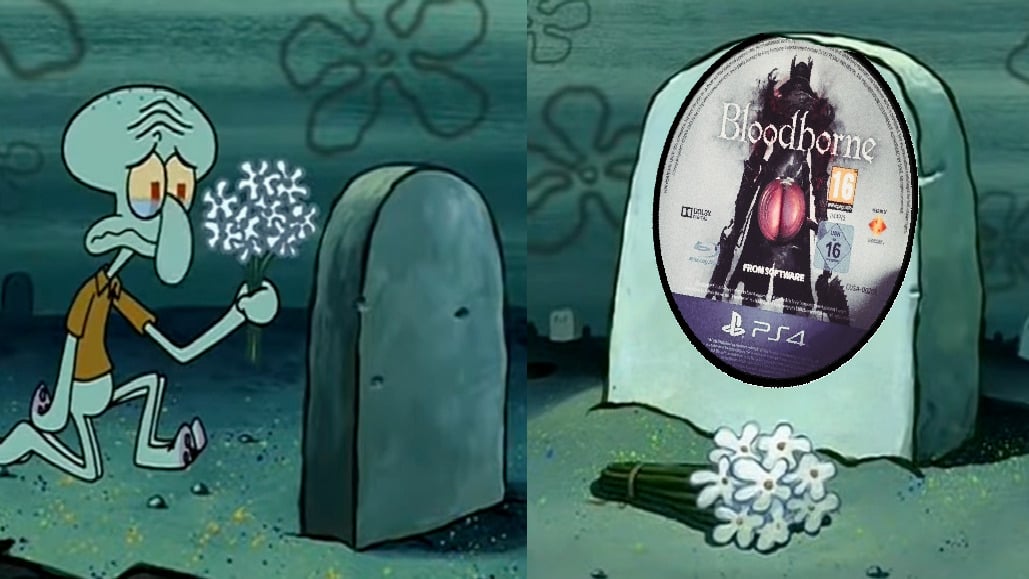
But the world of gaming is changing rapidly. As modern game consoles move away from physical discs and cartridges towards a future that is entirely digital, these special hidden gems are slowly disappearing. The shift means that the original, "unpatched" versions of games – the ones with all their raw, sometimes messy, charm – are becoming incredibly hard to find. The image above, showing a mournful Squidward at the "grave" of Bloodborne, powerfully captures this feeling of loss. It’s not just about a game; it’s about the passing of an era where every physical copy held a unique, unchanging snapshot of a game's early life, full of unexpected discoveries waiting to be found.
The Digital Revolution: A Double-Edged Sword
The move to digital-only gaming offers many clear advantages. For players, it means instant access to a vast library of games without needing to leave the house. No more scratched discs, lost cartridges, or overflowing shelves. Digital downloads can begin almost immediately, and games are always "in stock." For developers and publishers, it means easier distribution, quicker updates, and a direct line to their audience. This efficiency has undoubtedly streamlined the gaming experience for millions, making gaming more accessible than ever before.
However, this convenience comes with a significant trade-off. When you buy a game digitally, you're often purchasing a license to play it, not truly owning the game itself in a physical sense. This means you’re relying on the platform (like PlayStation Store, Xbox Games Store, or Steam) to keep that game available. More importantly, when you download a game today, you almost always get the most recent version, complete with all the updates and fixes that have been released since its original launch. While these updates often improve the game, fixing bugs and adding new content, they also overwrite the original, "day one" version forever. This seemingly helpful process inadvertently erases a piece of gaming history, making the initial, raw release of a game almost impossible to experience for new players.
What Are These "Unintentional Secrets"?
When we talk about "unintentional secrets," we're not just referring to hidden levels or easter eggs deliberately placed by developers. Instead, we're talking about the unexpected quirks that arise from a game's initial development. These can range from minor graphical glitches where a character might briefly float through a wall, to significant bugs that allow players to skip large parts of a game, known as "sequence breaking." They include debug menus that developers accidentally left in, allowing players to activate cheats or view unused content. Sometimes, they involve early versions of game mechanics that were later refined, or even pieces of story dialogue that were changed or removed in subsequent patches.
These early imperfections are more than just flaws; they are historical artifacts. They provide a unique window into the game's development process, showing how it existed before extensive testing and community feedback. For many gamers, especially those in communities dedicated to speedrunning or unusual challenge runs, these glitches are not hindrances but tools. They are the pathways to new achievements, faster clear times, or entirely new ways to interact with a game world. Think of a bug that lets you jump higher than intended, or pass through a locked door – these aren't just errors, they're invitations for creative play that often disappear with the first major update.
The Guardian of the Original Experience: Physical Media
Before the dominance of digital downloads, a physical game disc or cartridge was a time capsule. Once a game was pressed onto a disc or etched onto a cartridge, that specific version was permanently stored. This "golden master" copy represented the game as it was on the day it was sent to manufacturing. When you bought a physical copy, you were getting that exact version, no matter when you played it.
This is crucial because it allowed for the preservation of the "day one" experience. Many games today launch alongside a "day one patch" – a significant update available on the very first day the game is released. This patch often fixes critical bugs, improves performance, or even adds features that couldn't be included on the physical disc due to time constraints. While these patches are beneficial, they immediately alter the game from its original form. If you had a physical disc and chose not to download the patch (or couldn't, due to lack of internet), you would be playing the game exactly as it was designed and finalized before that first wave of updates. This unpatched version, with all its original oddities and imperfections, is the unique snapshot that physical media preserves. Finding an unpatched copy of a classic game is like finding an original manuscript before editors made their changes – a rare and fascinating insight into its true beginnings.
How Digital Erases History: The Patching Paradox
The convenience of digital gaming comes with an inherent challenge for game preservation. When you download a game from a digital store, you almost never get the choice to download an older version. The system is designed to provide you with the most up-to-date, patched version, ensuring the best possible experience according to the developers' latest vision. This means if you want to play a game as it was at launch, with its original bugs, balance issues, or even early artistic choices, a digital purchase simply won't allow it. The older versions are often overwritten or removed from the servers entirely, deemed obsolete by the publisher.
This creates a "patching paradox": while patches improve stability and performance, they simultaneously erase previous iterations, making it impossible to revisit the game's evolution. Beyond that, the reliance on digital platforms introduces other risks. What happens if a game's online services are shut down, or if the platform itself ceases to exist? Many games rely on server-side checks or downloads to even function. Without these servers, a digitally purchased game might become unplayable, even if you theoretically "own" it. This issue is compounded by Digital Rights Management (DRM) systems, which can prevent games from running without online verification, even for single-player experiences. The long-term stability and accessibility of our digital game libraries are therefore uncertain, highlighting a significant difference from the enduring nature of physical copies.
The Value Beyond a "Fix": Why Preservation Matters
The original, unpatched versions of games hold immense value that goes far beyond simply being "broken" or needing a "fix." They are crucial for several reasons:
Historical Significance: Unpatched games offer a unique glimpse into the constraints and development processes of their time. They show how games were initially conceived and delivered, reflecting the technology and design philosophies prevalent during their creation. For game historians and academics, these original versions are like primary sources, essential for understanding the evolution of game design, programming, and player experience.
Artistic Integrity: While patches often "improve" a game, they also represent changes made after the initial creative vision was solidified. The "day one" version, with all its quirks, can be seen as the raw, unfiltered artistic expression of the development team at a specific point in time. It's the game before widespread feedback or the pressure to fix every small bug led to alterations. Preserving this initial state respects the game as an evolving piece of art.
Speedrunning and Challenge Communities: A significant portion of the gaming community thrives on pushing games to their limits. Speedrunners often exploit specific glitches found only in unpatched versions to achieve incredibly fast completion times. These "glitch runs" create entire categories within the speedrunning world, celebrated for their mastery of unintended game mechanics. Without access to these specific versions, these unique forms of competitive play would simply cease to exist.
Archival Concerns: Just as libraries preserve books and films, there is a growing need for robust video game archives. Museums and institutions want to collect, document, and make games accessible for future generations. For physical media, this is straightforward – you preserve the disc. For digital-only games, or for specific unpatched versions, the challenge is immense. How do you archive something that exists primarily as data on a remote server, constantly updated and subject to removal? This digital fragility makes the preservation of unpatched physical copies even more critical as a safeguard for gaming history.
Bloodborne and Beyond: A Symbol of Loss
The image of Squidward at the grave of Bloodborne resonates deeply with the core message here. Bloodborne is a critically acclaimed and beloved game, known for its challenging gameplay, unique atmosphere, and intricate lore. While fans often wish for a PC port, a 60fps update, or a sequel, the image speaks to a different kind of longing: the lament for what is lost or potentially lost. It symbolizes the death of the ability to access and experience games like Bloodborne in their original, foundational state.
Imagine a future where you can only play the "final" patched version of a classic. You would never know about the original difficulty spikes, the unique item placements, or even the small graphical inconsistencies that were present on launch day. These subtle differences, while sometimes annoying, were part of the game's identity and its journey. Players often form strong memories around these early experiences, even the buggy ones. For games like the notoriously quirky Morrowind or the meme-generating early versions of Skyrim, their initial, unrefined states are part of their charm and legacy. The image of Bloodborne's grave isn't just about a single game, but about the slow erosion of a unique connection players have with the authentic, day-one versions of their favorite digital worlds.
The Future Landscape: Adapting to an All-Digital World
As we march further into an all-digital future, the implications for game preservation and the ability to experience a game's "original" form become more pressing. For upcoming console generations, the trend seems clear: digital libraries will be the norm, and physical media might become a niche product or disappear entirely. This raises important questions:
Will game platforms ever offer an option to download specific older versions of a game, akin to how some PC platforms like GOG.com allow users to revert to previous updates? Currently, this is rare on major console digital storefronts. What role will emulation and community efforts play? Often, it's dedicated fans who painstakingly archive and make available older game versions and even entire game platforms, fighting against obsolescence.
There's a growing call for game companies and platform holders to recognize the importance of preserving gaming history. This could mean establishing official digital archives, ensuring that older versions of games remain accessible, or designing digital distribution systems that allow for greater flexibility in choosing game versions. Without a concerted effort, the digital convenience of today could become the historical void of tomorrow, leaving future generations unable to fully appreciate the complex and evolving nature of video game development.
A Call to Action (or Reflection): Cherishing the Past, Shaping the Future
The shift to an all-digital gaming ecosystem is inevitable and brings many benefits. However, it also demands that we, as players, developers, and platform holders, become more aware of what we stand to lose. The "unintentional secrets" hidden within unpatched physical media are more than just curiosities; they are vital pieces of gaming history, cultural artifacts that reveal the raw, unpolished beginnings of beloved virtual worlds.
For players, this might mean a renewed appreciation for physical collections, not just as collectibles, but as living archives. For developers, it's an invitation to consider how their work, in all its iterations, can be preserved for posterity. For platform holders, it's a challenge to create digital ecosystems that are not just convenient but also robust guardians of our collective gaming heritage.
Ultimately, the unique magic of discovering a game in its original, unadulterated form – with all its unexpected quirks and unfiltered charm – is something worth fighting for. As Squidward mourns the "grave" of Bloodborne, let it be a reminder of the preciousness of our gaming past, and a call to ensure that the secrets of yesterday continue to inspire and inform the players of tomorrow.
Conclusion
The journey from physical discs to an all-digital gaming world marks a significant evolution in how we access and experience video games. While the convenience and accessibility of digital distribution are undeniable, this transition comes at a cost: the gradual disappearance of the "unintentional secrets" and original versions locked away in unpatched physical media. These glitches, developer oversights, and early game states are more than mere flaws; they are invaluable artifacts that enrich game history, fuel speedrunning communities, and offer unique insights into the creative process.
As console gaming embraces a fully digital future, the ability to revisit a game's authentic, day-one experience becomes increasingly rare. The image of Squidward mourning Bloodborne serves as a poignant reminder of this impending loss – not just of a game, but of a specific way of engaging with and understanding the history of interactive entertainment. To truly preserve the rich tapestry of video game culture, we must find ways to archive and make accessible these foundational versions, ensuring that the unique magic and unexpected discoveries of the past are not lost forever in the endless stream of digital updates.
from Kotaku
-via DynaSage

Post a Comment