
Siri AI Gains Customizable Voice Expressiveness and Pace
Apple's Siri AI Gets a Major Upgrade: Customizable Voices and Super-Accurate Dictation
Apple has just announced a significant leap forward for its intelligent assistant, Siri AI. Users can look forward to a "brand new voice experience," which includes exciting new ways to personalize how Siri sounds and performs. This update promises to make interactions with your Apple devices even more natural, intuitive, and tailored to your preferences.
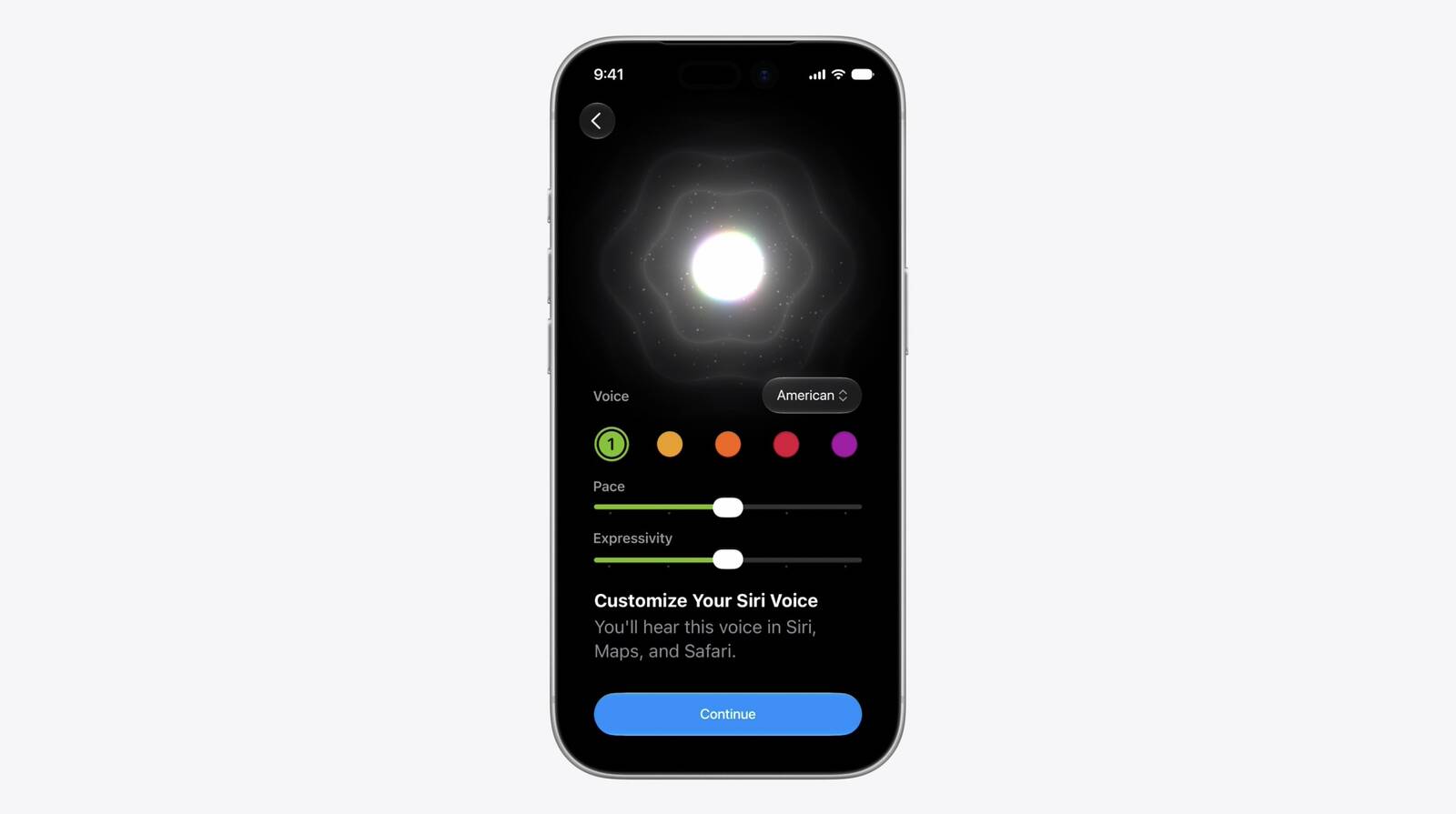
At the heart of this innovation is Apple's most advanced on-device model, which powers these enhancements directly on your device. This means not only greater privacy but also faster, more responsive performance. With this cutting-edge technology, Siri AI will deliver voices that are more expressive, alongside a truly remarkable improvement in systemwide dictation accuracy. Imagine speaking to your device and having it understand not just your words, but also the nuance behind them, and then responding in a voice that suits you perfectly.
A Personalized Sound: Customizing Siri's Voice
For a long time, digital assistants have offered a limited selection of voices. While some variation existed, the core characteristic of the voice was largely fixed. This new update from Apple changes that entirely, introducing a level of personalization previously unseen in mainstream voice assistants. The "brand new voice experience" goes beyond just offering new voice options; it gives you, the user, direct control over key aspects of Siri's vocal delivery.
The most exciting aspect of this update is the ability to adjust both the expressiveness and the pace of Siri's voice. This is a game-changer for how we interact with our devices. Imagine being able to fine-tune how much emotion or emphasis Siri puts into its responses. For some, a very matter-of-fact, direct tone might be preferred, especially for quick tasks or information retrieval. For others, a more warm and engaging voice might create a more pleasant and less robotic interaction, particularly when listening to longer texts or engaging in more conversational queries.
Expressiveness: Adding Emotion and Nuance
What does "expressiveness" truly mean for a digital voice? In human speech, expressiveness involves variations in pitch, tone, volume, and rhythm that convey emotions, emphasize certain words, or indicate sarcasm, excitement, or calm. For a digital assistant, recreating this naturally has been a monumental challenge. With this update, Apple is pushing the boundaries of what's possible, allowing Siri to convey a broader range of vocal characteristics. This means Siri could potentially sound more empathetic, more enthusiastic, or more reassuring, depending on the context and, crucially, your chosen settings. For example, if Siri is giving you a warning about traffic, it might be able to do so with a slightly more urgent tone, or if it's celebrating your fitness achievement, it could sound more cheerful. The ability to fine-tune this means you can decide how much of this "humanity" you want in your digital assistant.
Pace: Speaking at Your Speed
Equally important is the ability to adjust the pace of Siri's voice. We all process information at different speeds. For some, a quick, brisk pace is ideal, allowing them to get information rapidly and move on. For others, particularly those who are learning a new language, have auditory processing differences, or simply prefer to absorb information more slowly, a slower, more deliberate pace is essential. The lack of this option in many digital assistants has been a significant barrier for accessibility and comfort. Apple's introduction of adjustable pace directly addresses this need, making Siri a truly more inclusive and user-friendly assistant. Whether you're in a hurry and want Siri to speak faster, or you're multitasking and need it to slow down so you can catch every word, the control is now in your hands.
Intuitive Control with Sliders
Apple's approach to user interface design is often characterized by its simplicity and intuitiveness. True to form, users will be able to adjust both the expressiveness and pace of Siri's voice through a new user interface featuring easy-to-use sliders. This method of control is familiar and accessible, allowing anyone to quickly experiment and find their perfect Siri voice without navigating complex menus or settings. The visual feedback from the sliders will make it clear how your adjustments are changing Siri's vocal characteristics, empowering you to create a truly personalized sound profile.
As of the initial developer beta 1, the American English voice is the sole option available for these new customization features. This is typical for early releases, allowing Apple to focus on perfecting the core technology before expanding to a wider array of languages and accents. It's highly anticipated that Apple will roll out these expressive and pace customization options to other languages and regional variations in future updates, further enhancing Siri's global appeal and accessibility.
The Power of Customization: Why This Matters
Customizing Siri's voice might seem like a small detail, but its implications are profound, touching upon personalization, accessibility, and the very nature of human-computer interaction. It transforms Siri from a static, standardized interface into a dynamic, adaptable companion that truly feels like it belongs to you.
Deepening Personalization
In an era where technology is deeply integrated into our daily lives, personalization is no longer just a luxury but an expectation. We customize our phone wallpapers, app layouts, and notification sounds. Extending this personalization to the voice of our primary digital assistant is a natural and powerful step. A Siri that sounds "just right" can foster a stronger sense of comfort and familiarity. It moves beyond a generic utility and becomes a more integral, personalized part of your personal ecosystem. This level of customization allows you to shape your digital environment to better suit your individual preferences, making every interaction feel more natural and less like talking to a machine.
Enhancing Accessibility for All
One of the most significant benefits of adjustable pace and expressiveness is improved accessibility. For individuals with cognitive processing difficulties, dyslexia, or hearing impairments, a fixed-speed, monotonous voice can make understanding spoken information challenging. The ability to slow down Siri's speech can dramatically improve comprehension and reduce listening fatigue. Similarly, while expressiveness might seem purely aesthetic, subtle vocal cues can sometimes aid in disambiguation or highlight important information, which can be beneficial for many users. Apple has a strong track record of building accessibility into its products, and this Siri update is a clear continuation of that commitment, ensuring that more people can effectively use and benefit from their devices.
Fostering Better Engagement and Comfort
A voice that is more pleasant to listen to and can adapt to your needs is inherently more engaging. If Siri sounds too fast or too robotic, users might be less inclined to use it for anything beyond basic commands. However, a Siri that can adjust its pace to match your listening speed and even convey a degree of appropriate expressiveness can make interactions feel more comfortable, less strenuous, and ultimately more enjoyable. This increased comfort can lead to greater utilization of Siri's capabilities, encouraging users to explore more complex queries and commands, thereby unlocking the assistant's full potential.
A Glimpse into the Future of Digital Voices
This update also paves the way for even more advanced voice technologies. If users can adjust expressiveness and pace, what comes next? Could we see options for different accents within a language, or even the ability to "train" Siri's voice to sound more like a family member or a preferred voice actor? The underlying technology for generating and modifying speech with such fine control opens up a world of possibilities for hyper-personalized digital interactions. Imagine a future where your digital assistant truly has a voice that is uniquely yours, adapting not just to your preferences, but also to the context of your conversation.
Revolutionizing Dictation Accuracy: Speak Naturally, Get Perfect Text
Beyond the exciting voice customization, Apple has made equally significant strides in systemwide dictation accuracy. For anyone who regularly uses voice-to-text, this update is nothing short of revolutionary. The previous pain points of dictation – constant corrections, awkward formatting, and unintelligent punctuation – are now being addressed head-on with an advanced new dictation engine.
Capturing Speech as "Polished Text"
The core promise of this improved dictation engine is to capture speech not just as raw text, but as "polished text." What does this mean in practice? It means the system will automatically handle critical elements that previously required manual editing. Capitalization, for instance, will be applied correctly at the beginning of sentences and for proper nouns, just as you would expect from a human transcriber. Punctuation – commas, periods, question marks, exclamation points – will be inserted intelligently, based on the natural pauses and intonations in your speech. Moreover, the engine will manage formatting in real time, anticipating where paragraphs might begin or lists might be implied, all while you're still speaking.
Real-Time Precision and Immediate Feedback
One of the most frustrating aspects of older dictation systems was the delay in seeing the corrected text, or the need to wait until you finished speaking a full sentence before any punctuation or capitalization appeared. This new engine processes speech in real time, meaning you'll see your words appear on screen accurately and correctly formatted as you speak them. This immediate feedback not only enhances the user experience but also allows for quicker adjustments if the system misinterprets a word, although Apple's claim of "significant improvement" suggests such instances will be far less frequent.
The Freedom to "Speak Naturally"
Perhaps the most liberating aspect of this update is the newfound ability to "speak naturally." Previous dictation systems often required users to speak in a somewhat stilted, overly enunciated, or even robotic manner to ensure accuracy. This broke the flow of thought and made dictation feel less like a natural conversation and more like an exercise in precision. Apple's improved speech understanding means the AI is far better equipped to grasp context, understand nuances in accents, and process everyday speech patterns. This frees users from the burden of adapting their speech to the machine, allowing them to focus purely on what they want to say, trusting that their words will appear accurately and as intended.
Impact on Productivity and Workflow
For professionals, students, writers, and anyone who needs to capture thoughts quickly, the productivity gains from this enhanced dictation are immense. Drafting emails, taking notes in meetings, composing long documents, or even just jotting down a sudden idea becomes significantly faster and more efficient. The time saved from not having to constantly go back and edit for capitalization, punctuation, and basic formatting can add up, allowing users to dedicate more mental energy to the content itself rather than the mechanics of transcription. It essentially transforms speech into a robust input method, rivaling or even surpassing typing speed for many tasks.
Accessibility Reinforcement
Just like the voice customization, the dictation improvements offer profound accessibility benefits. For individuals who struggle with typing due to physical limitations, repetitive strain injuries, or conditions affecting fine motor skills, dictation can be a lifeline. A system that reliably translates natural speech into perfectly formatted text empowers these users to communicate and create with unprecedented ease. This ensures that technology is not a barrier but an enabler, opening up new avenues for participation and expression.
Behind the Scenes: Advanced AI and Machine Learning
These remarkable improvements in dictation don't happen by magic. They are the result of advanced artificial intelligence and machine learning models trained on vast amounts of speech data. These models learn to recognize not just individual words, but also the patterns of human language, including syntax, semantics, and prosody (the rhythm, stress, and intonation of speech). The "on-device model" aspect is key here, as it allows for incredibly fast processing without sending sensitive audio data to cloud servers, which significantly boosts privacy and responsiveness.
The Synergy of Improvements: A More Natural Interaction
What makes these updates truly powerful is how the customizable voice experience and the super-accurate dictation work in synergy. They represent two sides of the same coin: Siri's ability to listen and its ability to speak. By enhancing both simultaneously, Apple is creating a far more natural and seamless human-computer interaction.
Imagine speaking to Siri naturally, without having to rephrase or correct yourself, knowing that your words will be instantly and accurately transcribed. And then, Siri responds in a voice that is not only clear but also tailored to your personal preferences for pace and expressiveness. This creates a conversational flow that feels less like issuing commands to a machine and more like interacting with an intelligent, understanding assistant. This holistic approach to voice interaction is crucial for the future of AI, moving towards a world where technology adapts to us, rather than the other way around.
Apple's vision for AI has consistently focused on enhancing the user experience through seamless integration and intuitive design, often with privacy as a cornerstone. These Siri updates perfectly align with that philosophy, demonstrating how advanced AI can empower users by offering more control, greater accuracy, and a more personalized digital environment.
Privacy at the Core: The On-Device Model
It's important to reiterate the significance of these features being powered by Apple's "most advanced on-device model." In an age of increasing concerns about data privacy, Apple has consistently emphasized keeping user data local whenever possible. By processing speech and generating voice responses directly on your device, Apple ensures that your personal audio and spoken commands are not sent to cloud servers for processing. This not only significantly enhances privacy and security but also contributes to the speed and responsiveness of Siri. The computations happen instantly on your device, without the need for an internet connection to process the core aspects of these new features. This commitment to on-device intelligence is a hallmark of Apple's approach to AI, balancing powerful capabilities with user trust and data protection.
Looking Ahead: The Future of Siri
These current updates, while significant, feel like a foundational step towards an even more sophisticated future for Siri. The ability to control voice characteristics and the massive leap in dictation accuracy lay the groundwork for a truly intelligent and adaptive assistant. We can speculate on future enhancements that will build upon this strong base:
- More Expressive Range: Deeper and more nuanced emotional range, allowing Siri to truly match the context of a conversation, from celebratory to solemn.
- Multilingual Expressiveness: Extending these customization options to a vast array of languages and accents, making Siri universally adaptable.
- Proactive and Contextual Awareness: With improved understanding of natural speech, Siri could become even better at anticipating needs and offering proactive assistance based on ongoing conversations and context.
- Seamless Integration Across Ecosystem: Even deeper integration with other Apple services and third-party apps, making Siri a central hub for all digital interactions.
- Emotional Intelligence: While currently about expressiveness, future iterations might see Siri not just sounding expressive, but also better interpreting human emotions and responding in a more emotionally intelligent manner.
These updates signal Apple's renewed commitment to making Siri a truly leading-edge AI assistant. By focusing on fundamental aspects like natural interaction and personalization, Apple is setting the stage for a future where our devices don't just respond to commands, but truly understand and adapt to us.
Conclusion: A Smarter, More Personal Siri is Here
Apple's latest enhancements to Siri AI mark a pivotal moment for the intelligent assistant. With the introduction of a "brand new voice experience" that allows users to customize expressiveness and pace, combined with a monumental improvement in systemwide dictation accuracy, Siri is evolving into a more personal, intuitive, and highly capable companion. These advancements, powered by Apple's advanced on-device model, not only offer unparalleled control over how Siri sounds and performs but also uphold the company's commitment to user privacy and accessibility.
The ability to speak naturally and have your words perfectly translated into polished text, coupled with a Siri that responds in a voice tailored to your preferences, transforms the very nature of human-computer interaction. It's a significant step towards a future where technology is not just smart, but also deeply personal and seamlessly integrated into our lives, making every interaction feel more natural and effortless. Get ready to experience Siri in a whole new way – a way that’s distinctly yours.
This article, "Siri AI Gains Customizable Voice Expressiveness and Pace" first appeared on MacRumors.com
Discuss this article in our forums
from MacRumors
-via DynaSage
