Apple's New AI Models Contain 'None' of Google's Gemini Assistant
Unpacking Apple's AI Architecture: How Apple Foundation Models Work and the Truth About Google's Role
The world has been buzzing with anticipation for Apple's deep dive into artificial intelligence. Recently, Apple executives pulled back the curtain, offering a detailed look at the core structure of their new Apple Intelligence features. A key point of clarity emerged: the intricate architecture of their bespoke Apple Foundation Models (AFM) and, crucially, the precise, nuanced way Google's technology contributed to their development. This isn't a simple case of one tech giant adopting another's off-the-shelf solution; it's a testament to Apple's meticulous approach, especially concerning user privacy and control.
Following a highly anticipated keynote event, Craig Federighi, Apple's Senior Vice President of Software Engineering, hosted a crucial tech talk. He was joined by key figures in Apple's AI development: Amar Subramanya, Vice President of AI; Mike Rockwell, the lead for Siri; and Sebastien Marineau-Mes, Vice President of Software. During this session, detailed insights were shared (as reported by 9to5Mac) into how the third-generation AFM family was meticulously crafted from the ground up and, more importantly, how these advanced models serve as the powerful engine behind Apple Intelligence.
Dispelling the Rumors: Apple's Independence from Google Assistant and Gemini
One of the most pressing questions in the tech community revolved around Apple's relationship with Google's existing AI. Craig Federighi addressed this directly and unequivocally, stating, "The amount of the Google Assistant we use is none." This powerful statement set the tone for Apple's independent strategy. He elaborated further, ensuring there was no room for misinterpretation about the nature and extent of Google's involvement in Apple's user-facing AI capabilities.
Federighi explicitly clarified that Apple does not, in any capacity, deploy Google's Gemini models that are available to Google's own customers. This means that the artificial intelligence models directly interacting with Apple users are entirely Apple's creation, designed and optimized for their ecosystem. Furthermore, Apple has not integrated any of Google's client-side code—the software that runs locally on devices—into its operating systems. This commitment to developing its own client-side AI ensures a seamless, integrated, and private experience native to Apple devices.
Perhaps even more significant is the declaration regarding the knowledge backbone of Apple's AI. Federighi confirmed that Apple does not rely on Google Search infrastructure as the foundational source of information for its intelligence system. This is a critical distinction, as a vast amount of AI functionality depends on accessing and processing a comprehensive knowledge base. Apple's decision to build its own independent knowledge infrastructure underscores its long-term vision for its AI and its dedication to controlling the entire stack.
Of course, we don't have the Gemini app as our app. In fact, none of that client code is part of how we run on iOS. For these models, we use none of the models that Google deploys to their customers, nor do we use the infrastructure and means by which they deploy models to their customers. And then, when it comes to the knowledge base, we of course don't use Google Search or anything like that as the foundation of our system.
This statement leaves no ambiguity. Apple Intelligence is not a rebadged version of Google's AI. It is a distinct, purpose-built system, developed with Apple's unique hardware, software, and privacy principles at its core. This independence is not just a technical detail; it's a philosophical stance, reflecting Apple's commitment to delivering a personalized, secure, and intuitive AI experience that aligns with its brand identity.
The Apple Foundation Model (AFM) Family: A Multi-Tiered AI Architecture
Amar Subramanya provided a detailed overview of the new Apple Foundation Model (AFM) family, revealing a sophisticated, multi-tiered architecture designed to handle a vast array of tasks. This family of models is strategically divided into two categories: models that run directly on your device and models that operate securely in Apple's private cloud. This hybrid approach is fundamental to Apple's strategy, balancing instant responsiveness and deep personalization with the power required for more complex computations, all while upholding privacy.
On-Device Models: Personalization and Instantaneous Response
The on-device tier of the AFM family consists of two powerful models: AFM Core and AFM Core Advanced. These models are designed to bring significant AI capabilities directly to your iPhone, iPad, or Mac, ensuring speed, efficiency, and paramount privacy.
AFM Core: The Next-Generation Foundation
AFM Core represents Apple's next-generation dense architecture model. In simpler terms, a "dense architecture" model is a traditional neural network where every part of the model is deeply interconnected, allowing it to process information comprehensively. These models are highly effective for a wide range of common AI tasks, such as understanding language, generating text, and performing quick, localized actions. By running AFM Core directly on your device, Apple ensures that many everyday AI interactions—from refining your writing to summarizing articles—can happen instantly, without sending your data to the cloud. This not only makes the experience faster but also inherently more private, as your personal information stays on your device.
AFM Core Advanced: Multimodal Intelligence on Your Device
Stepping up the complexity, AFM Core Advanced utilizes a sparse architecture and is natively multimodal. A "sparse architecture" is a more specialized type of neural network where connections are not uniformly distributed but are optimized for specific types of tasks. This can make them incredibly efficient for certain complex computations. For AFM Core Advanced, this sparse design is particularly beneficial because it allows the model to be "natively multimodal."
Being "natively multimodal" means AFM Core Advanced isn't just good at understanding text; it can simultaneously process and understand different types of data inputs, such as images, audio, and even video, alongside text. This capability opens up entirely new avenues for on-device intelligence. Subramanya highlighted that AFM Core Advanced is "unlike any on-device model we've run before." Its advanced capabilities enable groundbreaking features like generating invitations with personalized details or producing expressive voices for Siri and other applications, all without needing to send requests to the cloud. Imagine having an AI assistant that can understand your spoken words, analyze an image you've taken, and then craft a perfectly worded, contextually relevant response, all happening locally on your device in real-time. This level of on-device multimodal processing is a significant leap forward, providing a more intelligent, personalized, and private experience.
Server-Side Models: Powering Complex Tasks with Private Cloud Compute
While on-device models handle a vast array of tasks, some computations require far greater processing power and access to broader knowledge bases. For these scenarios, Apple leverages a sophisticated suite of server-side models, integrated into its secure Private Cloud Compute infrastructure. These models are designed to tackle highly demanding tasks while maintaining Apple's strict privacy standards.
AFM Cloud: Latency-Optimized for Speed and Privacy
AFM Cloud is Apple's workhorse for handling latency-optimized Private Cloud Compute requests. This means it's engineered for tasks that require quick processing in the cloud, but where speed is critical to the user experience. When an on-device model isn't sufficient for a particular query—perhaps it requires more computational power or access to a wider set of general knowledge—AFM Cloud steps in. It processes these requests securely and efficiently, ensuring that even when data leaves your device, it remains protected within Apple's verifiable private cloud. This model ensures that complex queries, which might typically cause delays, are handled with minimal wait times, providing a seamless interaction while preserving the user's privacy through the unique architecture of Private Cloud Compute.
AFM Cloud Image: Creative Intelligence at Scale
The visual world gets its dedicated AI with AFM Cloud Image. This powerful server-side model is specifically designed to power advanced image generation and editing features within Apple Intelligence. This includes capabilities like spatial reframing—where AI intelligently adjusts and optimizes the composition of an image—and potentially other generative AI tools for creating or enhancing visuals. These tasks often require immense computational resources, making a cloud-based approach essential. By housing AFM Cloud Image within the Private Cloud Compute, Apple ensures that even highly creative and resource-intensive image manipulations are performed with the highest standards of user privacy and data security. Your creative endeavors are powered by advanced AI, but your personal images and their manipulations remain protected.
AFM Cloud Pro: The Pinnacle of Agentic AI and Complex Reasoning
The fifth and most capable model in the AFM family is AFM Cloud Pro. This model represents the pinnacle of Apple's AI capabilities, designed for highly sophisticated tasks such as agentic tool use and complex reasoning. "Agentic tool use" refers to an AI's ability to understand a complex request, break it down into smaller steps, and then intelligently use various applications, system tools, or online services to accomplish the task without explicit, step-by-step instructions from the user. For instance, an agentic AI could book a flight, summarize a meeting, or manage your schedule across multiple apps based on a natural language prompt. Subramanya highlighted that the quality of AFM Cloud Pro is "similar to Gemini frontier models," indicating its cutting-edge performance and advanced reasoning abilities.
However, running such a powerful model marks a strategic departure from Apple's standard Private Cloud Compute setup. The sheer computational demands of AFM Cloud Pro necessitated a unique collaboration, which brings us to the more intricate details of Google's involvement.
The True Nature of Google's Contribution: Distillation, Not Adoption
The core detail regarding Google's collaboration, and the one that truly clarifies the relationship, came during Subramanya's description of how these four models (AFM Core, AFM Core Advanced, AFM Cloud, and AFM Cloud Image) were trained. He stated, "All of these are custom built for Apple Silicon, trained using proprietary data with reinforcement learning and refined using outputs from Gemini frontier models." This statement is critical because it highlights a "distillation-based" contribution from Google, rather than a "wholesale adoption" of Gemini.
Custom Built for Apple Silicon and Proprietary Data
First, it’s crucial to understand that Apple’s Foundation Models are not generic AI. They are "custom built for Apple Silicon." This means they are specifically optimized to take full advantage of the unique architecture and incredible performance of Apple's custom processors (like the A-series and M-series chips). This deep integration at the hardware and software level allows for unparalleled efficiency, speed, and privacy. Furthermore, these models are "trained using proprietary data," meaning Apple has used its own vast datasets, carefully curated and managed, to teach its AI. This allows Apple to fine-tune its models for the specific needs and context of its users and ecosystem, rather than relying on publicly available or third-party datasets that might not align with its values or performance goals.
Reinforcement Learning: Learning from Experience
The training process also involves "reinforcement learning." In simple terms, reinforcement learning is a method where an AI model learns by interacting with an environment and receiving feedback, much like how a human learns from trial and error. The model performs an action, receives a "reward" for good outcomes or a "penalty" for bad ones, and then adjusts its internal parameters to perform better in the future. This iterative process allows Apple's models to continuously improve their performance, accuracy, and usefulness over time, becoming more adept at understanding user requests and providing helpful responses.
Refined Using Outputs from Gemini Frontier Models: The Art of Distillation
Here’s where Google’s role becomes clear and distinct. Apple's custom-built models were "refined using outputs from Gemini frontier models." This is the essence of "distillation." Imagine a brilliant teacher (Gemini frontier models) providing incredibly detailed answers to complex problems. Apple's students (its own AFMs) don't copy the teacher's brain or internal thought process. Instead, they study the teacher's *answers* and learn *from* them to improve their own problem-solving abilities. The goal is not to become Gemini, but to learn from its advanced capabilities to make Apple's own models even better.
"Gemini frontier models" refer to Google's most advanced, cutting-edge, and often experimental large language models. These are the powerful, highly capable models at the forefront of AI research. By allowing its own models to learn from the sophisticated outputs generated by these frontier models, Apple can enhance the reasoning abilities, knowledge base, and overall performance of its AFMs. This process helps Apple's models grasp nuances, understand complex relationships, and generate higher-quality responses, without actually incorporating Google's underlying architecture or proprietary code. It's a way of leveraging external intelligence for training purposes while maintaining complete control over the actual production models that run on Apple's infrastructure. This method ensures that Apple's models remain custom-built, proprietary, and fundamentally distinct, benefiting from external knowledge without compromising independence or privacy.
AFM Cloud Pro: Extending Private Cloud Compute with Nvidia and Google
As mentioned, the most powerful model, AFM Cloud Pro, designed for agentic tool use and complex reasoning, presented a unique challenge. Its computational demands were so immense that Apple needed to expand its Private Cloud Compute capabilities in an unprecedented way. This led to a direct collaboration with both Google and Nvidia to extend Apple’s private cloud infrastructure.
The Need for Nvidia's Latest Technology
Marineau-Mes explained the rationale: Apple wanted to "avail ourselves of the latest technology from Nvidia." Nvidia is at the forefront of GPU (Graphics Processing Unit) technology, and their latest chips offer unparalleled power for AI computations. To provide the advanced capabilities of AFM Cloud Pro, Apple sought to tap into this cutting-edge hardware. However, this presented a significant hurdle: integrating third-party hardware, especially when hosted in another company's cloud, while maintaining Apple's stringent privacy and security standards.
We wanted to avail ourselves of the latest technology from Nvidia, and so we set out to extend private cloud compute to third-party cloud.
The challenge was to use Nvidia's powerful GPUs, which would be hosted within Google's cloud infrastructure, without Google or even Nvidia being able to access or view the sensitive user data processed by Apple's models. This is a critical distinction from typical cloud computing, where the cloud provider usually has some level of access or visibility into the data processed on their servers.
Ambiguous Confidential Compute: The Privacy Breakthrough
The solution came in the form of a groundbreaking technology called "ambiguous confidential compute," developed by Nvidia. This innovative technology allowed Apple to configure the Nvidia GPUs in such a way that they could not read the contents of Apple's servers or the user data being processed. In essence, ambiguous confidential compute creates a secure, encrypted enclave around the computation. Even though the physical hardware (Nvidia GPUs) is located in Google's data centers, and Google manages the underlying cloud infrastructure, neither Google nor Nvidia can decrypt or access the actual data being handled by Apple's AI models.
This is a pivotal development in cloud security. It allows Apple to leverage the immense processing power of external, state-of-the-art hardware for its most demanding AI tasks, while ensuring that the privacy of user data remains uncompromisingly protected. The data is processed in a "confidential" manner, making its content "ambiguous" or indecipherable to anyone outside of Apple's secure environment. This partnership is a testament to Apple's commitment to finding innovative solutions that balance advanced AI capabilities with its foundational principle of user privacy, pushing the boundaries of what is possible in secure cloud computing.
The System Orchestrator: The Brain Behind Privacy and Performance
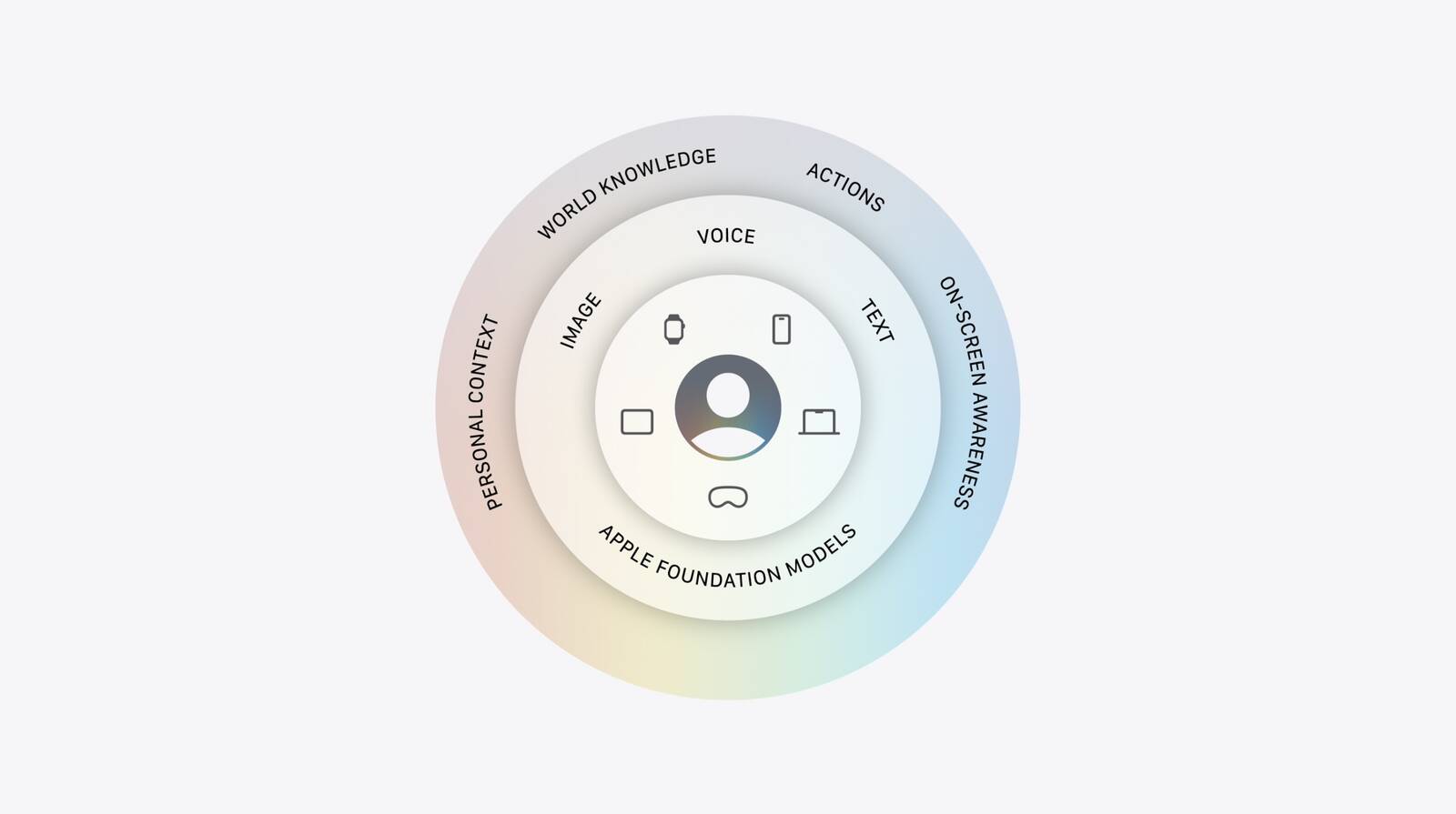
At the heart of Apple's new AI system architecture lies a sophisticated piece of software known as the System Orchestrator. Craig Federighi described this component as "key to the privacy architecture of our entire system." Its role is multifaceted, acting as the intelligent director that routes every query to the most appropriate AI model, whether that model resides directly on your device or securely in Apple's private cloud.
Intelligent Query Routing and Contextual Understanding
The System Orchestrator is designed to make intelligent decisions based on several factors: the complexity of the user's request, the level of personal context required, and the computational resources needed. For example, a simple request like "set a timer for 5 minutes" might be handled entirely by an on-device model for speed and privacy. A more complex request, such as "summarize the key points from that long PDF I was just reading in my email, and then draft a polite reply," might involve a combination of on-device processing to understand the personal context (the PDF, the email) and a server-side model (like AFM Cloud or AFM Cloud Pro) for the heavy lifting of summarization and drafting. The Orchestrator seamlessly manages this handoff, ensuring the most efficient and privacy-preserving path for every interaction.
Tapping into a Rich Ecosystem of Information
To perform its routing and contextualization effectively, the System Orchestrator draws upon several integral components within the Apple ecosystem:
App Toolbox: This provides the Orchestrator with access to in-app actions. When you ask Siri to "add this event to my calendar" or "send a message to John," the Orchestrator uses the App Toolbox to interact directly with the Calendar or Messages app. This integration allows Apple Intelligence to become truly "agentic," meaning it can perform actions across your apps to fulfill your requests, not just answer questions.
Spotlight Semantic Index: This is a sophisticated, on-device index of your personal content. Unlike a simple keyword search, a "semantic index" understands the meaning and context of your data, whether it's photos, emails, notes, or documents. The Orchestrator uses this index to understand your personal context and provide highly relevant, personalized responses. Critically, this index resides entirely on your device, ensuring that your most personal information remains private and under your control.
On-Screen Context: For real-time awareness, the Orchestrator can understand what's currently visible on your screen. If you're looking at a photo and ask, "Enhance this," the AI knows which photo you're referring to without you needing to explicitly specify it. This contextual understanding makes interactions much more natural and intuitive.
World Knowledge Service: For queries involving current events or general factual information, responses are found through Apple's own World Knowledge Service. Federighi explicitly stated that Apple has been building this service for several years. This is a crucial detail, as it reinforces Apple's independence from third-party search engines like Google for foundational factual knowledge. By curating and maintaining its own knowledge base, Apple ensures control over the information its AI accesses, further solidifying its privacy posture and consistency of information.
The System Orchestrator's intelligent design ensures that your requests are always handled by the most appropriate model, balancing performance, capability, and, above all, privacy. It's the central nervous system that makes Apple Intelligence feel seamlessly integrated and deeply personal, without compromising your data.
Independent Verification and Apple's Unwavering Privacy Pledge
Apple's commitment to user privacy isn't just a promise; it's a foundational principle embedded in the architecture of Apple Intelligence. The company maintains that its entire Private Cloud Compute infrastructure, including the extended Nvidia GPU capacity hosted in Google's cloud, can be independently verified by third-party researchers. This is a crucial aspect of transparency and trust.
The ability for independent experts to audit and confirm the security measures means that Apple is putting its privacy claims to the test. These researchers can verify that user data is never stored on the cloud servers for longer than necessary to fulfill a request and, critically, that it is never accessed or inspected by Apple employees, Google, Nvidia, or any other unauthorized entity. This verifiable privacy is a significant differentiator in the AI landscape, where concerns about data handling and security are paramount.
Apple's unique approach to Private Cloud Compute—where sensitive parts of your requests are processed in secure, cryptographically protected environments—is designed to give users peace of mind. By extending this verifiable privacy to external hardware and cloud partners, Apple is setting a new standard for responsible AI deployment. This level of scrutiny and transparency aims to build unprecedented trust, assuring users that their personal information remains private, even as they harness the powerful capabilities of advanced artificial intelligence.
In summary, Apple's new AI architecture is a meticulously crafted system that balances cutting-edge capabilities with an unwavering commitment to privacy. The clarification surrounding Google's involvement reveals a strategic, distillation-based partnership for training, and a secure, confidential compute collaboration for the most demanding tasks, rather than a wholesale adoption of existing technologies. With its custom-built Apple Foundation Models, intelligent System Orchestrator, and verifiable Private Cloud Compute, Apple Intelligence aims to deliver a profoundly personal, intuitive, and secure AI experience that is uniquely Apple.
This article, "Apple's New AI Models Contain 'None' of Google's Gemini Assistant" first appeared on MacRumors.com
Discuss this article in our forums
from MacRumors
-via DynaSage

Post a Comment