New iOS 27 Feature Hints at Major Siri Upgrade Coming Soon
Apple's AI Leap: Voice Control Hints at a Smarter Siri Coming Soon
Every May, Apple gives us a special preview of the exciting new ways its devices, like the iPhone, iPad, and Mac, will become easier for everyone to use. This yearly announcement usually happens just before Global Accessibility Awareness Day, offering a sneak peek at the features coming in the next big software updates for iOS, iPadOS, and macOS.
Global Accessibility Awareness Day (GAAD) is more than just a date on the calendar; it's a worldwide event dedicated to promoting digital accessibility and inclusion for people with disabilities. For Apple, this day serves as a powerful reminder of its ongoing commitment to designing technology that empowers everyone, regardless of their abilities. For years, Apple has been a leader in this space, introducing groundbreaking features like VoiceOver for the visually impaired, Magnifier for those with low vision, and AssistiveTouch for users with limited motor skills. These innovations underscore a core philosophy at Apple: technology should adapt to the user, not the other way around. This dedication ensures that the magic of computing is within reach for millions, making daily tasks, communication, and creativity possible in new and profound ways. And this year's announcement continues that tradition, pushing the boundaries even further with the power of artificial intelligence.
A More Intuitive Voice Control: The Power of Natural Language
This year, one of the most exciting new capabilities Apple showcased is the addition of natural language understanding to its Voice Control feature on the iPhone and iPad. This isn't just a small tweak; it's a significant leap forward, making your devices far more responsive and intuitive to your spoken commands.
Understanding Voice Control Before the AI Upgrade
To truly appreciate this new improvement, it’s helpful to understand what Voice Control was like before. Voice Control is an incredible accessibility feature that allows users to operate their iPhone or iPad entirely with their voice. It's particularly useful for individuals who might have difficulty touching the screen or performing precise gestures. Before this update, users could say commands like "tap Photos," "scroll down," or "go home." For more complex interactions, Voice Control often required users to remember exact labels of buttons or even specific numbers that appeared next to on-screen elements when a special overlay was activated. For instance, if you wanted to tap a specific photo album in the Photos app, you might have to say "tap album 12" or remember the exact name like "tap 'Vacation 2025'." This system, while functional, presented a learning curve and a mental burden. Users had to either memorize precise phrasing or repeatedly activate the numbering system, which could interrupt the flow of interaction and make the experience less seamless.
The Apple Intelligence Boost: Making Voice Control "More Intuitive Than Ever"
Now, Voice Control is getting a major upgrade thanks to Apple Intelligence. Apple Intelligence is Apple's new, personalized system of artificial intelligence that runs on your device, making it smarter, more helpful, and deeply integrated into your daily tasks. With this upgrade, Apple promises that Voice Control will become "more intuitive than ever." What does this mean in practice? It means a dramatic shift from rigid commands to natural conversation.
Instead of having to recall exact labels, numbers, or specific descriptions for on-screen buttons and controls, iPhone and iPad users will soon be able to simply describe what they see and what they want to do using everyday language. Imagine the difference: no more memorizing "tap 7" for a particular button or struggling to recall the precise name of an obscure menu item. The system now understands your intent, even if your words aren't an exact match to the underlying code.
Real-World Examples of Natural Language in Action
Let's look at some practical examples that highlight this transformative change:
- In the Apple Maps app, instead of trying to find the exact button for a guide, you could simply say, "tap the guide about best restaurants." The system, powered by Apple Intelligence, understands "guide about best restaurants" refers to the relevant on-screen element, even if the button's official label is slightly different or surrounded by other text.
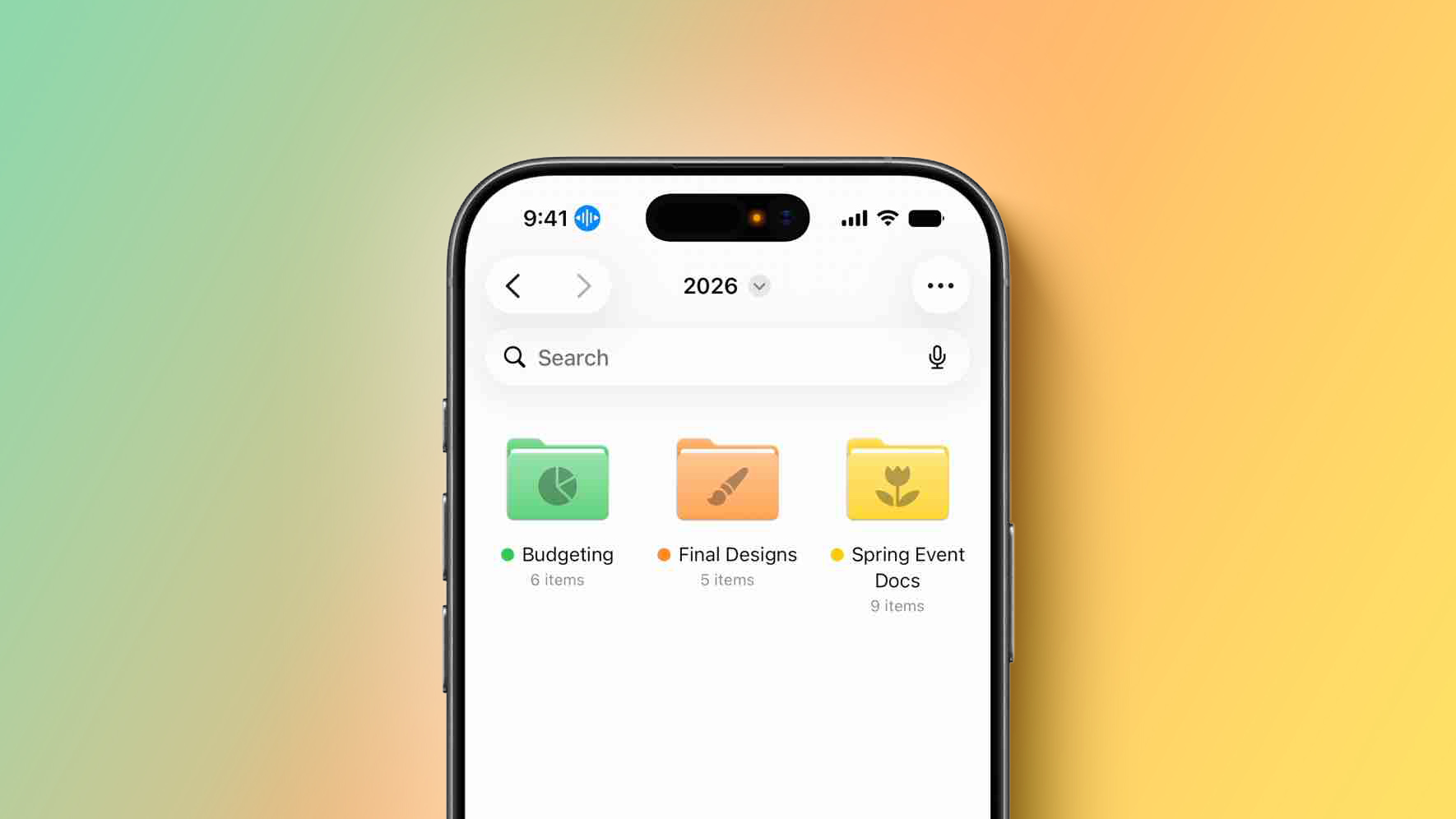
- In the Files app, navigating through folders becomes effortless. Instead of "tap 'Documents' folder," you might say, "tap the purple folder." Voice Control can now visually identify the color and associate it with your spoken request, making interaction much more human-like. This is particularly useful in apps where elements might not have distinct text labels but are visually identifiable.
- Consider browsing the web in Safari. If you see an interesting article link and it's surrounded by other links, instead of trying to read out the full link text or activate a numbering system, you could say, "tap the article about new space discoveries." Voice Control will intelligently identify the relevant link on the page.
- In a photo editing app, rather than saying "tap the contrast slider" or "tap button 5," you might be able to say, "make this photo brighter" or "adjust the color saturation." The AI would interpret your natural language and apply the appropriate controls.
These examples illustrate a profound shift: the technology is learning to understand *us*, rather than us having to learn to speak its specific language. This reduces the cognitive load, makes the technology accessible to a wider range of users, and significantly speeds up interactions for everyone.
Initial Availability and Future Expansion
Initially, this AI-powered Voice Control will be available in English in a few key regions: the U.S., Canada, the UK, and Australia. This strategic rollout allows Apple to gather valuable user feedback and refine the feature. It’s reasonable to expect that, like many of Apple's advanced features, support for additional languages and regions will follow in subsequent updates, making this powerful capability accessible to a global audience over time. This phased approach ensures quality and precision as the sophisticated AI models are adapted for linguistic and cultural nuances.
Beyond Voice Control: The Promise of a Revamped Siri
While the enhanced Voice Control is exciting in its own right, it's also a clear indication of a much larger transformation underway: the complete overhaul of Siri. The AI capabilities we see in Voice Control are essentially a preview of the more personalized and intelligent Siri that Apple first teased at WWDC 2024 (Worldwide Developers Conference). At that time, Apple laid out a bold vision for Siri, stating that it would gain "on-screen awareness" and fundamentally evolve into an "AI agent" capable of understanding natural language and taking action on your behalf across apps.
Correct me if I'm wrong but it sure looks like Apple just casually dropped agentic AI being built into iPhone
— Dylan (@DylanMcD8) May 19, 2026
Yes, in this video it's being used for Voice Control, but if a person can control their iPhone with natural language so can an AI agent! pic.twitter.com/S6DQOiQGsO
Siri's Evolution: From Basic Commands to Intelligent Agent
Siri has been with us for years, initially hailed as a revolutionary personal assistant. However, over time, it faced criticism for its limitations – often struggling with context, follow-up questions, and its inability to perform complex, multi-step tasks across different applications. It felt more like a command-line interface with a voice, rather than a truly intelligent helper.
The new vision for Siri aims to rectify these shortcomings by transforming it into an "AI agent." But what does that really mean? An AI agent isn't just about answering simple questions or setting timers. It's about a sophisticated AI system that can:
- Understand Complex Intent: Not just individual words, but the underlying meaning and purpose of your request.
- Perform Multi-Step Actions: It can chain together several actions across different apps to fulfill a single, broader request.
- Maintain Context: Remember previous interactions and information within a conversation or session, allowing for natural follow-up questions.
- Act Proactively: Potentially anticipate your needs based on your habits and current situation.
On-Screen Awareness: Siri's New "Eyes"
A crucial component of this transformation is Siri's newfound "on-screen awareness." This means Siri will be able to literally "see" and understand the content displayed on your iPhone or iPad screen. Imagine your device's screen as a document or an interface that Siri can actively analyze and comprehend. This ability allows Siri to interact with apps in a much more dynamic and intelligent way. If you're looking at a restaurant review, Siri will know it's a restaurant review. If you're viewing an email, Siri will understand the sender, recipient, and content.
This capability is what enables the sophisticated natural language support we see in Voice Control. If you tell Voice Control to "tap the purple folder," it can recognize the color of the folder on the screen. Similarly, if you ask Siri about something on your screen, it will be able to provide context-aware answers and take actions directly related to what you're currently viewing. This bridges the gap between your voice commands and the visual interface, making interactions incredibly seamless.
Examples of Siri's Future Capabilities
Apple has provided glimpses into just how powerful this new Siri will be. The examples demonstrate its ability to weave together information from multiple sources and perform complex actions:
- Personal Travel Plans: Apple's own example highlighted an iPhone user asking Siri about their mother's flight and lunch reservation plans. Imagine this scenario: you might say, "Hey Siri, what time is Mom's flight landing, and where are we taking her for lunch?" To answer this, the new Siri wouldn't just search the web. It would intelligently go into your Mail app to find flight confirmation emails, check your Messages app for conversations about lunch plans, consult your Calendar for any booked reservations, and potentially even look up traffic information to calculate travel time to the restaurant. All of this happens seamlessly, consolidating disparate pieces of information into a single, comprehensive answer or action. This requires not just accessing data, but also understanding the relationships between different pieces of information and making logical connections.
- Later reports have suggested even deeper integrations. For example, Siri will be able to do things like:
- Comment on an Instagram post: Instead of manually opening Instagram, navigating to a friend's post, and typing a comment, you might simply say, "Hey Siri, comment 'Looks amazing!' on Sarah's latest post." With on-screen awareness, Siri could identify "Sarah's latest post" and interact with the Instagram app directly to fulfill the request. This demonstrates Siri's ability to not just launch apps, but to navigate *within* them and manipulate their content.
- Scroll through a shopping app and add something to your cart: Picture this: you're casually browsing a clothing app, and you see a shirt you like. You could say, "Siri, add this blue shirt in large to my cart." Siri would understand "this blue shirt" by analyzing what's currently on your screen, correctly identify its size options, and then perform the necessary steps within the shopping app to add it to your basket. This takes personalization and convenience to an unprecedented level.
The Pillars of the Revamped Siri: Context, Awareness, and Control
Overall, the revamped Siri is being built upon three core pillars that promise a much richer and more capable experience:
- Better Understanding of a User's Personal Context: This goes beyond simply knowing your name. Siri will learn from your daily habits, your calendar, your contacts, your frequent locations, and your interactions across apps. It will understand *who* you are, *what* you usually do, and *where* you typically are. This personal context allows Siri to provide truly relevant and proactive assistance. For instance, if you usually listen to a specific podcast on your commute, Siri might suggest it when you get in your car. If you have a flight later, it might proactively give you gate information or remind you to leave for the airport, even without being asked.
- On-Screen Awareness: As discussed, this is Siri's ability to "see" and comprehend what's happening on your device's display. This visual intelligence is critical for enabling intuitive interactions directly related to the content you are viewing or interacting with. It makes Siri an active participant in your device experience, not just a separate voice interface.
- Deeper Per-App Controls: This means Siri won't just be able to open apps, but will also have a far more intricate understanding of how to operate *within* those apps. It can tap buttons, fill out forms, edit content, and navigate complex interfaces, all based on your natural language commands. This level of integration transforms Siri into a true digital assistant, capable of executing tasks that once required manual input.
The Road to Release: Delays, Anticipation, and Requirements
While the vision for the new Siri is incredibly compelling, Apple announced in March 2025 that these advanced capabilities were delayed until later this year. Delays, while sometimes disappointing, are not uncommon for such complex technological advancements. Developing an AI that can deeply understand personal context, reliably interact across countless apps, and maintain ironclad privacy is an immense undertaking. Apple's commitment to quality, security, and user experience likely prompted this decision to ensure the feature is polished and performs flawlessly upon release. It also allows time for further refinement of the underlying Apple Intelligence models and deeper integration across the operating system.
A Tentpole Feature for the Next Generation of OS
Despite the slight delay, the new-and-improved Siri is expected to be a tentpole feature of iOS 27, iPadOS 27, and macOS 27. A "tentpole feature" is a major, highly anticipated selling point that significantly defines a software release. For Apple, this means the revamped Siri will be at the forefront of their marketing and user experience, showcasing the pinnacle of their AI efforts. This isn't just an update; it's a fundamental shift in how we interact with our Apple devices.
These new operating systems – iOS 27 for iPhones, iPadOS 27 for iPads, and macOS 27 for Macs – are slated to be officially unveiled on June 8 at Apple's annual Worldwide Developers Conference (WWDC). Following the keynote presentation, developers will get their hands on early beta versions to start integrating these new capabilities into their apps. A public beta program usually follows, allowing adventurous users to test the features and provide feedback. Finally, the full public release of iOS 27, iPadOS 27, and macOS 27 is expected in September, coinciding with the launch of new hardware, typically new iPhones.
Device Requirements: The Need for Powerful AI Hardware
The highly personalized and on-device nature of the new Siri and Apple Intelligence features necessitates powerful processing capabilities. Therefore, the more personalized Siri will likely require an iPhone 15 Pro or newer, a Mac with an M1 chip or newer, or an iPad with an A17 Pro or M1 chip or newer. This is because these devices contain dedicated Neural Engines – specialized hardware designed to efficiently process machine learning and artificial intelligence tasks directly on the device. On-device AI processing offers several significant advantages:
- Enhanced Privacy: Your personal data and requests are processed locally on your device, minimizing the need to send sensitive information to cloud servers. This aligns perfectly with Apple's strong commitment to user privacy.
- Faster Performance: Tasks are completed more quickly because data doesn't need to travel back and forth to the cloud. This results in snappier responses and a more fluid user experience.
- Offline Capability: Many AI features can function even without an internet connection, providing greater reliability and utility in various scenarios.
- Personalization: On-device learning allows the AI to adapt to your specific habits and preferences over time, without sharing that unique data with Apple or third parties.
These requirements highlight Apple's strategy of delivering powerful, private, and personalized AI experiences by leveraging the advanced silicon in its latest hardware. This ensures that the AI is not just smart, but also secure and efficient.
Impact and Future Implications: A Smarter, More Accessible World
The advancements in Voice Control and the forthcoming transformation of Siri represent more than just new features; they signify a fundamental shift in how we interact with our technology. For many years, users had to learn how to operate their devices by memorizing gestures, commands, or menu structures. With these AI-powered capabilities, the device is learning to understand *us*, adapting to our natural language and context. This shift promises an enhanced user experience for everyone, making technology less of a tool to be mastered and more of an intuitive partner.
For accessibility, this is particularly groundbreaking. By removing the need for precise commands and introducing natural language, Apple is making its devices genuinely accessible to a far broader audience, including those with motor disabilities, cognitive impairments, or simply anyone who prefers a more conversational interface. What starts as an accessibility feature often evolves into a universally beneficial improvement, and the new Voice Control is a prime example. Everyone stands to gain from a system that simply understands what they mean, rather than demanding exact phrases.
Apple's approach also emphasizes privacy and security in the age of AI. By designing its Apple Intelligence framework to run significantly on-device, the company ensures that deeply personal data used for customization and understanding remains private. This contrasts with many cloud-based AI solutions, where data processing often occurs on remote servers, raising concerns about privacy and data security. Apple is attempting to strike a balance between powerful AI and user trust.
These developments position Apple strongly in the competitive landscape of artificial intelligence. While other companies are also advancing their AI assistants, Apple's combination of on-device processing, deep software-hardware integration, and a clear focus on privacy offers a distinct advantage. The future of human-computer interaction, as envisioned by Apple, is one where our devices are not just reactive but truly proactive, anticipating our needs, understanding our context, and seamlessly assisting us in complex tasks, all while keeping our personal information secure.
Conclusion: A Glimpse into the Future of Personal Computing
The new natural language support for Voice Control on iPhone and iPad is more than just an accessibility update; it's a significant hint at the future of Apple's entire ecosystem. By integrating Apple Intelligence, Voice Control becomes a powerful example of how natural language and on-device AI can make technology genuinely intuitive and empowering. This stepping stone paves the way for the much-anticipated, fully revamped Siri, which promises to transform our devices from mere tools into truly intelligent and personal agents. With on-screen awareness, a deep understanding of context, and unprecedented per-app controls, Siri is poised to redefine how we interact with our digital world.
As we look forward to WWDC 2026 in June and the public release of iOS 27, iPadOS 27, and macOS 27 in September, the excitement for these advancements is palpable. Apple is not just adding features; it's evolving the very nature of personal computing, making it smarter, more accessible, and more personal than ever before. The future, powered by Apple Intelligence, truly looks intuitive and user-centric.
This article, "New iOS 27 Feature Hints at Major Siri Upgrade Coming Soon" first appeared on MacRumors.com
Discuss this article in our forums
from MacRumors
-via DynaSage

Post a Comment