Apple Eyes Intel and Samsung as Backup US Chipmakers
Apple Explores Bringing Chip Manufacturing Closer to Home in the US
In a significant move that could reshape the future of its supply chain, technology giant Apple has reportedly begun "exploratory" discussions with two major players in the semiconductor world, Intel and Samsung. The goal? To potentially manufacture the powerful main processors for its beloved devices right here in the United States. This news, initially brought to light by Bloomberg, signals Apple's proactive approach to addressing growing concerns about global supply chain stability and the surging demand for advanced computing power.
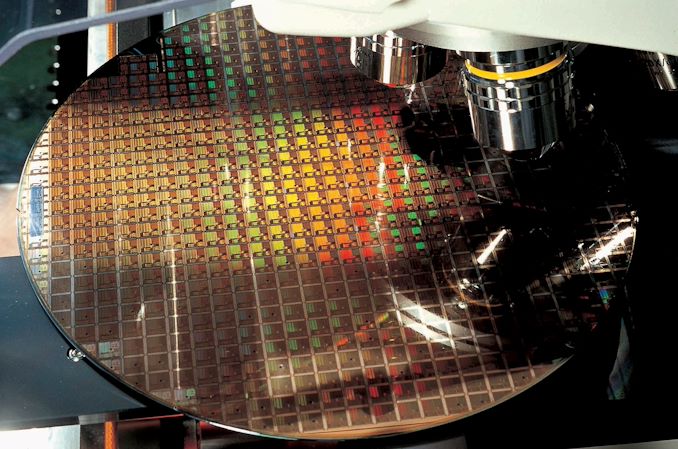
These early-stage conversations are a clear indication that Apple is serious about exploring alternatives and supplements to its long-standing, primary chip manufacturing partner, Taiwan Semiconductor Manufacturing Company (TSMC). While details remain scarce and the talks are described as preliminary, the very notion of Apple diversifying its chip production to include US-based facilities for Intel or Samsung is a monumental development for the tech industry and the American economy alike.
The Strategic Imperative: Why Apple is Looking Beyond TSMC
For years, Apple has relied heavily on TSMC, a Taiwanese powerhouse known for its cutting-edge chip fabrication technology and immense production capacity. TSMC has been instrumental in bringing Apple's custom-designed A-series (for iPhones and iPads) and M-series (for Macs) chips to life, giving Apple an unparalleled advantage in performance and power efficiency. So, why would Apple even consider looking elsewhere?
Addressing Supply Chain Vulnerabilities
The global events of the past few years have painfully exposed the fragilities of highly centralized supply chains. From the COVID-19 pandemic to geopolitical tensions, disruptions can quickly bring industries to a grinding halt. For a company like Apple, which ships hundreds of millions of devices annually, any interruption in chip supply can have massive financial repercussions and significantly impact its ability to meet customer demand. Relying predominantly on a single manufacturer, particularly one situated in a geopolitically sensitive region, naturally introduces risks. Diversifying manufacturing locations and partners is a strategic move to build greater resilience against future unforeseen events, ensuring a more stable and predictable flow of critical components.
The Chip Shortage Crisis: A Lingering Threat
The world has been grappling with an unprecedented chip shortage that began in 2020 and continues to affect various sectors, from automotive to consumer electronics. While Apple, due to its size and strategic importance, has often been able to secure preferential access to chips, it hasn't been entirely immune. These shortages have highlighted the immense global demand for semiconductors and the limitations of existing manufacturing capacity. By seeking additional suppliers, Apple aims to secure a more robust and expansive supply network, protecting itself from future market fluctuations and ensuring it can continue to innovate and deliver products without undue delays.
The AI Boom: Unprecedented Demand for Advanced Chips
Perhaps one of the most significant drivers behind Apple's exploratory talks is the explosive growth of Artificial Intelligence (AI). The rise of AI models, particularly large language models and generative AI, requires immense computational power. This power is primarily delivered by advanced semiconductors. Data centers across the globe are rapidly expanding, heavily investing in state-of-the-art chips to train and run these sophisticated AI algorithms. This surge in demand from the AI sector is effectively siphoning a substantial portion of the world's most advanced chip manufacturing capacity, leading to tightened supply for other industries, including consumer electronics.
Apple itself is heavily investing in AI, both in its cloud services and, increasingly, in on-device AI capabilities. This means Apple will not only be competing with other tech giants for chips but also requiring more chips for its own AI infrastructure and AI-enabled devices. Securing additional manufacturing capabilities becomes not just a matter of resilience but a necessity to support its own AI ambitions and product roadmap.
Surging Demand for Specific Apple Products: Mac mini and Mac Studio
Adding to the pressure, specific Apple products, notably the Mac mini and Mac Studio, have seen unexpectedly heavy demand. These compact yet powerful machines, especially configurations with Apple's M-series chips, are highly sought after by users and developers looking to run local AI models. Running AI models directly on a personal computer, rather than relying solely on cloud services, offers benefits like enhanced privacy, lower latency, and potentially reduced ongoing costs. This suitability has made the Mac mini and Mac Studio particularly attractive to a growing segment of users engaged in AI development and deployment.
This increased demand has stretched Apple's supply capabilities for these particular models. Apple CEO Tim Cook acknowledged this constraint on an earnings call, stating that Mac mini and Mac Studio supply is constrained and that it could take "several months" for the company to achieve a balance between supply and demand. Such delays are not ideal for Apple, underscoring the urgent need for expanded and diversified chip production capacity.
"Made in USA": Economic, Political, and Branding Advantages
Beyond immediate supply chain concerns, manufacturing chips in the United States offers Apple several strategic advantages. From an economic perspective, it aligns with government initiatives like the CHIPS and Science Act, which aims to boost domestic semiconductor manufacturing through significant incentives and funding. This push for onshore production is driven by national security concerns, the desire to create high-paying jobs, and a broader strategy to re-establish American leadership in advanced manufacturing.
For Apple, participating in this domestic manufacturing movement could lead to financial incentives, closer collaboration with US-based talent, and potentially reduced logistical complexities. Furthermore, the "Made in USA" label, even if only for a portion of its chips, could carry significant branding appeal for certain markets and demographics, enhancing Apple's image as a contributor to the American economy and workforce. It could also mitigate risks associated with international trade disputes or tariffs.
The Potential New Partners: Intel and Samsung
Intel: A Giant Reawakening in Foundries
Intel, a venerable name in the semiconductor industry, has historically been known for designing and manufacturing its own chips, primarily x86 processors for PCs and servers. However, in recent years, Intel has faced challenges in keeping pace with TSMC's advanced manufacturing processes. Under new leadership, Intel has embarked on an ambitious strategy to regain its manufacturing edge and establish a robust "foundry" business – Intel Foundry Services (IFS) – where it manufactures chips for other companies, including direct competitors.
Apple's reported early-stage talks with Intel about using its chipmaking services are a significant indicator of Intel's serious push into the foundry space. For Intel, securing a contract with a client as prestigious and demanding as Apple would be a massive win, validating its renewed focus on manufacturing and attracting other potential clients. It would provide Intel with the crucial volume and revenue needed to fund its aggressive expansion plans and achieve its technological goals.
However, there are considerable hurdles. Intel's most advanced manufacturing processes are still catching up to TSMC's bleeding edge. Apple is known for demanding the absolute best in chip technology, requiring extremely tight tolerances, high yields, and custom process optimizations. Integrating Apple's highly proprietary chip designs with Intel's manufacturing processes would be a complex undertaking, requiring deep collaboration and overcoming potential technological discrepancies. Apple's concern about using technology "not made by its longtime chip partner, TSMC," is a valid one, highlighting the significant trust and seamless integration built over years with TSMC.
Samsung: A Dual Threat and a Growing US Presence
Samsung is a unique entity in the tech world, not only designing its own devices and components (like memory and displays) but also operating a significant foundry business, directly competing with TSMC. Samsung Foundry has been striving to catch up with TSMC's most advanced nodes, offering its manufacturing services to various companies, including Qualcomm and NVIDIA.
Apple executives reportedly visiting a Samsung plant under construction in Texas is a concrete sign of serious interest. This new facility, located in Taylor, Texas, represents a multi-billion dollar investment by Samsung and is designed to produce advanced chips. Having a state-of-the-art facility in the US makes Samsung an attractive proposition for Apple, aligning with the "Made in USA" objectives.
Samsung's experience as both a chip designer and manufacturer gives it a unique perspective. It understands the entire ecosystem of chip development, which could be beneficial for Apple. Like Intel, however, Samsung faces the challenge of matching TSMC's sheer scale, reliability, and the perceived slight technological lead in certain areas. Apple would need assurance that Samsung can consistently deliver the required volumes and quality for its demanding processors.
The Incumbent: TSMC and Its Unrivaled Position
TSMC's Dominance and Partnership with Apple
Taiwan Semiconductor Manufacturing Company (TSMC) is the undisputed leader in advanced chip manufacturing. It operates as a pure-play foundry, meaning it only manufactures chips for other companies, never designing its own. This focus has allowed TSMC to pour all its resources into research and development, perfecting its manufacturing processes (known as process nodes, e.g., N5, N4, N3, N2). Apple has been one of TSMC's most important and demanding clients, driving the development of these advanced nodes and consuming a significant portion of the most cutting-edge capacity.
TSMC's reliability, technological leadership, and sheer scale of production are unmatched. It consistently delivers high yields (the percentage of functional chips from a wafer) even on the most complex designs, which is crucial for Apple's high-volume product launches. The seamless integration between Apple's design teams and TSMC's engineering teams has allowed for incredible innovation in Apple's custom silicon.
TSMC's US Expansion: The Phoenix Plant
Even TSMC is recognizing the global trend towards diversified manufacturing and has actively pursued expanding its footprint outside Taiwan. Apple has already been working closely with TSMC to support the build-out of its new plant in Phoenix, Arizona. This facility marks a significant investment by TSMC in US-based manufacturing. While still ramping up, the Phoenix plant is already producing a limited number of chips for Apple and has ambitious targets, expecting to make 100 million chips for the company in 2026.
This existing collaboration with TSMC in the US demonstrates Apple's commitment to exploring domestic production even with its primary partner. However, even with the Phoenix plant, TSMC's US operations are still a fraction of its total global capacity, and its most advanced nodes are typically first rolled out in Taiwan before slowly migrating elsewhere. This means that while TSMC's US plant is a step in the right direction, it alone might not fully satisfy Apple's long-term diversification and capacity needs, especially with the AI-driven surge in demand.
Challenges and Uncertainties: The Road Ahead
Technological Compatibility and Trust
The report highlights Apple's "concerns about using technology that is not made by its longtime chip partner, TSMC." This is a critical point. Apple's custom silicon is designed specifically for TSMC's processes, which are incredibly complex and optimized. Shifting production to Intel or Samsung would require significant effort to port those designs, ensure compatibility, and achieve comparable performance, power efficiency, and yields. Any deviation could lead to compromises in product quality or delays in development. The level of trust and intimate collaboration built with TSMC over many years is not easily replicated.
Scale, Production, and Reliability
The statement that "Neither Intel nor Samsung can reliably provide the kind of production and scale that TSMC offers" remains a significant obstacle. Building a state-of-the-art chip fabrication plant (a 'fab') is an undertaking of immense scale, costing tens of billions of dollars and taking many years to become fully operational and reach high-volume production with good yields. TSMC has decades of experience and has optimized its entire ecosystem for massive, reliable output.
While Intel and Samsung are investing heavily, their current foundry capacities, particularly for the most advanced nodes Apple requires, still lag behind TSMC. Apple needs hundreds of millions of chips annually, across multiple product lines, with consistent quality. Ramping up to meet that demand, especially for brand-new US-based facilities, is a monumental challenge that cannot be solved overnight.
The "Preliminary" Nature of Talks
It's crucial to remember that these talks are "preliminary," and "no orders have been made so far." This means that while Apple is genuinely exploring options, there is no guarantee that any concrete agreements will materialize. The complexities involved – technological, logistical, financial, and strategic – are immense. The discussions could easily "go nowhere" if the right balance of cost, technology, capacity, and risk mitigation cannot be found.
Cost Implications of US Manufacturing
Manufacturing chips in the United States is generally more expensive than in regions like Taiwan or South Korea, primarily due to higher labor costs, more stringent environmental regulations, and sometimes higher utility costs. While government incentives can offset some of these expenses, there's a fundamental cost differential. For Apple, a company known for its meticulous cost management, integrating more expensive chips into its supply chain could impact profit margins or necessitate price adjustments for consumers. The balance between supply chain resilience and cost efficiency will be a key factor in any final decision.
Broader Implications for the Semiconductor Industry and US Economy
A Boost for US Chip Manufacturing Ambitions
If Apple were to successfully establish a significant chip manufacturing partnership with Intel or Samsung in the US, it would be a huge victory for American industrial policy. It would demonstrate the viability of domestic chip production, attracting further investment and talent. It would strengthen the US technology base and reduce reliance on overseas manufacturing for critical components, addressing national security concerns.
Shifting Power Dynamics
While TSMC is likely to remain Apple's primary chip manufacturer for the foreseeable future, any diversification to Intel or Samsung in the US would introduce a new dynamic to the highly competitive foundry market. It could spur further innovation and competition among chipmakers, ultimately benefiting the entire technology ecosystem by pushing the boundaries of manufacturing technology and efficiency.
A Precedent for Other Tech Giants?
Apple's move could also set a precedent for other major tech companies. If one of the world's largest and most influential hardware companies successfully diversifies its advanced chip manufacturing to the US, it might encourage others to follow suit, further bolstering domestic production capabilities and fostering a more geographically diverse semiconductor supply chain globally.
Conclusion: A Cautious but Significant Step
Apple's exploratory talks with Intel and Samsung about US-based chip manufacturing represent a cautious but incredibly significant step towards enhancing its supply chain resilience, addressing the pressures of AI-driven demand, and aligning with broader strategic goals of domestic production. While the challenges are substantial, particularly regarding technological integration, scale, and cost, the potential benefits are equally compelling.
For now, TSMC remains Apple's indispensable partner, with its Phoenix plant already contributing to US-based chip production. However, these new discussions indicate Apple's determination to explore all avenues to secure its future chip supply, ensuring it can continue to innovate and deliver its cutting-edge devices to a demanding global market. The outcome of these talks will undoubtedly have profound implications for Apple, its potential partners, and the future landscape of the semiconductor industry.
This article, "Apple Eyes Intel and Samsung as Backup US Chipmakers" first appeared on MacRumors.com
Discuss this article in our forums
from MacRumors
-via DynaSage

Post a Comment