There’s A Newly Discovered Elden Ring Cutscene Players Have Never Seen Before
Unearthing Lost Worlds: The Fascinating Hunt for Cut Content in Video Games
Imagine a world where the stories you love in video games are just the tip of the iceberg. Beneath the surface, hidden within the game's files, lie fragments of forgotten quests, unused characters, and entire areas that never saw the light of day. This hidden treasure is known as "cut content," and for many passionate players and digital detectives, uncovering it is a thrilling adventure in itself. But how do these secrets come to light? Often, it's thanks to the dedicated work of a "dataminer" – a kind of digital archaeologist who sifts through game code to reassemble these lost pieces, offering us a glimpse into the game worlds that almost were.
The act of finding and putting back together "cut content" is a window into the complex and often messy world of game development. It reveals the creative paths not taken, the ideas that were too ambitious, or simply the features that didn't quite fit the final vision. For the gaming community, it's more than just finding hidden objects; it's about understanding the full scope of a game's creation, adding layers to its lore, and sometimes, even predicting future updates or expansions. In this deep dive, we'll explore what cut content truly is, who dataminers are, why their work is so important, and the fascinating insights they provide into our favorite virtual universes.
What Exactly is "Cut Content"?
Before we delve into the detectives who find it, let's clearly define what "cut content" means. In the simplest terms, cut content refers to any part of a video game that was developed to some extent but ultimately removed before the game was released to the public. This can include a wide range of things: entire levels or maps, character models, dialogue lines, storylines, items, weapons, enemies, sounds, animations, or even gameplay mechanics. Think of it like deleted scenes from a movie or chapters cut from a book – they were once part of the original creative process but didn't make it into the final product.
The reasons why content gets cut are numerous and varied. Game development is an incredibly complex and iterative process, involving hundreds of people and millions of dollars. As a project evolves, tough decisions have to be made. Sometimes, a feature might be technically challenging to implement or optimize, leading to performance issues on various gaming platforms. Other times, creative directions change, and a concept that once seemed brilliant no longer fits the game's overall tone, story, or gameplay flow. A quest line might be removed because it disrupts the pacing, or a character might be cut because they no longer serve the narrative effectively.
Budget and time constraints are also major factors. Developing video games is expensive, and every hour spent on a feature adds to the cost. If a game is falling behind schedule, developers might have to cut features to meet a deadline, prioritizing the core experience over additional elements. Similarly, content might be deemed "non-essential" if its inclusion doesn't significantly enhance the player experience or if it’s too niche for the broader audience. In essence, cut content isn't necessarily "bad" content; it's simply content that, for a myriad of practical and creative reasons, didn't make the final cut.
The Digital Archaeologist: Who is a Dataminer?
So, if content is cut, how do we know it even existed? This is where the "dataminer" comes in. A dataminer is essentially a person who explores the raw files and code of a video game, often after it has been released. Unlike regular players who interact with the game through its user interface, dataminers dive deep into the game's internal structure using specialized software and technical skills. They are, in essence, digital archaeologists, sifting through lines of code, texture files, audio clips, and hidden directories to uncover fragments of information that were never meant for public eyes.
Their process often involves reverse-engineering or decompiling game files. Many game files are packed or encrypted to protect intellectual property and keep the game running efficiently. Dataminers work to unpack these files, turning obscure binary data into readable formats like image files, audio files, or text. They look for anomalies: placeholder textures, unused character models, dialogue snippets that don't appear in the game, or even references to entirely different levels or gameplay mechanics. It requires a keen eye for detail, a strong understanding of programming languages, and often, a lot of patience.
The motivation for dataminers varies. For some, it's a pure curiosity – a desire to see everything the developers created, even the parts that were hidden. For others, it's about historical preservation, ensuring that glimpses of a game's development journey are not lost forever. And for many in the gaming community, dataminers are celebrated for revealing exciting new lore, potential future updates, or just plain fascinating insights into beloved games. Their work acts as a bridge between the developers' internal world and the players' external experience, often sparking vibrant discussions and theories across fan communities.
Reassembling the Fragments: The Art of Digital Reconstruction
Finding cut content is one thing, but "reassembling" it, as the initial text suggests, is an entirely different level of skill and dedication. It's not enough to simply find a file named "unused_level_01.map"; a dataminer often has to piece together its context, speculate on its intended purpose, and sometimes even restore it into a playable state within the game. This reconstruction process turns mere data fragments into meaningful insights.
Imagine finding a blueprint for a house that was never built. A dataminer doesn't just find the blueprint; they might also find sketches of furniture, notes about the architect's intentions, and even early drafts of plumbing layouts. To "reassemble" this, they would not only present the blueprint but also explain how it connects to the other pieces, what it tells us about the original vision, and how it might have looked if completed. In the gaming world, this means:
- Contextualizing Lore: Finding unused dialogue might explain a character's backstory more fully or clarify a plot point that felt vague in the final game. Reassembling these lines helps fans understand the deeper narrative.
- Visualizing Unseen Worlds: Uncovering half-finished map files, combining them with discovered texture assets and early design documents, allows the community to visualize what a cut level might have looked like and how it would have played.
- Restoring Functionality: In some cases, highly skilled dataminers can even activate dormant code, bringing cut items, characters, or mechanics back into the game, even if only in an unofficial, modded capacity. This is true "reassembly," where the digital fragments are made whole again.
- Understanding Development Cycles: By comparing different versions of assets or code found in various updates, dataminers can reconstruct the evolution of a game feature, showing how ideas changed over time.
This reassembly requires not just technical prowess but also a deep knowledge of the game itself, the developers' typical design choices, and a fair bit of educated guesswork. It's a collaborative effort within the community, with many dataminers sharing their findings, and other fans contributing theories or even creating mods to integrate the discovered content. The goal isn't just to expose secrets, but to enrich the overall understanding and appreciation of the game.
Why Does Uncovering Cut Content Matter?
The fascination with cut content goes beyond simple curiosity. It serves several important roles for players, developers, and the broader gaming culture:
1. Expanding Game Lore and Storytelling
For many players, the story and world-building of a game are paramount. Cut dialogue, character biographies, or quest lines can provide invaluable insights into the game's lore that were never fully explained in the final release. These fragments can answer long-standing questions, deepen character motivations, or even reveal alternative narrative paths that were considered. For a dedicated fan base, uncovering these details is like finding missing pages from a beloved book, enriching their understanding and appreciation of the game's universe.
2. Glimpse into the Development Process
Cut content offers a unique, unfiltered look into the challenging and often chaotic process of video game development. It shows the evolution of ideas, the compromises made, and the sheer volume of work that goes into creating a game. Seeing early concepts for characters, discarded gameplay mechanics, or incomplete level designs helps players appreciate the immense effort and creativity involved. It humanizes the development team, reminding us that games are not born perfect but are carefully crafted through countless iterations and tough decisions.
3. Game Preservation and History
In the rapidly evolving world of technology, digital works can be surprisingly fragile. If content is cut and never released, it risks being lost forever as files are purged or development archives are forgotten. Datamining acts as a form of digital archaeology, helping to preserve these lost pieces of gaming history. By documenting and sharing cut content, dataminers contribute to a more complete historical record of how games are made and how they evolve. This preservation ensures that future generations can look back and understand the full creative journey of iconic titles.
4. Community Engagement and Speculation
The discovery of cut content often ignites passionate discussions within gaming communities. Forums light up with theories about why content was cut, how it would have impacted the game, or if it might be repurposed in future updates. This shared exploration fosters a strong sense of community, as players collaborate to piece together clues, interpret findings, and even create fan-made content based on what's discovered. It adds a whole new layer of engagement long after a game's official content has been exhausted.
5. Fueling Anticipation for Future Content
Sometimes, datamined content isn't just about the past; it can offer tantalizing hints about the future. References to unannounced characters, upcoming locations, or new gameplay features found in game files often precede official announcements. While developers may not always appreciate these "leaks," they undoubtedly generate buzz and excitement among players, building anticipation for new expansions, downloadable content (DLC), or even sequels. This can be a double-edged sword, but it undeniably impacts the hype cycle around a game.
The Ethics and Impact: A Double-Edged Sword
While the benefits of uncovering cut content are clear, the practice of datamining isn't without its complexities, particularly regarding ethical considerations and its impact on the player experience and developer intentions.
Spoilers and Surprises
The most immediate concern is spoilers. Datamined information can reveal plot twists, secret characters, or hidden endings that developers intended players to discover naturally. For those who enjoy the thrill of organic discovery, stumbling upon datamined spoilers can significantly diminish their enjoyment. It creates a tension between the desire for full transparency into game development and the desire to experience a game as its creators intended, with all its surprises intact.
Developer Intent vs. Player Discovery
Developers often cut content for specific reasons – sometimes because it wasn't good enough, sometimes because it didn't fit, and sometimes because it just wasn't ready. When datamined content is shared, it can sometimes be presented out of context, leading to misinterpretations about the developers' vision or even generating undue criticism for content that was intentionally discarded. There's a fine line between providing insight into the creative process and unfairly judging unfinished work.
Security and Intellectual Property
From a developer's perspective, datamining can also raise concerns about security and intellectual property. While most datamining is done out of passion, the methods used can sometimes expose vulnerabilities or reveal proprietary information. More commonly, it bypasses the carefully constructed marketing campaigns and release schedules, potentially undermining a developer's efforts to control the narrative around their game and its future content.
The Feedback Loop
Despite these challenges, datamining can also inadvertently create a feedback loop. Sometimes, fan reaction to rediscovered cut content is so overwhelmingly positive that developers might reconsider and reintroduce elements in future updates or sequels. This isn't common, but the strong community interest in certain cut features can demonstrate a demand that might not have been apparent otherwise. This shows how datamining, while unofficial, can sometimes influence the very creators whose work is being dissected.
Beyond the Game: A Glimpse into Creative Evolution
Ultimately, the reassembly of cut content by a dataminer provides more than just trivia; it offers a profound look into the nature of creative work itself. Every game, like any work of art, is a journey of countless decisions, revisions, and compromises. The final product we play is often a distilled version of a much larger, more ambitious, and sometimes contradictory vision.
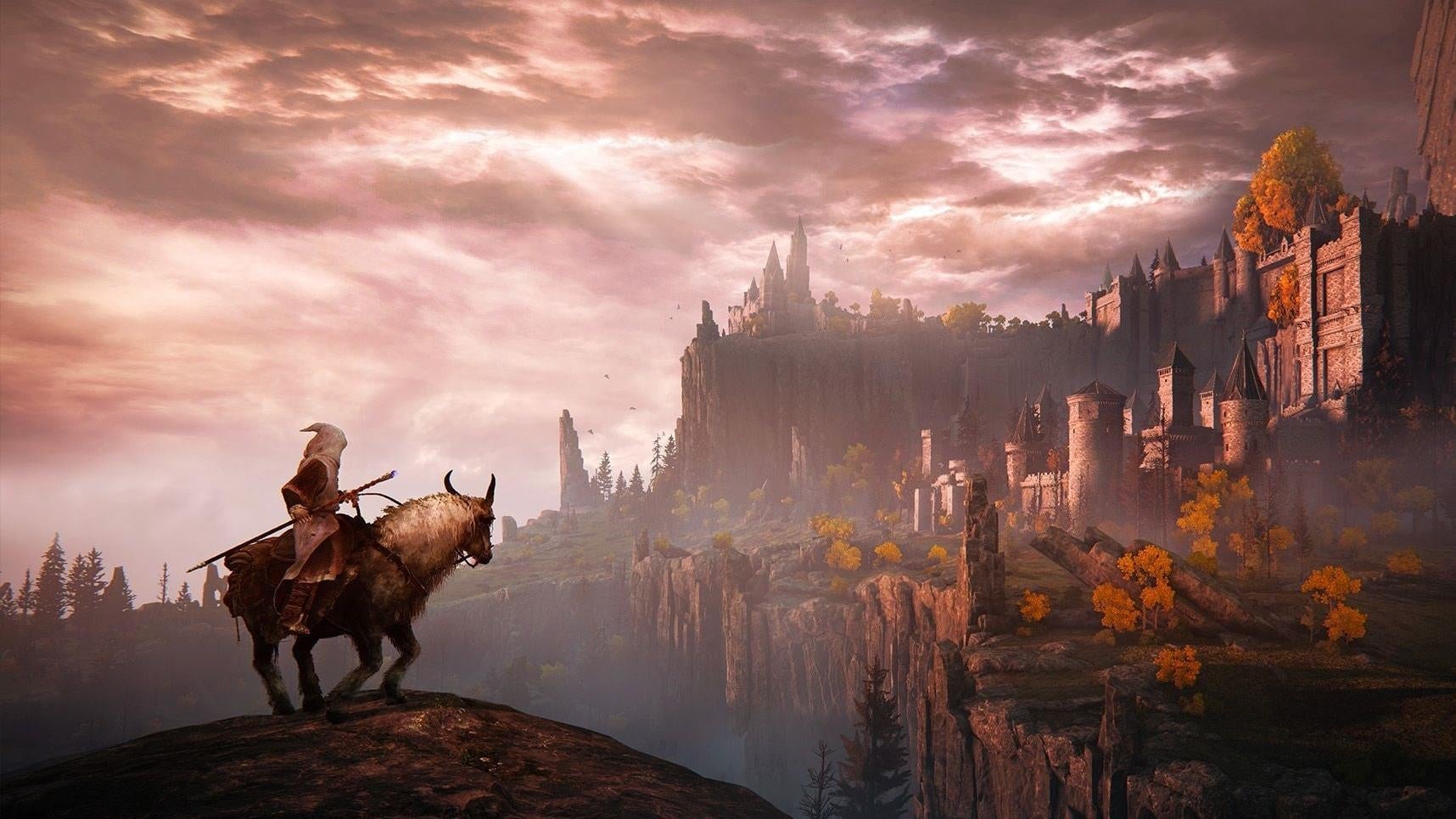
When we see a tarnished warrior looking out at a castle in an image – perhaps a concept that hinted at an even grander, more expansive world than what eventually shipped – we're not just looking at a pretty picture. We're glimpsing a moment in time during a game's creation, a 'what if' scenario that could have led to a different experience. Dataminers help us understand these 'what ifs' and fill in the blanks, allowing us to appreciate the artistry and engineering that goes into every game, from its initial spark of an idea to its polished release.
This ongoing exploration enriches our understanding of video games not just as entertainment products, but as complex digital ecosystems with hidden depths and untold stories. It fosters a deeper connection between players and the games they love, transforming passive consumption into active participation in the uncovering of history.
Conclusion: The Enduring Allure of the Unseen
The journey of a dataminer, tirelessly sifting through digital remnants to reassemble cut content, is a testament to the enduring curiosity of the gaming community. It's about more than just finding secrets; it's about understanding the full narrative of a game, both seen and unseen. It offers unique insights into the meticulous craft of game development, helps preserve digital history, and sparks vibrant discussions that deepen our connection to the virtual worlds we explore.
From a forgotten character model to an entire discarded storyline, each piece of reassembled content adds another layer to our appreciation of a game's creation. So, the next time you dive into a vast virtual world, remember that there might be an entire universe of forgotten dreams and discarded ideas waiting just beneath the surface, patiently waiting for a skilled dataminer to bring them back to life. The mystery of the unseen continues to call, inviting us to look beyond the finished product and marvel at the intricate process of creation.
from Kotaku
-via DynaSage

Post a Comment