Sabotage, Crunch Culture, And Spying: Meet The MindsEye Developer Speaking Out About The Chaos
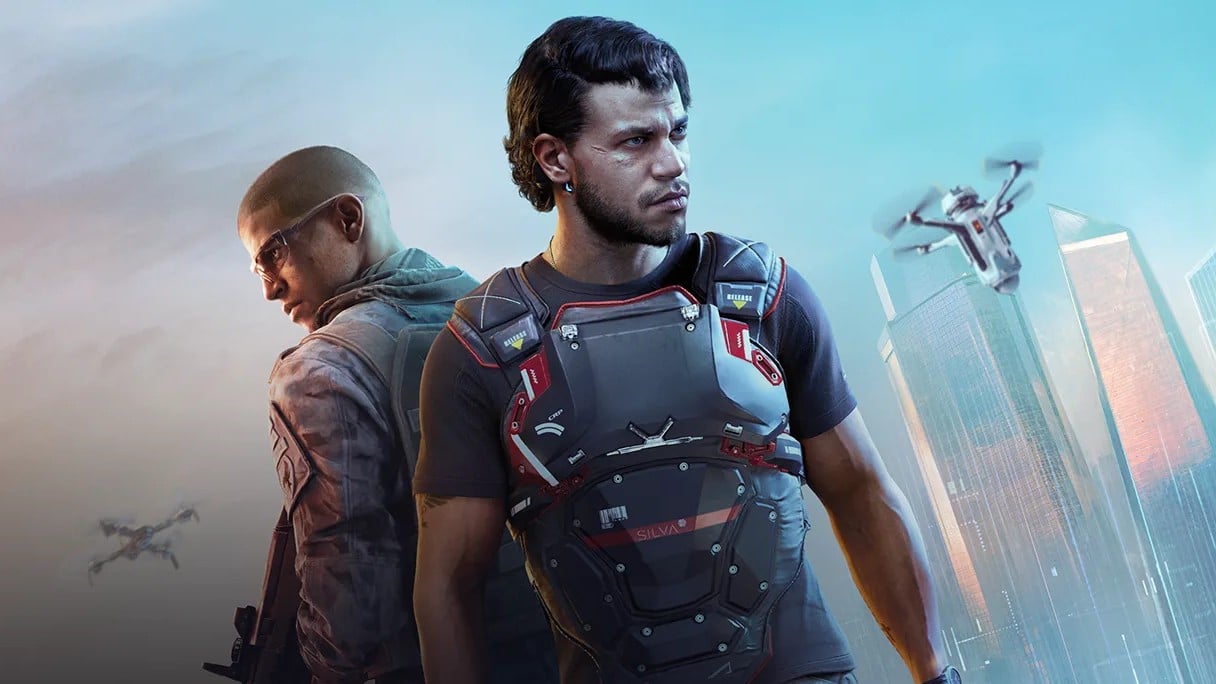
The Untold Story of Build a Rocket Boy: When Ambition Meets Unsteady Leadership
The world of video game development is a fascinating blend of art, technology, and sheer passion. Developers pour their hearts and souls into creating immersive worlds and engaging experiences. Yet, behind the dazzling trailers and polished releases, lies a complex landscape often fraught with challenges. One such story recently emerged, shedding light on the internal struggles at a highly anticipated studio: Build a Rocket Boy. Specifically, former lead animator Chris Wilson has shared his critical observations about his time there, painting a vivid picture of a company facing significant headwinds, steered by co-CEOs he describes as leading a "sinking ship."
This is not just a tale about one person's experience; it's a window into the broader issues that can plague even the most promising game development projects. It highlights the critical importance of strong, unified leadership, a clear creative vision, and a company culture that nurtures its talent rather than burning it out. Let's delve deeper into Chris Wilson's insights and explore the challenges that can arise when a studio's foundational elements begin to crack.
The Grand Vision: What Drew Talent to Build a Rocket Boy?
Build a Rocket Boy burst onto the scene with significant buzz, largely due to its founder, Leslie Benzies, a name synonymous with monumental success in the industry, particularly for his work on the Grand Theft Auto series. The prospect of a new studio led by such a figure, promising innovative projects like the ambitious "Mind's Eye" and "Everywhere," naturally attracted top talent from across the globe. For many, including Chris Wilson, it represented a chance to be part of something truly groundbreaking, a new chapter in gaming history.
The initial pitch for "Mind's Eye" was incredibly compelling. Imagine a game that pushes boundaries, offering players unparalleled freedom and a deeply engaging narrative. Concept art hinted at breathtaking environments, and early discussions revolved around revolutionary gameplay mechanics. This wasn't just another game; it was presented as an experience designed to redefine genres. The studio’s commitment to cutting-edge technology and a bold creative direction was a powerful magnet for experienced professionals who yearned to leave their mark on the industry. It promised a collaborative environment where creativity could flourish, where animators like Chris could bring characters and worlds to life in ways never before seen.
Chris Wilson, with his extensive background and a reputation for excellence in animation, was among those who answered the call. He saw in Build a Rocket Boy not just a job, but a mission. The opportunity to shape the visual language and movement of a next-generation title was irresistible. The initial enthusiasm was palpable throughout the studio, a vibrant hub filled with brilliant minds eager to turn grand visions into playable reality. Everyone believed they were on the cusp of creating something truly special.
Chris Wilson: A Dedicated Animator's Journey
Chris Wilson is not just any animator; he's a veteran with a deep passion for bringing characters to life through motion. His portfolio likely boasted work on numerous successful titles, showcasing his skill in expressive character animation, fluid combat sequences, and subtle environmental movements. When he joined Build a Rocket Boy as lead animator, he carried with him not just technical expertise, but a profound understanding of storytelling through movement. He was responsible for guiding a team of animators, ensuring consistency in style, and translating design concepts into compelling visual actions within the game world.
His role was crucial. Animation is often the first thing players notice, conveying personality, impact, and the overall feel of a game. Chris's leadership meant establishing animation pipelines, mentoring junior artists, and working closely with game designers and programmers to integrate animations seamlessly. He was, by all accounts, deeply invested in "Mind's Eye," seeing it as a canvas for his team's collective talent. He envisioned characters that felt real, movements that conveyed emotion and purpose, and a world that breathed with dynamic life.
For Chris, game development was more than just a job; it was a craft. He believed in the power of collaboration and the magic that happens when diverse talents align to achieve a common goal. This belief fueled his dedication, his long hours, and his unwavering commitment to pushing the boundaries of what was possible. It was this very dedication that made his eventual disillusionment so poignant, as he watched the ambitious project he poured his soul into begin to veer off course.
The Dual Helm: A Recipe for Trouble?
At the heart of Chris Wilson's concerns lies the studio's leadership structure, specifically the presence of two co-CEOs. While a dual leadership model can sometimes work by leveraging complementary strengths – one focusing on creative vision, the other on business operations – it often introduces a significant risk: conflicting directives and a lack of singular, decisive leadership. In Chris's view, this was precisely the pitfall Build a Rocket Boy stumbled into, turning what should have been a clear path into a convoluted maze.
Imagine a ship with two captains, each with their own map and preferred destination. While both might ultimately want the ship to reach a safe harbor, their constant disagreements on the best route, or even the fundamental direction, can lead to paralysis, wasted effort, and growing frustration among the crew. This analogy resonates strongly with Chris's experience. He observed a pervasive struggle for ultimate authority and conflicting creative visions between the co-CEOs. Decisions would be made, only to be questioned or entirely reversed shortly after, creating a dizzying cycle of uncertainty.
This constant oscillation in direction wasn't just inconvenient; it was incredibly damaging. For a creative team, especially animators who invest countless hours into bringing specific actions and personalities to life, a shifting vision means wasted work. Imagine animating a complex character movement sequence for a particular narrative beat, only to be told a week later that the character's role has changed entirely, or that the tone of the game has shifted, requiring a complete overhaul. This isn't just a technical setback; it's a demoralizing experience that erodes trust in leadership and drains creative energy.
Signs of a "Sinking Ship": Details from the Deck
Chris Wilson's description of Build a Rocket Boy as a "sinking ship" wasn't a casual remark; it was a grave assessment born from witnessing a multitude of systemic issues. These problems, he observed, stemmed directly from the fractured leadership and cascaded down through every department, affecting morale, productivity, and the project's overall trajectory. Let's break down some of the key indicators Chris likely pointed to:
Creative Direction Drift: A Shifting Sand of Ideas
One of the most debilitating issues Chris witnessed was the constant "creative direction drift." In game development, a clear and consistent artistic vision is the bedrock upon which everything else is built. When two leaders pull in different directions, this vision becomes muddled. What started as a gritty, realistic adventure might suddenly be pushed towards a more fantastical, stylized look, only to swing back again. For the animation team, this meant pouring hours into developing a specific animation style or character movement vocabulary, only to have it rendered obsolete by a new directive.
This wasn't just about minor tweaks; it involved fundamental changes that impacted the entire aesthetic and feel of "Mind's Eye." Such instability forced artists to constantly adapt, discard finished work, and restart from scratch, leading to immense frustration. The passion that initially drew them to the project began to wane as their creative output felt increasingly temporary and undervalued.
Unrealistic Expectations and Scope Creep: The Endless Horizon
Another common pitfall in game development, exacerbated by leadership discord, is "scope creep." This refers to the uncontrolled growth of a project's features and requirements beyond its initial plan. At Build a Rocket Boy, Chris observed that the co-CEOs' competing visions often led to an endless cycle of new feature requests and ambitious additions, without a clear understanding of the resources or time required. One CEO might push for a groundbreaking new gameplay system, while the other might demand an expansion of the narrative or world size, all without proper coordination.
This created an environment of impossible expectations. Teams were constantly asked to do more, faster, and with ever-changing specifications. The animation team, for example, might be tasked with creating animations for an expanding roster of characters, new enemy types, or complex environmental interactions, all while the release date remained a distant, ever-shifting target. This relentless pressure, coupled with the instability of the creative vision, inevitably led to burnout and a sense of being perpetually behind, regardless of how hard everyone worked.
Communication Breakdown: Whispers and Mixed Messages
Effective communication is the lifeblood of any large-scale creative project. At Build a Rocket Boy, Chris highlighted significant communication breakdowns as a major contributing factor to the studio's woes. With two leaders, information often became siloed or contradictory. Decisions made by one CEO might not be effectively communicated to the other, or to the teams, leading to confusion and duplicated efforts.
Team leads, including Chris, found themselves in unenviable positions, trying to reconcile conflicting directives from the top. They became unwilling intermediaries, attempting to interpret vague instructions or navigate contradictory feedback. This lack of clear, consistent communication fostered an environment of uncertainty and distrust, making it difficult for teams to plan effectively, allocate resources, or even understand their immediate priorities. It created a feeling of operating in the dark, constantly second-guessing every move.
Resource Mismanagement: A Treadmill of Wasted Effort
The cumulative effect of creative drift, scope creep, and communication breakdown was profound resource mismanagement. Valuable time, talent, and financial resources were squandered on tasks that were later discarded or deemed irrelevant due to a change in direction. For an animation team, this meant completing complex animation sets that would never see the light of day, or developing tools and pipelines that were abandoned for newer, equally unproven methods.
This wasn't just about financial waste; it was about the waste of human potential and effort. Developers, particularly those with a deep creative investment like Chris, found it disheartening to see their hard work repeatedly end up on the cutting room floor, not because of quality issues, but because of executive indecision. This constant cycle of starting, stopping, and restarting took a heavy toll on morale and made it increasingly difficult to build momentum on any aspect of the project.
Toxic Culture: The Silent Killer of Creativity
Perhaps the most insidious outcome of these leadership struggles was the erosion of company culture, leading to what many might describe as a "toxic" environment. When leadership is unstable and contradictory, employees become stressed, anxious, and disengaged. The initial excitement and camaraderie that drew Chris and others to Build a Rocket Boy slowly began to dissipate, replaced by cynicism and frustration.
Chris likely observed declining morale, increased rates of burnout, and perhaps even a higher turnover rate among talented individuals who simply couldn't endure the constant turmoil. A culture where employees feel unheard, undervalued, or constantly subjected to arbitrary changes is one where creativity struggles to survive. Trust, the cornerstone of any successful team, erodes, and people start focusing on simply surviving rather than thriving and innovating. The "sinking ship" metaphor perfectly captures this slow, inevitable decline in spirit and effectiveness.
The Animator's Perspective: Impact on the Craft
From Chris Wilson’s unique position as a lead animator, the impact of these systemic issues was acutely felt. Animation is a highly iterative and time-consuming process. Each movement, each facial expression, each intricate detail requires meticulous planning, precise execution, and often, collaboration with other departments like character art, design, and engineering.
When the creative vision for "Mind's Eye" wavered, Chris's team bore the brunt of it. Imagine animating a series of dynamic combat moves for a specific character, only to be told that the character's weapon class has changed, or their core personality has been re-envisioned as less aggressive. This means going back to the drawing board, re-analyzing the character's new identity, and animating entirely new sets of movements – effectively doubling or tripling the workload without any extension to deadlines.
Furthermore, communication breakdowns meant that animators often worked in isolation or on assumptions, only to discover later that their work was out of sync with other parts of the game. A character’s movement speed might not match the level design, or an emotional cutscene animation might contradict a new piece of lore. This led to endless rounds of revisions, patch-ups, and a feeling that their creative input was not truly being integrated into a coherent whole. For animators who pride themselves on seamless, impactful motion, this was incredibly disheartening. It made it difficult to maintain the quality and consistency that a AAA title like "Mind's Eye" demanded.
Attempts to Course Correct: A Lone Voice in the Storm
It's highly unlikely that Chris Wilson, as a dedicated lead animator, stood idly by as he watched the project falter. Individuals like him, deeply invested in their craft and the success of the game, often become internal advocates for change. Chris likely made numerous attempts to voice his concerns, not out of malice, but out of a genuine desire to see "Mind's Eye" succeed. He would have approached his direct managers, and perhaps even the co-CEOs themselves, with constructive feedback.
His efforts would have focused on tangible solutions: proposing clearer communication channels, advocating for more defined project milestones, suggesting methods to solidify the creative vision, or highlighting the impact of scope creep on his team's morale and productivity. He might have presented data on wasted animation cycles, offered streamlined processes, or even tried to mediate between conflicting creative directives he received from the dual leadership.
However, in an environment where leadership itself is fragmented, such voices of reason often fall on deaf ears. When the captains of the "sinking ship" are too busy squabbling over the helm, they may be unwilling or unable to listen to the pleas of the crew. Chris's attempts, no matter how well-intentioned or data-backed, likely met with resistance, dismissive responses, or temporary fixes that failed to address the root cause – the fundamental discord at the top. This gradual realization that his efforts were futile, despite his passion, must have been profoundly demoralizing.
The Inevitable Departure: Choosing Self-Preservation
For someone as passionate and dedicated as Chris Wilson, the decision to leave Build a Rocket Boy would not have been an easy one. It would have been a heartbreaking choice, akin to abandoning a creative child he had invested so much in. Yet, the continuous cycle of frustration, the feeling of fighting an uphill battle against systemic issues, and the visible deterioration of the project's health eventually reached a breaking point.
The emotional and professional toll of working in such an environment cannot be overstated. The constant pressure, the wasted effort, the lack of clear direction, and the erosion of trust would have chipped away at his mental well-being and his professional satisfaction. At some point, the love for the project becomes overshadowed by the sheer exhaustion of navigating an unstable environment. Chris likely realized that staying would only lead to further burnout and a diminished sense of purpose.
His departure, therefore, was not just an individual career move; it was a powerful statement. It signified that the internal issues at Build a Rocket Boy were severe enough to drive away seasoned, committed talent. When key figures like a lead animator choose to leave, it sends a clear signal that something is fundamentally amiss, and that the promise that initially drew them in has been irrevocably broken. It was a choice for self-preservation, a recognition that he could no longer contribute effectively to a project that was, in his estimation, heading in the wrong direction due to its leadership.
Speaking Out: Why It Matters for the Industry
When individuals like Chris Wilson decide to speak out about their experiences, especially in an industry often characterized by non-disclosure agreements and a culture of silence, it is an act of significant courage. While such statements can be controversial, they serve a vital purpose for the wider game development community. Chris's willingness to share his perspective on the co-CEOs steering a "sinking ship" provides invaluable transparency.
Firstly, it offers a stark reminder that even studios founded by industry legends are not immune to fundamental organizational problems. Success in one venture doesn't automatically guarantee success in another, especially when leadership dynamics change. Secondly, it validates the experiences of countless other developers who might be facing similar challenges in their own workplaces but feel unable to speak up. Hearing a senior figure articulate these issues can empower others and foster a sense of solidarity.
Most importantly, Chris's candid remarks serve as a critical learning opportunity. For aspiring game developers, it highlights the importance of researching studio culture and leadership alongside project ambition. For existing studios, it acts as a cautionary tale, emphasizing the paramount importance of clear, unified leadership, effective communication, and a healthy work environment. Such transparency, while painful for the studio involved, is ultimately beneficial for the industry's growth and maturity, promoting better practices and greater accountability.
Lessons for the Industry: Building a Stable Ship
The challenges highlighted by Chris Wilson at Build a Rocket Boy offer profound lessons that extend far beyond a single studio. They underscore foundational principles for successful game development and the well-being of its most crucial asset: its people.
The Primacy of Unified Leadership
Perhaps the most critical takeaway is the absolute necessity of unified, coherent leadership. While co-CEO models can theoretically work, they require exceptional synergy, clear division of responsibilities, and an unwavering commitment to a singular vision. When leaders are at odds, it creates chaos that destabilizes every level of the organization. A strong leader provides a consistent compass, ensuring everyone is moving in the same direction.
The Power of a Clear Vision
A game's creative vision should be a lighthouse guiding development, not a flickering candle. It needs to be clearly defined, consistently communicated, and robust enough to withstand the inevitable challenges of production. When the vision constantly shifts, teams lose their focus, and creative energy is wasted on work that is constantly discarded. Leadership must champion and protect this vision, allowing teams to build upon a stable foundation.
Nurturing a Healthy Culture
Talent will flock to ambitious projects, but it will only stay where it feels valued, respected, and supported. A culture that fosters open communication, constructive feedback, and realistic expectations is crucial for retention and creativity. Conversely, environments marked by constant pressure, poor communication, and wasted effort breed burnout and cynicism. Studios must actively invest in their employees' well-being, recognizing that a happy, engaged team is a productive team.
Effective Project Management and Scope Control
Ambition is vital, but it must be tempered with realistic planning and stringent scope control. Leaders must empower project managers to set achievable goals, prioritize features, and push back against uncontrolled additions that can derail an entire project. This involves understanding the technical and human resources required for each task and making tough decisions when necessary to keep the project on track.
Listening to Your Talent
Senior developers, team leads, and experienced artists like Chris Wilson are invaluable sources of insight. They are on the front lines, understanding the practical challenges and potential pitfalls. Leadership must create channels for genuine feedback, actively listen to concerns, and be willing to adapt based on the expertise within their teams. Ignoring these voices can lead to catastrophic consequences.
Conclusion: The Future of "Mind's Eye" and Beyond
Chris Wilson's frank account of his time at Build a Rocket Boy serves as a poignant reminder of the intricate dance between creative ambition and organizational stability in game development. His concerns about the co-CEOs steering a "sinking ship" underscore how even the most promising projects, backed by industry titans, can falter without cohesive, clear-headed leadership.
As the gaming community watches to see the eventual fate of "Mind's Eye" and "Everywhere," this narrative prompts a crucial reflection. Will Build a Rocket Boy manage to course correct, find its unified vision, and overcome the challenges highlighted by its former lead animator? Only time will tell. But one thing is clear: the success of any creative endeavor, particularly one as complex as a AAA video game, hinges not just on brilliant ideas, but on the strength, unity, and foresight of those at the helm. For developers and players alike, Chris Wilson's story is a powerful testament to the human element at the heart of every digital world we explore.
from Kotaku
-via DynaSage

Post a Comment