Oops: Actor Accidentally Leaks The Existence Of Spider-Man 3 From Insomniac Games
The Web of Secrets: What Ben Jordan's Deleted Mo-Cap Pic Hints for Spider-Man's Future
The world of gaming is no stranger to thrilling revelations, unexpected announcements, and, perhaps most excitingly, the occasional tantalizing leak. Few franchises ignite fan passion quite like Insomniac Games' Marvel's Spider-Man series. From its groundbreaking gameplay to its emotionally resonant storytelling, each installment has pushed boundaries and redefined what a superhero game can be. This insatiable hunger for news means that even the smallest hint, a mere whisper from behind the scenes, can send the community into a frenzy of speculation.
Recently, just such a whisper turned into a rapid-fire buzz. A prominent figure known for bringing the wall-crawler's fluid movements to life shared a brief, intriguing glimpse of what might be next for our favorite web-slinger. The post, appearing on Instagram, was a motion-capture (mo-cap) photo, an intimate peek into the very heart of game development. What made it particularly noteworthy, and instantly viral among fans, was its swift disappearance. The picture, shared by mo-cap actor Ben Jordan, was online for only a fleeting moment before being deleted, sparking a wildfire of questions: What was it? Why was it removed? And most importantly, what does this mean for the future of Insomniac's beloved Spider-Man universe?
The Moment Itself: A Glimpse Behind the Curtain
In the fast-paced world of social media, nothing truly disappears. Even a rapidly deleted post can be captured and shared before its creator has a chance to fully retract it. This was precisely the case with Ben Jordan's now-infamous Instagram picture. The image itself, a standard yet revealing mo-cap setup, featured the unmistakable environment of a motion capture studio.
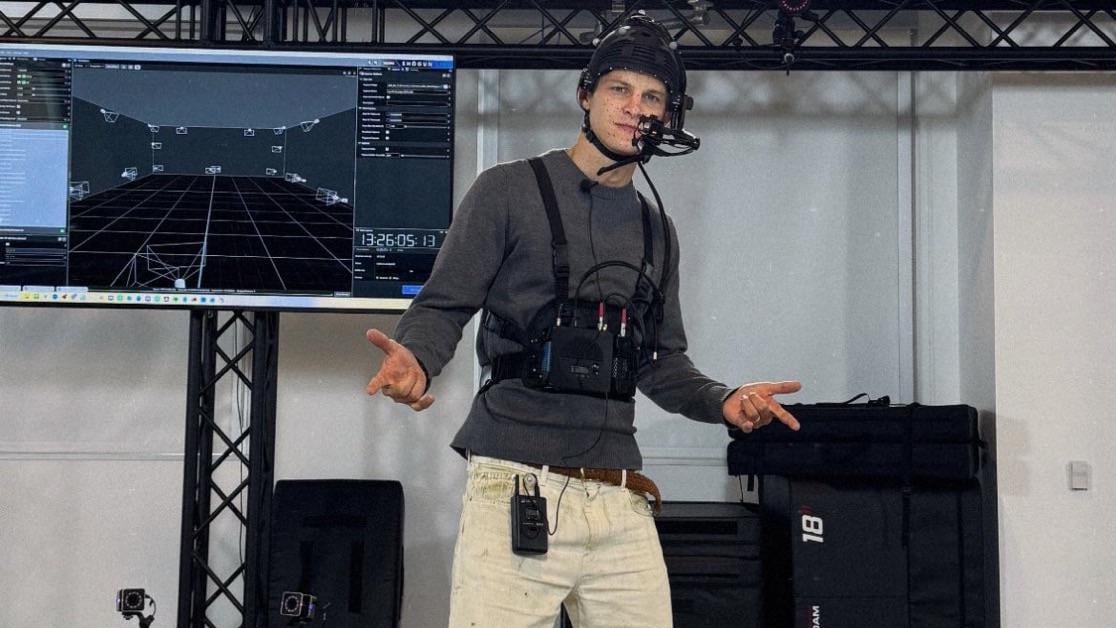
For eagle-eyed fans, the context was immediate and clear: this was work related to the Spider-Man games. While the picture didn't show any specific characters or detailed environments, the very act of a mo-cap actor known for Spider-Man posting and deleting such an image speaks volumes. The rapid deletion suggests that the content was either mistakenly shared, or more likely, was not yet cleared for public consumption. In the tightly controlled world of AAA game development, secrecy is paramount, and every reveal is carefully planned and orchestrated by marketing teams.
This incident wasn't just a simple social media mishap; it was a digital breadcrumb, pointing towards ongoing development. For fans eagerly awaiting the next chapter in Peter Parker and Miles Morales' adventures, this brief flash of behind-the-scenes activity served as concrete evidence that something is brewing at Insomniac Games. It reinforced the idea that the world of Spider-Man games is far from over, and that the groundwork for new stories and breathtaking gameplay is actively being laid.
Who is Ben Jordan? The Man Behind Spider-Man's Moves
To truly understand the weight of this leak, one must first appreciate the contributions of Ben Jordan. While Yuri Lowenthal provides the voice and facial performance for Peter Parker in Insomniac's games, Ben Jordan is the unsung hero who brings the physical dynamism of both Peter Parker and Spider-Man to life. He is the principal motion capture performer for the character, meaning that the incredible web-slinging, acrobatic combat, and fluid movements that define the gameplay are largely thanks to his physical prowess and dedication.
Jordan’s involvement spans the entire series, from the original Marvel's Spider-Man in 2018, through Marvel's Spider-Man: Miles Morales, and most recently, Marvel's Spider-Man 2. His role is critical; he translates the vision of the game designers and animators into tangible, believable movement. Imagine the hours spent perfecting the intricate dance of web-swinging through New York City, or executing complex combat maneuvers with multiple enemies. This isn't just acting; it's an intense physical performance, often requiring stunt work, precise choreography, and an understanding of the character's unique physicality.
Beyond the technical demands, Jordan also imbues Spider-Man with a personality that shines through his movements. The way Peter Parker stands, the way he reacts to danger, his playful dodges, and powerful blows – these all contribute to the character's authenticity. His presence in a motion capture suit signals that work is underway on a project that requires the distinct, signature movements of Spider-Man. For fans, seeing Ben Jordan in a mo-cap studio is almost as exciting as seeing a new teaser trailer, because it confirms that the very foundation of the next game's animations is being built.
Demystifying Motion Capture: How Games Come to Life
Motion capture, often shortened to "mo-cap," is a technology that has revolutionized animation in both film and video games. At its core, it's the process of recording the movement of objects or people and then digitally transferring that movement data to a computer-generated (CG) model. It's the secret sauce that makes digital characters move with uncanny realism, bridging the gap between human performance and virtual reality.
The process usually involves an actor wearing a special suit covered with reflective markers. These markers are strategically placed at key points on the body, such as joints and limbs. The mo-cap studio itself is equipped with an array of specialized cameras that emit infrared light. These cameras track the positions of the reflective markers in three-dimensional space, capturing every subtle movement of the actor.
Once captured, this raw data is then processed. Software interprets the marker positions over time, reconstructing the actor's performance as a skeletal animation. This digital skeleton can then be applied to any 3D character model. The beauty of mo-cap lies in its ability to capture the nuances of human movement that would be incredibly difficult, if not impossible, to animate by hand. This includes the natural flow of a walk, the subtle weight shifts in a run, or the complex dynamics of a fight sequence.
In games like *Marvel's Spider-Man*, motion capture is essential. Spider-Man's traversal system, his iconic web-swinging, is a masterclass in fluid animation. Ben Jordan's performances are meticulously captured to ensure that every swing, every flip, every wall-run feels natural and responsive. Beyond traversal, mo-cap is vital for combat animations, making each punch, kick, and dodge feel impactful and realistic. Even minute details like character idle animations, how they react to environmental stimuli, or their expressions during cutscenes often involve a combination of full-body motion capture and intricate facial capture techniques.
The blend of mo-cap with traditional keyframe animation allows developers to achieve both realism and stylized exaggeration when needed. For Spider-Man, this means characters can perform superhuman feats while still maintaining a believable human core. The deleted image of Ben Jordan in his mo-cap suit signifies that this fundamental, laborious, and creative process is actively underway, laying the groundwork for the next stunning visual and gameplay experience.
The Legacy of Insomniac's Spider-Man Series
Insomniac Games has cultivated a stellar reputation within the gaming industry, known for their innovative gameplay and compelling narratives across various titles. However, their work on the Marvel's Spider-Man series has arguably elevated them to new heights, establishing a benchmark for superhero games.
It all began with the critically acclaimed *Marvel's Spider-Man* in 2018. This PlayStation exclusive captivated audiences with its vibrant open-world depiction of New York City, its exhilarating web-slinging mechanics, and a deeply emotional story that explored Peter Parker's life both in and out of the mask. The game wasn't just fun; it had heart, tackling themes of responsibility, sacrifice, and the personal cost of heroism. It sold millions, garnered numerous awards, and set an impossibly high bar for future installments.
Following this success, Insomniac delivered *Marvel's Spider-Man: Miles Morales* in 2020. This standalone adventure, featuring Miles as the new protagonist, expanded the universe by introducing a fresh perspective, unique powers like venom blast and camouflage, and a rich, personal story. It built upon the foundations of the first game while carving out its own identity, proving that the Spider-Man mantle could be shared effectively and compellingly.
Most recently, *Marvel's Spider-Man 2*, released in 2023, brought both Peter and Miles together in a sprawling narrative that introduced fan-favorite villains like Kraven the Hunter and Venom. It pushed the boundaries of gameplay, offering new abilities, a larger map (including Queens and Brooklyn!), and a refined combat system. The game was praised for its ambitious storytelling, stunning visuals, and seamless character switching, further cementing Insomniac's mastery of the license.
The success of these games isn't merely commercial; it's cultural. They've fostered a passionate community, eager for every snippet of news, every rumor, and every official announcement. This deep connection means that any hint of future development, like Ben Jordan's deleted mo-cap picture, is instantly magnified and scrutinized by a legion of dedicated fans. They aren't just waiting for another game; they're waiting for another chapter in a story that has become deeply meaningful to them.
Spinning New Webs: What Could This Mo-Cap Session Mean?
The deleted Instagram post has sparked endless discussions across forums, social media, and YouTube channels. Given Ben Jordan's specific role, the most logical conclusion is that Insomniac Games is indeed working on a new Spider-Man-related project. But what kind of project could it be? The possibilities, while thrilling, range from direct sequels to unexpected spin-offs.
Marvel's Spider-Man 3: The Next Main Saga
The most anticipated outcome, and perhaps the most likely, is the development of *Marvel's Spider-Man 3*. The ending of *Spider-Man 2* left several narrative threads open, strongly hinting at future conflicts and character developments. Peter Parker, having faced immense personal challenges, seems poised for a new chapter, perhaps even taking on a more mentoring role as Miles fully embraces his destiny as New York's primary Spider-Man. The introduction of Cindy Moon, also known as Silk, in the post-credits scene, further suggests an expansion of the Spider-Verse within the game's continuity.
A direct sequel would allow Insomniac to continue their ambitious storytelling, explore new villains (like Green Goblin, who was teased in previous games, or perhaps Doctor Octopus's return), and evolve the gameplay even further. Fans would expect new traversal mechanics, more intricate combat abilities, and an even more dynamic open world. Given the typical development cycle for a AAA game, a mo-cap session now would align with a release several years down the line, making a full sequel a plausible target.
DLC for Spider-Man 2: Expanding Current Adventures
While less ambitious than a full sequel, a significant DLC (Downloadable Content) for *Spider-Man 2* is also a strong possibility. Both previous games received story expansions (*The City That Never Sleeps* for the first game and a smaller update for *Miles Morales*), and *Spider-Man 2* left ample room for additional narratives. For instance, the Venom symbiote's fate and the rise of Carnage could easily be explored in a dedicated story expansion. Alternatively, the introduction of Silk could be a setup for her own smaller narrative arc, similar to *Miles Morales*' standalone nature.
DLCs often use existing game assets and mechanics, but they can also introduce new characters and enemies, requiring new motion capture performances. If Insomniac aims to bridge the gap between *Spider-Man 2* and a future *Spider-Man 3*, a robust DLC could serve as an excellent narrative and gameplay stepping stone.
A Standalone Spin-Off or New Character Focus
Insomniac has already shown a willingness to explore different characters within the Spider-Man universe, as evidenced by *Miles Morales*. This opens the door for other spin-off titles. With the ending of *Spider-Man 2* heavily implying the potential for a Venom game (especially with the tease of a "Venom-Verse"), this could be a prime candidate for a standalone experience. A Venom game, with its darker tone and unique gameplay potential, could be an exciting departure for the studio.
Beyond Venom, the introduction of Cindy Moon (Silk) suggests that she could be a future playable character. A game centered around her, perhaps exploring her unique powers and origin story, would offer a fresh perspective. Alternatively, Insomniac could delve into other corners of the broader Marvel universe, though the explicit connection to Spider-Man through Ben Jordan makes a direct Spider-Man spin-off more probable.
An Entirely Different Marvel Project?
While less likely to be the primary focus of the leak, it's worth noting that Ben Jordan is a skilled mo-cap actor who could be involved in other Marvel-related projects. Insomniac Games is also working on a Marvel's Wolverine game, and while Jordan isn't typically associated with Wolverine's specific movements, it's not entirely out of the question for actors to cross over. However, given the existing imagery and his established role, the Spider-Man connection remains overwhelmingly strong, making a non-Spider-Man Marvel project a less compelling explanation for this particular deleted post.
The Thrill and Trepidation of Gaming Leaks
The incident with Ben Jordan's Instagram post highlights the double-edged sword of game leaks. On one hand, they generate immense excitement and conversation within the gaming community. For fans who are deeply invested in a franchise, any crumb of information about future projects is eagerly devoured. Leaks can create buzz, drive speculation, and keep a game in the public consciousness long before official marketing campaigns begin. They foster a sense of shared discovery and collective detective work among the fan base, strengthening community ties.
However, for game developers and publishers, leaks can be a significant headache. They disrupt carefully planned marketing strategies, spoiling major announcements that are designed to build hype and maximize impact. Developers pour years of their lives into these projects, often working under strict non-disclosure agreements (NDAs). A leak can undermine their hard work, potentially revealing content that is still in early stages and not representative of the final product, or, worse, forcing them to address rumors prematurely.
In the case of Ben Jordan, his quick deletion suggests he recognized the mistake and attempted to rectify it, likely due to an NDA or internal policy. This situation underscores the tightrope walk that actors, artists, and developers must navigate when working on highly anticipated titles. Social media, while a powerful tool for connection, also presents constant risks for unintended disclosures. For Insomniac, while the leak undoubtedly generated buzz, it also meant losing control over the timing and messaging of a potential announcement. It's a reminder that even the smallest slip-up can have wide-reaching implications in the interconnected digital age.
The Unseen Work: Game Development and Anticipation
Behind every blockbuster video game lies an incredible amount of unseen work. The journey from initial concept to a polished, retail-ready product is long, complex, and involves hundreds of talented individuals across various disciplines. Motion capture, as evidenced by Ben Jordan's post, is often an early and crucial stage in this development pipeline. Character movements, combat animations, and cinematic sequences are planned and recorded long before the environments are fully rendered or the narrative is finalized.
This early development means that while a mo-cap session confirms a project is underway, it doesn't necessarily indicate a release in the near future. AAA games typically take anywhere from three to five years, or even longer, to develop. There are countless stages after mo-cap: asset creation, level design, programming, bug fixing, voice acting, musical composition, and extensive quality assurance. Fans, understandably eager, often forget the sheer scale of this undertaking.
The anticipation for Insomniac's next Spider-Man game is palpable, and this leak only serves to fuel that fire. It’s a testament to the quality and impact of their previous work that a single, fleeting image can generate such widespread discussion and excitement. It reminds us that while we wait for official news, the dedicated teams at Insomniac are tirelessly working to craft the next unforgettable experience.
Conclusion: Waiting for the Official Web-Sling
Ben Jordan's quickly deleted Instagram post, a simple mo-cap photo, has become a powerful symbol of the ongoing excitement and fervent speculation surrounding the future of Insomniac's Spider-Man games. It’s more than just a leak; it's a confirmation that the web-slinging adventures are far from over, and that the dedicated team, including the incredible mo-cap performers like Jordan, are already hard at work on the next chapter.
Whether this turns out to be *Marvel's Spider-Man 3*, an exciting DLC for *Spider-Man 2*, or a thrilling new spin-off, one thing is certain: Insomniac Games is continuing to invest in their beloved iteration of the Marvel universe. While leaks provide an early, unofficial peek, the true magic lies in the carefully crafted reveals and official announcements that will eventually come from the studio itself. For now, fans can continue to speculate, dream of new villains and storylines, and eagerly await the moment Insomniac officially spins its next web. Until then, the deleted photo remains a tantalizing hint of the amazing things yet to come for our friendly neighborhood Spider-Man.
What do you think Ben Jordan's mo-cap session was for? Share your theories in the comments below!
from Kotaku
-via DynaSage

Post a Comment