Apple's New 16-Inch MacBook Pro Charger Has a Compatibility Issue
A Hidden Snag: Unpacking the Compatibility Issue with Apple's New 16-inch MacBook Pro Charger
The arrival of a new Apple product, especially a flagship like the 16-inch MacBook Pro with the powerful M5 Pro or M5 Max chip, is always met with excitement. Users eagerly anticipate cutting-edge performance, innovative features, and the seamless experience that Apple is known for delivering. However, even the most meticulously designed products can sometimes harbor unforeseen quirks. Recently, some owners of the latest 16-inch MacBook Pro models have encountered a subtle yet significant issue with the included 140W USB-C Power Adapter, revealing an unexpected compatibility problem that affects essential accessories.
This situation highlights how even a minor alteration in design can have cascading effects within a well-established ecosystem. For many, a power adapter is a simple, often overlooked component, yet it is absolutely crucial for the productivity and mobility of their high-performance laptop. When an issue arises with something as fundamental as charging, it can disrupt workflows and cause considerable inconvenience, turning initial excitement into frustration. Let's delve into the specifics of this compatibility snag, exploring what has changed, who is affected, and what it means for users of Apple's latest professional-grade notebooks.
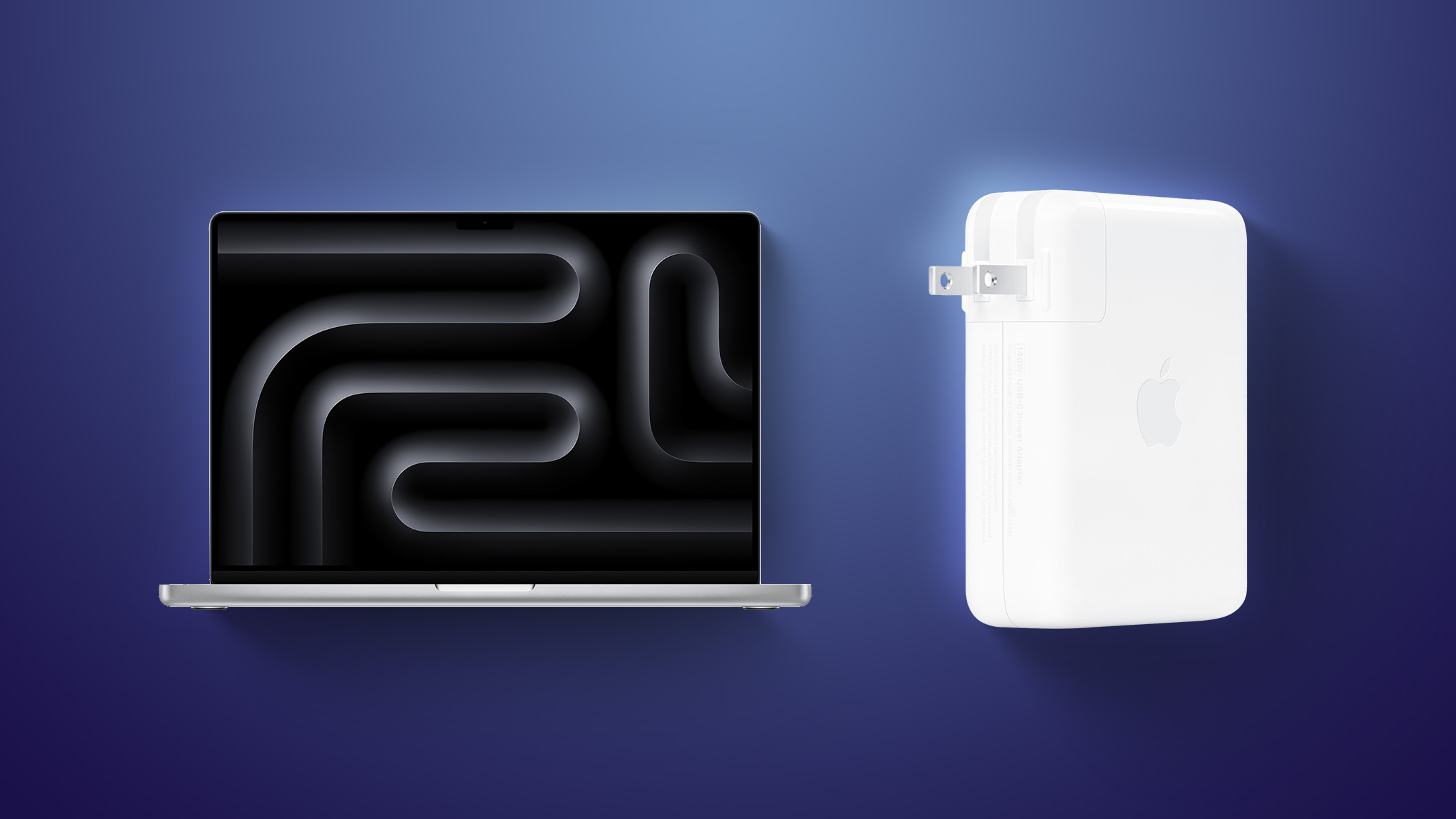
Understanding the New 16-inch MacBook Pro and Its Power Needs
Apple's 16-inch MacBook Pro, especially the models equipped with the M5 Pro or M5 Max chips, represents the pinnacle of portable computing power. These advanced processors are designed to handle the most demanding tasks, from complex video editing and 3D rendering to intensive software development and scientific simulations. To support such incredible performance, these machines require a robust and efficient power delivery system. The 140W USB-C Power Adapter is specifically engineered to meet these high demands, providing rapid charging and ensuring that the laptop receives ample power even under heavy workloads.
The M5 Pro and M5 Max chips, unveiled last month, bring significant advancements in processing capability, graphics performance, and neural acceleration. These enhancements make the 16-inch MacBook Pro an indispensable tool for creative professionals, engineers, and anyone who pushes the boundaries of portable computing. For such users, the ability to power their device reliably and flexibly is not just a convenience; it's a fundamental necessity. Whether working in a studio, on location, or from a remote office, a dependable power source ensures uninterrupted productivity and the full utilization of the MacBook Pro's potent hardware. This context makes any issue with the power adapter particularly vexing, as it directly impacts the very essence of why these powerful machines are chosen.
The Heart of the Problem: A Subtle Design Change
The core of the compatibility issue lies in a seemingly minor, yet critically impactful, redesign of the 140W USB-C Power Adapter. While the overall appearance and core function of the adapter remain unchanged, Apple has tweaked a specific component: the male connector that attaches to the removable AC plug. This connector is the interface between the main power brick and the part that goes into your wall outlet or power strip. Traditionally, these connectors have followed a relatively consistent standard, ensuring interoperability with accessories like extension cables.
Specifically, the previous versions of Apple's power adapters utilized a connector design that was a variant of the modified C7 coupler standard. This design, often referred to as a "figure-8" connector, is quite common in many electronic devices and has been a staple for Apple's power bricks for years. It features a recognizable shape with two distinct pins for power transfer. The beauty of this standard was its broad compatibility, allowing accessories like extension cables to plug in seamlessly, providing greater flexibility for users.
However, with the latest 140W USB-C Power Adapter, Apple has introduced a new male connector design. This revised connector is described as having a "slimmer pill-like shape." While it still retains the two pins necessary for power, its physical dimensions and contours have been altered. This subtle change, though perhaps internally motivated for reasons such as manufacturing optimization, enhanced durability, or even a precursor to future design language, has unfortunately led to an immediate external consequence: a breakdown in compatibility with existing accessories. It's a classic example of how a small engineering decision, made perhaps in isolation, can ripple through a product ecosystem, affecting user experience.
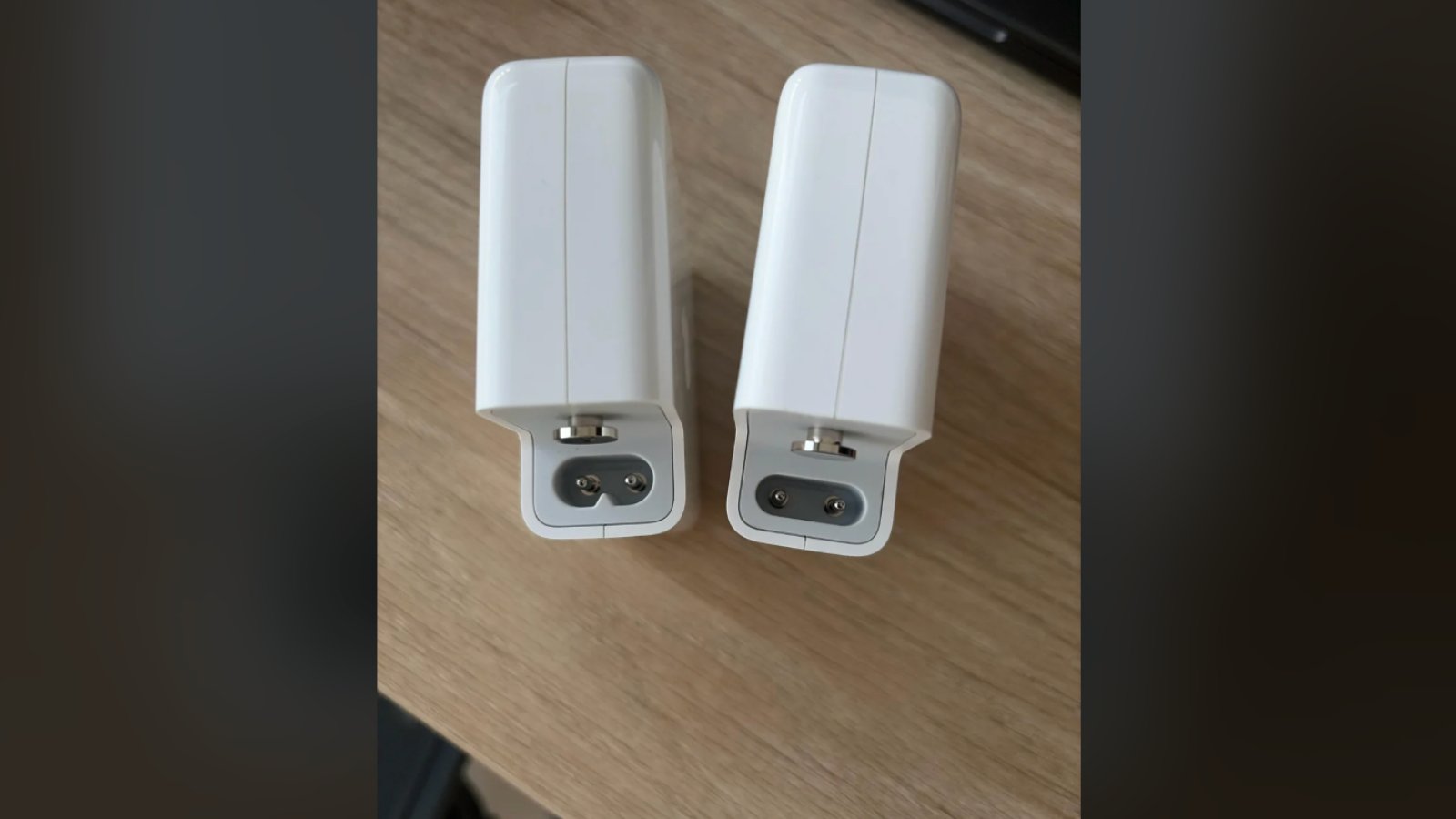 The redesigned male connector (on the right in the photo)
The visual evidence clearly shows the difference: the older connector is squarer and more open, while the new one is elongated and more enclosed. This difference, though slight, is enough to prevent a secure physical connection with accessories designed for the previous iteration. For consumers, this translates to a frustrating discovery: their trusted extension cables and travel kits, which worked perfectly with their older Apple adapters, simply won't fit or function with the new 140W charger. It creates an unexpected barrier to the usability and versatility that Apple users have come to expect from their products.
The Compatibility Crisis: What Doesn't Work Anymore
The direct consequence of this subtle connector redesign is a significant blow to the compatibility of the new 140W USB-C Power Adapter with several key Apple-branded accessories. These accessories, designed to enhance the utility and flexibility of Apple's power solutions, are now rendered incompatible for users with the redesigned adapter. This creates an unexpected problem for consumers who rely on these tools for convenience and global travel.
Apple's Power Adapter Extension Cable: Losing Reach and Flexibility
Perhaps the most widely used accessory affected by this change is Apple's Power Adapter Extension Cable. This cable is a highly valued accessory for many MacBook users. Its primary purpose is to provide an extended reach from the wall outlet, allowing users to place their MacBook Pro more comfortably in various environments, whether in a coffee shop where outlets are scarce, a conference room with distant power strips, or simply to reduce clutter around a desk. It also allows the bulky power brick to rest on the floor rather than hanging directly from an outlet, which can sometimes be precarious.
The incompatibility stems from the female connector on the extension cable. This connector is precisely molded to mate with the older, modified C7-style male connector found on previous Apple power adapters. With the new 140W charger's "slimmer pill-like" male connector, the physical dimensions simply do not match. Users attempting to connect the extension cable will find that it either won't fit at all, or it will connect loosely without making proper electrical contact, rendering it useless. This is a significant setback for productivity and convenience, forcing users to either sit closer to power outlets or seek out alternative, potentially non-Apple solutions.
What makes this particular incompatibility even more perplexing for consumers is that Apple's official product page for the Power Adapter Extension Cable continues to state that the cable is compatible with its 140W USB-C power adapters. This discrepancy between official product information and real-world functionality creates confusion and can lead customers to purchase an accessory that will not work with their new MacBook Pro charger. This lack of updated information can erode user trust and highlights a potential lapse in communication within Apple's product ecosystem.
Apple's Discontinued World Travel Adapter Kit: A Global Travel Headache
Another crucial accessory impacted by the redesign is Apple's discontinued World Travel Adapter Kit. While no longer sold directly by Apple, many international travelers and professionals still own and rely on this kit. It contains a collection of interchangeable AC plugs designed to fit power outlets in various countries around the world, making it an indispensable tool for anyone who travels frequently across different continents. The kit allowed users to swap out the standard regional plug on their Apple power adapter for one compatible with their destination, ensuring they could always charge their devices.
The redesigned male connector on the new 140W USB-C Power Adapter means that none of the international plugs included in the World Travel Adapter Kit will fit. Just like the extension cable, these travel plugs feature a female connector designed for the older, broader C7-style male connector. For global professionals and digital nomads, this presents a substantial travel challenge. They are left with a 16-inch MacBook Pro charger that can only be used in regions compatible with its original, non-interchangeable plug, or they must resort to buying third-party universal travel adapters, which might not offer the same seamless integration or quality as Apple's solution. This undermines the convenience and investment made by users in Apple's travel ecosystem.
Potential Broader Implications
While the immediate known incompatibilities are with Apple's own accessories, this design change could potentially ripple into the broader accessory market. Many third-party manufacturers produce extension cables or specialized adapters that utilize the same C7-style connector for compatibility with Apple's power bricks. If the new "pill-like" connector becomes the standard, these third-party accessories will also become obsolete for new 16-inch MacBook Pro owners. This could force users to search for newly designed, compatible accessories, leading to additional costs and a period of uncertainty as the market adapts. It emphasizes how a seemingly minor internal change can necessitate a widespread redesign across an entire category of complementary products.
A "Hit-or-Miss" Situation: Geographic and Production Variations
One of the most perplexing aspects of this compatibility issue is its inconsistent nature. Reports from users suggest that the problem is not universal; it appears to be a "hit-or-miss" situation. This means that not every 16-inch MacBook Pro owner with an M5 Pro or M5 Max chip will encounter the redesigned charger and its associated compatibility problems. This variability adds another layer of confusion for consumers, who might not know whether their specific charger is affected until they attempt to use it with an extension cable or travel adapter.
The new design has specifically been spotted in Australia and China, indicating that certain regions or manufacturing batches might be exclusively receiving the updated adapter. However, other customers in different parts of the world have reported that their 140W power adapters still feature the older, compatible connector design. This patchwork distribution makes it challenging for both consumers and tech journalists to confirm exactly which countries or production runs are impacted. The lack of a clear pattern means that a user in one country might receive the new design, while a user in an adjacent country, or even a different customer in the same country, might receive the older, compatible version.
Several factors could contribute to this "hit-or-miss" scenario. It could be due to Apple's manufacturing processes, where multiple factories in different regions produce these adapters, and only certain facilities have transitioned to the new design. Alternatively, it might be related to regional regulatory requirements or certification processes that necessitate a different approach to the connector design in specific markets. It's also possible that Apple is phasing in the new design incrementally, leading to a mix of old and new adapters circulating in the market until the older stock is depleted globally.
This inconsistency raises important questions for consumers. How can someone know if the 140W USB-C Power Adapter that Apple sells separately is affected by this change anywhere? For example, if a user buys a new MacBook Pro and then decides to purchase a second 140W adapter as a spare, there's no guarantee that it will match the connector design of their included charger, or even that it will be compatible with their existing extension cable. This uncertainty makes it difficult for users to plan their power solutions or confidently invest in additional accessories, as they face the risk of receiving an incompatible product. Until Apple provides official clarification, customers are left guessing, which is not an ideal experience for a premium product ecosystem.
Why This Matters: Impact on Users
While the connector redesign might seem like a minor technical detail, its implications for everyday users are substantial and varied. For owners of the 16-inch MacBook Pro, this compatibility issue isn't just an inconvenience; it can genuinely affect their workflow, travel plans, and overall satisfaction with their expensive new device.
Loss of Convenience and Flexibility
The primary impact is the immediate loss of convenience and flexibility that accessories like the Power Adapter Extension Cable provide. Many users have grown accustomed to the freedom of placing their laptop further from an outlet, or tidily routing cables without the power brick dangling mid-air. With the new adapter, these options are gone. Users are forced to work closer to power sources, which can be restrictive in offices, coffee shops, or even at home. This often means compromising on ergonomics or ideal workspace setup, as the power brick must now be positioned directly at the wall outlet.
Travel Headaches for Global Professionals
For international travelers, especially those who rely on the now-incompatible World Travel Adapter Kit, the issue is even more pronounced. Global professionals, digital nomads, and students studying abroad often need to charge their devices in various countries. The inability to use their existing travel kit forces them to seek out generic, often bulkier, third-party travel adapters, or to purchase entirely new local power cables for each region. This adds extra bulk to their travel gear, introduces potential compatibility or safety concerns with non-Apple accessories, and generates additional, unexpected costs. It disrupts what should be a seamless experience of powering a high-end device across borders.
Unexpected Costs and Environmental Concerns
The incompatibility can lead to unexpected expenses. Users who already own Apple's Power Adapter Extension Cable or World Travel Adapter Kit will find these accessories rendered useless with their new MacBook Pro charger. If they wish to regain the lost functionality, they will either have to purchase new, potentially redesigned, Apple accessories (if and when they become available) or invest in third-party solutions. This represents an unbudgeted cost for something that was previously part of their functional Apple ecosystem. From an environmental perspective, it also raises questions about waste, as perfectly functional accessories become obsolete due to a single, unannounced design change.
Erosion of Trust and Expectation
Perhaps more subtly, this issue can erode user trust and disrupt expectations. Apple has built its reputation on delivering a coherent and integrated ecosystem where products and accessories generally work seamlessly together. When a new product breaks compatibility with existing, officially sanctioned accessories without prior notice or a clear solution, it can feel like a betrayal of that implicit promise. Users expect their Apple investments to have a certain longevity and interoperability. This situation can lead to frustration and a sense of being left in the lurch, particularly for those who have invested heavily in Apple's ecosystem over many years.
Impact on Professional Workflows
For professional users, whose livelihoods depend on their 16-inch MacBook Pro, reliable and flexible power is non-negotiable. Imagine a videographer on a remote shoot, needing to charge their laptop using an extension cable to reach a power source, only to find their trusted cable no longer works. Or a developer presenting at an international conference, unable to charge their machine due to an incompatible travel adapter. These scenarios highlight how a seemingly small issue can lead to significant disruptions, downtime, and potentially missed opportunities in high-stakes professional environments. The reliance on consistent power delivery for intensive tasks means any hiccup can cascade into larger problems.
Ultimately, this design change, while perhaps made with good intentions from an engineering standpoint, has created a tangible negative impact on user experience. It underscores the importance of backward compatibility and clear communication, especially when dealing with essential components like power adapters that underpin the functionality of premium devices.
Seeking Solutions and Workarounds
In light of this unexpected compatibility issue, users and the wider tech community are naturally looking for solutions and guidance. While an official statement or resolution from Apple is still pending, there are immediate actions users can consider and potential long-term remedies that Apple could implement.
Awaiting an Official Apple Response
The most important next step is an official response from Apple. We have reached out to Apple for comment, but as of now, there has been no public acknowledgment of the issue or guidance provided to affected customers. A comprehensive response from Apple would ideally include:
- **Clarification:** A clear explanation of why the design change was made and which specific 140W adapters (and in which regions/batches) are affected.
- **Updated Product Information:** Correcting the misleading compatibility claims on the Power Adapter Extension Cable product page.
- **A Solution for Affected Users:** This could involve several options:
- **Replacement Program:** Offering to replace the redesigned 140W adapters with a compatible version, or providing an updated extension cable.
- **New Accessories:** Releasing new versions of the Power Adapter Extension Cable and potentially a new World Travel Adapter Kit that are compatible with the updated connector.
- **Adapter Trade-in/Credit:** Providing a mechanism for users to exchange their now-incompatible accessories or offering credit towards new ones.
Without official guidance, users are left in a state of uncertainty, which is particularly frustrating for owners of premium Apple products who expect robust support and foresight from the company.
Current User Strategies and Workarounds
While awaiting an official fix, users facing this problem can consider a few immediate strategies:
- **Check Your Adapter:** If you have a new 16-inch MacBook Pro, visually inspect the male connector on your 140W power adapter. Compare it to images of the older C7-style connector and the new "pill-like" design to determine if you are affected. Attempt to connect your extension cable or travel plug to confirm compatibility.
- **Use an Older Compatible Adapter (if available):** If you own an older Apple 140W (or even 96W/67W if less power is acceptable for light tasks) USB-C power adapter with the traditional C7-style connector, you might be able to use its removable AC plug and extension cable with the newer MacBook Pro. However, ensure the wattage is sufficient for your tasks, especially with the demanding M5 Pro/Max chips.
- **Consider Third-Party USB-C Cables and Power Bricks:** While not ideal, if you desperately need an extension or a travel solution, you might look into robust third-party USB-C to USB-C cables and multi-port power bricks that support USB Power Delivery (PD) 3.1 at 140W. This would involve replacing the entire Apple power solution, which is a significant workaround but might offer the necessary flexibility. Always research reputable brands and ensure safety certifications.
- **Generic Travel Adapters:** For travel, a universal travel adapter that plugs directly into the wall and then accepts the standard fixed plug of your 140W Apple adapter could be a temporary solution. These adapters typically don't separate the power brick from its fixed plug, but rather provide the correct outlet type for the entire brick.
- **Patience and Community Discussion:** Many users are discussing this issue on forums like the MacBook Pro forums. Keeping an eye on these discussions can provide insights into potential regional differences, unofficial workarounds, or early announcements of an official solution.
It's important to approach any third-party solution with caution, ensuring that products meet safety standards and provide adequate power to avoid damaging your expensive MacBook Pro. While these workarounds can mitigate the immediate impact, they do not resolve the underlying design incompatibility and represent an added hassle for users.
The Broader Context: Apple's Design Philosophy and QA
This compatibility issue with the 140W USB-C Power Adapter raises questions about Apple's renowned design philosophy and rigorous quality assurance processes. Apple has cultivated a reputation for meticulous attention to detail, seamless integration, and an unwavering commitment to user experience. When an issue like this surfaces, it prompts an examination of how such a discrepancy could have occurred within a company celebrated for its precision.
Apple's Design Ethos: Form, Function, and Integration
Apple's design ethos typically emphasizes both aesthetic elegance and functional harmony. Products are designed not just to look good, but to work together effortlessly within the Apple ecosystem. Backward compatibility, where feasible, is often a hallmark, ensuring that existing accessories and workflows remain relevant across product generations. The power adapter, while seemingly mundane, is a critical component of this ecosystem. Its ability to integrate with extension cables and travel kits has historically been a testament to this integrated approach, providing users with consistent utility across different environments.
The decision to subtly redesign a connector, breaking compatibility with established accessories, seems to diverge from this long-standing philosophy. While there could be valid engineering or manufacturing reasons for the change – perhaps to improve durability, reduce manufacturing costs, or prepare for future power standards – the failure to ensure forward compatibility, or at least to clearly communicate the change and offer immediate solutions, is an unusual misstep for Apple. It suggests a potential disconnect between the design and engineering teams responsible for the adapter and those overseeing accessory compatibility and product information.
The Role of Quality Assurance (QA)
Apple's quality assurance processes are typically extensive, involving rigorous testing of new products with existing accessories and use cases. For an issue as fundamental as a physical connector incompatibility with official Apple accessories, it’s surprising that it wasn't caught and addressed before the product reached consumers. QA would typically involve checking all aspects of the user experience, including the ability to attach and detach standard accessories like the extension cable and travel plugs. The fact that the product page for the extension cable still claims compatibility further suggests a breakdown in the synchronization of information and testing.
This incident underscores the challenge of managing a vast and complex product line. Even a company as sophisticated as Apple can face internal communication gaps or oversights. It highlights the importance of not just testing individual components, but also ensuring comprehensive system-level testing that accounts for the entire user ecosystem, including legacy accessories. For users, such an oversight can be particularly frustrating because it goes against the very premium experience they expect from Apple products.
Balancing Innovation with Backward Compatibility
The tension between innovation and backward compatibility is a constant challenge in the tech industry. Companies often introduce new standards or designs to push technological boundaries, but this can sometimes come at the expense of existing products. While it’s unrealistic to expect indefinite backward compatibility for all components, for essential items like power adapters, which have a long lifecycle and are integral to a device's functionality, changes that break compatibility need to be managed with extreme care and clear communication. Users invest in an ecosystem, and unexpected disruptions can diminish the value of that investment.
This situation serves as a valuable case study, illustrating how even minor design modifications in a flagship product can create significant ripple effects across the accessory landscape, impacting user convenience, trust, and the overall perception of a brand's commitment to its ecosystem. It reinforces the idea that for a brand like Apple, the user experience extends far beyond the core device itself, encompassing every accessory and interaction.
What's Next?
The situation with the new 140W USB-C Power Adapter for the 16-inch MacBook Pro is a developing story, and the eyes of the tech community, especially Apple users, are fixed on what comes next. The immediate need is for clarity and a concrete solution from Apple.
A Call for Clarity and a Swift Resolution from Apple
The most pressing requirement is for Apple to acknowledge the issue officially. A clear statement would help to alleviate user confusion and set expectations. This acknowledgment should ideally be followed by a definitive plan to address the problem for affected customers. Whether this involves a product recall, a free replacement program for incompatible adapters or extension cables, or the immediate release of updated compatible accessories, a proactive and comprehensive solution is essential to maintain user trust and satisfaction. The longer the silence, the more frustration builds among the user base.
Furthermore, Apple needs to update its product pages and marketing materials to accurately reflect the compatibility (or lack thereof) of the new 140W power adapter with existing accessories. Misleading information only adds to the problem and can lead to unnecessary purchases and customer dissatisfaction. Transparency and accuracy in product communication are paramount.
Advice for Users: Stay Informed and Act Carefully
For individuals who have recently purchased or are considering purchasing a 16-inch MacBook Pro with the M5 Pro or M5 Max chip, the best advice is to proceed with caution and stay informed. Before attempting to use existing extension cables or travel kits, visually inspect the male connector on your 140W power adapter to identify its design. If you suspect an incompatibility, avoid forcing connections, as this could potentially damage the adapter or the accessory.
Users should actively monitor official Apple support channels, tech news outlets, and community forums for updates. The MacBook Pro forums, for instance, are often a first-hand source of information and discussions among affected users. Subscribing to relevant news feeds or setting up alerts for "Apple 140W charger" or "MacBook Pro compatibility" can help you receive timely notifications about any developments.
If you encounter the incompatibility, consider reaching out to Apple Support directly. Document your experience and provide feedback. Collective user feedback is often a powerful catalyst for companies to prioritize and resolve such issues. While waiting for an official solution, implement the temporary workarounds discussed earlier, focusing on safe and reliable power delivery for your high-performance laptop.
The Importance of Power Delivery for High-Performance Laptops
This issue underscores a fundamental truth about modern high-performance laptops: their dependency on robust and flexible power solutions. For a device as powerful and essential as the 16-inch MacBook Pro, the ability to charge reliably and conveniently is not a luxury but a core requirement. Any disruption to this fundamental functionality can significantly impact productivity, mobility, and the overall user experience.
As technology continues to advance, and laptops become even more capable, the role of accessories like power adapters, extension cables, and travel kits will only grow in importance. Users expect these components to be as thoughtfully designed and seamlessly integrated as the main device itself. This current challenge serves as a potent reminder that even the smallest, often overlooked, parts of an ecosystem can have a profound effect on the overall perception and utility of a premium product.
Conclusion
The recent discovery of a compatibility issue with the new 140W USB-C Power Adapter included with the latest 16-inch MacBook Pro models presents an unexpected challenge for some Apple users. A subtle redesign of the male connector on the power brick has rendered it incompatible with Apple's own Power Adapter Extension Cable and the discontinued World Travel Adapter Kit. This "hit-or-miss" situation, observed in specific regions, leaves many users uncertain about the functionality of their accessories and their ability to power their powerful new laptops conveniently and flexibly.
While the exact reasons for this design change remain unclear, its impact on user experience is tangible. It disrupts convenience, complicates international travel, and creates an unexpected need for workarounds or new purchases. For a company like Apple, known for its seamless ecosystem and meticulous design, this oversight is particularly noteworthy and highlights the critical importance of backward compatibility and clear communication in product development.
As the tech community awaits an official response from Apple, users are encouraged to verify their charger's design and explore temporary workarounds while staying informed about any official solutions. The hope is for a swift and comprehensive resolution that restores the expected level of integration and convenience for owners of the formidable 16-inch MacBook Pro. Ultimately, the reliable and flexible delivery of power is not just a feature; it's the lifeline that enables these advanced machines to fulfill their promise of unparalleled performance and productivity.
Related Information and Resources
This article, "Apple's New 16-Inch MacBook Pro Charger Has a Compatibility Issue" first appeared on MacRumors.com
Discuss this article in our forums
from MacRumors
-via DynaSage

Post a Comment